Autism in ‘The Unbreakable Boy’

Greetings Earthlings! 🙂

This week I’d like to take a look at autism in the film ‘The Unbreakable Boy‘ based on the book ‘The Unbreakable Boy: A Father’s Fear, a Son’s Courage, and a Story of Unconditional Love’ by Scott Michael LeRette and Susy Flory.

Starring Zachary Levi, the film tells the true story of Scott and Susy’s experiences as first time parents to Austin who has both Osteogenesis imperfecta (brittle bone disease) and autism. The film gives us an honest depiction of the ups and downs of caring for a child with needs like Austin’s and the strain that this can put on the family unit.

You can see a trailer for the film below:

So how did I rate the films depiction of autism?

It’s always interesting to see how Hollywood will handle an adaptation of a true story about an autistic child, but this film did a pretty good job. Keeping with the current trend in autistic representation, Austin is played by autistic actor Jacob Laval (who also happens to have Osteogenesis imperfecta) which always helps to truly translate the autistic experience. In the film, we get to see some of the classic signs of autism we’re used to like lining up toys and counting them, nerdy specialist interests like Star Wars and dinosaurs, violent meltdowns, OCD, food issues and literal thinking. I did get a chortle when Austin is told he was asked to do something 100 times for him to respond that it’s only been 4 times 🤣

However, the film does showcase some lesser known autistic traits like constant talking (which is rare given how often we’re presented with the non-verbal/introverted autist), tendencies towards daydreaming and fantasies, issues with hand-eye coordination, and sensory issues around clothing. In one particular scene, Austin takes off all of his clothes in the bathroom at church- a behaviour that’s common among some autists who struggle with clothing sensitivity.

The real Scott and Austin at the film premiere

On another level, while I don’t know much about the author, Scott’s character in the film certainly shows some higher functioning autistic traits himself, which is often true for parents of autists. Throughout the film, Scott struggles to cope with parenthood and develops issues with substance abuse to get through. There’s also a throwaway comment about money being wasted on Scott’s hobbies and gadgets which could be a subtle indicator of specialist interests. However, a lot of critics have remarked that focusing on Scott’s experiences in the movie tend to sideline Austin who is the primary focus of the book.

Whilst the film was a fairly lackluster affair (it doesn’t quite hit the warm and fuzzy wholesome feels you’d expect from this type of film), the depiction of autism and the strains it places on the family unit are fairly spot on, charting the highs and lows that come from life on the spectrum.

Hope you enjoyed this post dear Earthlings! 🙂

Have a lovely weekend!

Aoife
Autism in ‘The Other Sister’

Greetings Earthlings! 🙂

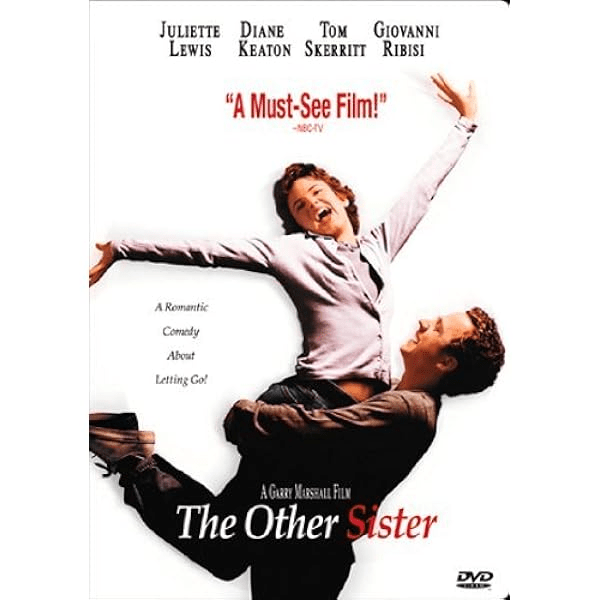
This week I’d like to talk about the depiction of autism in the 1999 romantic comedy film ‘The Other Sister‘, starring Juliette Lewis and Diane Keaton.

Fun fact– Juliette Lewis also appeared in another film featuring an autistic character, ‘What’s Eating Gilbert Grape.’

So what’s the film about?

The film centres around mildly mentally disabled Carla Tate who has lived a sheltered life in a private school. Upon graduation, she returns home to her overprotective mother determined to earn a diploma from a local technical university so that she can become a veterinary assistant and establish her independence. Whilst at college, she meets and falls in love with Danny (who is also mentally disabled), and seeing his independent life, she further advocates for her own life and an apartment, much to the chagrin of her oftentimes controlling mother.

While autism is never explicitly mentioned, both Carla and Danny display a number of autistic traits such as coordination issues, impulsivity, fondness for routine, specialist interests, food issues and lack of filter in social settings.

You can see a trailer for the film bel0w:

So what did I make of it?

As a story, I enjoyed it. It was a wholesome romantic comedy that broke the mould at the time by featuring a mentally disabled couple at it’s core, showing that neurodivergents, despite our differences, want to have ordinary romantic relationships like everyone else. However, the film largely received negative views for the acting (Juliette Lewis was nominated for a Razzie for her performance) and shameless use of disability as a gimmick.

In terms of autism, this was a fairly run of the mill affair, standard stereotypical traits, but unlike the critics I found their depiction fairly inoffensive compared with other more stereotyped examples.

All in all, while not the most relatable depiction of autism when compared with other romantic movies featuring autistic couples (like ‘Mozart and the Whale‘), the film is still worth a watch 🙂

Hope you enjoyed this post dear Earthlings!

Have a lovely weekend! 🙂

Aoife

Autism in Wayne’s World?

Greetings Earthlings! 🙂

This week I’d like to discuss a potentially autistic character in the classic 90’s ‘Wayne’s World‘ films- Garth Algar played by Dana Carvey.

In case you’ve never seen Wayne’s World, the films are centred round metal loving best friends Wayne and Garth who have their own comedy public access TV show in Aurora, Illinois, often getting into weird and wacky situations. The duo are perhaps most famous for re-popularizing Queen’s ‘Bohemian Rhapsody’ in the 1990s in this iconic scene:

So where does autism come in?

While autism is never explicitly mentioned and little was relatively known about the condition at the time of filming, many have retrospectively concluded that Garth is quite likely on the autistic spectrum. A shy, awkward and uncoordinated nerd, Garth actively avoids eye contact (except with the camera), doesn’t like touching, often misses social cues and can be very literal in his thinking and resistant to change.

His iconic exchange with Kim Basinger, “So, would you like to have dinner one night? Garth: Oh, I like to have dinner every night“; is a classic Asperger’s moment. He also is very into his specialist interests like electronics and heavy metal, and has a wild imagination like many autists.

Here’s a clip from ‘Wayne’s World 2‘ which really showcases Garth’s awkwardness, mind blindness and literal thinking:

Interestingly, despite not intentionally seeking to depict autism, many autists consider Garth to be a very positive portrayal of the condition. Garth is seen as a little bit quirky, but is fully accepted by his friends. He has a job, a social life, and even manages to bag himself a couple of girlfriends. These are all “normal” positive things, the real lived experience of many of us late diagnosis autists. Too often in media portrayals of autism the characters are depicted as othered and often incapable of living independently, even today, so for films this old to have such a positive approach to neurodivergents is pleasantly refreshing.

Hope you enjoyed this post dear Earthlings! 🙂

Have a lovely weekend!

Aoife
Autism in ‘I Used To Be Famous’

Greetings Earthlings! 🙂

This week I’d like to talk about Netflix’s latest drama film ‘I Used To Be Famous‘ and an autistic character that appears in the film.

So what is the film about?

The film follows Vince (played by Ed Skrein), a former member of a famous boy band who has been struggling to make headway with his own electronic music since the dissolution of the band several years previously. One day while busking in the city, he happens upon a teenage boy who starts drumming a beat on a nearby bench in sync with his electronic stylings. The resulting music captures the attention of everyone around and a video of the incident goes viral online. As it turns out, Stevie is on the autistic spectrum and a passionate drummer. Vince tracks him down in a music therapy group for people with disabilities and proposes that they start a band together in his desperation to make it back on top, a move which changes both of their lives forever.

You can see a trailer of the film below:

So how was this films depiction of autism?

The writers have kept things simple in the film, choosing to make Stevie’s drumming abilities the main focus rather than his autism, showing us all that autism should never be a blocker to achieving your dreams. Now one of the great things about this film is that building on from Atypical, Netflix has cast an autistic actor, Leo Long, to play Stevie. Leo is a talented drummer with the London Youth Folk Ensemble and National Open Youth Orchestra, and a passionate advocate for making the music and film industries more accessible for individuals with disabilities.

It’s a heartwarming film with some great tunes to boot- perfect for a quiet evening in 🙂

Hope you enjoyed this post dear Earthlings!

Have a lovely weekend 🙂

Aoife

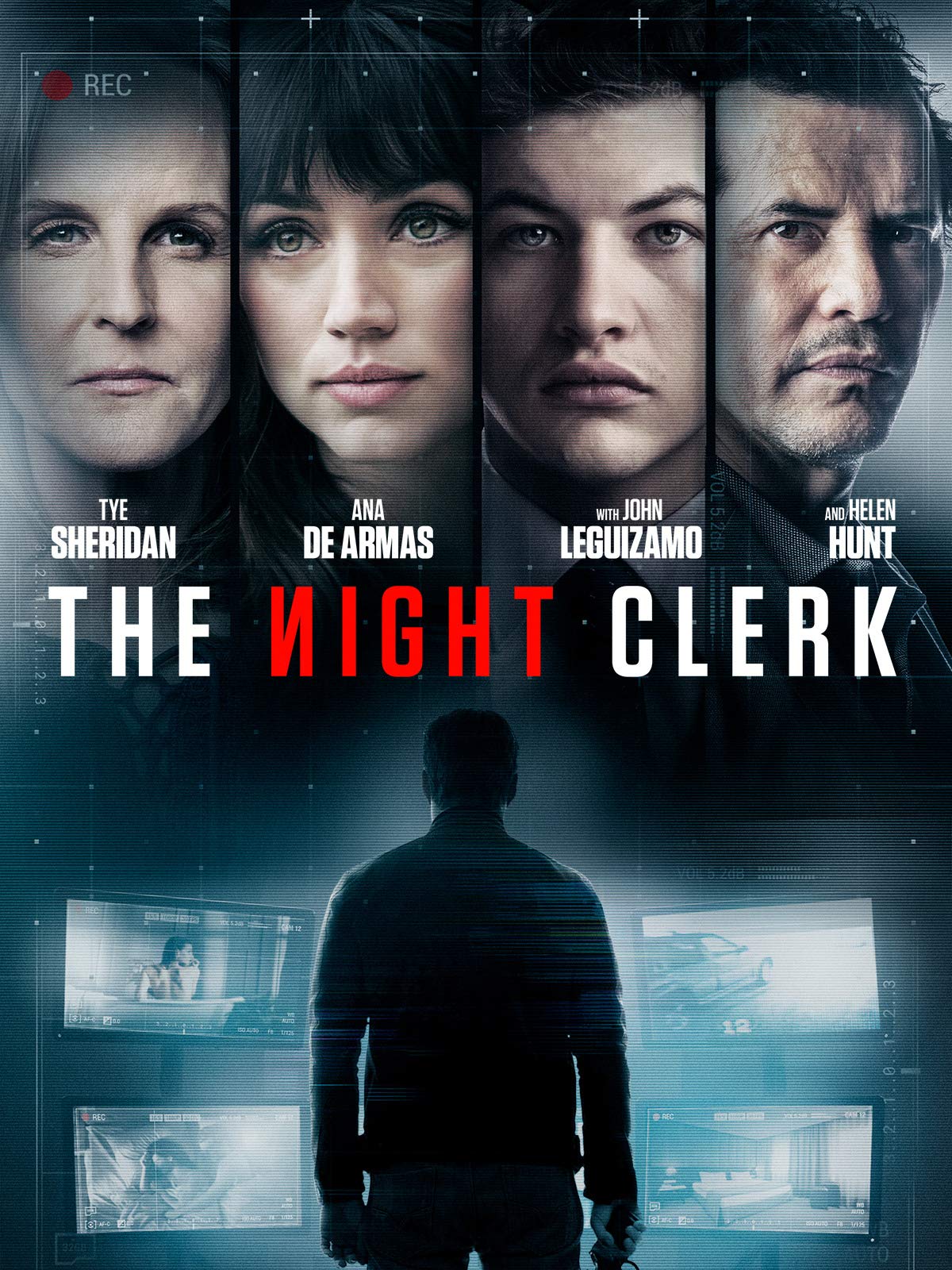
Autism in ‘The Night Clerk’

Greetings Earthlings! 🙂

This week I’d like to take a look at the portrayal of autism in the 2020 crime-drama film ‘The Night Clerk‘ starring Tye Sheridan, Helen Hunt and Ana de Aramas.

Watch The Night Clerk | Prime Video

So what’s the movie about?

The Night Clerk tells the story of Bart, a 23 year old with Asperger’s Syndrome who works as a night clerk in a local hotel. Bart secretly films the guests in the hotel through a number of hidden cameras he has installed in order to observe people and learn social cues to help him navigate the world, becoming embroiled in a murder investigation as a result.

If you haven’t seen the film you can see the trailer here:

So how did the film fare in it’s portrayal of autism?

The film generally get’s a lot of the classic traits right such as struggles with eye contact, colour sensitivity, lack of filter, social awkwardness, stimming, coordination issues (in particular Bart runs awkwardly with his hands flapping at his sides) and echolalia. I particularly enjoyed Bart’s response when people asked him “How are you?” and he replied with “That’s a very complicated question!” As I’ve discussed in previous posts, I have often found in the past that this is one of the worst questions to be asked and it’s great to see that portrayed on screen.

Bart’s voyeurism on the other hand, while well intentioned, does portray the community somewhat negatively and further adds to the wealth of negative portrayals of autism. Interestingly though, it does sort of in a weird way shake things up a bit- yes it’s not the best look for autist’s, but it does highlight that just because you’re on the spectrum, doesn’t mean you can’t also be a bit of a creep 😛

Overall however, the depiction falls into the stereotypical pit showing us a lot of the same tired autistic tropes like Bart’s primarily monotonous tone of voice. Just once I’d like to see an autist show a little bit of varied inflection on screen- every single autist I know uses a variety of tones when speaking; monotonal speech is clearly not as common as film makers would have us believe.

The Night Clerk Review: Tye Sheridan's Thriller Is a Dud | Observer

Hope you enjoyed this post dear Earthlings! 🙂

Have a lovely weekend!

Aoife

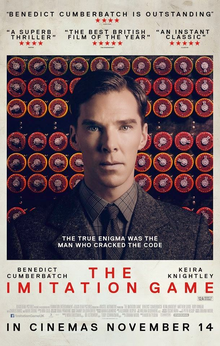
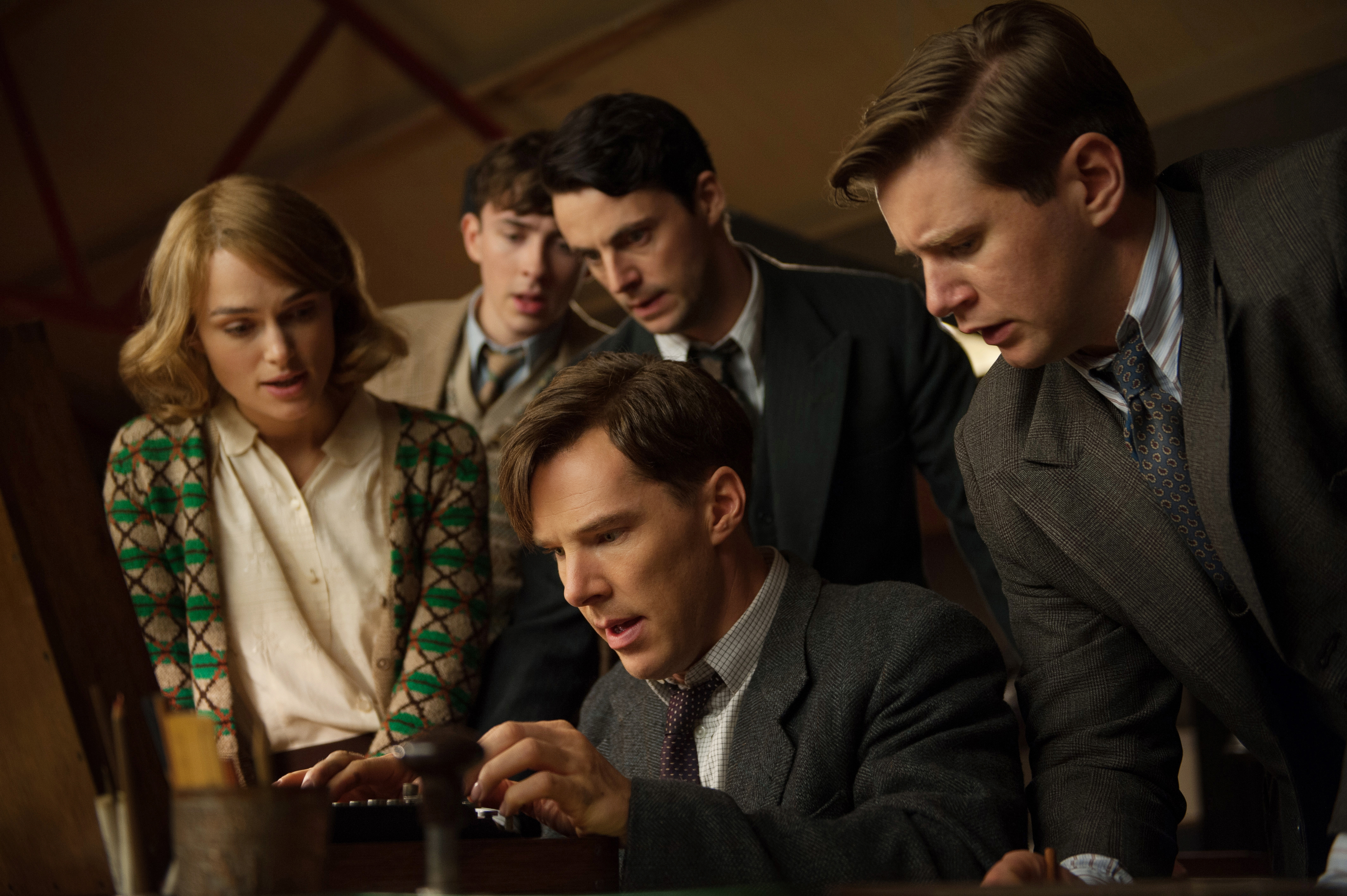
Autism in ‘The Imitation Game’

Greetings Earthlings! 🙂

This week I’d like to have a look at the depiction of autism in the 2014 historical drama ‘The Imitation Game‘ starring Benedict Cumberbatch and Keira Knightley.

The Imitation Game (2014).png

So what’s the film about?

Based on a true story, ‘The Imitation Game‘ follows computer scientist and mathematician Alan Turing during World War II as he works together with a group of code breakers to decrypt the German cipher machine Enigma, successfully intercepting key messages for British Intelligence. In designing his own computer (the Turing Machine) to decrypt the messages, Turing’s efforts allowed the allies to win a number of key battles in the war, with experts estimating that the war was shortened by as many as 2 years saving 14 million lives.

A trailer for the film can be found here:

Now this film isn’t strictly about autism, but as Alan Turing is widely believed by scholars to have had Asperger’s syndrome, it’s worth looking into the portrayal of Turing on the big screen.

So how did ‘The Imitation Game‘ fare?

In my opinion, I found Cumberbatch’s characterization of Turing to be very convincing of a man with Asperger’s syndrome- a blunt, literal, socially awkward character, with poor eye contact and a tendency towards unusual verbose language (although I will admit that these are once again, highly stereotyped autistic traits). It helps that Benedict Cumberbatch is no stranger to autism- for his turn in Danny Boyle’s Frankentein, Cumberbatch did a lot of research about autism and met with many individuals on the spectrum, his experiences of which would likely have influenced his portrayal of Alan Turing.

The True Story of The Imitation Game | Time

On the other hand, Turing’s intellect does further perpetuate the stereotype of the autistic genius, however, as in the case of ‘Mozart and the Whale‘ (also based on a true story), it’s hard to downplay a historical figure that is in fact a genuine genius 😛 We just need to get Hollywood on board with showing us a more diverse range of autistic characters in fiction films 😉

Interestingly, historians have criticized the film’s depiction of Turing as the autistic traits depicted do not align with Turing’s adult personality. Turing has been described as quite sociable and friendly with a good sense of humour, a man who did not have issues working with others- so it would appear that the filmmakers took some liberty with the facts in an attempt to convey that Turing was likely on the spectrum. Perhaps a more subtle portrayal of Turing’s autistic traits would have led to a more accurate portrayal of an alleged real life autist.

All in all, it’s a really interesting biopic and worth a watch to while away the lock-down blues 🙂

Hope you enjoyed this post dear Earthlings!

Have a lovely weekend!

Aoife

Autism on Screen- Backstreet Dreams

Greetings Earthlings! 🙂

This week I’d like to talk about the representation of autism in the 1990 drama film ‘Backstreet Dreams‘ starring a young Brookie Shields and Jason O’Malley.

BackstreetDreams1990.png

So what’s the film about?

The story follows a young hoodlum named Dean as he navigates fatherhood. Things become complicated when Dean’s son Shane get’s diagnosed with autism, causing his marriage to fall apart, and making Dean a single father. With the help of Shane’s therapist Stevie, Dean forms a connection with his son, finding the strength to leave his backstreet activities behind him.

You can check out a trailer for the film here:

So how did this film fare in it’s portrayal of autism?

Filmed in 1990, this was one of the earlier film portrayals of autism, and as such is very stereotyped in the autistic traits discussed. There’s a lot of mono-tonal speech, lack of eye contact, repetitive behaviours and stimming so nothing really out of the ordinary in this film. That being said, for a child actor in a role this young, it’s tricky to accurately depict the realities of autism unless the actor is themselves autistic. The story also tended to focus more on the impact of autism for Dean rather than Shane, which further distracted from the issue.

Cineplex.com | Movie

On the other hand, it was heartening to see the impact that appropriate interventions and support were having on Shane’s development, something that wasn’t always highlighted in these early films featuring autism. Most early films focus on accepting autism or how burdensome the condition can be, but this film showed a turning point in how it’s not all doom and gloom, and how proper interventions can really improve symptoms and outcomes for autists.

All in all, it was a fairly poor offering both in terms of autism and cinema, but by all means give it a go if you think you might like it!

Hope you enjoyed this post dear Earthlings! 🙂

Have a lovely weekend!

Aoife

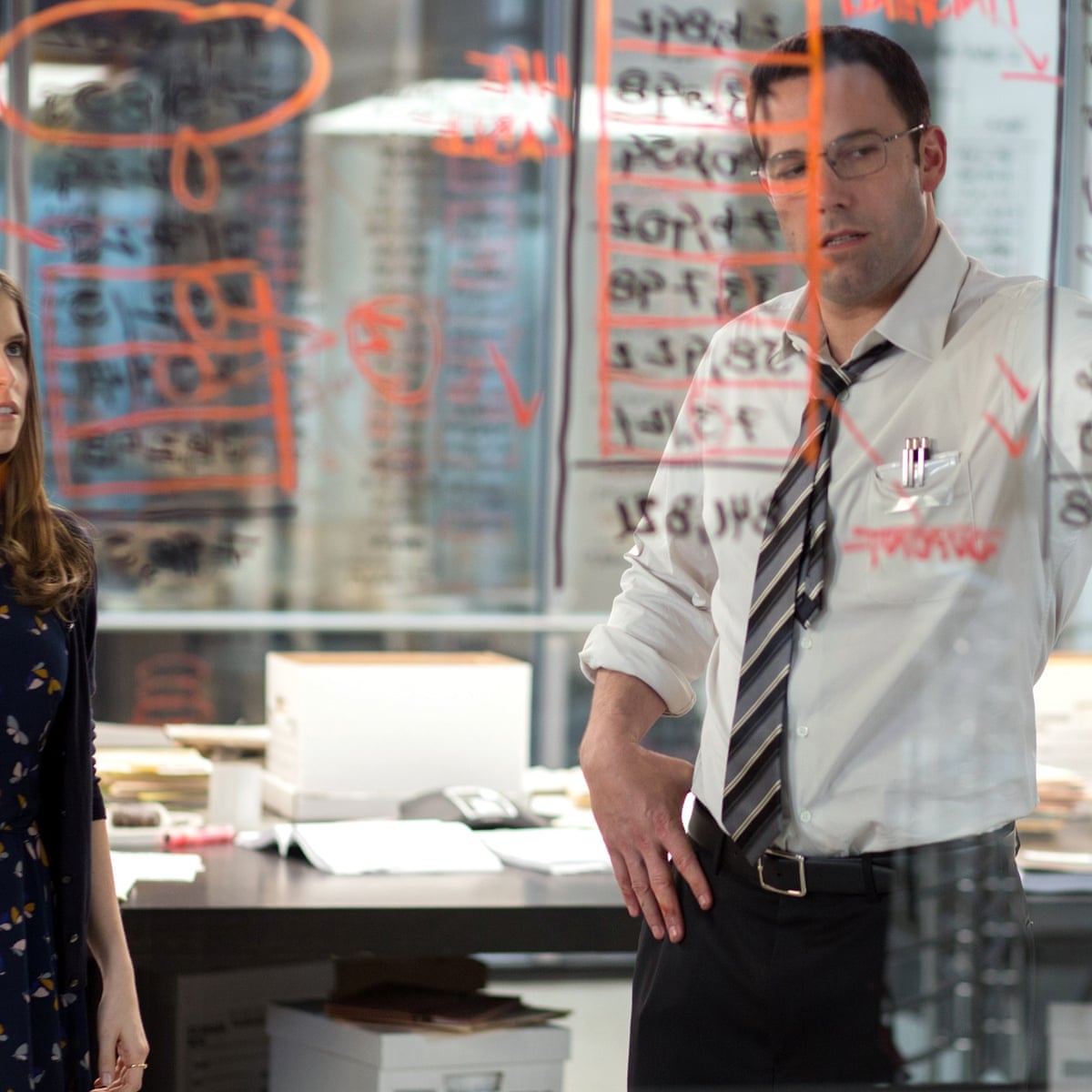
Autism on Screen- The Accountant

Greetings Earthlings! 🙂

This week I’d like to take a look at a film I’ve been meaning to write about for a while, the 2016 action thriller ‘The Accountant‘ starring Ben Affleck and Anna Kendrick.

The Accountant [DVD]

So what’s the film about?

As the name suggests, the film follows an accountant named Chris (Affleck) with high functioning autism and genius level maths skills (yawn! Can we get a new angle please Hollywood?). By day, Chris is a talented forensic accountant and expert cooker of books, but by night, he exacts violent revenge on the criminals he encounters through his work for breaking his moral code (his father put him through grueling military and martial arts training as a sort of coping mechanism/management strategy).

If you haven’t seen the film, you can watch the trailer here:


So what did I make of the depiction of autism?

It was hard to focus on the film at times as the acting was not great- Ben Affleck was basically expressionless throughout the entire film. Not sure why I’m surprised after Affleck’s pitiful take on Batman! The filming schedule for this would have coincided with Batman vs Superman so maybe he was channeling Chris instead of Batman 😛 Acting aside, this lack of emotion annoyed me. Yes, some autists struggle to express their emotions, but that does not mean that we are all emotionless robots or supercharged killing machines.

The Accountant review – Ben Affleck autism thriller doesn't add up ...

In terms of scientific accuracy, the film is a fairly bland affair. It get’s the basics relatively right with little things like separating foods, routines, stimming behaviours, social awkwardness and lack of eye contact, buuttt as with many other films, it hinges on stereotypes of savantism and mathematical genius. I did however appreciate the angle of Chris’s vigilante retribution for those that violated his moral code- a refreshing take on an autists propensity for rules/black and white thinking (albeit his response to the rule breaking was not the best…). In addition, I did find the military style induction of sensory overload through loud music, flashing lights and self injury to be an interesting new take on stimming and autism management, although a wildly extreme one!

The film however was not well received by the autistic community. The American Journal of Psychiatry for instance criticized it for not balancing clinical reality with the films action and entertainment value. Moreover, many have criticized the film for it’s links between autism and violence. Indeed, some autists can have violent outbursts during meltdowns, however, it’s the cool, calculated intent that is particularly unsettling in this inference.

All in all, The Accountant is a fairly run of the mill action movie that doesn’t deliver a significant portrayal of the autistic experience- if you really want to see Ben Affleck run around as a brooding, emotionless vigilante, you’d be better off watching Batman Vs Superman 😛

Hope you enjoyed this post dear Earthlings! 😀

Have a lovely weekend!

Aoife

Autism on Screen- X+Y

Greetings Earthlings! 😀

This week I’d like to take a look at the depiction of autism in the semi-biographical drama film ‘X+Y‘ (also known as ‘A Brilliant Young Mind‘ in some countries) starring Asa Butterfield, Rafe Spall and Sally Hawkins.

In case (like me) you have never heard of it, the film follows the story of Nathan, an autist with genius level skill in mathematics as he trains for and competes in the International Mathematical Olympiad (IMO). The interesting thing about this story is that it is based on the experiences of Maths prodigy Daniel Lightwing, who won a silver medal in the IMO back in 2006, and shows us how he found love, friendship and a sense of belonging through Maths.

You can see a trailer for the film here:

So given that the film has it’s basis in fact, how did it fare in it’s depiction of autism?

For starters, I found it hard to take the film seriously knowing from my research that for a film based on a true story, there were a number of  inaccuracies. Nathan was diagnosed with autism at a young age whereas Daniel was a teenager; his mentor was a woman but portrayed by a man in the film; Nathan’s father is killed off whereas Daniel’s is very much living, and perhaps the biggest difference being *Spoiler alert* that Nathan ran out of the IMO exam, whereas Daniel claimed the silver medal!

In terms of the portrayal of autism, I found that in general Asa Butterfield’s portrayal of autism was fairly stereotyped (poor eye contact, literal thinking, particular food preferences, problems with social skills etc.), however in reading about Daniel/watching his teenage self being interviewed, it’s hard to argue with the portrayal. Got to admit, Asa does look quite like him!

Image result for daniel lightwing"

One thing that I found particularly interesting was when another autistic character began to self harm after he did not make it onto the IMO team. This darker side of autism is often overlooked in film. We see the stereotyped struggles such as eye contact, social and sensory problems, however we rarely see an autists struggles with mental health. As I’ve discussed previously, mental health issues are very common among autists. Self injurious behaviours such as cutting can be particularly common, making the depiction of this trait in the film all the more poignant.


Image result for x+y"

At the end of the day, the real opinion that matters here is Daniel’s. When asked about the film Daniel was quoted as saying “I cried the first three times I watched it. It says things I was feeling but could not express.”

You can read more about Daniel’s experiences of Asperger’s here:

https://www.standard.co.uk/lifestyle/london-life/with-asperger-s-you-put-on-a-mask-to-pretend-you-re-normal-daniel-lightwing-on-how-the-film-of-his-10119675.html

All in all, ‘X+Y’ is worth a watch, perhaps not the most informative film about autism, but an interesting story nonetheless.

Hope you enjoyed this post dear Earthlings! 😀

Have a good weekend!

Aoife

Autism on Screen- I Am Sam

Greetings Earthlings! 😀

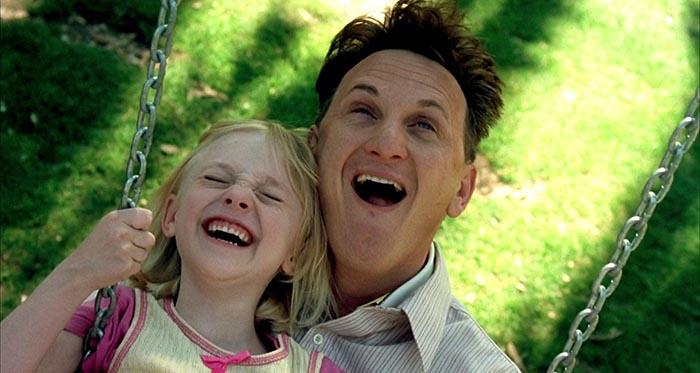
This week I’d like to discuss the portrayal of autism in the 2001 drama film ‘I Am Sam‘ starring Sean Penn, Michelle Pfeiffer and a young Dakota Fanning.

Image result for i am sam"

So what’s the film about?

The film focuses on the title character of Sam (Penn), an adult man with autism who is struggling to raise his 7 year daughter Lucy (Fanning) on his own. As Lucy’s intellectual age begins to surpass that of her father’s, social services seek to take her into care, so Sam must go to court to fight for custody.

If you haven’t seen it before, you can watch the trailer here:


https://www.youtube.com/watch?v=EROTbDCr5ag

So what did I make of the film?

Sean Penn’s acting was superb as Sam (I wouldn’t be his biggest fan, but he’s completely obscured by the character) and he even received an Oscar nod for his role. But an Oscar nomination is not always synonymous with scientifically accurate portrayals, so how did the film fare?

When it comes to researching films about autism, ‘I Am Sam‘ is rarely mentioned. His intellectual disability is not specifically labelled in the film, but much of Sam’s traits are consistent with autism- his poor coordination, repetitive behaviours, echolalia, OCD and poor eye contact.

The film itself received mixed to negative reviews, however, some critics have praised it for focusing on a “real” autist, a man who’s holding down a job, has a social life, is raising a child etc- aspects of life that are often ignored or overlooked in media portrayals of autism. As I have discussed in many previous posts, the vast majority of autists live normal lives. We’re always hearing about children with autism, but we forget that children grow up into adults with autism; adults that want jobs, relationships, children- it just might be a little bit harder for us to achieve these goals. So it’s quite refreshing that this film portrays Sam as a functioning member of society and not just another autist incapable of independent living.

All in all the film is worth a watch at least once, even if just for Sean Penn’s acting 🙂

Image result for i am sam"

Hope you enjoyed this post dear Earthlings!

Enjoy the weekend! 🙂

Aoife

Blog at WordPress.com.

Up ↑