Finding and Maintaining Employment

Greetings Earthlings! 🙂

In continuation from my blog post about autism in the workplace, this week I’m going to give some of my tips and tricks for finding and maintaining employment for autists.

Finding employment:

searching.png

Job seeking can be a daunting prospect for anyone, but for autists in particular, this can be quite the overwhelming experience. Navigating career search engines, filling out applications, preparing for interviews, coping with rejection- it’s a lot to handle.

When it comes to applying for jobs, there are a few important questions that an autist should consider:

  • Is this job a good fit for me?
  • What areas may be challenging for me in this role?
  • Is this an equal opportunities employer?

It’s important that you apply to jobs that cater to your strengths with an employer that will support both you and your needs 🙂

Top Tip: Glassdoor is an excellent online tool for job hunters. It allows you to look up different companies, read employee reviews and interview experiences, giving you invaluable insight into what life could be like for you within that company.

Next comes the dreaded interview- a real struggle for autists, but it doesn’t have to be 🙂

Fun Fact: According to career experts, 95% of interview questions can in fact be predicted and prepared for in advance! And there’s nothing we love more than predictability 😉

There are a number of organisations out there that are dedicated to advising, training and preparing people with autism for the workplace. For example, Specialisterne is an international organisation dedicated to creating jobs for people with autism through partnership with several companies in the science and technology sector. Specialisterne coaches people with autism and Asperger’s syndrome to prepare them for the workplace and additionally provides employers with training so to best support their employees.

There are also numerous career coaches and communications agencies out there which can sit you down and help you to prepare for an interview, run through mock questions, give you tips on body language etc.

Here are a few tips that I’ve found helpful to get you through an interview:

  • Preparation is Key– research the company, prepare answers to common questions, look up your interviewers on LinkedIn (don’t worry, you can use a private setting so they won’t know you’ve looked them up! 😉 ) etc. A mock interview can also be very useful. The more you prepare, the more comfortable you will feel in the interview.
  • Keep your answers relevant to the question– I know it sounds obvious, but if you’re anything like me, beware of tangents!
  • Ask for a moment to think– if a question throws you, drink some water and ask for a minute to think. It’s perfectly acceptable to ask for this. It gives you time to gather your thoughts whilst remaining in control.
  • Aoife says ‘Relax’! – Easier said than done, I know, but it was only when I began to relax in interviews that I was finally offered a job 🙂

Maintaining Employment:

work sigh.png

Congratulations-you’ve gotten through the interview stage and the job is yours! 😀 However, a number of people with autism will struggle to maintain this job. The workplace can be quite overwhelming as I’ve discussed, and we often do not receive the support we need from our employers.

So what can you do?

If you feel comfortable disclosing your diagnosis to your employer, steps can be taken to help accommodate your needs. For example, autism training can be arranged so that other members of staff can better understand and support you.

Having a work mentor or job coach to talk to and advise you about your workplace can also be helpful. This person can advise you on workplace ettiquette, social skills, interacting with co-workers and the unwritten rules of your place of work.

There are also some steps that you can take to better cope with the pressures of working life:

  • If you struggle with organization as I often do, making use of lists, diaries and Google Calendar can help you to stay on top of things
  • As I’ve said before, talk to someone about your problems with work- let it all out!
  • Take a breath- if you feel overwhelmed or a meltdown coming on, take a moment away from your workstation. Go to the bathroom, step outside the door (if possible), grab a coffee or a glass of water- do anything to distract yourself until you feel well enough to return to work 🙂
  • Try to maintain a good work- life separation. At the end of the day, we all need to leave work at work. It can be hard to switch off at the end of the day, especially for autists, so try to relax! Why not take up a hobby that will engage a different part of your brain such as art, exercise, music or gaming? Do what you have to do to unwind!
  • Take care of yourself- Keep snacks nearby, stay hydrated and get to bed early! Sleep tip– Blue light from screens interferes with the hormone that induces sleep, Melatonin. So ditch the laptop before bed; read a book instead!

Finding and maintaining employment as an autistic adult can be challenging, but remember, you have just as much to offer as any other candidate out there 🙂

bitmoji-1812259489.png

Enjoy the weekend Earthlings! 🙂

Aoife
 

Autism on Screen- Killer Diller

Greetings Earthlings! 🙂

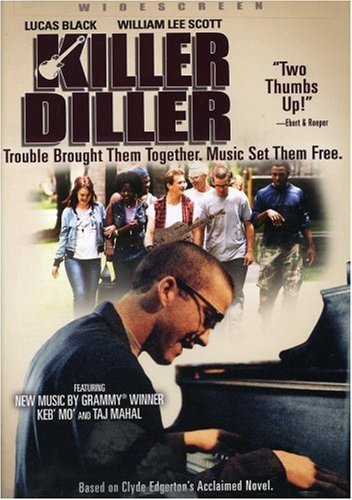
Time for another autism on screen again, this time exploring the portrayal of autism in the 2004 musical drama film ‘Killer Diller.

Image result for killer diller

The film follows Wesley, a young musician and troublemaker who is sent to live at a Christian halfway house for young offenders. Reluctantly drafted into the choir, Wesley encounters Vernon, an autistic savant with a gift for music. His captivating piano playing inspires Wesley to invite Vernon to form a blues band with the choir members and embark on a journey of music, understanding and friendship.

You can check out the trailer below (apologies for the poor quality, it’s not a very well known film- I found it very difficult to source):

So how did this film fair in terms of representation of autism?

Well, by now you all know how I feel about the over-representation of autistic savants in TV and film, so as you can imagine I was yet again disappointed to see this rare trait highlighted in another film. So let’s quickly move on from that! 😛

Much of the behaviours exhibited by Vernon were consistent with classical autism symptoms like rocking, missing social cues, inappropriate social behaviour etc.; however, as I previously found while watching ‘Cube‘, nothing felt unique about the character, Vernon was just another Hollywood carbon copy of autistic stereotypes.

Image result for killer diller 2004

In addition to this, many film scholars have noted that in films featuring autistic characters, the filmmakers choose to use autism for the purposes of redeeming the main character. This film is a prime example of this. Vernon’s presence in the film is used to redeem Wesley, who up until he meets Vernon, is selfish and wayward. However, like ‘Rain Man‘, ‘Snow Cake‘ and several other films featuring an autistic character, the protagonist is transformed following his encounter with an autist.

Thankfully in more recent years, the focus has since changed wherein autistic characters are no longer seen as secondary, but are protagonists in their own right as we have seen in ‘Atypical‘ and ‘The Good Doctor‘ (which by the way, is proving to be an excellent series as the year has moved on 🙂 )

Huzzah for Progress! 😀

All in all, this film (if you can find it) was worth a watch at least once- especially if you’re into blues music. It may not have been the greatest depiction of autism, but it’s an easy watch with some decent music to boot 🙂

Enjoy the weekend everyone! 🙂

Aoife

Broad Autism Phenotype (BAP)

Greetings Earthlings! 🙂

Today we’re going to discuss a type of autism that lies just outside the spectrum- the broad or broader autism phenotype (BAP).

Image result for what gif

What on earth is that when it’s at home?!

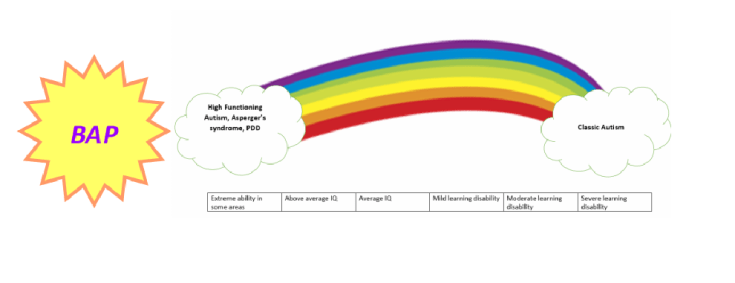
BAP is a term used to describe a wider range of individuals just beyond the spectrum who have difficulties with language, personality, and exhibit a number of social and behavioural traits at a higher level than the average neurotypical, but not so high as to be diagnosed with autism.

In other words, this means that you have “a touch of autism” or “not quite autism (NQA)”. The individual has a high number of mild traits, but not enough to interfere with daily life.

So what do we know about BAP?

bap.png

Relatively little- it doesn’t even have a Wikipedia page!

This intermediate description is most commonly associated with family members (parents, siblings, and other extended family members) of those with ASD diagnoses (14–23%), but it can also be found in the general population as well (5–9%).

Interestingly, evidence of an intermediate autism phenotype has existed since the late 1970’s (the term itself was coined in 1994), but it is only in recent years, with the expansion of the spectrum, that it has become a source of research interest for scientists seeking to understand the range of ASD’s that lie beneath the spectrum rainbow.

Broader autism phenotype

Much of the research in this area involves using the BAP to better understand autism- in particular it’s severity and genetics. By analyzing autism traits in families through the prism of BAP for example, researchers may be better able to identify the specific genes which underpin ASDs, paving the way for better therapies for autists.

Apologies for the shortness of this post dear Earthlings, but there is sadly very little information out there about BAP. Perhaps in the future there may be new research that will shed greater light on this subject 🙂

Have a good weekend everyone! 🙂

Aoife

Autism and Smell

Greetings Earthlings! 🙂

As I mentioned in last weeks post on taste sensitivity, this week we’re going to discuss sensitivity to smell in autism.

Image result for smell gif

As with other senses we have discussed, autists can be either hyposensitive or hypersensitive to odours. One autist may enter a malodorous environment without noticing anything amiss, another autist may wretch, or worse!

As a child, my nose was particularly sensitive to my environment (although judging by how I could taste the beer my friends were drinking yesterday evening from the fumes alone, this may still be the case on occasion 😛 ). Bad smells were especially trying- the smell of salads, fish, cigarette smoke, incense, even something so simple as a bag of popcorn could easily turn my stomach.

But it wasn’t all bad- this sensitivity comes with a heightened appreciation for pleasant smells too 🙂

Baking, chocolate, nice perfumes, the outdoors, the smell of metal (don’t ask me why I love this one so much- must be something to do with my taste in music! 😛 😉 )- in fact, such smells are not only a sensory sensation, but can also be used to help calm an autist.

As easily as an unpleasant smell could unsettle me, the right smell could calm me back down again as a child.  I always kept a teddy or a blanket near at hand that I could smell to help soothe and calm me and to lull me off to sleep- I couldn’t sleep without one particular teddy until I was 16!

teddy.png

^^^^My teddy was a lot more raggedy than this…😬

So why does smell affect autists so much?

Interestingly, some studies indicate that there are no differences in sensitivity to smell between autists and their neurotypical peers, however, much research points to the cortex of the brain. This region is heavily involved in smell processing, and yep, you guessed it- the autistic brain shows signs of dysfunction in this region. In fact, the pre-frontal cortex shows signs of overgrowth and excessive linkage in the neurons (just like an overloaded plug), so no wonder sensory perception is altered in autists! This region is also associated with the formation and retrieval of long term memories, which could also explain why smells are often tied to memory recall in autists (which I will explore in more detail at a later stage 🙂 ).

One study also shows that autists may not inhale smells in the same way to their neurotypical peers. Evidence suggests that autists inhale deeply and intensely for both pleasant and unpleasant smells, whereas neurotypicals will tentatively sniff in the presence of an offending odour, which could further explain differences in scent processing.

In addition to this, research suggests that alterations in smell can influence social behaviours. A recent study in fact suggest that autists cannot smell fear and that there is a reversal in their response to fear. In this study, a group of autists were calm when presented with a sample of sweat from a skydiver, whereas their neurotypical peers exhibited classic signs of fear. In contrast, their fear levels increased when presented with the sweat sample from a calm individual!

In other words, an autists social behaviour may be affected by an inability to interpret social cues carried in odours- the mind boggles!

So there we have it dear Earthlings- hope this post didn’t ‘stink’ too badly 😛 😉

bitmoji-2090425460.png

Enjoy the weekend everyone! 🙂

Aoife

Autism and Taste

Greetings Earthlings! 🙂

As we have discussed in previous posts (such as sensory issues, light sensitivity and sound sensitivity), people with autism are highly sensitive on a sensory level, so naturally, taste is no exception.

Related image

Many autists have highly sensitive taste buds wherein we find a number of flavours and foods too strong and overpowering to tolerate. This sensitivity to tastes can make life very difficult when it comes to taking medicines, food selection (which we will discuss in greater detail at a later stage) and maintaining a somewhat neutral expression when put in awkward public tasting scenarios (perhaps one of my biggest personal challenges 😛 ).

bitmoji1419645621.png

On the other hand, some autists can in fact be hyposensitive to taste, often preferring foods with stronger flavours

So what’s causing these alterations in tongue sensitivity?

The research into this aspect of autism is currently quite limited, however, some neurological studies indirectly suggest that there is evidence of taste dysfunction in autism.

Many studies have shown evidence of brainstem dysfunction in the neurodiverse brain such as hypoplasia, or under development of the facial nerve nucleus (a collection of neurons in the brainstem that innervate the face). This nerve network carries taste information from the tongue and relays it to the brain. Any dysfunction or damage to this pathway can affect a persons ability to detect tastes.

Furthermore, the ability to identify tastes and flavour perception is controlled by a complex nerve network involving several different brain regions such as the thalamus, insula/operculum, the orbitofrontal cortex (OFC) and our old friend the amygdala. Many of these regions have been implicated in autism, suggesting that dysfunctions in these regions may influence an autists taste buds.

bitmoji1029366338

Recent evidence also suggests that autists may be more sensitive to bitter tastes due to genetic mutations in the TAS2R38 taste receptor. Alterations in the TAS2R38 gene can cause autists to perceive bitter tastes differently to their neurotypical peers which could explain why our taste buds are so sensitive (and why alcohol makes me gag 😛 )

Finally, an increased sensitivity to smell also feeds into these alterations in taste which I will examine next week 🙂

Until next time Earthlings! 🙂

Aoife


Autism and Pain

Greetings Earthlings! 🙂

As I am currently recovering from the removal of my wisdom teeth (contrary to popular belief- my mouth is too small 😛 ), I’ve decided to write about pain and autism this week.

Image result for pain gif

One might imagine that autists have a higher response to physical pain owing to our sensory sensitivities, however, pain perception, as with all aspects of the spectrum, is entirely individual to the autist.

Some are hypersensitive (touching the skin or simply brushing your hair can cause pain), whereas others may in fact have very high pain thresholds. Yours truly unknowingly lived with a permanent ulcer in their mouth from an impacted wisdom tooth for a couple of years due this without batting an eyelid! I thought that was how it was supposed to look…😂😬!

oops.png

So why the polar responses to pain?

The evidence as to why this is is unclear. For many years, researchers believed that people with autism were insensitive to pain as they did not always respond to pain in the usual manner (crying, seeking comfort etc), in addition to the display of self injurious behaviours. However, more recent studies have challenged this notion indicating that people with autism show signs of hypersensitivity to pain in the brain, experiencing greater physiological responses to pain than neurotypical peers.

The autistic brain clearly demonstrates alterations in “normal” pain pathways, but is there a root explanation?

Some evidence points to genetic mutations in such genes as the Shank genes (which have  recently been implicated in a number of autistic behaviours), however, the explanation could be much simpler. As discussed in previous posts, numerous neurotransmitters are dysregulated in autism- neurotransmitters which play an important role in our perception of pain.

Evidence suggests that Dopamine in particular plays an important role in the modulation of pain perception and analgesia in the body. Many studies have linked dopamine dysregulation to autism, which could explain why pain responses vary among autists 🙂

There we have it now Earthlings! 🙂 Hope this post wasn’t too “painful” for you! 😉

Okaaaay, that was a bad one! Sorry 😛

We’ll blame that pun on my wisdom teeth! 😉

bitmoji-630449596

Enjoy the weekend everyone! 🙂

Aoife

Supporting a Child with Autism

Greetings Earthlings! 🙂

For a change today, I’d just like to write a quick post for all of the autism parents out there.

I recently received an email about special needs parenting and it got me thinking about ‘autism parents’. How they must be feeling, the difficulties they face, the struggle to understand, teach and support their child. They really should be called ‘awesome parents’- I certainly didn’t make life easy for mine! 😛

Autism is not the easiest of diagnoses for a parent to hear, but there are many simple ways that you can support your child. Granted, I’m not an autism parent, but as someone who has been on the other side of the fence, I’ll do my best to give you my top tips to support and encourage your child 🙂

bitmoji84905202.png

Educate yourself– Read, read read! Understanding is key to helping your child. A mechanic can’t help your engine if he doesn’t know how it works first.

Don’t believe everything you read–  You’ll quickly learn that one size does not fit all when it comes to autism. Each case of autism is different, every autist will have different needs and experiences to the next. The advice and experience of others can be useful, but remember to take everything with a pinch of salt.

Try to put yourself in their shoes– The world is often alien to us, we don’t always fit in or understand it’s ways. We don’t mean to act weird or meltdown and cause trouble, but oftentimes our brain has other ideas. Try to understand how we see the world before you judge us too harshly 🙂

Know their limits, but don’t limit them– This can be a challenging balance to strike. As I have discussed previously, we should endeavour to understand the capabilities of autistic children, but we must not use autism as an excuse– explanation yes, but never excuse. When we repeatedly excuse an autists behaviour, or tell them they “can’t” do something, we keep them from reaching their potential. For example, as a child, I could not seem to master the humble skip. Had my parents told me to give up due to my coordination difficulties, I would never have overcome this struggle- and would have looked pretty stupid in school shows where such simple choreography was the cornerstone of many a dance number! 😛 😉

Image result for skipping gif

Never underestimate the power of small victories– whether it’s getting your child to wear a bra, tie their shoelaces or a mastered skip, sometimes it’s the little steps that can have the greatest impact. Had I not overcome my seemingly left feet, I would not have discovered a love of dance, never danced on stage or gone out to clubs. Without this small victory I would never have gone on to help choreograph my school play or even teach dancing to kids as a teenager! The victories seem small, but they just may be the tip of the majestic iceberg lurking underneath 🙂

Accept the A-word– Acceptance is at the heart of supporting a child with autism. Without this, they can never truly fulfill their potential. There’s no use in burying your head in the sand. We won’t grow out of autism, we need to accept and grow around it.

Always remember:

Image result for autism end of the world beginning of a new one

So there you have it Earthlings- my top tips for supporting a child with autism. However, like I said, I can only speak from my experiences of autism, so here are some other helpful advice links on more specifc ways to support autistic children:

At the end of the day Earthlings, armed with a little bit of knowledge, understanding and most importantly love- there’s no better way to support your child 🙂

support

Aoife

Autism on Screen- Mercury Rising

Greetings Earthlings! 🙂

It’s been a while since I’ve done one of these, so today I would like to take a quick look at the 1998 political action film (not a genre one would immediately associate with autism)- ‘Mercury Rising‘.

Mercuryrisingposter.jpg

So how does this action film relate to autism?

In this film, the NSA has created a cryptographic super-code (Mercury) that was thought to be unbreakable by any computer in the world. However, following the release of the code in a childrens puzzle book in order to test it, autistic savant (not again!!! 😛 ) Simon easily cracks it. This simple act puts his life in danger as contract killers are sent to silence him as the NSA believe him to be a liability. FBI agent Art Jeffries, played by Bruce Willis, is assigned the difficult task of protecting Simon from these killers whilst also navigating the social and behavioural challenges associated with his autism.

You can check out a trailer for the film below:

Honestly, I found the film to be particularly tedious (not a desirable quality for an action film), and really struggled to make it through to the end. 2 hours is a loooong time for a boring film! 😛

As to the film’s portrayal of autism, you know what I’m going to say- we NEED to stop perpetuating the stereotype of the autistic savant! As I have discussed many times, this is a RARE characteristic (roughly 1 in 10 autists), and yet almost every film I’ve seen that features autism depicts this rare trait in some form or another! 😛

Give me strength!

Aside from this, whilst the film did touch on such important topics as ‘wandering’ and issues of trust (which are not always depicted where autism is considered), I just felt that this character was highly stereotyped and that autism was poorly portrayed overall and at times was a little insulting. In fact the original book that this film is based on was titled ‘Simple Simon!’😲😒

This may even perhaps be one of the worst depictions of autism on screen in my opinion.

So all in all, if you need a good sedative, or are a huge Bruce Willis fan, this film’s for you! 😛 😉

Enjoy the weekend everyone! 🙂

Aoife

Accepting your Autism Diagnosis

Greetings Earthlings! 🙂

To kick off the new year I’m going to expand a little bit on something I’ve touched on briefly in the past- coming to terms with your autism diagnosis.

As I’ve stated many times, getting my Asperger’s diagnosis was one of the best things that could have happened to me. Two little words clarified a lifetime of questioning, confusion and misunderstanding.

My entire life finally began to make sense.

bitmoji-1865562563.png

Whilst this diagnosis was indeed a welcome one (in spite of the way my diagnosis was sprung on me 😛 ), I struggled to come to terms with it for some time afterwards. As an adult, the diagnosis shouldn’t have changed anything- Asperger’s syndrome explains me, but it does not define me.

However, just because the shoe fits does not mean that you will break it in overnight.

Logically, there was no issue in being diagnosed; the emotional aspect on the other hand was much tougher.

Getting my diagnosis was like seeing myself for the first time in a mirror. It felt like I had made a revolutionary discovery, and yet  somehow, I was ill at ease. The more I read about Asperger’s, the more self conscious I became of my mannerisms and behaviours. I was hyper-aware of everything that I did.

I knew and accepted that Asperger’s didn’t define me, however, I felt compelled to define it. I talked about Asperger’s incessantly possessed by the niggling urge to explain every single thing I did for fear of being misunderstood. As a friend recently told me, she barely knew my name before I had filled her in about my diagnosis! 😂

There were times when I felt as though I were beginning to disappear behind the smokescreen of the diagnosis, constantly questioning what was me and what was just Asperger’s.

bitmoji-386840795.png

It took me over two years to learn to fully relax and embrace my diagnosis- somewhere along the way it just clicked. I no longer feel this need to go on about it. Indeed, there are times when I want to talk about it (for example in this blog), but I am also perfectly content to keep people guessing 😉

Asperger’s is a big part of my life, but it’s not the whole picture 🙂

Here’s just a couple of things that helped me on my journey towards acceptance:

  • Talk about it– Real original- I know, but if it ain’t broke don’t fix it!
  • Try CBT– Now I know that I’ve said CBT wasn’t particularly useful for me from a management perspective, buuuuuut cognitive behavioural therapy did help to increase my knowledge of autism and better understand who and why I am 🙂
  • Write it out– I know I’ve said it before, but writing can be so cathartic. It really helps to verbalize what you can’t describe, especially if you have alexithymia. My laptop is full of mini essays from deflating my overly full skull at 3am! 😛
  • Read – Whilst this may have partially fueled my hyper-analysis, it also allowed me to better understand and accept myself. The more I learned, the easier it was to accept and embrace my quirks. Just maybe steer away from some of the novelizations of autism- these don’t always paint the most realistic of pictures 😛

Learning to accept an autism diagnosis (as cheesy as it sounds) is a journey. There may be twists and turns and many a speed bump along the way, but you will one day reach your destination 🙂

distance.png

Aoife


Should I tell my Employer I Have Autism?

Greetings Earthlings! 🙂

In continuation from my previous post, I’d like to discuss a very important question for autists in the workplace: should you tell your employer that you are on the spectrum?

bitmoji148542879.png

This is a tricky one to tackle.

On the one hand, your employer can better support you and help to adjust aspects of your role to suit your needs; on the other, many employers are poorly informed about autism. As a result of this, you may be misjudged and your true potential overshadowed by the big bad ‘A’ word.

In my career, I have had both positive and negative experiences when informing my employer. One employer was highly supportive- my diagnosis was openly discussed and viewed as an asset. In another position, my abilities were overshadowed by my diagnosis. Having Asperger’s was seen as a problem, and my career was reluctantly diverted down an entirely new road (which thankfully was fruitful). As a result of this, I chose not to reveal my diagnosis to my current employer in order to allow my work to speak for itself without an autism filter.

So what should you do?

Image result for hmm

There is no right or wrong answer to this question; the answer is entirely individual. In my case, thankfully my needs are minimal (a bottle of water and some snacks go a long way towards managing my more eccentric behaviours, and the occasional cake will help distract from foot-in-mouth tendencies 😛 😉 ). I am in the lucky position where I can pass for neurotypical, however, there are many autists out there that may struggle in the workplace if not adequately supported by their employer.

Ultimately the “right” answer is what is right for you.

Assess the situation- Do you need the extra support? Would you feel more comfortable/uncomfortable if your co-workers were aware? Is this the kind of company that will support you if you choose to tell them?

At the end of the day, it’s up to you.  You are under no obligation to reveal this information if you are no comfortable doing so.

And remember- whatever your decision, it will all come right in the end. If an employer doesn’t want you, then you don’t want them.

There are much better opportunities waiting out there for you 🙂

bitmoji1293571427.png

Aoife

Blog at WordPress.com.

Up ↑