Autism 10 years on

Greetings Earthlings! 🙂

This week marks a bit of a milestone in my autism journey- the 10 year anniversary of my diagnosis. It’s mind boggling how fast these years have flown by, not to mention how much my life has changed in that time.

In September 2014, I was a complete wreck. I was suffering with social anxiety, my mental health was a mess, and I was struggling with work and the social dynamics of my workplace. I had never been so stressed in my entire life (which is saying something given that I was bullied in school) and was at breaking point. Out of nowhere, I found myself tricked into an autism assessment (kudos to my parents for that 😛 ) and my entire world flipped- but in the best possible way.

Admittedly, things were rough for the first year as I learned to adjust to this newfound knowledge, and it took an additional year to relax enough to not mention the diagnosis every 5 minutes, but my life has ultimately changed for the better. I spent my first 24 years on this earth feeling like I didn’t belong, like a wonky puzzle piece that couldn’t slot into society. Everyone misunderstood me, but I guess when I didn’t even understand myself, how could the rest of the world? Most twenty somethings will have a quarter life crisis on their journey of self discovery, but I had the ultimate one. One little word held the key that allowed me to fully embrace the person I was always meant to be.

10 years later, I barely recognize myself. I’m in a job that I enjoy, I have amazing, supportive friends, and a (very) busy social life. Looking back on my past through the lens of autism, I have become a lot kinder to my younger self, learning to laugh and channel my experiences to help others like me. I feel less self conscious of my differences, know my triggers and how to sidestep them. This has enabled me to grow in confidence to a point where I have never felt more comfortable in my own skin.

Before my diagnosis, I was always shy and introverted, but by fully understanding myself, I’ve been able to unleash my inner extrovert, comfortably smiling and chatting with strangers wherever I go. Having a name for my differences normalized my feelings and gave me ownership, allowing me to overcome my anxieties and manage my sensory issues. I have autism, but autism does not have me.

If you had told me ten years ago what this one little word would do to my life, I don’t think I would have believed you.

I find it quite hard to imagine what my life would look like now had I not received my diagnosis. I have previously discussed if parents should tell their child about their diagnosis, and while the decision depends on the individual, based on my experience I would highly recommend divulging. It was initially a tough pill to swallow, but my life is better for it.

There’s so many things I wished I knew about autism before I was diagnosed, even now I’m still learning every day, but I suppose the biggest thing was to know that I would still be me at the end of it all- just a shiny, happier model. As I’ve discussed on many occasions, while an autism diagnosis shouldn’t change anything in theory, knowledge changes everything for the autist. It’s a lot to process, and it can be hard to see beyond the label, but you will emerge from the chrysalis a fully fledged butterfly. Initially it seemed like autism weighed me down, but that was just my wings poking through ready for flight 🦋

So for those of you working through your diagnosis right now, cringey cliché that it is to say, it does get better. To quote ‘The Middle‘ by Jimmy Eat World:

“It just takes some time
Little girl, you’re in the middle of the ride
Everything, everything’ll be just fine
Everything, everything’ll be alright, alright.”
❤️

Hope you enjoyed this post dear Earthlings! 🙂

Have a lovely weekend!

Aoife

Autism in ‘Dinosaur’

Greetings Earthlings! 🙂

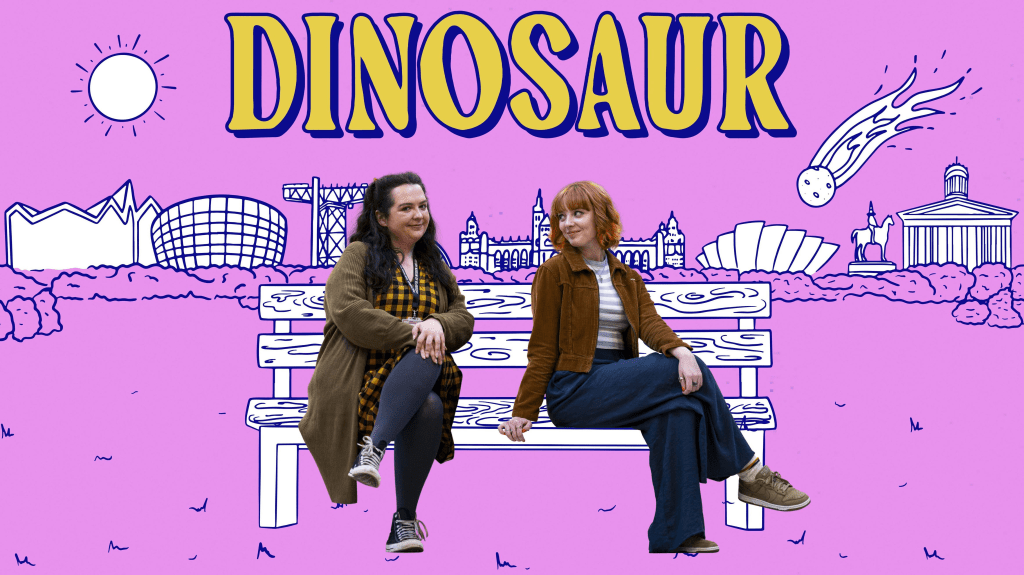
As autism awareness month comes to a close, this week I’d like to talk about autism in the new BBC Scotland sitcom Dinosaur.

So what exactly is Dinosaur about?

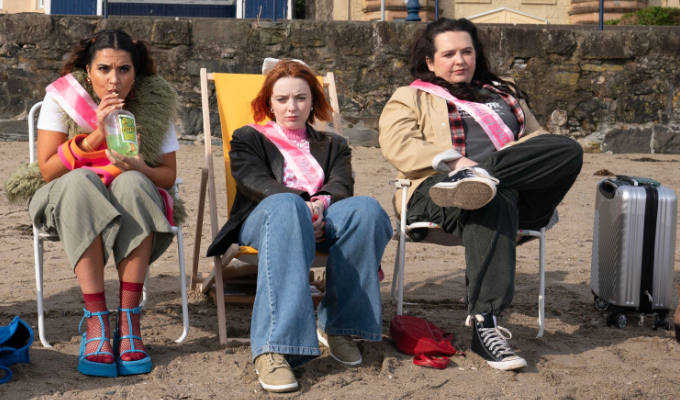
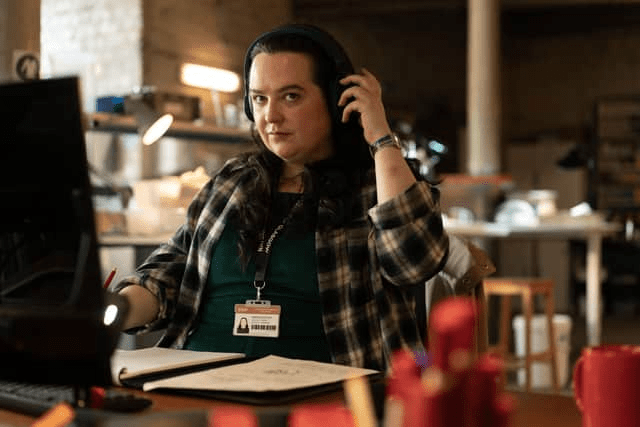
Dinosaur follows autistic palaeontologist Nina (played by autistic actress, comedian and show co-writer Ashley Storrie) who is content with her life in Glasgow, but finds her life upended by her sister’s impulsive decision to marry a man she has known for only 6 weeks. Cue hilarious chaos as Nina tries to navigate this transition whilst balancing the pressures of work, love, and being her sisters maid of honour.

You can check out a trailer for the series here:

So what did I make of it?

Aside from the fact that Nina’s dinosaur obsessions is ever so slightly stereotypical, I loved this sitcom and found it a refreshingly honest portrayal of life on the spectrum. Too often scriptwriters tend towards the hyperbolic when it comes to autism, but this show hits the mark perfectly for what life is like for a high functioning autist.

The show is highly self-aware tackling common stereotypes head on in humorous fashion. When Evie’s fiancé Ranesh starts talking about Nina’s autism, Nina pre-empts his stereotypes muttering “Don’t’ say it!” under her breath, before Ranesh describes having autism as a “superpower!” Another episode see’s Nina’s boss, (while reprimanding her for saying that Jurassic Park should have been named ‘Cretaceous Park’), tell her that they don’t want to give the impression of paleontologists as being “rigid and a bit autistic” for her to respond, “But I am autistic!” leaving her boss completely mortified.

More importantly, Nina doesn’t take herself too seriously. In one conversation with her sister (in an episode where everyone was pretending to be something they were not for Evie’s soon to be father-in-law), Nina gives Evie a pep talk telling her that she can keep up the pretense if Nina can and ” [she is] literally autistic”! This particularly made me chuckle as I have often made this remark with regard to neurotypicals claiming they aren’t able to do some basic things that I as an autist have no issues doing! 🙈

Nina’s unfiltered moments land casually without the need for exaggeration. Her stimming is subtle, like playing with her necklace, and tapping and fidgeting with her fingers when she is getting overwhelmed. No stereotypical hand flapping or head banging here! I particularly liked how they showed Nina having a meltdown when trying on bridesmaid dresses- shopping being a situation where I often get overwhelmed. The pressure from the salespeople, being under pressure for time after she arrived late, the heat of the shop, the itchy fabric, being told a dress is fabulous on her that really does not suit her etc. Nina promptly had to exit the shop and scream into a bush from the pressure of the task- a feeling I know all too well.  In a later episode they showed Nina crying and struggling to breathe during a meltdown- finally showing a realistic portrayal of how most of my meltdowns manifest.

Another positive aspect of the show was the portrayal of Nina naturally pursuing a relationship. Often these types of storylines are forced like ‘I want to have/should have a girlfriend/boyfriend, so I’m on a mission to get one and here’s how I’m going to do it’, buuuuuuut that isn’t exactly realistic. In the show, Nina starts to connect with her new barista and bravely decides to ask him out. Her autism is casually discussed, it’s not a huge issue like in other shows- she’s just a neurospicy girl going out on an awkward first date like anyone else. Moreover, the show doesn’t portray her as a sexually inept weirdo as many shows tend to. In a particularly humorous moment during a spicy confession game at her sisters hen party, Nina’s mother tells her to cover her ears, only for Nina to boldly tell her mother that she’s done it 13 times (much to her mothers surprise)! 🤣🙈 The show truly does Nina justice by showing the world that we’re just out here living our lives like everyone else; we just think a little bit differently.

While it would have been nice if Nina had had a slightly more ordinary job, especially given that it tends to be more male autists that obsess over dinosaurs than women, all in all this show is an excellent depiction of autism with some great laugh out loud moments to boot.

Hope you enjoyed this post dear Earthlings! 😊

Have a lovely weekend!

Aoife

Autism in ‘Friends’?

Greetings Earthlings! 🙂

This week I’d like to take a quick look at some likely spectrum characters in the beloved TV sitcom Friends. Now I know what you’re thinking, autism was never mentioned during the 10 season run (likely due to a lack of general awareness of the condition during the 1990s), but many people have retrospectively noticed some autistic traits in the gang.

For those of you who have been living under a rock (or are so young you have yet to see the show), the TV series follows 6 friends in their 20’s/30’s living in New York, charting their friendship and the hilarious antics they get up to. Here’s a compilation video of the iconic intro across the seasons to give you a flavour of the show:

So let’s get to autism. First up- let’s take a look at Ross Geller (David Schwimmer).

Ross displays many traits of a high functioning autist. He’s a quirky, highly strung palaeontologist (do I smell a stereotype?) who is intensely passionate about science.

He is often socially awkward, misses out on social cues and sarcasm, moves with an unusual gait, and shows signs of sensory issues (he thinks that ice-cream is too cold). Ross is also prone to impulsive decisions, obsessive tendencies, and outbursts of rage that border on meltdown-like behaviour as you can see in the clip below.

Ross’s sister Monica (played by Courtney Cox) on the other hand, while not as overtly quirky as Ross, also displays some traits. Her OCD and control issues are often centre stage in the show with many comedic moments drawing from this. She can be an obsessive overthinker and fiercely competitive, often fixating on certain topics in her pursuit of perfectionism.

Her compulsive overeating in her teen years could also be considered an autistic trait. She may not be quite as neurodivergent as her brother, but she could fall under broader autism phenotype as do many siblings of autists. The iconic dance scene between the brother-sister duo really highlights their quirkiness and possible neurodiversity in their complete blindness at how ridiculous they look.

Finally, let’s take a look at the iconic Phoebe Buffay. Portrayed by Lisa Kudrow, Phoebe is the quintessential outsider displaying many autistic and ADHD traits. Brutally honest and hyperactive, she unashamedly marches to her own beat, completely oblivious to how others perceive her (or her terrible singing). She also flaps her hands an awful lot in the show and has been known to chew her hair in earlier seasons which are signs of stimming behaviour.

Interestingly, neurodivergent individuals tend to stick together in real life (I’ve spoken to many spectrum friends and you tend to subconsciously attract each other 🤣), which could explain why 3 out of the group of 6 display autistic traits. This is perhaps the most realistic aspect of autism that the show unconsciously portrays.

Now obviously we will never know if these characters are on the spectrum, but it’s still nice to see clearly neurodivergent characters marching to the beat of their own drum for us to identify with 🙂

Hope you enjoyed this post dear Earthlings! 🙂

Have a lovely weekend!

Aoife

Learning and Autism

Greetings Earthlings! 😀

Leading on from my previous posts about autism and memory, IQ, and studying, this week I’d like to talk about the topic of autism and academic learning.

First things first, autism is NOT a learning disability. It’s a neurodevelopmental disorder which impacts how our brain develops and the rate at which it develops having an impact on motor learning, social learning, language learning etc. That being said, ASD‘s can be co-morbid with learning disabilities such as dyslexia, ADHD and dysgraphia.

Everyone’s academic learning journey is unique, especially among autists. Autists can have problems concentrating in classrooms due to sensory sensitivities, issues with social skills can make it harder to interpret teaching cues, and difficulties with executive functioning and information processing can make it hard to process new information.

I’ve always had a passion for academic learning, but even I’ve had my struggles. I struggled hugely with maths in my teenage years. Once letters came into equations I regularly had meltdowns and got overwhelmed when I couldn’t immediately make sense of the topic. One of my most enduring memories of school is throwing my maths book at the wall mid meltdown while doing my homework 🙈

Buuuuuttttt I would usually be able to make sense of the exercises once the meltdown had passed. My teachers unfortunately didn’t understand this (the joys of being undiagnosed) which often made my learning journey challenging. Had I been given the opportunity to work slowly 1:1 with maths, I would have picked topics up a lot quicker.

Everyone’s learning style is different, especially when considering the challenges of autism. There are several different learning styles:

  • Visual learning– where learners take in information better visually through pictures, graphs and mind maps to help make connections
  • Auditory learning– where learners listen to information for optimal processing
  • Verbal learning– using verbal approaches like reading out loud and mnemonic devices
  • Reading/writing learning– classical learning approach by reading and writing
  • Kinesthetic learning– physical learning by doing tasks or needing to move while learning
  • Logical learning– where logic and pattern recognition skills are used to connect concepts
  • Social/Interpersonal learning– where you learn best by observing others, and talking and communicating with a social group
  • Solitary/Intrapersonal learning– where you just need to be by yourself to learn on your own with no distractions

Sometimes a mix of learning styles can be the best approach- I have employed all of these styles at different points in my life, but I would largely fall into the visual and kinesthetic learner categories. Seeing things drawn out and or doing tasks is often the best way for me to process information. For example, I tend to take notes using coloured pens as the visual stimulation from the colours makes it easier to process and retain the information.

There are so many different ways to learn, it’s just a matter of sitting down and figuring out what kind of learning style works for you, or working out a plan to limit classroom issues like sensory challenges that can derail your learning process. Lot’s of apps and supports are available for autists these days that can help make learning a lot easier.

The key thing is to not get discouraged. No two autists are the same and it can take a while to find what learning style works for you. When I took maths and biostatistics in college, the lectures were overwhelming, but once I sat down to a tutorial session where we worked hands on with the sums in an intimate environment, I flew through the work and got excellent marks in my exams. It takes time, but once you find the right approach, learning can be a breeze 😊

Hope you enjoyed this post dear Earthlings! 🙂

Have a lovely weekend!

Aoife

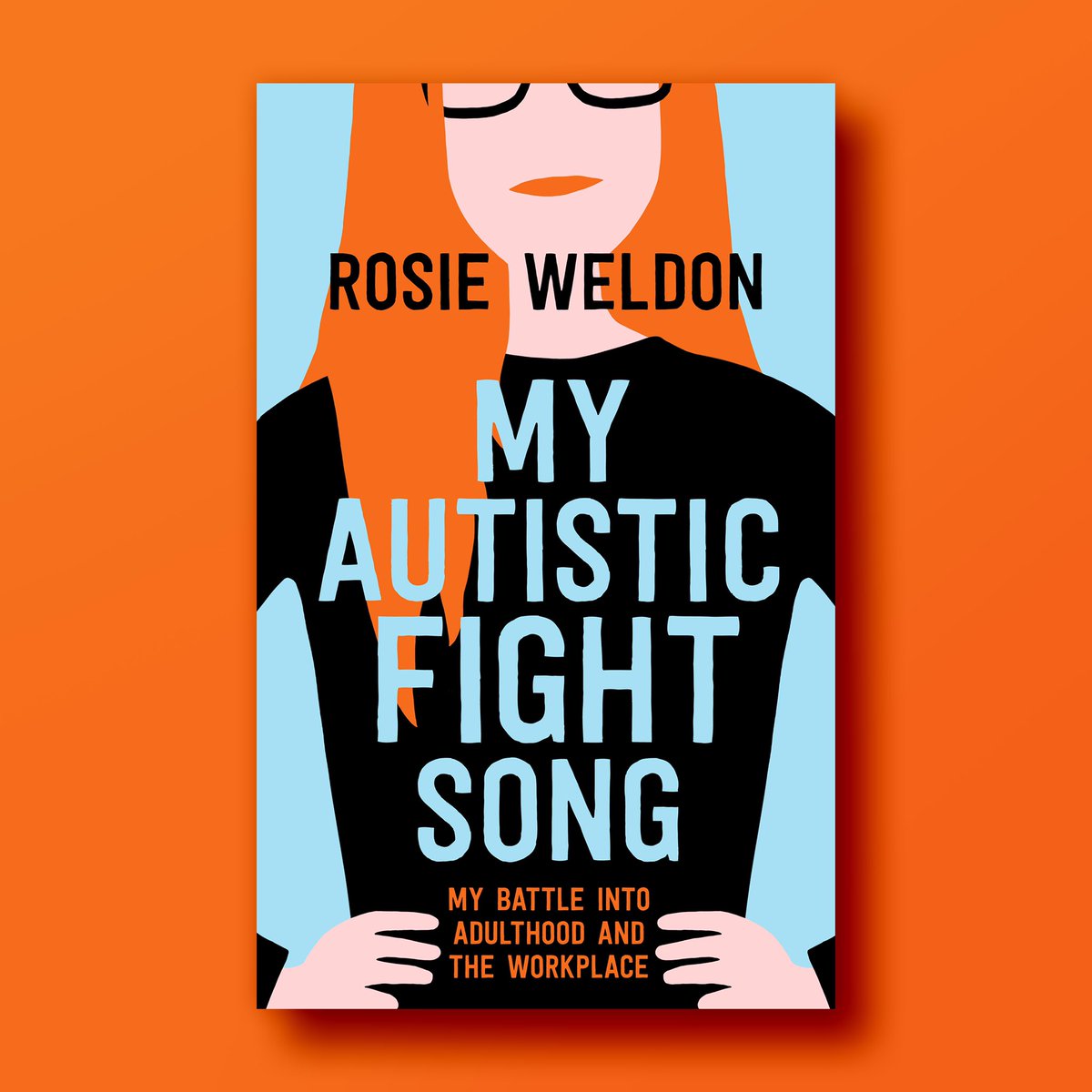
My Autistic Fight Song- Rosie Weldon

Greetings Earthlings! 😀

As many of you may know, I love to read, and so I was delighted to be offered the opportunity to read an advanced copy of ‘My Autistic Fight Song‘ by Rosie Weldon.

Image result for rosie weldon

This enticing memoir charts Rosie’s journey through higher education, her autism diagnosis and her struggles in the workplace as she strived to achieve her dream of becoming an accountant.

You can find a trailer for the book here on Rosie’s Youtube Channel:

So what did I make of the book?

Reading this book was a very interesting experience for me as someone who has yet to engage with another female autist in the flesh. I’ve read many abridged accounts and watched many interviews with other female autists, but this was the first time I really was given a raw insight into the mind of someone other than myself.

In some ways I could have been reading my own story. My experience of autism has been significantly milder, but yet many of our experiences align. Both diagnosed in our twenties, both encountered challenges with social anxiety, both found comfort in music, books and the confines of a secluded bathroom stall. It was fascinating to see into Rosie’s thought process, her thinking so often mimicking my own- growing up, it would have been nice to have come across this book to let me know that I wasn’t alone, that I wasn’t so different after all.

Autistic people and eating

Perhaps most interesting was Rosie’s experiences of the workplace. As I have discussed previously, only a small percentage of autists find full time employment. Rosie’s perseverance in the face of adversity in the workplace was inspiring. She was fiercely determined not to be another statistic, and this determination made her dream of being an accountant a reality.

It was also most heartening to see the support that Rosie received from her employers along the way- they did not see her autism as a challenge and instead found ways to work within her comfort zone, such as moving noisy machines to a different room. Having struggled in the workplace myself in a role where I was not adequately supported, I’m glad to see that not all employers see autism as a burden.

For anyone looking for an insight into the mind of a female autist, “My Autistic Fight Song” is the perfect bedtime read 🙂

Rosie also has her own blog where she talks about autism which you can check out here: https://www.rosieweldon.com/

If you’d like to read ‘My Autistic Fight Song‘, the book will be available to buy from April 1st (conveniently timed for Autism Awareness Month) 🙂

226d5b24f10442a45bd7c8e305b90729d5ea301565ee4ae633cb6cfe2401cd08.0

Hope you enjoyed this post dear Earthlings! 😀

Enjoy the weekend!

Aoife

Autism and Self Injurious Behaviors (SIBs)

Greetings Earthlings! 🙂

This week I’d like to discuss an issue that impacts roughly half of all autists at some point in their life- self injurious behaviours or SIBs.

sibs

So what are SIBs?

Self-injurious behaviours are simply behaviours where a person physically harms themselves. This can manifest as self biting, hair pulling, skin picking, hitting, head banging (not the good kind 🎸), cutting etc.

So what triggers this sort of behaviour in autists?

bitmoji522001614

Research suggests that there are a number of potential physiological and psychological reasons for self injury:

Biochemical factors- Some studies have indicated that neurotransmitters such as dopamine and serotonin may be associated with self injury. This may be particularly relevant given that these neurotransmitters are often dysregulated in autism which may predispose us to such behaviours.

Stimulation– Like stimming, some research suggests that SIB’s may be a repetitive behaviour in response to a lack of or an increase in sensory stimulation. Some autists may self harm to increase their alertness in times of low stimulation; other’s my harm in response to stress or anxiety to dampen their emotions.

Pain- Ironically, SIBs can be a response to pain as a means of reducing it. Beta endorphins (opiate like substances in the brain) may be released following self injury which can dampen the pain response. Moreover, self injury may act as a diversion from the pain that an autist may be experiencing in another region of the body, or in response to a sensory stimulus that causes pain (e.g the noise of a fire alarm may register as painful to an autist).

Communication and Frustration– Some autists may be unable to communicate an emotion that they are experiencing and may resort to SIB’s out of frustration or in a non-verbal attempt to communicate that something is wrong, boredom, excitement etc.

Control- As in the case of eating disorders, self harming may provide an autist with a sense of control when life spins out of it.


bitmoji355578372

SIB’s can be deeply distressing for a friend or parent to witness, but when mild, they are often not cause for concern. If these behaviours are escalating however, there are a number of interventions such as medications, CBT, autism support dogs (I’ve seen amazing videos of dogs calming down autists/using their paws to intervene and stop self hitting) and encouraging replacement behaviours such as wearing rubber bracelets and necklaces to divert self biting and skin picking impulses.

Hope you enjoyed this post dear Earthlings! 😀

Enjoy the weekend!

Aoife

Autism and Stress

Greetings Earthlings! 🙂

Stress- it’s hard to escape it in the modern world; even more so for an autist.

bitmoji-20190828093747

Ordinary day to day life can be very stressful to navigate. Such simple things as responding to an email, dealing with crowds, sensory triggers and social interactions can be completely overwhelming. The thought alone of these seemingly innocuous situations can be incredibly stressful for an autist.

In my case, just the mere idea of driving in Dublin city centre for example majorly stresses me out- I have genuinely told my friend that if his directions landed us there I would get my car towed and grab a taxi 😛 Any unexpected scenarios, detours or maneuvers in my car will leave me hot under the collar, praying out loud for help to keep from freaking out!

bitmoji-20180406032839

But are there any scientific reasons why autists are more predisposed to stress?

Interestingly, autists show signs of greater biological stress than their neurotypical peers. In particular, studies have indicated that autists have higher levels of stress hormones than neurotypicals. As I’ve previously discussed, stress hormones such as cortisol and adrenaline are released in response to stressful situations from the hypothalamic–pituitary–adrenal axis or HPA axis. This is a complex interconnecting network that comprises the hypothalamus, the pituitary gland and the adrenal gland (i.e. HPA) to control our response to stress- a network that is hyperactive in autists.

Following exposure to a stressful situation, stress hormone levels should return to normal, however, research has shown that stress hormone levels tend to persist in autists, which can make us more susceptible to stress related outbursts and meltdowns. In other words, we’re constantly living in a state of fight or flight.

bitmoji-35911512

Long term activation of the stress system can lead to a number of health problems such as poor mental health, weight gain, sleep issues, digestive and cardiovascular problems to name but a few- many of which are regularly comorbid with autism.

In addition to this, studies have shown that autists have higher levels of oxidative stress in the body. Oxidative stress occurs when there is an imbalance between anitoxidants and free radicals (unstable oxygen atoms that can damage cells causing illness and aging – not so fun fact, free radicals are thought to contribute to hair greying) in our bodies. Several studies have indicated that antioxidant enzyme levels that regulate free radicals in the body may be altered in autists. As such, oxidative stress has been linked to the appearance of autistic symptoms such as language delay in previous studies.

In addition, as with prolonged exposure to stress hormones, oxidative stress may also contribute to the development of cardiovascular disease and mental health problems such as depression. Worryingly, heart disease and suicide are among the leading causes of mortality for autists, with studies indicating that the average autist lives 16 years less than their neurotypical peers! 😲  In addition to this, research suggests that psychological stress may worsen the symptoms of ASDs.

Therefore, as for everyone, it’s very important for an autist to find ways to manage their stress levels for both their long term physical and mental health.

Hope you enjoyed this post dear Earthlings! 🙂

Have a lovely weekend!

Aoife

Autism and Mental Health

Greetings Earthlings! 🙂

Did you know– autistic children have higher levels of depressive symptoms and are 28 times more likely to have thoughts of suicide than their neurotypical counterparts? 😲

bitmoji1256098968In recent years our awareness of and willingness to tackle mental health issues has increased significantly, however, the autistic community is often forgotten in our discussions.
Mental health issues such as OCD, anxiety, depression, eating disorders, ADD, psychosis, personality disorders and bipolar disorder are frequently co-morbid with ASD diagnoses, but aside from OCD and anxiety, you will rarely hear about these other issues in relation to autism. In fact, such mental health issues can even obscure ASD diagnoses in higher functioning autists as clinicians often diagnose the co-morbid condition without seeing the underlying ASD.

This is a particularly big issue for women on the spectrum as experts have found that we tend to exhibit greater depressive symptoms and higher anxiety levels than our male counterparts as we tend to internalize and ‘mask‘ our struggles. Moreover due to differences between male and female presentation of ASD’s and male bias in the development of the diagnostic criteria, women with autism are often misdiagnosed as having mental health issues, but the root ASD continues to evade.

bitmoji-20190226102522

But are there any scientific reasons why mental health issues are so prevalent among autists?

A recently published study has suggested that perhaps the gut may influence an autists mental health. As gastrointestinal issues are often co-morbid with an ASD diagnosis, and as the microbes that live in the gut can have an influence on the brain and behaviours, it has been proposed that perhaps a “dysbiosis” or imbalance in gut microbes may have an influence on an autists mental health 😲

Interestingly studies have also identified an overlap between the genes that cause schizophrenia, bipolar disorder and autism wherein certain points on these genes encode proteins that are involved in the formation and strength of synapses (which act as chemical bridges between neurons) suggesting that these disorders may act through a similar neurological pathway. Moreover, dysregulation of neurotransmitters (biochemical messengers in the brain) has also been implicated in depression, anxiety, bipolar disorder, ADHD and autism (as we have discussed in multiple previous posts) indicating further neurological overlaps.

In short, it seems that the biological basis of both autism and mental health issues are intertwined, which could explain why so often the two walk hand in hand.

bitmoji-20190226101111

Hope you enjoyed this post dear Earthlings! 🙂

Until next time!

Aoife


Blog at WordPress.com.

Up ↑