Autism in Books: Diary of a Young Naturalist

Greetings Earthlings! 🙂

As we have just celebrated St. Patrick’s Day here in Ireland, this week I’d like to review a book by a young Irish author- Diary of a Young Naturalist by Dara McAnulty.
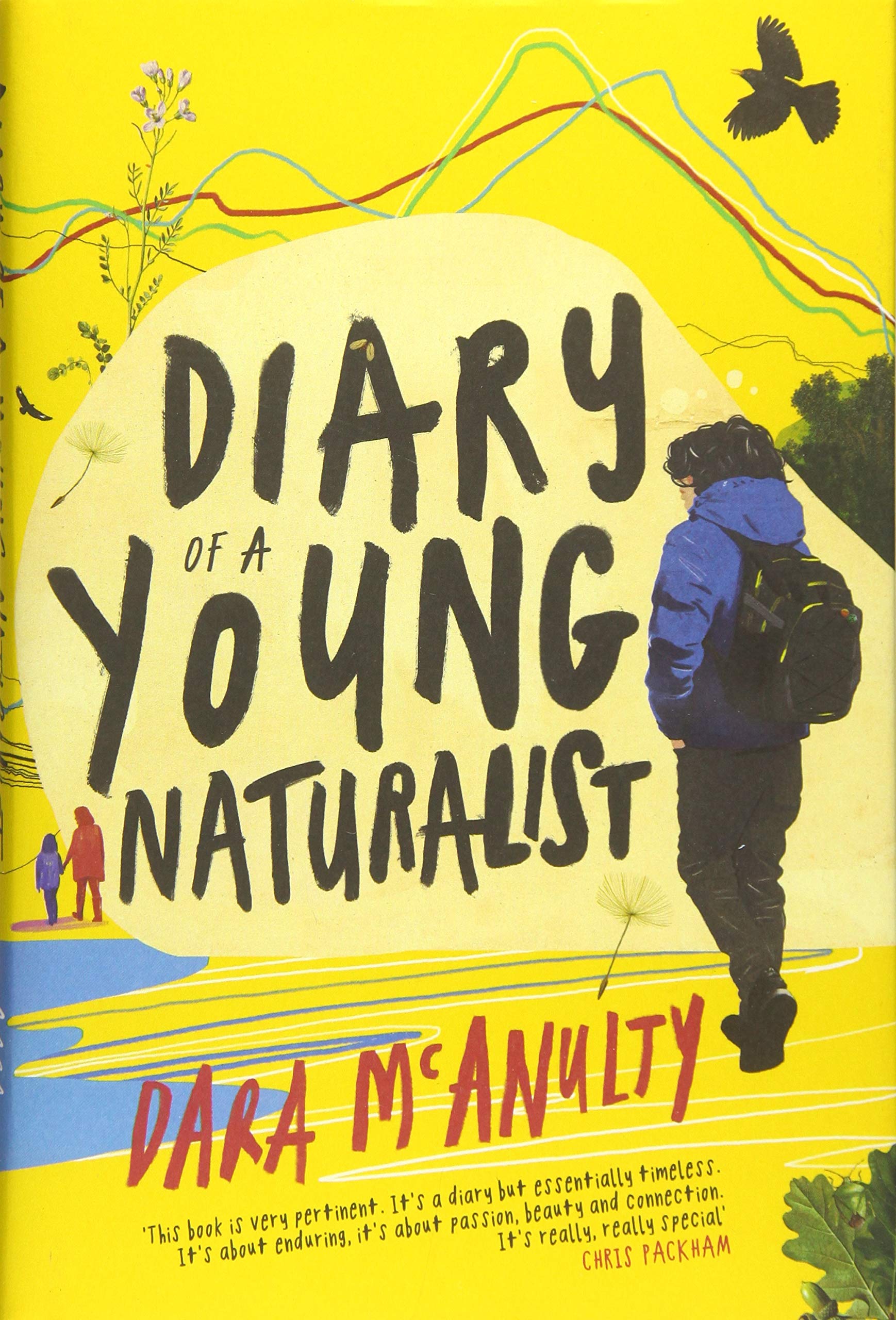
Diary of a Young Naturalist: WINNER OF THE 2020 WAINWRIGHT PRIZE FOR NATURE  WRITING: Amazon.co.uk: McAnulty, Dara: 9781908213792: Books

Dara is a 16 year old autistic naturalist and author who wrote ‘Diary of A Naturalist‘ to chronicle his fourteenth year on this planet. In the book, Dara gives us beautiful insight into his intense connection to nature and how it provides him with an escape to cope with his autism. The book has won numerous literary awards, making Dara the youngest recipient of the Wainwright prize for nature writing and the RSPB (Royal Society for the Protection of Birds) medal in the UK.

Here’s a video of Dara discussing his experience of how nature helps him manage his autism:

So what did I make of the book?

The book is beautifully written, powerfully evoking vivid imagery of the Northern Irish landscape and it’s local wildlife where Dara lives with his family. You really feel Dara’s intense passion for the natural world through his writing whilst giving us an insight into his everyday experiences of autism. Dara bravely tells us about his struggles with bullying, sensory overload and mental health showing a maturity way beyond his 16 years. Autists so often struggle to describe their emotions (as many of us have alexithymia), it’s a real privilege to have such an intimate insight into Dara’s mind.

Perhaps one of the most powerful aspects of the book for me personally, although small, was Dara’s account of his struggles with change and his mental turmoil as his family moved to a different part of Northern Ireland. I experienced a similar situation when I was 11 after selling my childhood home. We only relocated a few miles down the road (to a new house that was designed in a near identical layout to our previous house), but the change was devastating to my mental health. I always felt ridiculous that something seemingly so small could have such an effect on me, but it’s comforting to know that I’m not alone in this experience.

May be an image of 1 person and book

All in all, this book is a must read for anyone who is passionate about the natural world and conservationism 🙂

Hope you enjoyed this post dear Earthlings! 🙂

Have a lovely weekend!

Aoife
Autism and MDMA/Ecstasy

Greetings Earthlings! 🙂

Leading on from my previous post about autism and CBD, this week I’d like to explore another drug that is being researched in the treatment of autism- MDMA, the active ingredient in Ecstasy.

Yes, you’ve heard me correctly, the psychoactive drug MDMA is indeed being explored as a treatment option for autists!

So how can a recreational party drug help people with autism?

First synthesized for use in psychotherapy by Merck in the 1910’s, MDMA is the active ingredient in the street drug ecstasy and is thought to improve anxiety, sensory perception and sociability in those who take it. Many autists who have taken the drug recreationally have reported feeling more at ease in their body and increased empathy.

So how does the drug work?

MDMA increases release of neurotransmitters such as serotonin, noradrenaline and dopamine in the brain- neurotransmitters that are dysregulated in the autistic brain. In addition, MDMA is also thought to boost the hormones oxytocin and vasopressin the body which are also implicated in autistic symptoms. These hormones and neurotransmitters are heavily involved in anxiety and social behaviours, so targeting these makes pharmacological sense for autists.

That’s fine in theory, but does it work?

A pilot study (a small scale preliminary study) was conducted in 2016 to compare the impact of MDMA assisted psychotherapy on anxiety levels in autists versus psychotherapy alone. The study found that social anxiety significantly reduced in the group that received MDMA, a positive change that occurred rapidly and show signs of long term duration. This was however only a small pilot study and studies are ongoing with larger cohorts.

The drug does not currently have any legally approved medical uses, but if these clinical trials prove successful, this may change in the coming years.

In case you’re getting worried, the street drug itself is not being explored- ecstasy does not contain enough MDMA for therapeutic benefit, and it is often combined with other substances such as methamphetamine which make long-term use highly addictive and damaging to overall health. However, long-term use of MDMA does hold similar safety caveats such as sleep disturbances, depression, heart disease, decreased cognitive functioning and concentration so further research is required.

Nearly half of people who regularly consume ecstasy have tested their drugs

Hope you enjoyed this post dear Earthlings! 😀

Have a lovely weekend!

Aoife

Autism in ‘The Imitation Game’

Greetings Earthlings! 🙂

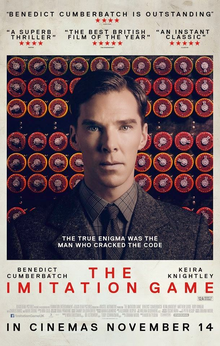
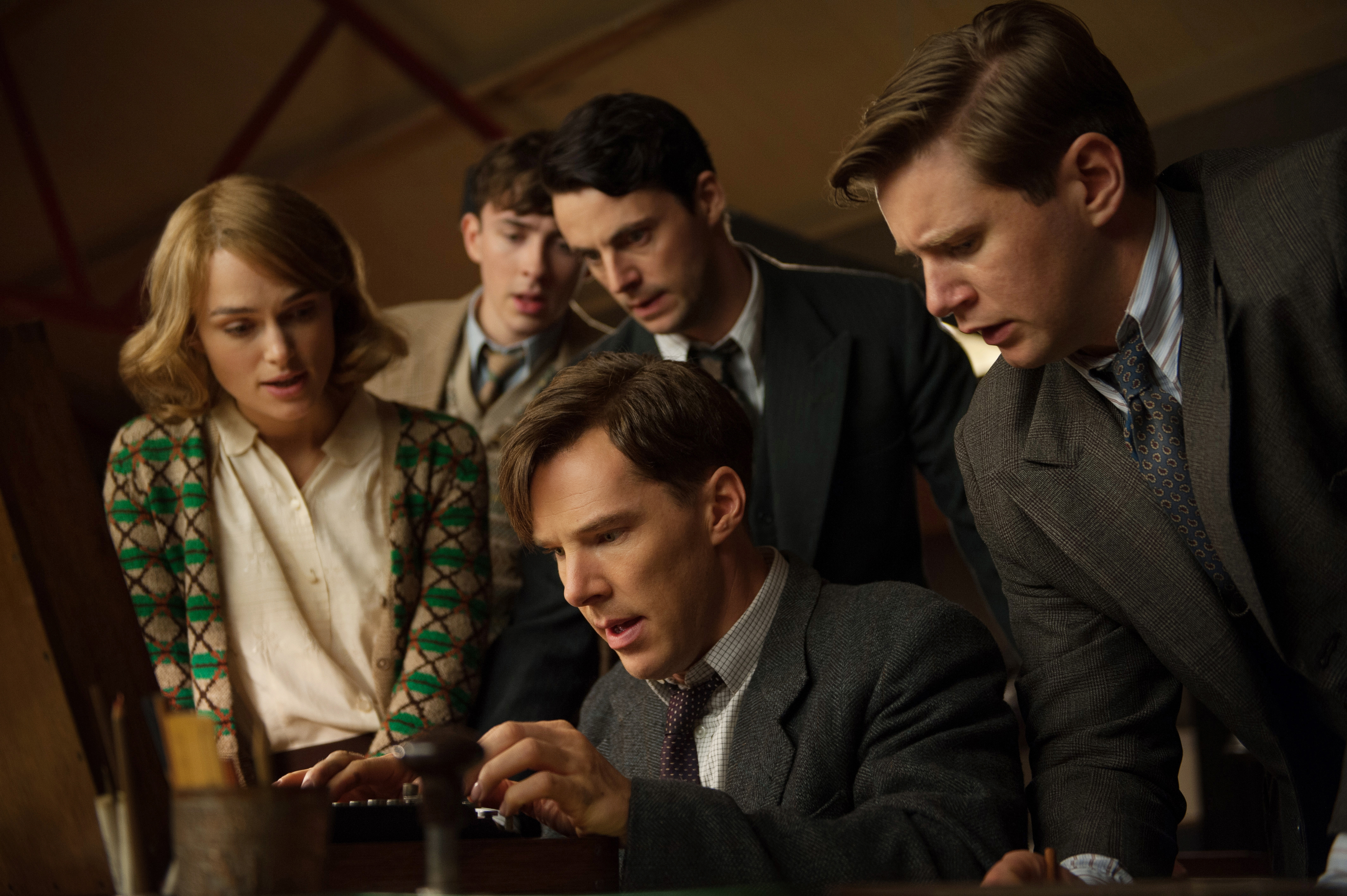
This week I’d like to have a look at the depiction of autism in the 2014 historical drama ‘The Imitation Game‘ starring Benedict Cumberbatch and Keira Knightley.

The Imitation Game (2014).png

So what’s the film about?

Based on a true story, ‘The Imitation Game‘ follows computer scientist and mathematician Alan Turing during World War II as he works together with a group of code breakers to decrypt the German cipher machine Enigma, successfully intercepting key messages for British Intelligence. In designing his own computer (the Turing Machine) to decrypt the messages, Turing’s efforts allowed the allies to win a number of key battles in the war, with experts estimating that the war was shortened by as many as 2 years saving 14 million lives.

A trailer for the film can be found here:

Now this film isn’t strictly about autism, but as Alan Turing is widely believed by scholars to have had Asperger’s syndrome, it’s worth looking into the portrayal of Turing on the big screen.

So how did ‘The Imitation Game‘ fare?

In my opinion, I found Cumberbatch’s characterization of Turing to be very convincing of a man with Asperger’s syndrome- a blunt, literal, socially awkward character, with poor eye contact and a tendency towards unusual verbose language (although I will admit that these are once again, highly stereotyped autistic traits). It helps that Benedict Cumberbatch is no stranger to autism- for his turn in Danny Boyle’s Frankentein, Cumberbatch did a lot of research about autism and met with many individuals on the spectrum, his experiences of which would likely have influenced his portrayal of Alan Turing.

The True Story of The Imitation Game | Time

On the other hand, Turing’s intellect does further perpetuate the stereotype of the autistic genius, however, as in the case of ‘Mozart and the Whale‘ (also based on a true story), it’s hard to downplay a historical figure that is in fact a genuine genius 😛 We just need to get Hollywood on board with showing us a more diverse range of autistic characters in fiction films 😉

Interestingly, historians have criticized the film’s depiction of Turing as the autistic traits depicted do not align with Turing’s adult personality. Turing has been described as quite sociable and friendly with a good sense of humour, a man who did not have issues working with others- so it would appear that the filmmakers took some liberty with the facts in an attempt to convey that Turing was likely on the spectrum. Perhaps a more subtle portrayal of Turing’s autistic traits would have led to a more accurate portrayal of an alleged real life autist.

All in all, it’s a really interesting biopic and worth a watch to while away the lock-down blues 🙂

Hope you enjoyed this post dear Earthlings!

Have a lovely weekend!

Aoife

Autism in The Rosie Result

Greetings Earthlings! 🙂

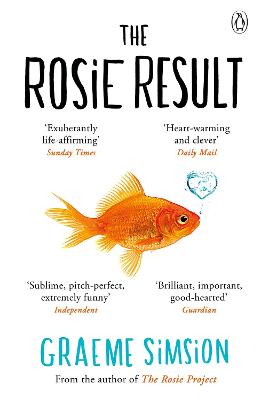
This week I’d like to conclude my review of the Rosie trilogy by discussing autism in the book ‘The Rosie Result‘ by Graeme Simsion.

The Rosie Result by Graeme Simsion | Waterstones

So what is the book about?

The third book in the series picks up with Don and Rosie several years after ‘The Rosie Effect‘ as they prepare to move back from New York to Australia with their son Hudson. Hudson naturally shares many of his fathers quirks, and following his enrollment at a new school, the teachers are quick to recommend him for an autism assessment. Determined that his son will not be disadvantaged or pigeonholed by such a diagnosis, Don takes a sabbatical from his career as a geneticist so that he can devote his time to Hudson and impart on him the many coping mechanisms that he himself has used to “fit in” (aka ‘The Hudson Project’).

Here’s a fun little trailer for the book:

So how did this book compare with the others in the series in it’s portrayal of autism?

I really enjoyed the book, however, many ranked this book as their least favourite, with some even criticizing it for portraying autistic characters as “caricatures” of autism. For the first time in the trilogy, the subject of autism is tackled head on, and to an extent I would have to agree with this summation of the books portrayal of autism. There are several autistic characters in the book, and indeed many of them are quite stereotypically nerdy, Sheldon-Cooper-esque types. Hudson is indeed cut from the same cloth as his father, and naturally has many of the same classic symptoms of Asperger’s Syndrome, such as his aversion to change, fondness for routine, niche specialist interests, sensory sensitivities etc. Granted, as Don’s son you would expect similarities, but as autism is unique to the individual, it would have been nice to add a different twist to Hudson’s traits.

The Rosie Result by Graeme Simsion | Hilarious, Rosie, Author

Regardless of this, it was a highly entertaining read and I would highly recommend it as a lockdown distraction. Yes, the character’s are stereotyped, but this book does challenge our perceptions of autists in a lighthearted humorous manner- a refreshing change from the doom and gloom that is often depicted around autism in popular culture 🙂

Hope you enjoyed this post dear Earthlings! 🙂

Have a lovely weekend!

Aoife

Autism and Epilepsy

Greetings Earthlings! 🙂

Following on from last weeks post about CBD/medical marijuana and autism, this week I’d like to take a closer look at epilepsy, a neurological condition that is often co-morbid with autism. In fact, some reports suggest that as many as half of people with autism also suffer with some form of epilepsy! 😲

So what exactly is epilepsy?

Epilepsy is a neurological condition caused by abnormal electrical activity along the neurons in the cortex of the brain. In the brain, neurons are usually activated in order along the nerve as messages travel from one point to another- in other words, only one nerve cell at a time is activated. Think of nerve cells like a chain of people passing a note along- only one person will hold the note at a given time. During an epileptic seizure however, the nerves fire excessively and abnormally all at the same time. The exact mechanism is unclear, but evidence suggests that changes in the membrane of nerve cells or dysfunction in inhibitory brain cells may cause symptoms.

Here’s a handy video from ‘The Doctors‘ that talks through some of the common types of seizures:

But how is it linked with autism?

Researchers are unclear as of yet if epilepsy is a consequence of autism or a contributory factor in developing it, however, both autism and epilepsy share common genetic roots. Some studies have found that there is a lot of overlap between the genes implicated in both conditions, where mutations in these genes (such as SCN2A and HNRNPU genes) give rise to symptoms.

The main theory behind their overlap is that they stem from similar biological mechanisms wherein both conditions are caused by alterations and imbalances in excitation and inhibition of nerve activity in the brain.

If you want to do some more reading about how epilepsy manifests in autism and how to manage it, here’s a useful link: https://www.epilepsy.ie/content/epilepsy-and-autism

873 Epilepsy Illustrations, Royalty-Free Vector Graphics & Clip Art - iStock

Hope you enjoyed this post dear Earthlings!

Have a lovely weekend,

Aoife

Autism on Screen- Backstreet Dreams

Greetings Earthlings! 🙂

This week I’d like to talk about the representation of autism in the 1990 drama film ‘Backstreet Dreams‘ starring a young Brookie Shields and Jason O’Malley.

BackstreetDreams1990.png

So what’s the film about?

The story follows a young hoodlum named Dean as he navigates fatherhood. Things become complicated when Dean’s son Shane get’s diagnosed with autism, causing his marriage to fall apart, and making Dean a single father. With the help of Shane’s therapist Stevie, Dean forms a connection with his son, finding the strength to leave his backstreet activities behind him.

You can check out a trailer for the film here:

So how did this film fare in it’s portrayal of autism?

Filmed in 1990, this was one of the earlier film portrayals of autism, and as such is very stereotyped in the autistic traits discussed. There’s a lot of mono-tonal speech, lack of eye contact, repetitive behaviours and stimming so nothing really out of the ordinary in this film. That being said, for a child actor in a role this young, it’s tricky to accurately depict the realities of autism unless the actor is themselves autistic. The story also tended to focus more on the impact of autism for Dean rather than Shane, which further distracted from the issue.

Cineplex.com | Movie

On the other hand, it was heartening to see the impact that appropriate interventions and support were having on Shane’s development, something that wasn’t always highlighted in these early films featuring autism. Most early films focus on accepting autism or how burdensome the condition can be, but this film showed a turning point in how it’s not all doom and gloom, and how proper interventions can really improve symptoms and outcomes for autists.

All in all, it was a fairly poor offering both in terms of autism and cinema, but by all means give it a go if you think you might like it!

Hope you enjoyed this post dear Earthlings! 🙂

Have a lovely weekend!

Aoife

Autism in ‘The Rosie Effect’

Greetings Earthlings! 🙂

True to my word, this week I’m going to discuss the representation of autism in the sequel to ‘The Rosie Project‘, the 2014 novel ‘The Rosie Effect‘ by Graeme Simsion.

So what’s the sequel about?

The Rosie Effect‘ picks up where we left Rosie and Don, now a year into marital bliss, having moved to New York for Rosie’s studies. Having found love and marriage, Don now faces an impending new edition to his family. The story focuses in on Don on his journey towards fatherhood (lovingly referred to as “The Baby Project”) as he tries to come to terms with this massive change to his life in his own unique way.

You can check out an interview with Graeme talking about the about the sequel here:

So how does the sequel fare in it’s representation of autism?

Similar to it’s predecessor, the book continues to deliver in it’s portrayal of autism, focusing in the minutia of the condition through Don’s everyday life in his quirks, routines, mind blindness and blunt manner. Whilst again, Don does not identify as autistic/is not diagnosed as such in the book, there is a heavier, less subtle inference that Don has Asperger’s Syndrome from those around him.

This book is particularly interesting in that it focuses on the impact of married life and impending fatherhood for Don, aspects of life that are often overlooked when talking about autists. Too often in fictional accounts of autism (not to mention the real world) do we focus on the “disability” and not on the person, and so the world rarely sees that adult autists can live “normal” and happy lives.

What I enjoyed most about the book however, was that through the first person narrative, we really got an insight into the workings of Don’s mind, illustrating how often autists intentions are misconstrued, however noble. You get to see his complete thought process, showing us a character who is kind and compassionate, and watch in horror as those around him pick him up completely wrong. This really resonated with me, as like Don, all too often the world misunderstands my way of thinking, oftentimes with disastrous consequences 😞

Fun Fact– I’ve recently discovered that there’s an official Twitter account (see below) for Don tweeting out amusing Don-isms, so if you’ve read the books I’d highly recommend following him! 🙂

Hope you enjoyed this post dear Earthlings- I highly recommend this book, it’s a great way to pass those second lockdown hours 🙂

Have a lovely weekend!

Aoife

Autism and Ageing

Greetings Earthlings! 🙂

As I am approaching a new decade in the coming days (eep!), this week I’d like to explore the topic of autism and ageing.

For the most part when talking or reading about autism, children with autism are the focus, but what happens when the child grows up? Autism is a lifelong condition, it doesn’t just magically go away once you’ve turned 18! Sadly, it is around this time that many services are taken away from autists and we “age out” of the system.

So what happens now? What do we know about ageing and autism?

As autism is still a relatively young diagnosis, there is limited data about about the impact ageing has on an autist. The first autists were diagnosed in the 1940’s, so the long term data is only now starting to emerge. So what does it indicate?

The data so far is a little bit mixed about outcomes for autistic adults. Some studies indicate that autism improves over time, but many of these have focused on outcomes for younger autists, all of whom were diagnosed and received interventions during their developing years.

Other studies indicate that autism in fact get’s worse with age where features such as communication, flexible thinking and social awkwardness become more severe over time. This study however focused purely on adults with autism, most of whom received their diagnoses later in life, so it’s hard to predict if their outcomes would have improved with age had they received support and useful interventions at an earlier age.

These studies also fail to take into the account the outcomes of the “lost generation” of autistic adults in the world, walking through life as I did, knowing something wasn’t quite right about me, but unable to put my finger on it.

Speaking from my own experience of autism over the last 30 years, my outcomes have improved dramatically over time. In particular, things have most improved in the years since receiving my diagnosis, as I now finally understand myself, and have been able to adjust my lifestyle accordingly 🙂

On a slightly more morbid note, recent studies have indicated that autists have a shorter life expectancy than neurotypicals (18 years younger!😱 ), as we are at higher risk for accidents, cancers, diabetes, cardiovascular disease and mental health issues!

However, the risk may be indirect correlating to our tendency towards maladaptive behaviours and lifestyles, so I wouldn’t worry too much about it if you’re keeping on top of your health and fitness 🙂

Finally, age has also been implicated as a factor in the risk of developing autism. Multiple studies have shown that there is a correlation between parental age and autistic risk i.e the older you are, the greater the risk that your child may be autistic.

I wouldn’t worry too much about this though- we’re not so bad 😛 🙃

Hope you enjoyed this post dear Earthlings! 🙂

Have a lovely weekend!

Aoife
Autism and Temperature

Greetings Earthlings! 🙂

With the summer drawing to a close, this week I’d like to talk about thermosensitivity and autism.

As I’ve discussed on multiple occasions, autists’ are very sensitive to sensory stimuli, so it should come as no surprise that autists have different reactions to temperature versus their neurotypical peers.

temperature

In my experience, I have found that I can be sensitive to higher or lower than average temperatures. I’m a bit like Goldilocks- I don’t like to be too hot, don’t like to be too cold, but I do like a nice moderate temperature (which is why Ireland suits me so well I suppose!😂). If the temperature starts to drift in either direction away from my comfort zone, I tend to get quite irritable and my masking abilities are impacted by the distracting temperature change. I may have gotten some weird looks from some girls a few rows in front of me at a Paramore concert once as my voice started to get higher, shout-y and more strangled from the frustration of sitting beneath a freezing vent while waiting on the band 😬

237eb9d07b82e4ddea0b143c18561588343f6945c9b97bdc0da155199b63e925.0

I’m also more likely to have a meltdown if other buttons are pushed while dealing with temperature fluctuations, particularly where hotter temperatures are concerned-needless to say, I’m not a fan of sun holidays and dread to think what menopause may bring for me in the future! 😛

83020e285301a3c3c9750c32f56b06635018bc9c36b14df54bd6fbc1458660fa.0

I’m even quite picky when it comes to the temperature of food, being unable to stomach some foods under certain temperatures. For example, I’m a real carnivore, but if the meat is cold I can’t stomach it; similarly, hot drinks are an uncomfortable sensory experience, so even though I like the taste of hot chocolate, I won’t drink it!
Like me, many autists are quite thermosensitive, and find fluctuations in their surrounding temperature to be an overwhelming experience. On the other hand, several autists have also reported temperature insensitivity or an indifference to thermal stimuli.

temp

So what has the science to say?

The literature is a little contradictory when it comes to thermosensitivity. A 2015 study found that children with autism had a lower perceptual threshold for detection of hot and cold temperatures, indicating decreased temperature sensitivity and perception in certain brain regions. This was thought to be related to cognitive impairments and deficits in attention, so it could be that some autists are more distracted by other stimuli to notice temperature fluctuations. However, a more recent 2019 study found that there appeared to be no differences in temperature perception between autists and neurotypicals, concluding that temperature perception was entirely individual to the autist- which makes a lot of sense given the vastness of the spectrum.

On another scientific note entirely, research suggests that autistic behaviours are positively impacted by elevated body temperature. Multiple studies have noted that when an autist has a fever, many of their negative behaviours (such as irritability, hyperactivity, repetitive behaviours etc.) improve, but return to normal post-recovery. The reason for this remains unclear, however, one such theory cites the impact of temperature on neural circuits where it can either enhance or suppress brain activity in certain regions. This seems quite likely given that autists brains have an excess number of brain connections and increased neurochemical activity compared with neurotypicals, factors which heavily contribute to autistic behaviours. Brain activity might also be impacted by certain chemicals produced by our immune system to fight infection during a fever.

Perhaps it might be worth exploring the severity of autism between autists who live in hotter or colder climates to see if an increase in surrounding temperature could help manage autistic symptoms.

All in all it would seem that temperature response, like autistic traits, is entirely individual to the autist 🙂

Hope you enjoyed this post dear Earthlings! 🙂

Have a lovely weekend!

Aoife
Autism in ‘The Rosie Project’

Greetings Earthlings! 🙂

This week I’d like to talk about a book that was recommended to me by several people around the time of my diagnosis (most notably by my grandmother, the name pressed into my hand on a folded piece of notepaper as if my diagnosis were a state secret!😂)- Graeme Simsion’s ‘The Rosie Project.’

You reading group: The Rosie Project by Graeme Simsion | Daily ...

The Rosie Project‘ tells the story of Don Tillman, a genetics professor that struggles with social interaction, who creates a questionnaire to determine the suitability of potential female romantic interests (something that he calls ‘The Wife Project’). In the process, he meets Rosie, a completely “unsuitable” candidate with whom he strikes up a friendship, helping her to track down her biological father (“The Father Project”), and falling in love along the way.

Fun fact about the book- a former colleague of the author did in fact create a “Wife Project” questionnaire just like Don (however, as far as he knows this worker was never diagnosed as autistic)!

You can find a trailer of sorts from the author here where he talks about the book and the challenges of translating it for other countries:


It’s an endearing, unconventional love story, but how does it’s depiction of autism fare?

Unlike ‘The Curious Incident of the Dog in the Night-Time‘, the book was never explicitly linked to autism in the blurbs, however, many agree that Don is on the spectrum. His logical thinking, strict routines, social awkwardness, his intellect (here we go again 🙄) and struggles with emotions are highly indicative of Asperger’s syndrome, albeit somewhat stereotyped traits. Moreover, Asperger’s and it’s symptoms are directly discussed by Don multiple times throughout the book, but Don never explicitly reveals whether or not he has been diagnosed with it- a clever move by the author as it infers the diagnosis, without accountability for any potential misrepresentation.

Graeme Simsion completes his mega-selling Rosie trilogy

                                                       Author Graeme Simsion in 2019

Nevertheless, the book delivers the highly positive message that autists are not just capable of love, but of also being loved in return- and by neurotypicals no less (shock, horror! 😛 ), and I would highly recommend a read of it 🙂 .

In preparation for this post, I recently discovered that this book is part of a trilogy, so I will definitely be checking these out and will write about them in the near future.

Hope you enjoyed this post dear Earthlings! 🙂

Enjoy the weekend!

Aoife

Blog at WordPress.com.

Up ↑