Autism and Revenge bedtime procrastination (RBP)

Greetings Earthlings!

This week I’d like to discuss something that I have a very bad habit of engaging in- revenge bedtime procrastination.

And what pray tell is that when it’s at home?

You may never have heard of the expression, but it’s something that most 0f us have likely done at some point in our lives, especially for autists. Revenge bedtime procrastination (or RBP) is the deliberate act of putting off sleep in order to reclaim leisure time that was lost during the day, often after a busy and stressful one. The term was first coined on Chinese social media in 2014, where ‘revenge’ comes from taking back time for yourself, however, this behaviour is often self sabotaging resulting in poor sleep quality and deprivation.

For autists in particular, this behaviour is seen as a means of taking back control in a world where we often feel out of it. It’s a coping mechanism of sorts where we engage in this intentional sleep deprivation after an overwhelming day of sensory overload and social obligations. Taking back this time, while self sabotaging, is needed for self soothing, allowing autists to recover from the demands of living in a neurotypical world. Many autists struggle with executive dysfunction and ADHD, so organization and planning can be difficult, often leading to an out of balance day where routine can be difficult to maintain. RBP allows an autist to use their limited time at night for specialist interests and relaxation, where the cost of sleep is considered a worthy investment (or at least perceived as such til the next morning 😴).

I’m especially prone to this type of behaviour- I just wasn’t aware there was a word for it until recently. My schedule can be pretty hectic at times, often rolling home late at night, but despite my tiredness, I have to pull out my phone or a book for a while when I get to bed to veg out and decompress after the day. Other times, I tear into a few rows of knitting late at night, or tell myself I need just an episode or two of whatever show I’m currently binging before I can go to bed. I may be falling down from the tiredness, but there’s just something in me that pushes me to do these things before I turn out the light. Sometimes it’s this need to feel productive in my projects, other times its to zone out. It doesn’t matter how tired I’m going to be in the morning, my brain just needs those extra few minutes of me time.

It may not be the most sensible autistic behaviour, but with all the sleep issues autists experience at night, do whatever you need to do to reset your brain before bed 😌

Hope you enjoyed this post!

Have a lovely weekend!

Aoife

Autism and Limerence

Greetings Earthlings! 🙂

Leading on from my previous posts about autism and love and sexuality, this week I’d like to discuss the psychological state of limerence and autism.

Who in the what now?

Yes it’s not a term I had heard of either, but it’s certainly something that I have experienced many times as an autist- I just never knew it was a thing!

Limerence is a strong feeling of infatuation with another person that may be confused for romantic feelings (though it can also happen in platonic relationships). We’re not just talking your regular crush, limerence can be an intense, intrusive, all consuming involuntary obsession, mirroring the experiences of addiction, withdrawal and OCD.

You’re completely consumed by your feelings for the other person whether you want to be or not. It can occur in a romantic relationship, with someone you barely know, or even someone you’ve never met like a celebrity. Unlike with real love however, the obsession is usually one sided, marked by uncertainty and driven by excitement, adrenaline, stress and confusion. It plays havoc with your mental health and in extreme cases can lead to compulsive behaviours like stalking and harassment. Autistic women are particularly susceptible to limerence as we have a tendency to make people our specialist interests.

So many times I thought I was in love in the past, but more and more since my diagnosis I felt that these incidences were passing infatuations. Limerence really hits the nail on the head. When I would fall for someone, I would fall hard out of nowhere for walking red flags, people that I did not want to be attracted to, but drawn I was. Lovesick is a good description of it as it’s like an illness. I would obsess over them, they would invade most of my thoughts, I’d say and do stupid things, getting high off the slightest interactions and becoming irrationally jealous when they would spend time with others. It’s not a want, it feels like a need, this compulsion t0 be with that person constantly.

On the surface it seems like a typical crush, but no crush is this destructive. Limerence wreaks complete havoc with your mental health. Like addiction, you can think of little else other than your next fix. You spend nights tossing and turning thinking of only them, feeling like you could burst or die if your feelings go unreciprocated for one more minute. You over-analyse every single interaction you’ve ever had, searching for the slightest shred of evidence that they feel the same, clinging on to the slightest scraps to keep the dream alive. Your thinking is so clouded you totally ignore every red flag or paint it green to keep the fantasy alive. Any time spent with them is marked by exhilaration, stress and anxiety all at once. There’s no calm like there is when love is truly there.

And when the bubble finally bursts it’s the worst feeling in the world as you grieve what never was. Well, maybe not always! Sometimes it’s a simple “thank you- next” depending on the severity of your limerence.

Is there any scientific reason why autists are prone to limerence?

As with many neurological aspects of the spectrum, it comes back to imbalances in neurotransmitters and hormones. Limerence triggers many of the same chemicals in the body that are released when in love, and given that so many autists have issues with alexithymia, it’s no wonder we can’t tell the difference. Autists often have dysregulated levels of key love hormones such as dopamine, oxytocin and serotonin which are involved in pleasure, reward, and attachment. So if these chemicals are out of whack, this can easily develop into limerence.

The object of your limerence is usually filling a gap in an attempy to balance the chemicals that your brain is desperately craving, so it’s kind of like a twisted form of self regulation- your brain creates these attachments to get it’s fix. Certainly some of my more serious attachments were formed during particularly tumultuous periods in my life with my brain forging these highs to counteract the lack of stimulation I was getting. Paramore’s song Brick by Boring Brick sums this up nicely- “You built up a world of magic, because your real life was tragic!”. 🫠🙈

Much better to find a healthier specialist interest like crafting or music- something that will stimulate the same chemicals with none of the side effects! 😉

Hope you enjoyed this post dear Earthlings!

Have a lovely weekend!

Aoife

Autism in Books: Diary of a Young Naturalist

Greetings Earthlings! 🙂

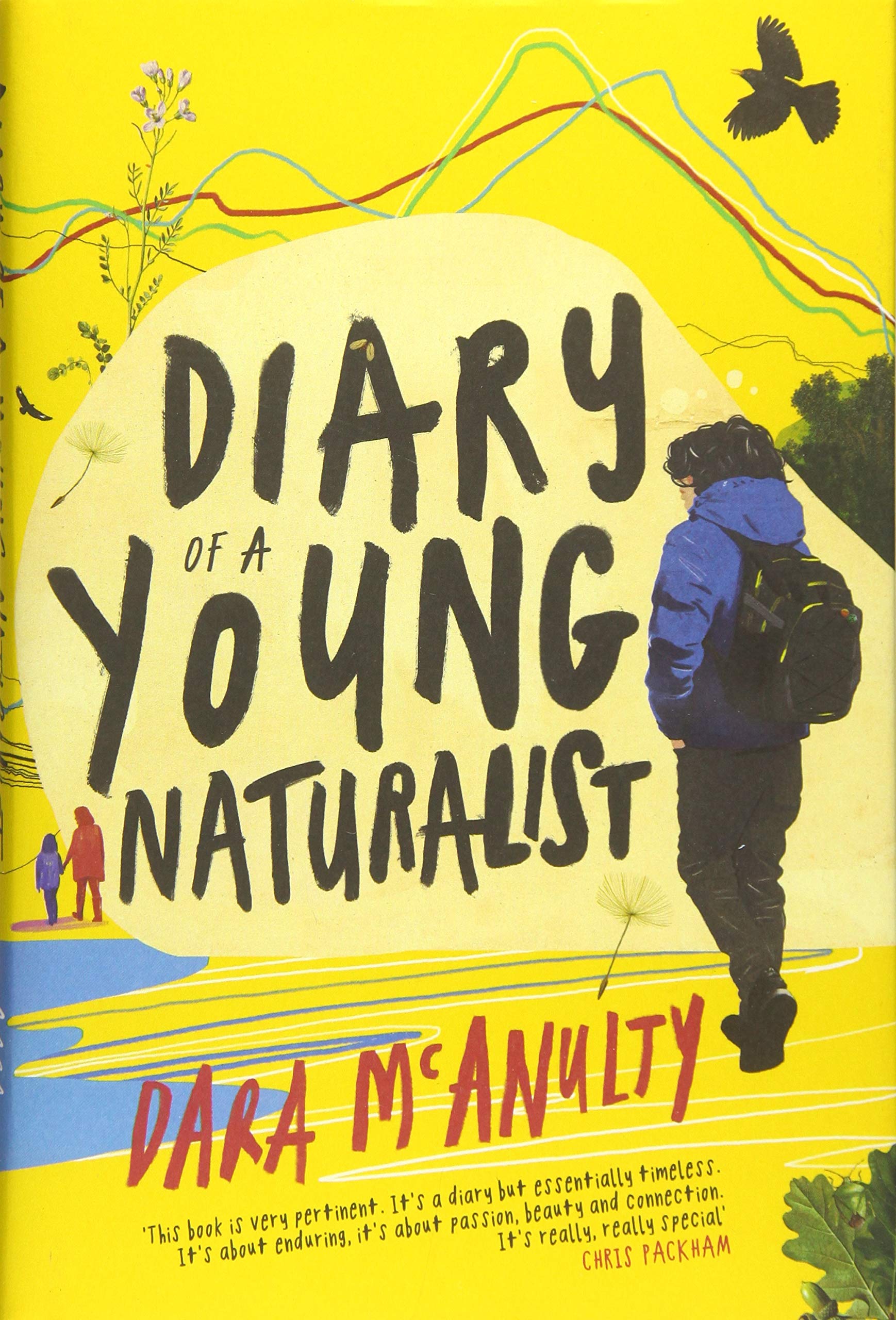
As we have just celebrated St. Patrick’s Day here in Ireland, this week I’d like to review a book by a young Irish author- Diary of a Young Naturalist by Dara McAnulty.

Diary of a Young Naturalist: WINNER OF THE 2020 WAINWRIGHT PRIZE FOR NATURE  WRITING: Amazon.co.uk: McAnulty, Dara: 9781908213792: Books

Dara is a 16 year old autistic naturalist and author who wrote ‘Diary of A Naturalist‘ to chronicle his fourteenth year on this planet. In the book, Dara gives us beautiful insight into his intense connection to nature and how it provides him with an escape to cope with his autism. The book has won numerous literary awards, making Dara the youngest recipient of the Wainwright prize for nature writing and the RSPB (Royal Society for the Protection of Birds) medal in the UK.

Here’s a video of Dara discussing his experience of how nature helps him manage his autism:

So what did I make of the book?

The book is beautifully written, powerfully evoking vivid imagery of the Northern Irish landscape and it’s local wildlife where Dara lives with his family. You really feel Dara’s intense passion for the natural world through his writing whilst giving us an insight into his everyday experiences of autism. Dara bravely tells us about his struggles with bullying, sensory overload and mental health showing a maturity way beyond his 16 years. Autists so often struggle to describe their emotions (as many of us have alexithymia), it’s a real privilege to have such an intimate insight into Dara’s mind.

Perhaps one of the most powerful aspects of the book for me personally, although small, was Dara’s account of his struggles with change and his mental turmoil as his family moved to a different part of Northern Ireland. I experienced a similar situation when I was 11 after selling my childhood home. We only relocated a few miles down the road (to a new house that was designed in a near identical layout to our previous house), but the change was devastating to my mental health. I always felt ridiculous that something seemingly so small could have such an effect on me, but it’s comforting to know that I’m not alone in this experience.

May be an image of 1 person and book

All in all, this book is a must read for anyone who is passionate about the natural world and conservationism 🙂

Hope you enjoyed this post dear Earthlings! 🙂

Have a lovely weekend!

Aoife

Autistic Burnout

Greetings Earthlings! 🙂

Leading on from previous posts about shutdowns and meltdowns, today I’d like to discuss the “autistic burnout”.

bitmoji-20180418083700.png

So what exactly is that when it’s at home?

Autistic burnout (also known as “autistic regression”) happens when an autist has maxed out their capacity to mask and to socially cope following a period of prolonged stress (such as major change, attempting to be “normal”, poor self care etc.). This triggers a shutdown like state where the autist can become “more autistic” and is often unable to utilize the skills they have learned to cope- the mind is so exhausted that the autist no longer has to energy to try to overcome their difficulties.

Some people have even reported that these skills did not come back at all after recovering from a severe burnout- hence the name autistic regression.

bitmoji1240954002

From a scientific perspective, the autistic burnout has not been explored as of yet on a medical level, however, there is much discussion of burnout within the autistic community.

Thankfully I have not really experienced such a full on burnout, but I have circled the drain a few times. When you’re particularly under pressure from doing too many things at once, sleep deprived, dehydrated, hungry etc., that’s when the mask starts to slip. In times like these I have felt much more symptomatic than normal, causing me to snap or say inappropriate things and act more eccentrically than I ordinarily would. It’s as if a part of your brain switches off to keep from overloading- and that part seems to be the one that controls our cloaking device.

So how can burnouts be avoided?

Much in the same way as meltdowns and shutdowns 🙂

As I have discussed in a number of previous posts, the key things to remember are:

  • Self Care– Stay hydrated, get plenty of snacks, get lot’s of sleep etc.
  • Utilize stress busters– Find respite in hobbies, in exercise, specialist interests or relieve stress through stimming
  • Take a break– If a situation is taking it’s toll, take a step back. Leave the room, take a holiday (if work related) or go outside for a walk; time in solitude to decompress and reset can be particularly helpful 🙂

Here’s a useful chart from the Autistic Women’s Network summarizing autistic burnout:

Click to access autistic-burnout.pdf

Hope you enjoyed this post dear Earthlings! 🙂

Remember to make time for you this weekend 😉

Aoife

Autism on Screen- Please Stand By

Greetings Earthlings! 🙂

In this weeks edition of ‘autism on screen’, we’re going to take a look at a brand new film about autism- the 2018 film ‘Please Stand By.

Image result for please stand by poster

What’s that I see in the poster? A young woman with autism?! 😲

FINALLY!

Nice to see Hollywood change things up a bit!

So what’s the story about?

Starring Dakota Fanning (was wondering what she was up to these days after Twlight!), ‘Please Stand By‘ tells the story of Wendy, a girl with Asperger’s syndrome living in a home for people with disabilities. When the opportunity arises to enter a screenwriting contest for ‘Star Trek‘ fan-fiction, Wendy must step outside her comfort zone and boldly cross the country alone (she ran away- a common trait in autistic women) in order to get her script to the studio on time.

You can check out the trailer for the film here:

So how did this film fare in it’s depiction of autism?

Well…as excited as I was to see this film…the reality did not live up to my expectations.

Indeed, Wendy showed the classic signs of autism- meltdowns, lack of eye contact, preference for routine, social awkwardness, literal thinking etc., but she did not stand out as a unique character. She was quirky, but there was nothing unique about her quirks, unlike Sigourney Weaver and her fondness for snow in ‘Snow Cake.

Surprisingly, Wendy didn’t appear to be a savant as in other films, however, she did have superb recall of the minutia of her specialist interestStar Trek‘!

bitmoji431833082.png

I am a little shocked seeing as her character was so derivative in other respects! 😛

What really bugs me about this film however were the missed opportunities. As Wendy spends much of this film by herself, ‘Please Stand By‘ had the perfect opportunity to focus in on the challenges of a high functioning female autist. To the outside world, most autistic women appear fine; we employ learned/observed techniques to blend in- known as ‘masking’. However, behind closed doors it’s a very different story.

Case in point-check out this clip from last week’s Channel 4 documentary ‘Are You Autistic‘:

You would never know that these women are on the spectrum, but you could pick Wendy out of a lineup!

The film uses a lot of narrative introspection to give us some insight (albeit minor) into the autistic psyche, but alas the full potential here was not harnessed. Wendy mainly spoke in ‘Star Trek‘ quotes which while poignant, this narrative could have been put to better use to give us true insight into the speed/and or disordered array of thought within the autistic mind. I often compare my thoughts to that of Marisa Tomei’s character in ‘What Women Want‘ (which by the way is just as funny 18 years on as it was when it was released… Man I feel old!😬).

To be quite frank, the film is kind of forgettable (I even had to look up Wendy’s name she left that little of an impression on me!)- it just didn’t draw me in and I found it incredibly tedious.

But as I say with all these films- if you think it’s your thing, why not check it out? One man’s trash is another man’s treasure after all! 🙂

Enjoy the weekend everyone! 😀

Aoife

Autism and the Benefits of Animals

Greetings Earthlings! 🙂

We all love our furry and feathered friends dearly don’t we? Seems hard to imagine the internet without funny animal videos these days!

Image result for funny animal gifs

Animals are so important to us that they are not just friends, but an integral part of the family.

For autists, an animal in the home can be this and so much more (#specialistinterest 😉 )!

Research suggests that animals can play a very important role in the social, emotional and cognitive development of children and can also aid the development of empathy. Animals such as assistance dogs (which I hope to write a post on at a later stage), cats, horses, guinea pigs, and interestingly keeping chickens is the latest trend to help improve these skills in the autistic community!

Image result for hugging animal gif

Studies have shown that the social skills of autists who live with an animal are much greater than those who do not have a pet. Pets are often considered “social lubricants” wherein they provide autists with a source of conversation which can encourage better engagement.

Sometimes we find it a lot easier to relate to animals. I’ve often remarked growing up that life would be so much easier if we were all dogs for example. With a dog, life is black and white (fun fact– they aren’t colour blind!). You take care of them, they love you forever-simple. There are no games or tricks (well, unless like my dog yours spins round in circles when you try to brush him to make you dizzy in the hope that you will go away 😛 ), you never have to wonder where you stand with a dog, they’ll make it very clear if they love or hate you!

dfgerhrtsghs

Studies have also shown that animals in fact can have a measurable biological effect on people with autism! A recent study measured “excitement” levels in children with autism when performing such tasks as reading out loud and playing with a group. The results showed that in these situations, the excitement levels were higher in the brain indicating stress. However, when these levels were measured whilst playing with an animal they  plummeted as stroking the animal induced biological calm.

Finally!

Scientific proof that I should spend more time cuddling my dogs!!! 😉


However, as beneficial as animals can be, experts advise that the individual needs and sensitivities of the child are taken into consideration when choosing a pet. A dog might seem like a good idea, but whilst many autists may gravitate towards the soft and furry, others may be repulsed by the texture of their hair, the smell or may even be overwhelmed by their energetic nature.

Aoife’s Top Tip– Try to expose your child to different animals to gauge their reactions before making any firm decisions on a pet- they are a big commitment! The research shows that any pet, even a spider, can be beneficial 🙂

There we have it dear Earthlings- another, scientifically proven reason to love animals all the more! 😀

What better way is there to spend the bank holiday weekend than relaxing with your pet? 😉

bitmoji1415319073

Aoife

Autism 101- ADHD

Greetings Earthlings! 🙂

So today I’m going to be talking a little bit about-

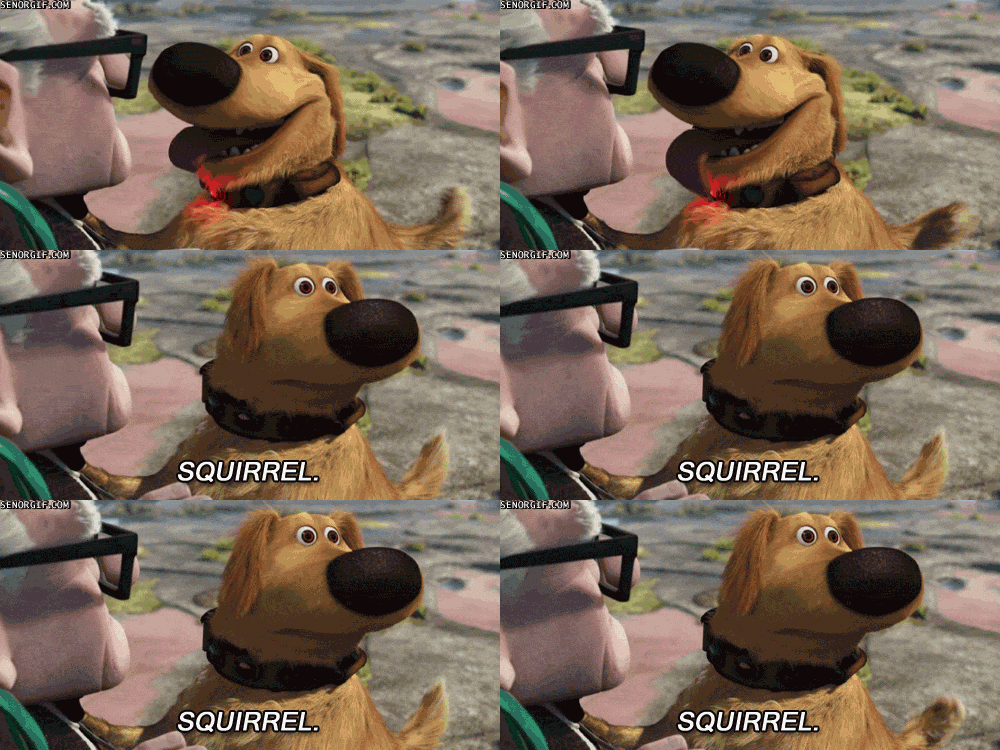
squirrel-up-dog-gif.gif

Haha! Sorry about that! 😛 Although fun story- genuinely stopped mid conversation to cry “SQUIRREL” when out with a friend recently! 😉

Yes that’s right, today we’ll be talking about ADHD in autism- also known as attention deficit hyperactivity disorder.

ADHD is commonly diagnosed in autists (in the region of 29-83%), causing such difficulties as impulsiveness, over-activity and poor attention.

There are 3 main types of ADHD:

  • Inattentive ADHD (formerly known as ADD (attention deficit disorder))- This can manifest in a number of ways such as a lack of attention to detail, losing things, organizational problems, making careless mistakes, having trouble completing tasks and struggling to sustain attention.
  • Hyperactive-Impulsive ADHD- Signs of hyperactivity and impulsivity include restlessness, excessive talking (Guilty!) fidgeting, interupting others, impulsive descisions and activities etc.
  • Combined Inattentive and Hyperactive-Impulsive ADHD

Personally, I would have really mild combined ADHD tendencies. In addition to my sometimes impulsive nature, I have a habit of zoning out of lessons and conversations, sometimes even films, books and TV shows for brief moments, completely lost in my own thoughts.

I can be pretty easily bored and distracted!

Half the time I’m not even aware of it happening. I could be reading a page in a book one minute, and suddenly find myself halfway down the next page, without any idea of what I was supposed to have taken in! Other times I find myself in a room in the house unsure as to why I came in as I hopped onto another train of thought mid action! I often have to repeat tasks over and over in my mind to ensure I don’t forget them.

My mind just completely wanders off…

Image result for homer brain gif

But somehow I’ve always managed to hide my inattention. It never really posed a problem at school. Teachers knew I was away with the fairies, but could never seem to catch me out when pressed! 😛 I suppose my deductive skills must have learned to compensate for my temporary lapses in concentration! 😉

Top Tip: Studies have suggested that playing video games may be beneficial to improving concentration in ADHD.

sdgsd.PNG

Just because concentration can be a struggle however, does not mean that you can’t concentrate.

Interestingly, there occurs a concentration paradox in ADHD and autism known as hyperfocus- an intense form of concentration where you are completely absorbed by a task, something that I like to call “The Zone”. I’ll write a separate post on hyperfocus at a later stage 🙂

Aoife’s Top Tip: Applying specialist interests to tasks can encourage concentration. Last year I was struggling to write an essay for college, I found an angle that allowed me to write about Eurovision and suddenly I couldn’t stop writing! 🙂

In addition to my lapses in focus, I can also be a little bit hyperactive. Now, hyperactive doesn’t necessarily mean bouncing off the walls like a child high on sweets, it can also mean abnormally active.

I am quite a restless individual. On the outside, I may look like I’m staring at a wall, in my mind I could be designing a cake, a knitting project, writing a story or drafting a hypothesis. I once spent a train ride visualizing, staging and arranging a musical based on the music of My Chemical Romance!😂

I always have this need to be productive, even if it’s as simple as building my trophy collection on the Playstation or binge watching a TV series.

My brain never turns off!

If I’m excited enough, I do bounce around the place on occasion too 😉

Image result for wild child bouncing gif

But what’s going on in the brain that interrupts our concentration?

It is not clear what exactly causes ADHD in the brain, but remember neurotransmitters? (Inside the Autistic Brain, Autism 101-Sensory Processing, Autism 101- Digestive Problems)

Most current models point to low levels of the neurotransmitters Dopamine and Noradrenaline. Pathways involving these chemical messengers project to the striatum and prefontal cortex of the brain- areas which are responsible for executive function (i.e. memory, planning, organization, behaviour control etc.). If these neurotransmitters are out of sync, this will have an effect on these functions. As neurotransmitters are also dysregulated in the autistic brain, this would explain why ADHD so commonly occurs in autism.

ADHD, like autism, can’t be cured, but it can be treated with cognitive behavioural therapy (CBT) and medication in severe cases, however, the side effects of medical treatment for ADHD have been controversial, and long term usage studies have yet to be completed.

However, like autism, ADHD need not hold you back in life. Some of the most successful people in the world have ADHD, such as Sir Richard Branson, Justin Timberlake, Simone Biles, will.i.am, Russell Brand, Ryan Higa, Jamie Oliver, Jim Carrey and Solange Knowles 🙂

So to conclude Earthlings-

Wait! What was I saying again?! 😉

adhd no transparency.png

Have a good weekend guys!! 😀

Aoife

Discussion: Love and Romance

Greetings Earthlings! 🙂

In continuation from my previous post, today I’m going to expand a little bit more on the social problems autists experience in romantic situations.

We’ve already explored some science on the subject, so now I’m going to try and clue you in a little bit on what it’s like inside my head 🙂

As a person with autism, my life is often governed by rules- don’t tell lies, never go over the speed limit, don’t put raisins in a scone (a serious crime against cake! 😛 )!

Hence when it comes to socializing, things start to get tricky. Even trickier in matters of the heart. Rules exist when it comes to love, but these rules are in a constant state of flux- and I just can’t seem to keep up! 😛

man trips over ever hurdle dr heckle funny wtf gifs.gif

Social rules are a cornucopia of contradictions- a source of constant frustration for the black and white autistic mind.

Opposite’s attract, but birds of a feather flock together. Absence makes the heart grow fonder, but out of sight is also out of mind. Treat them mean to keep them keen,  but do unto others as you would have them do unto you.

It’s enough to make your brain explode!

j-d-exploding-head-o.gif

The majority of autistic people want to love and be loved as much as anyone else, however, when the goalposts keep moving and the game keeps changing, it can be extremely difficult to navigate the battlefield of love.

Growing up, love always seemed so easy on screen. Boy meets girl, boy asks girl out on a date- both know where they stand and so relationships blossom.

Easy peasy right?

Wrong! 😛

Boy was I in for a shock when I got smacked with the reality stick! I was in no way prepared for the games that teenage boys play with your mind and heart.

Wide eyed and innocent, I believed the boys who said they fancied me, I believed the so called friends who encouraged me- but all along I was being set up for a fall. It was all just a game to mess with the weirdo who’d never been kissed, and I never saw it coming.

bitmoji-959104985.png

In hindsight when I see pictures of my atrocious hair cut at the time, I really should have seen through them! 😛

I was in for an even bigger reality check when it came to night’s out.

People grabbing you on the dance floor, stinking of booze and cigarettes, expecting you to just fall into their arms! Whatever happened to chat up lines, buying someone a drink, or even just learning their name? I struggle with things as innocent as hugs, how was I meant to cope with this invasion of space, not to mention the sensory fallout?!

This wasn’t the path to romance, this was carnage! 😛

If you are one of the lucky few who can get past this awkward stage to forge a real connection, communicating one’s feelings can be a real struggle for an autist. Saying the words ‘I love you’, even to family members, does not come naturally for me. I can tell my dogs I love them a thousand times a day, but ask me to say it to my parents and I freeze. It’s not that I don’t love them, I just can’t seem to get the words out…

Advice for family and significant others (SO): Don’t take this struggle personally. Your child/SO does really care about you, they just struggle to show it 🙂

Psychologists are of the opinion that we don’t see a need to repeatedly tell people that we love them, and hence we don’t say the words. Personally, I’m not sure that I’d agree with this explanation. I do want to say the words, they just won’t come out. In their absence, I’ve learned to do what I can through action to show people I care- a cake or a knitted present say more than I ever could 🙂

When it comes to romantic situations, this struggle for words is multiplied tenfold! With so many conflicting rules about showing affection or revealing your feelings, as with empathy, sometimes it’s easier to stay silent. I weigh up all the options, assess every social rule, turn myself upside down and inside out over my feelings- and then do absolutely NOTHING about it by default! 😛 Painful as it is, sometimes it just feels like the easiest option. There’s no drama, no outright rejections, no awkward moments…but also no requited love! As a result, I’ve landed myself in the friend-zone more times than I can count! 😛

giphy (17).gif

Over the years I’ve become a little more assertive in this regard. I eventually work up some bit of courage to communicate my emotions, but it’s still a real struggle to get there. I frequently undergo these periods of hyper-analysis prior to opening my mouth!

Advice for SO’s/potential SO’s: Be direct and let us know how you feel. We can’t read between the lines, we struggle to comprehend the rules of love and fathom the games- the direct approach is the way to go. The object of your affections may seem aloof, but they might simply not know how to act on their emotions. Just ask them out- their answer may surprise you 🙂

If my future husband happens to be reading this- when you meet me, no games please! 😛 😉

raw (5).gif

Happy Valentine’s Day everyone! 🙂

bitmoji732211657.png

Aoife

Autism 101- Specialist Interests

Greetings Earthlings! 🙂

Today I’m going to expand on the topic of specialist interests (SI’s).

SI’s are one of the defining features of Asperger’s syndrome in particular. Hans Asperger originally described us as ‘little professors‘ due to our ability to talk about our interests in great detail- often droning on in lengthy lectures, completely oblivious to our bored audience….
http-%2f%2fmashable-com%2fwp-content%2fgallery%2f25-exhuastion-gifs-for-when-you-cant%2fboy-meets-world-sleep

….so I’ll try my best not to bore you today 😛 😉

As discussed in the previous post, specialist interests are subjects which autists are intensely preoccupied with. These are generally associated with higher functioning forms of autism, but have also been noted in lower forms. Interests can be random items (e.g toilet brushes and deep fat fryers- I have genuinely come across these examples in a research paper!), subjects that are unusual to focus so intently on (dinosaurs, trains, Star Trek etc.) and finally topics that overlap with the hobbies of normally developing peers (horses, music, gaming etc.).

Women in particular tend to have SI’s akin to those of their peers, which can make it harder to diagnose them.

This would have been my experience of SI’s. My most intense interest growing up was that of Harry Potter. It would have been seen as perfectly normal to be ‘potty about Potter’ as a teenage girl during the noughties, but few would have shared my intensity.

This intensity is the major difference between normal ‘fandom’ and SI.

Unlike fandom, your interest can entirely consume you. It’s like an addiction- you are hooked on your interest. It’s not a case of want, but you physically HAVE to get your fix. If you don’t get it, your brain feels like it’s going to explode.

If I didn’t get to see the latest Harry Potter film at the first possible showing, it literally felt like the end of the world. I once made a phone call to my mother after seeing gameplay footage for Harry Potter and the Chamber of Secrets to say that I needed the game NOW (why Aoife!)…even though I knew it was under the tree for Christmas!

But I just HAD to have it in that moment!

Oh but when I got that game- what a feeling!! Even better when I got to experience TWO different versions of the game on both PC and PS2!!!

Talk about shooting up on dopamine! 😀

It’s a little difficult to explain the feeling in words. It’s not just a sense of happiness or excitement, it’s like the atomic bomb version of Beatlemania has gone off in my head- if that makes sense?

Let me try to explain the feeling with gifs, I think these sum it up better:


If you combine all of these at once- that’s what it’s like in my brain.

Kind of a miracle that it hasn’t full on exploded yet 😛

Your interest is more than just obsession- it’s compulsion. Every time that I saw a still from the Harry Potter films in a newspaper or magazine, I was compelled to cut them out to add to my collection. It didn’t matter that I had the same picture six times already, I had to have it! If I didn’t get it, I would genuinely torture myself about that one lost picture, or missed TV special for years afterwards! Even now the residual memory of those missed moments still bother me! 😛

As with all addictions however, you can take things a little too far to get your hit…

One of the most memorable examples of this was my dedication to reading the latest Harry Potter books. Determined to be the first to finish the book, I would read in the car! This doesn’t sound too extreme at first….however, I can get motion sick from looking down while travelling in the car… but I didn’t care!

I read until I threw up and then read some more!!

In addition to this, I was also caught sneaking into my mothers room in the dead of night to nab the Half Blood Prince from her after the midnight opening! 😛 Luckily, we had the sense to buy two copies for the Deathly Hallows midnight release 😉

Such are the lengths we are willing to go to for our specialist interests. You become so intensely focused that you are often blinded as to the lows to which you sink…

penny-needs-help-for-her-computer-addiction-on-the-big-bang-theory

In addition to subjects, people can often become SI’s- especially in women. I’ve definitely been guilty of this at times.

You connect with a person, and like other areas of interest, you want to know everything about them- even the things that are socially unacceptable to ask! When you spend time with that person, it’s never enough. If you see them hanging out with other friends on social media, you feel a pang of regret/jealousy that you weren’t there- as genuinely irrational as you know your feelings to be. I suppose it’s like any other interest, every missed moment with your friend feels like a missed concert for your favorite band- a one off event that can never be recaptured.

You know you’re obsessing and that you shouldn’t feel like this, but you just can’t seem to stop yourself.

mean-girls-obsessed-gif.gif

Even worse when you inadvertently cling on so tightly that you end up smothering your SI…We don’t mean to act like crazy people, but sometimes it happens.

Word of advice to human SI’s: Just wait it out. We’ll move on to our next interest before long. Just try to understand and love your friend as they are 🙂

So why are we so inclined towards these interests?

Scientists are of the opinion that SI’s reflect some of the heightened abilities unique to autism such as systemizing- the drive to explore, analyze or construct a system. SI’s are also thought to correlate to the severity of social impairment in individuals with autism, serving a role in reducing stress and anxiety.

For me personally, I find that SI’s provide a source of comfort. Life can be pretty overwhelming for people with autism, and sometimes we need to escape. In my own life I have found that some of my more intense interests were born of the flames of turbulent times.

When I was 11, we sold my childhood home and I was completely knocked out of sync. This simple change combined with the joyous trials of puberty had a devastating effect on me. My world was, to my mind, spinning out of control, and I wasn’t coping very well. Around the same time, the Hogwarts Express was just leaving the station, and I jumped on board to escape. The books, the films and the games transported me to another world away from all of my problems. Harry Potter gave me a sense of control, an oar to navigate the rapids of life- which is kind of ironic given the intense hold that SI’s can have over us! 😛

For any parents out there reading this, don’t worry too much about our SI’s. This is perfectly normal behavior! 🙂 And if you’re sick of hearing about your child’s subject- they’ll move on eventually 😉

Top Tip- Experts in the area recommend using  SI’s to encourage your child in other areas they may struggle with. I really struggled to study for my exams when I was a teenager, so my mother encouraged me through an SI- gaming. For every hour of study I managed, I was awarded with an equal amount of gaming time. Before long, I was studying without any incentive at all!! 🙂

DiStPqF.gif

Have a good weekend everyone! 🙂

Aoife


Autism 101- Asperger’s Syndrome

Greetings Earthlings! 🙂

In continuation from my previous post, I’d like to introduce you properly to Asperger’s syndrome or AS. More and more frequently are we hearing of the condition, but very rarely is it explained to us. I  myself knew relatively little about the disorder upon diagnosis, and that was with a degree in physiology!

So what exactly is Asperger’s syndrome?

Asperger’s syndrome is a form of high-functioning autism. As with all ASD’s, the normal development of the brain is impaired in AS,  however, the symptoms are considered less severe. For example, the social communication difficulties experienced by those with AS are much milder than other ASD’s. We may struggle to communicate our intentions, to empathize or to make eye contact, but much of this can be learned and improved with time 🙂

Unlike classic autism, individuals with AS show relatively normal intelligence and language skills. AS is in fact often associated with higher IQ’s, and in some cases savant skills (mathematical genius, eidetic memory, musical/artistic genius etc.).

itMcsy5.gif

Stereotype alert!!!- The majority of Hollywood portrayals of autistic individuals depict us as having savant skills. This is a RARE condition affecting between 0.5 and 10% of autists. (So no- I can’t count cards in Vegas with you like ‘Rain Man‘ 😛 ).

Motor development can also be affected in AS. In comparison to my peers, it took me a lot longer to hit some of my finer motor milestones (nearly 3 years to master shoelaces for example). Additionally, people with AS are often quite clumsy- something that I may know a thing or two about…

PeteFallsDownVulture.jpg

It’s gotten to the stage where I fall down the stairs so often that my family rarely come to my rescue (I’ve learned to fall with style sustaining minimal injury)! I’m also quite adept at falling over my own feet…the worst fall of my life came after tripping myself up, and not letting go of the Alsatian I was holding…

raw (8).gif

…at least we were still in the driveway! 😛

Unusual use of language is also associated with AS. This doesn’t mean that we create our own language or anything weird, but that we have a tendency towards unusual turns of phrase.

I, for example, am particularly fond of using big words- ruminate, cornucopia and ethereal are particular favorites! In my head I can’t see why you wouldn’t use a fancy word like ephemeral or fleeting instead of temporary! 😉 Although this did get me into trouble once with my supervisor for using the word ‘multitudinous’ in a research paper…

Restrictive and repetitive behaviors (like OCD) are additionally found in cases of AS.

6405d183a382fb193920ceba696a2ad5.jpg

These can manifest in a number of ways. There is a tendency towards routine in AS for example- we don’t like change and the uncertainty it brings. In a world that doesn’t always make sense, routine offers stability and control.

One of the most striking features of AS is our tendency towards having a specialist interest. These are intense areas of interest in which we accumulate mountains of information about a single molehill! If you stumble upon one of my interests in conversation, advanced warning- you could be there a while! 😛 😉  I’ll write a separate post discussing specialist interests in detail on Friday 🙂

So there you have it- a quick overview of Asperger’s syndrome! 🙂

These are just some of the typical characteristics associated with AS. If I were to fully explore the symptoms today, this post would likely be the length of a book! But I’ll do my best to break everything down for you as I go along 🙂

Aoife 🙂

Abbreviations: ASD- Autism Spectrum Disorder, AS- Asperger’s syndrome, OCD- Obsessive compulsive disorder


Blog at WordPress.com.

Up ↑