Google Accessibility Discovery Centre (ADC)

Greetings Earthlings! 🙂

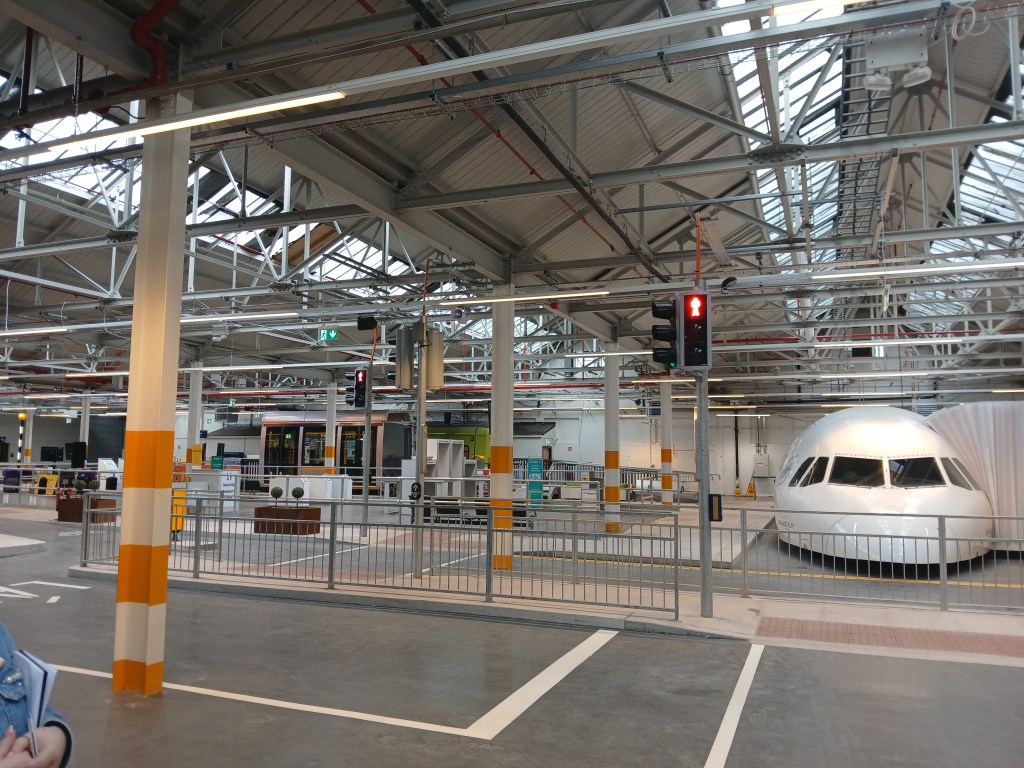
This week I’d like to talk about a recent trip I took to Google’s Accessibility Discovery Centre (ADC) in Dublin- the first of it’s kind in the EU. Now I know you might be wondering what a trip to Google has to do with autism- but bear with me!

So the ADC is a dedicated space where researchers and engineers develop new technologies that can help people with disabilities including those with autism. Not only do they develop new technologies, Google also uses this space to engage more effectively with disability communities to better understand our needs. The space is specifically designed to facilitate different disabilities- it’s wheelchair accessible, the colour scheme was designed to suit different disabilities with muted tones, and the lighting can be easily adjusted for sensitivities.

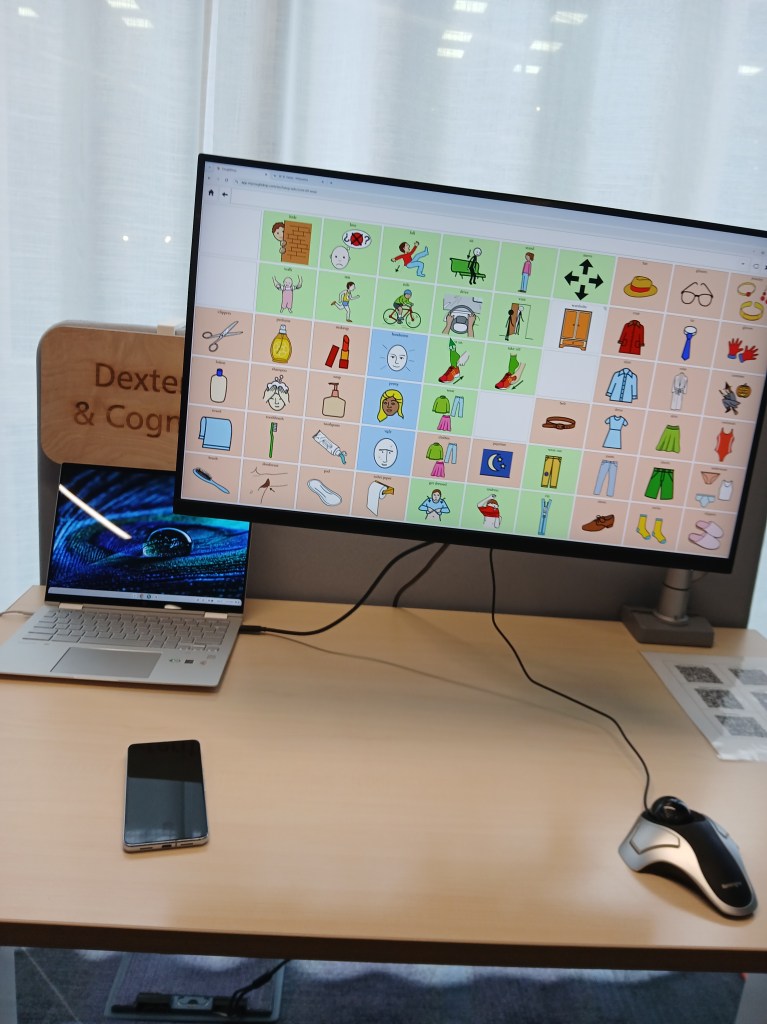
There were a number of really cool, innovative technologies that will really help the quality of life for people with physical disabilities including games that can be controlled with a chin joystick and ones that track eye movements- you can literally drive a car on the screen using your eyes! They are also working on some amazing tools for those with nonverbal autism such as a picture based program where you can click on images to make sentences (kind of like the rapid prompting method). You can see this in the image below:

They also showed us around their suite of accessibility tools and extensions available when using Google Chrome, including dyslexic font to help make reading easier- who knew such things could exist?🤯 One of my favourite parts of the tour was the neurodivergent corner where they had a range of nifty sensory toys you could play with which were great for stimming. They also had some glasses for light sensitivity issues, loop earplugs and a sliding social battery pin- which I could really do with getting my hands on 🤣.

It is a really cool facility and it’s great to see new dedicated spaces like these that are working on making life easier for neurodivergents and others with disabilities. If you’d like to tour the ADC, you can email Google at adc-dublin@google.com to set it up- I highly recommend the experience! 😀

Hope you enjoyed this post dear Earthlings!

Have a lovely weekend!

Aoife

Autism and Homelessness

Greetings Earthlings! 🙂

Leading on from my previous post about autism and employment, this week I’d like to discuss the link between autism and homelessness. I was shocked to learn recently that people with autism are at a higher risk of experiencing and remaining homeless than the general population. Research varies, but estimates of autism in the homeless range from 3%- 18.5%. This is a staggering statistic given that autism in the homed population is roughly 1-2%.

But why are autists more likely to experience homelessness?

As I’ve mentioned previously, 75-85% of autists are unable to find and maintain employment. Moreover, many autists struggle with co-morbid mental health issues and can be more likely to suffer from addiction issues- all of which can be contributing factors for homelessness. As a result of these struggles, autists do not have the same means that neurotypicals do to reduce their risk of homelessness and the ability to change their circumstances once homeless.

Autism is a condition that thrives on routine, stability and regulation of sensory environments which homelessness only serves to exacerbate. The sensory struggles with weather, the unfiltered noise of the city, the nasty smells from your surroundings can be completely overwhelming. Your mental health is on a knife edge and symptoms worsen without support and understanding. Most countries already struggle to provide adequate resources for housed autists and the general homeless population, making it even harder to properly support homeless autists. There is a serious lack of understanding of autism among workers in the homeless sector, especially with regard to the female experience. Surveys among workers in the homeless sector in the UK and Ireland have highlighted these gaps with over 90% of respondents noting the low levels of support for homeless autists and the need for autism specific training.

This is clearly a challenging issue that needs care and consideration to properly support the autistic community in both preventing and reversing homelessness.

Hope you enjoyed this post dear Earthlings!

Have a lovely weekend!

Aoife

Virtual Autism

Greetings Earthlings!

This week I’d like to talk about a new type of autism that is emerging- virtual autism!

Em… what on earth is that?

No, it’s not some kind of futuristic disease or new computer virus. The reality of this condition is far more concerning.

Virtual autism is being used to describe a growing trend of developmental delays in children that mimic autism due to excessive digital device usage. In other words, screen usage is causing children to falsely present as autistic!

The term was first coined in 2018 by Romanian psychologist Marius Zamfir to describe behavioral abnormalities observed in children between the ages of 0 and 3 resulting from a lack of motor, sensory and social stimulation after spending >4 hours a day in a virtual environment. Symptoms observed  include communication issues, social withdrawal, lack of eye contact, attention problems, sleep issues, physical inactivity, and developmental delays which overlap with the early signs of classic autism. Similarly, other studies have backed up these observations by confirming the presence of autism like symptoms in toddlers that used electronic screens excessively.

Whilst the condition is too new to be recognized as a genuine diagnostic form of autism, experts are nonetheless warning parents about the risks and dangers of virtual autism. The good news is that unlike other forms of autism, virtual autism is easily preventable by monitoring and restricting screen usage. Similarly, virtual autism can be reversed and improved in most cases by reducing screen time, encouraging face to face interaction and playing with toys. The brain is highly adaptable, especially in childhood, so fear not if you think your child is showing signs of virtual autism. If you are unsure if your child is truly autistic or showing signs of virtual autism, cutting out excessive screen usage is a good first step to rule out virtual.

Hope you enjoyed this post dear Earthlings!

Have a lovely weekend! 🙂

Aoife

Physical attributes of Autism

Greetings Earthlings! 🙂

Leading on from my previous post You don’t look autistic?, it seems that I might need to eat my words that no one looks autistic. Research in recent years indicates that autism may in fact have some physical attributes- in other words, there is actually an autistic look 🤯

Yep, I had to be peeled off the floor when I heard that- so many autists making jokes about not looking autistic and here we have science telling us that we do! 😂

So what does the research say?

Whilst there isn’t a specific definitive autistic look as with other genetic conditions like Down’s Syndrome, studies have identified the following facial features in autistic children:

  • Eyes are wider and spaced further apart
  • Broader upper face
  • Shorter middle face
  • Larger mouth and philtrum (i.e., the groove between your nose and mouth)
  • Others may also have a flattened nasal bridge, a longer philtrum, and a less pronounced chin

Similarly, studies suggest that 10-35% of autists have a larger head size than their neurotypical peers. The circumference of the head, particularly in males with autism, is much larger than average- a condition known as macrocephaly. This size difference is often linked to larger brain volume in childhood, thought to be caused by early brain overgrowth. Head size usually balances out in adulthood, but it may persist for some autists.

As with all autistic traits, not all autists may have these facial features (my mouth is so small my wisdom teeth had no room to grow), and the differences are so subtle it’s doubtful that the untrained eye will notice. The research is very limited, so these facial features may not even indicate an autism diagnosis, but still it’s a very interesting concept. Perhaps one day facial analysis may help speed up the autism diagnostic process.

Hope you enjoyed this post dear Earthlings!

Have a lovely weekend!

Aoife

Do people with autism look younger?

Greetings Earthlings! 🙂

Leading on my from my previous post about autism and ageing, this week I’d like to discuss whether or not people with autism look younger.

Yep, apparently there appears to be a link between autism and looking younger!

In my own experience, it has been mentioned that I look far younger than my age. I’ve always had a youthful complexion, but I’d just chalked it down to good skincare, genes and the lack of a man to turn my hair grey 😂 Never in my wildest dreams did I think that my autism might be linked to my appearance!

So let’s explore why autists look younger.

As I’ve discussed in my previous post about autism and joint hypermobility, some autists have co-morbid hypermobility conditions such as Ehlers-Danlos Syndrome (EDS). This causes structural tissues like collagen to be weaker and more elastic which causes stretchy joints. However, this increased elasticity can result in a more youthful appearance as the skin is more resistant to damage, which can delay or even prevent the appearance of wrinkles🫨

Facial expressions may also contribute to a youthful visage, as autists tend to produce facial expressions less frequently and for shorter durations than neurotypicals. A less expressive face = less wrinkles.

It’s also possible that our youthful appearance may be more behavioural than biological. A lot of autists tend to be introverted and prefer indoorsy activities away from the elements, especially those with light sensitivity. As a result, lower UV exposure may be preserving our skin from the ageing impact of the sun. My nickname was ‘Dracula’ as a teenager as I would spend summers indoors reading, often returning from sun holidays with little to no tan🙈. On another level, our tendency towards naivety, more childish interests and behaviours can make us seem younger by association rather than looks.

However, while the evidence does seem to suggest autists do look younger, there equally is evidence that some autists look a lot older. As much as EDS increases skin elasticity, it can also lead to thin, fragile skin that can be more prone to bruising, resulting in premature ageing. One study even suggests that autists experience a faster rate of ageing and that they have an older facial age. This may however be correlated to poor self care, lifestyle and the higher levels of biological stress experienced by autists, buuuttt the same can largely be said for neurotypical ageing🤷‍♀️.

Hope you enjoyed this post dear Earthlings! 🙂

Happy Easter!

Aoife

Autism and Boredom

Greetings Earthlings! 🙂

This week I’d like to discuss a topic that many autists struggle with- boredom. We all know the feeling, that mental itch that makes you want to jump out of your skin, but for autists boredom can be so much worse.

Many autists, especially those with co-morbid ADHD, crave constant stimulation. As a result, boredom occurs more easily than neurotypicals. A simple lack of interest in a topic, if a task is too easy, or feeling overwhelmed can trigger boredom and autists will tune out fast. When this happens, it can lead to negative behaviours where an autist will act out and be destructive and disruptive, it might even trigger a meltdown in chronic scenarios (I have had this happen in work following months of tedious tasks🙈).

Boredom has always been a challenge for me. I constantly need to be working on something. In school I often got in trouble for reading/drawing/writing during class as I would get ahead of my work and need to keep my hands busy while waiting for the lesson to move forward. If anything they should have encouraged my habit for productivity in my downtime! 🤷‍♀️

But what does the science have to say?

As I’ve discussed previously, autists have higher levels of stimulating neurotransmitters and lower levels of calming neurotransmitters, so their neurons are firing excessively in the brain. When they aren’t able to channel this excess stimulation into something, boredom takes over which can lead to negative behaviours that cause problems. Autists also have dysregulated levels of the neurotransmitter dopamine- the chemical involved in motivation, pleasure and reward systems. When dopamine levels are low, motivation is low, so when an activity is not enjoyable, autists won’t have the brain power to engage and boredom will set in.

On another level, there have been reports from doctors claiming that FMRI scans of ADHD brains show that areas of the brain associated with pain light up when they experience boredom, suggesting that boredom might actually be a painful experience for neurodivergents. However, other neuroscientists have refuted this claim as the human pain response largely remains a mystery, so making this assumption from the data is a bit of a stretch.

Hope you enjoyed this post dear Earthlings!

Have a lovely weekend!

Aoife
Autism in ‘The Princess Diaries’

Greetings Earthlings! 😀

This week I’d like to discuss autism in one of my favourite teenage book series ‘The Princess Diaries‘ (we won’t go into the films- they deviated too much from the books and Anne Hathaway comes across more adorably awkward than autistic).

So what are the books about?

The books focus on American teenager Mia Thermopolis and her discovery that she is secretly a princess to the small European principality of Genovia. Mia keeps a diary to help process her feelings in the wake of this massive revelation, whilst also navigating the ups and downs of school life, teenage crushes, bullies, self image and self-discovery. Two later books geared at the adults who grew up with Mia document her royal wedding and experiences of quarantine life during the Covid-19 pandemic.

But what about autism?

Now here’s where things get interesting. Reading these books was probably the first time that I had ever heard of Asperger’s syndrome (the original series was written pre-2013 when Asperger’s was still a separate diagnosis). Mia is assigned to do a report on the condition in psychology class in book 5 ‘Princess in Pink‘ (or ‘Give Me Five ‘ as I knew it), quickly identifying with many traits, and subsequently diagnosing herself and everyone in her social circle. However, her mother reminds her that she thought she had Tourette’s syndrome during her previous assignment, brushing away her fears and never mentioning autism again. Her mom does suggest that Mia’s best friend Lily might have Aspergers- which is likely, but in my opinion Lily tends to veer more towards narcissism than spectrum.

Princess Diaries author Meg Cabot

So is Mia really autistic?

Despite being brushed off by her family, I (and many other autistic readers) believe that ironically Mia is quite likely on the spectrum. I always identified with Mia and saw a lot of myself in her. Tomboyish and nerdy, she always marched to her own beat (in spite of her bullies), but struggled to fit in outside her close knit friend group. She’s a highly sensitive over-thinker with a tendency to catastrophize and create scenarios in her head out of nothing. She obsesses over the minutia of how the world perceives her and the social pressures and expectations of society (she spends several books overthinking about her readiness for physical intimacy and what is expected of her), often describing herself as a ‘freak’ who wants to be normal. An avid writer, Mia journals everything in detail, her thoughts often resonating with ADHD thinking. Moreover, she is quite drawn to smells like her brothers head and her boyfriend’s neck, feeling calmer after she has sniffed these- something that many autists can relate to. She also tends to look to romantic comedies and romance novels for how relationships should play out- something that many experts have noted autistic women do.

One moment in particular stands out to me with the hindsight of my diagnosis. In the 6th book Princess in Training (Sixsational in the UK/Ireland), Mia completely cracks under the pressure of her princess duties, running for student council, her first ever B in English, and her paranoia that her boyfriend will break up with her as she’s not ready for sex. After seeing her grandmother handing out pens in school for her presidential campaign, she freaks out, starts throwing the pens and completely breaks down crying and is hauled off to the nurses office, an incident the nurse described as “a crying jag”. This seems far more like a classic meltdown to me. Moreover, there are many more instances of things like this where when things go wrong, Mia goes into flight mode running off with her diary to her fire escape, the school roof, abandoned stairwells and spends an awful lot of time in bathroom stalls mirroring my own responses to upsetting situations as a teenager.

Some readers however were not happy about Mia’s assumption that everyone she knows has Asperger’s. Meg Cabot has apologised on her blog for any pain caused by this as she was trying to portray how Asperger’s can be so diverse in it’s symptoms and how we all have traits, but was mainly trying to show the phenomenon of thinking you have the disease you’re reading about. On another level, I think this is really interesting how Mia keeps seeing it in her friend group as quite often neurodivergents tend to gravitate towards each other (a number of my friends have sought autism/ADHD diagnoses as adults), so it’s fair to say her friends likely do have many autistic traits.

Not much was widely known about the female experience of autism back when these books were written, but it’s a pretty accurate depiction, however unintentional.

Hope you enjoyed this post dear Earthlings! 🙂

Have a lovely weekend!

Aoife
Autism and Snow

Greetings Earthlings! 🙂

Happy new year! 😀 As I am snowed in this week, I thought I would take some time to discuss this weather phenomenon and how it can have a ‘polarizing’ impact on autists❄️.

As I’ve discussed in previous posts, autists can be sensitive to temperature and changes in weather, so snowy conditions can be particularly triggering. Extreme cold temperatures and the added glare and brightness from our snow covered environment can be a real sensory challenge. Textural changes in our surroundings can also bring added challenges with new crunching sounds and the feeling of snow against the skin, not to mention the sensory impact of wearing many constrictive layers to combat the cold. There are also additional challenges for those of us who have coordination issues on slippery surfaces (I may have taken a tumble on walk with my dog the other day as a car was coming up the road straight at us🙈) as well as stressful routine disruption due to snow related travel restrictions.

On the other hand, many autists find snowy conditions to be a rather positive experience. They relish the peaceful silence that accompanies snowfall, muffling the often overwhelming noises of the world. Moreover, they view the time out from the hustle and bustle of every day life to be soothing. With dangerous impassable roads (especially in rural Ireland where we are not prepared for heavy snowfall), school, work and social plans are often cancelled, allowing autists to take some socially acceptable time out to retreat from the world. Having had an especially busy and socially heavy Christmas period, I have been particularly grateful for the weather this week as it has allowed me much needed time to recharge my batteries 🙃

Snow can also be a rich source of sensory stimulation for some autists. The simple tactile sensations of running in the snow, making snow angels, rolling snowballs and building snowmen can be soothing, with the added benefit of building your coordination, and spatial awareness skills.

Hope you enjoyed this post dear Earthlings!

Have a lovely weekend! 🙂

Aoife

Does Santa have autism?

Greetings Earthlings! 🙂

This week I’d like to take a lighthearted look on whether or not our favourite bearded man may in fact by autistic- yep, I’m talking about Santa Claus!🎅

I know it seems crazy but hear me out, as many people have observed Santa’s autistic traits:

  • Restrictive diet– Santa’s diet is known for being very fatty and restrictive, mainly consisting of milk, cookies and other holiday treats like mince pies. Many autists can relate to this tendency towards beige foods
  • Christmas is his specialist interestFor us mere mortals Christmas comes but once a year. Santa’s entire life however, revolves around this single calendar day and his efforts to make it the best day possible for children all over the world
  • Tendency towards sameness and routine– Santa wears the same clothes day in day out which are loose fitting and comfy (which could be indicative of sensory issues). Moreover, his choice of red clothing is interesting as red is a colour often dismissed by autists, meaning he could have diminished sensitivity to the colour red making it an ideal colour choice for someone with colour sensitivity. Santa also works on the 25th of December every year without fail, completing the same working routine in children’s homes across the world
  • Black and white thinking/rule orientated– Naughty and nice list, need I say more?
  • Repetitive behaviours– Lining up and naming out his reindeer over and over, repeatedly saying Ho Ho Ho, and checking the list twice are all classic repetitive behaviours
  • Avoids social interactions/unaware of social rules– He slips into our homes in the dead of the night, but never engages with us, just get’s the job done and moves on to the next house. Similarly, he is completely oblivious to how casually breaking into someone’s home to deliver presents in the middle of the night isn’t exactly a socially acceptable behaviour 😂
  • Santa is an introvert– Santa prefers to live in his own space in the North Pole far away from the prying eyes of the world with only Mrs Claus and the elves for company
  • Creative thinker- When the whole world bullied Rudolph for his nose, Santa found a way for him to be useful, highlighting neurodivergent creative thinking at it’s finest

So there you have it Earthlings- do you agree that Santa might be one of the most famous autists in the world? 🤔

Wishing you and yours a very merry Christmas and every blessing for 2025!

Aoife

Autism 10 years on

Greetings Earthlings! 🙂

This week marks a bit of a milestone in my autism journey- the 10 year anniversary of my diagnosis. It’s mind boggling how fast these years have flown by, not to mention how much my life has changed in that time.

In September 2014, I was a complete wreck. I was suffering with social anxiety, my mental health was a mess, and I was struggling with work and the social dynamics of my workplace. I had never been so stressed in my entire life (which is saying something given that I was bullied in school) and was at breaking point. Out of nowhere, I found myself tricked into an autism assessment (kudos to my parents for that 😛 ) and my entire world flipped- but in the best possible way.

Admittedly, things were rough for the first year as I learned to adjust to this newfound knowledge, and it took an additional year to relax enough to not mention the diagnosis every 5 minutes, but my life has ultimately changed for the better. I spent my first 24 years on this earth feeling like I didn’t belong, like a wonky puzzle piece that couldn’t slot into society. Everyone misunderstood me, but I guess when I didn’t even understand myself, how could the rest of the world? Most twenty somethings will have a quarter life crisis on their journey of self discovery, but I had the ultimate one. One little word held the key that allowed me to fully embrace the person I was always meant to be.

10 years later, I barely recognize myself. I’m in a job that I enjoy, I have amazing, supportive friends, and a (very) busy social life. Looking back on my past through the lens of autism, I have become a lot kinder to my younger self, learning to laugh and channel my experiences to help others like me. I feel less self conscious of my differences, know my triggers and how to sidestep them. This has enabled me to grow in confidence to a point where I have never felt more comfortable in my own skin.

Before my diagnosis, I was always shy and introverted, but by fully understanding myself, I’ve been able to unleash my inner extrovert, comfortably smiling and chatting with strangers wherever I go. Having a name for my differences normalized my feelings and gave me ownership, allowing me to overcome my anxieties and manage my sensory issues. I have autism, but autism does not have me.

If you had told me ten years ago what this one little word would do to my life, I don’t think I would have believed you.

I find it quite hard to imagine what my life would look like now had I not received my diagnosis. I have previously discussed if parents should tell their child about their diagnosis, and while the decision depends on the individual, based on my experience I would highly recommend divulging. It was initially a tough pill to swallow, but my life is better for it.

There’s so many things I wished I knew about autism before I was diagnosed, even now I’m still learning every day, but I suppose the biggest thing was to know that I would still be me at the end of it all- just a shiny, happier model. As I’ve discussed on many occasions, while an autism diagnosis shouldn’t change anything in theory, knowledge changes everything for the autist. It’s a lot to process, and it can be hard to see beyond the label, but you will emerge from the chrysalis a fully fledged butterfly. Initially it seemed like autism weighed me down, but that was just my wings poking through ready for flight 🦋

So for those of you working through your diagnosis right now, cringey cliché that it is to say, it does get better. To quote ‘The Middle‘ by Jimmy Eat World:

“It just takes some time
Little girl, you’re in the middle of the ride
Everything, everything’ll be just fine
Everything, everything’ll be alright, alright.”
❤️

Hope you enjoyed this post dear Earthlings! 🙂

Have a lovely weekend!

Aoife
Blog at WordPress.com.

Up ↑