Autism in your social circle

Greetings Earthlings!

This week I’d like to talk about something that a lot of neurodivergents have observed in their social circle- that lot’s of our friends are also neurodivergent! Prior to my autism diagnosis, I did not have any friends on the spectrum, or so I thought… Over the past 11 years, many of my friends have sought or are currently seeking autism and ADHD assessments. In the last year alone I’ve had four friends seek my advice about getting diagnosed.

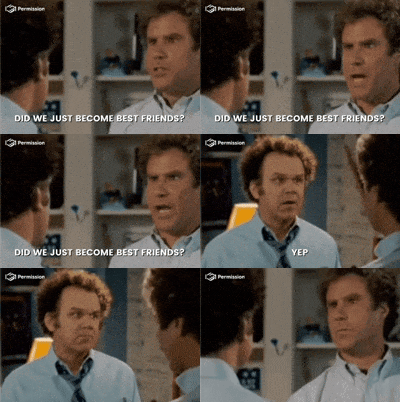
During my school years, I didn’t really have a core group of close friends; people just didn’t get me, nor I them. Going to university opened up an entirely new world, widening my social pool and enabling me to meet more likeminded people. I quickly found tribes of friends who were equally quirky with similar interests that I connected with on a level that I couldn’t explain. We would connect within minutes as if we had known each other our whole lives, feeling completely comfortable in each others presence, unknowingly unmasking.

After my diagnosis, I slowly started to notice common autistic traits among my friends. At first I thought it was funny when friends would say the more they listened to me talking about my traits, the more paranoid they became that they had autism, but now I see the grains of truth. I’ve spoken about this with my neurodivergent friends and they have also noticed similar patterns in their social circles.

There isn’t really any research on this topic, but it seems that there is a general pattern of neurospicy birds of a feather flocking together. Autists tend towards sameness and familiarity, so naturally our social preferences also mimic these patterns. Studies have shown that friends tend to have similar brain activity patterns called neural synchrony- so on a biological level, we are designed to seek out minds that are similar to our own. In addition, studies have shown that our noses play an important part in forming friendships as we tend to gravitate towards people with natural scent profiles similar to our own. Given how autists are sensitive to smell, it’s fair to say that perhaps our nose is handpicking neurodivergent friends for us!

Hope you enjoyed this post dear Earthlings!

Have a lovely weekend! 🙂

Aoife

Autism and Homelessness

Greetings Earthlings! 🙂

Leading on from my previous post about autism and employment, this week I’d like to discuss the link between autism and homelessness. I was shocked to learn recently that people with autism are at a higher risk of experiencing and remaining homeless than the general population. Research varies, but estimates of autism in the homeless range from 3%- 18.5%. This is a staggering statistic given that autism in the homed population is roughly 1-2%.

But why are autists more likely to experience homelessness?

As I’ve mentioned previously, 75-85% of autists are unable to find and maintain employment. Moreover, many autists struggle with co-morbid mental health issues and can be more likely to suffer from addiction issues- all of which can be contributing factors for homelessness. As a result of these struggles, autists do not have the same means that neurotypicals do to reduce their risk of homelessness and the ability to change their circumstances once homeless.

Autism is a condition that thrives on routine, stability and regulation of sensory environments which homelessness only serves to exacerbate. The sensory struggles with weather, the unfiltered noise of the city, the nasty smells from your surroundings can be completely overwhelming. Your mental health is on a knife edge and symptoms worsen without support and understanding. Most countries already struggle to provide adequate resources for housed autists and the general homeless population, making it even harder to properly support homeless autists. There is a serious lack of understanding of autism among workers in the homeless sector, especially with regard to the female experience. Surveys among workers in the homeless sector in the UK and Ireland have highlighted these gaps with over 90% of respondents noting the low levels of support for homeless autists and the need for autism specific training.

This is clearly a challenging issue that needs care and consideration to properly support the autistic community in both preventing and reversing homelessness.

Hope you enjoyed this post dear Earthlings!

Have a lovely weekend!

Aoife
Autism and Displaced Anger

Greetings Earthlings! 🙂

Leading on from my previous posts about meltdowns, emotions and alexithymia (the inability to identify emotions in the self and others), this week I’d like to take a close look at the specific issue of displaced anger.

As I’ve discussed multiple times, autists process emotions differently to their neurotypical peers, often because they aren’t able to properly recognise what they’re feeling. In my experience, anger is one of the worst offenders. I have often had issues with displaced anger, misdirecting my wrath at everyone and anyone around me because I hadn’t been dealing with the source. Just walking around for weeks lashing out at the slightest annoyances because I hadn’t twigged that I was bothered by something else entirely.

Interestingly, I have also resorted to anger as a cloak in the past. I often found when on the verge of a meltdown being angry and rude were much easier emotions to project than what I was truly feeling. Anger was much easier to control, with less likelihood of dissolving into tears (not to mention the repellant effect). I just knew that were I to make eye contact or speak without anger in those scenarios, the floodgates would open, and it was too overwhelming to have to explain them.

There is also a cognitive emotional processing condition which can contribute to displaced anger outbursts known as anger rumination. This happens when an autist has a tendency to dwell on past experiences of anger and frustration. By focusing on these experiences, autists develop difficulties in properly processing and responding to anger. Persistent rumination on past stressors depletes your ability to self regulate resulting in behavioural inhibition, which makes you more hostile and prone to displaced anger outbursts.

While it’s never nice to be on the receiving end of these anger outbursts, try to bear in mind that you’re unlikely the cause. You might have triggered a reaction, but usually the issue runs deeper. Try to give an autist some space in these scenarios to give them time to calm down. Talking after the red mist has passed can be very helpful in allowing an autist to process their emotions in a healthy way in a safe, nonjudgmental environment.

Hope you enjoyed this post dear Earthlings!

Have a lovely weekend!

Aoife

Autism and Screens

Greetings Earthlings! 🙂

Leading on from my previous post about virtual autism, this week I’d like to take a more specific look at the impact of screen use has on people with autism.

Whilst screen use is largely seen as a negative thing for the general population, screens can actually have a positive impact for autists:

  • Communication, connection and social skills– screens can help autists to connect with peers and communicate without the pressure of face to face interactions. There’s no need for eye contact, and plenty of time to think about and edit your response, allowing autists to relax. Removing these social barriers will also help autists to develop their other social skills which can then be applied to the real world. In my work for example, I’ve found that AI chatbots can be very useful when I’m struggling to find the right words and tone to deal with an awkward email
  • Regulation– Screens can offer a calming, safe (at least perceived as safe to an autist) and familiar presence for autists in an overwhelming, out of control world, enabling them to manage anxiety and meltdowns. For example, one of my autistic friends whips out her phone to look at cute animal videos anytime she is anxious, helping her to re-centre
  • Accessibility and gamified learning– screen based technologies can be very helpful for autists struggling with learning issues and verbal communication. The use of augmentative and alternative communication devices (AACs) and speech-to-text/text-to-speech tools can be hugely beneficial for autists. Similarly, gamified learning can be used to encourage autists to learn through the use of educational games which can help autists who struggle in a classroom setting. While studying for my leaving cert French oral, I used to study my notes while I played Mario Kart, which somehow made the information stick a lot better in my memory 😂🙈
  • Life skills– the internet is filled with useful apps and videos that can help teach autists valuable life skills that they struggle with in the real world such as personal hygiene, cleaning, map reading, cooking and shopping. Online shopping has been a complete gamechanger for me as I can shop peacefully with no pressure or risk of sensory overload
  • Specialist interests– having access to a screen enables autists to easily explore their specialist interests which can further help them to regulate when overstimulated. Back in the early days of dial up internet, I would happily spend a couple of hours waiting on a page to slowly load on the ABBA website just to read the historical chart information for all of my favourite songs. I would have bored everyone senesless with ABBA facts had I access to a mobile phone back in the 90s! 🤣
  • Executive function- planners, reminders, alarms and body doubling ADHD apps (such as Dubbi) can be very useful to help autists who struggle with organization

However, there are also many negative implications for autists that overindulge in screen time:

  • Overstimulation– excessive exposure causes over stimulation of the brain, increasing stress levels and disregulating emotions
  • Addiction as previously discussed, autists can be prone to addictive behaviours. As screens are highly addictive for neurotypicals, the risk can be even higher for an autist
  • Cyberbullying– autists are often an easy target for bullies, and granting them access to social media unchecked can have disastrous consequences. Growing up in the early era of social media, I didn’t know how to act appropriately online and often emulated those around me without thinking. This autistic tendency for masking and mimicry got me into hot water a couple of times, but if I were unsupervised and allowed to emulate the way users behave today, things would have been so much worse
  • Decreased focus and sleep issues– overuse of screens can impair concentration and attention spans for autists, which may be already impacted by co-morbid ADHD. The blue light emitted from these devices can also disrupt sleep patterns which are often dysregulated for autists. Sleep and screens is often an issue for me, especially if I have been watching content at double speed (it’s like listening to fast speech revs up the speed of my inner monologue which can overstimulate me before bed)

Some studies have also suggested that there is a link between screen usage before 2 years of age and the risk of developing autism, buuutttt it doesn’t look like this link is causal. Perhaps the link is coincidental given how virtual autism manifests.

As with most things in life, moderation is key for autists when interacting with screens. There’s no set amount of hours that one can follow, but monitoring your child’s screen use and it’s impact on their behaviour will help you determine how long is too long.

Hope you enjoyed this post dear Earthlings!

Have a lovely weekend! 🙂

Aoife

Virtual Autism

Greetings Earthlings!

This week I’d like to talk about a new type of autism that is emerging- virtual autism!

Em… what on earth is that?

No, it’s not some kind of futuristic disease or new computer virus. The reality of this condition is far more concerning.

Virtual autism is being used to describe a growing trend of developmental delays in children that mimic autism due to excessive digital device usage. In other words, screen usage is causing children to falsely present as autistic!

The term was first coined in 2018 by Romanian psychologist Marius Zamfir to describe behavioral abnormalities observed in children between the ages of 0 and 3 resulting from a lack of motor, sensory and social stimulation after spending >4 hours a day in a virtual environment. Symptoms observed  include communication issues, social withdrawal, lack of eye contact, attention problems, sleep issues, physical inactivity, and developmental delays which overlap with the early signs of classic autism. Similarly, other studies have backed up these observations by confirming the presence of autism like symptoms in toddlers that used electronic screens excessively.

Whilst the condition is too new to be recognized as a genuine diagnostic form of autism, experts are nonetheless warning parents about the risks and dangers of virtual autism. The good news is that unlike other forms of autism, virtual autism is easily preventable by monitoring and restricting screen usage. Similarly, virtual autism can be reversed and improved in most cases by reducing screen time, encouraging face to face interaction and playing with toys. The brain is highly adaptable, especially in childhood, so fear not if you think your child is showing signs of virtual autism. If you are unsure if your child is truly autistic or showing signs of virtual autism, cutting out excessive screen usage is a good first step to rule out virtual.

Hope you enjoyed this post dear Earthlings!

Have a lovely weekend! 🙂

Aoife

Autism assessments for trans kids?

Greetings Earthlings!

Leading on from my previous post about gender identity and autism, this week I’d like to discuss NHS proposed guidelines in the UK where children who are referred to gender clinics will also be assessed for neurodevelopmental conditions like autism and ADHD.

But is this a good thing?

While some people believe that this is part of the growing anti-trans agenda in the UK, the majority feel that this is a positive step for the autistic community as experts estimate that trans patients could be 3-6 times more likely to be diagnosed as autistic. As such, it’s important that gender dysphoric patients are properly assessed so that they can be fully supported. This is especially important given the long term ramifications if a patient transitions but their dysphoria was a temporary product of their autism.

I have read many stories over the years from families with undiagnosed autistic kids who identified with trans ideology as they did not feel like they fit in. These children then began the transitioning process, only to find that after an autism diagnosis, they no longer felt at odds with their birth gender. Statistics among de-transitioning patients are difficult to estimate, but studies have found that as many as 15-20% of these are autistic.

It’s actually quite common for neurodiverse children to temporarily disassociate from their bodies as they naturally approach puberty. In my own case, I often felt that life would be so much easier if I could just click a button around 9 years of age (after having the dress up experience of one’s first holy communion of course 😂🙈) to switch genders as being a man seemed so much better than the realities of womanhood. Other than these passing thoughts as an undiagnosed kid, I have never ever felt at odds with my gender. Despite being quite tomboyish in my younger days, my friends describe me as quite feminine in my 30s with a wardrobe that’s bursting with dresses. Were 9 year old Aoife to express such thoughts today, I would likely be landed in a gender clinic being assessed for gender dysphoria, when what I really needed was an autism assessment.

Whilst many autists may be genuinely transgender, we need to do due diligence in gender assessments to ensure that no decisions are rushed. In my opinion, this is an excellent plan from the NHS to ensure that autists and people with gender dysphoria are getting the best care possible.

On the other hand, this proposal begs the question as to why similar guidelines have not been recommended for other conditions that are often co-morbid with autism. Many people who are assessed for ADHD are receiving subsequent autism diagnoses. Overlap is estimated to be as high as 80%, yet an autism assessment is not always considered during ADHD assessment. Moreover, it’s thought that 23-32% of patients with eating disorders are also autistic, an issue that is quite common for undiagnosed women, yet autism assessments are not factored into treatment. These co-morbid issues impact an arguably higher number of autists than gender dysphoria, yet patients are generally not co-screened for autism.

A larger conversation is clearly needed around co-occurring mental health and neurodiversity if we want to properly support the autistic community.

Hope you enjoyed my post dear Earthlings!

Have a lovely weekend!

Aoife
Autism in ‘The Pitt’

Greetings Earthlings! 🙂

This week I’d like to discuss autism in the brand new medical drama that everyone’s talking about- The Pitt.

So The Pitt is a unique new medical drama set in the emergency room of the fictional Pittsburgh Trauma Medical Hospital (hence the name). Unlike conventional dramas however, the show happens in real time, with each episode focusing on one hour of the doctor’s shift. By the end of the season, there will have been 15 episodes documenting one single 15 hour shift in the E.R. The show has been praised for how realistic it is, not shying away from the squeamish reality of medicine like close up surgeries, gory injuries and uncovered birth scenes.

And before any of you guys ask, yes that is the guy from E.R.- Noah Wyle (a little bit typecasty bringing him back to lead another series set in an E.R. but everyone is raving about his performance!).

So to autism!

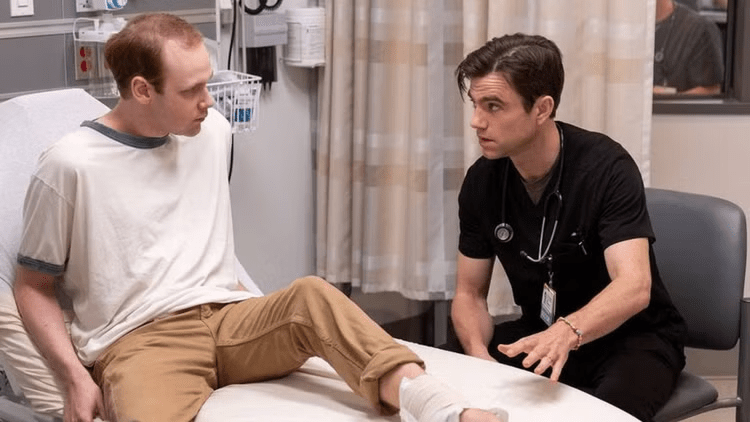
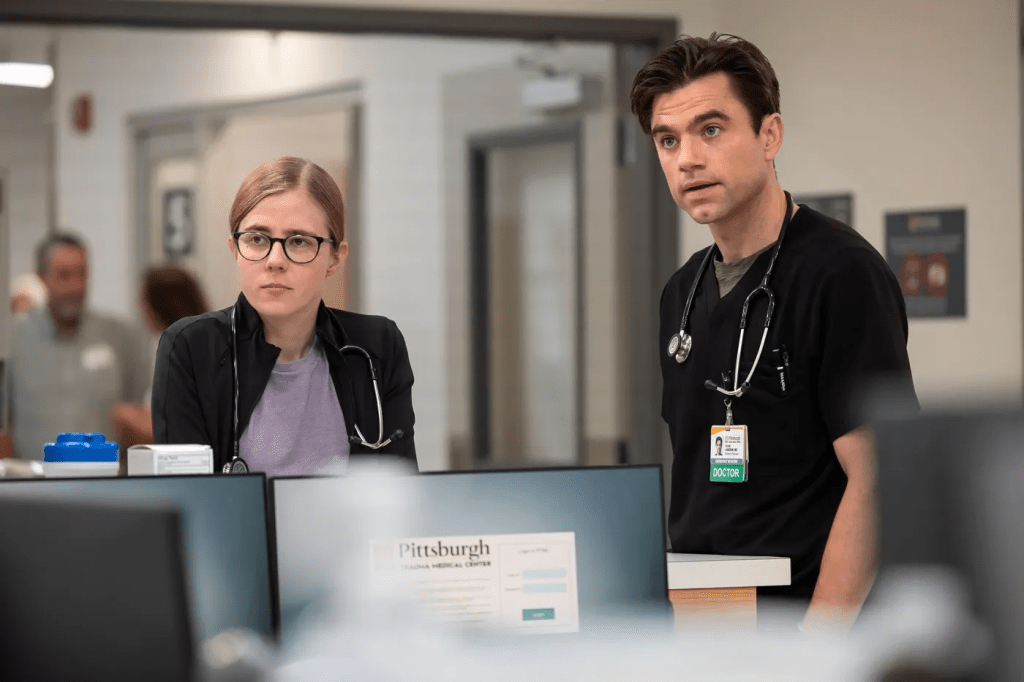
In episode 7, Terrance (played by autistic actor Coby Bird) comes into the E.R. with a sprained ankle. His autistic traits are immediately obvious to the trained eye (his lack of eye contact, constant questions, interrupting his doctor, monotone voice and language use) buuutttt his doctor does not pick up on any of it. Instead he leaves frustrated giving out that he couldn’t take a patient history from the constant questions. Thankfully another doctor’s spidey senses start to tingle, and she quickly spots his autism diagnosis in his medical history file in the hospitals computer.

Mel has an autistic twin sister (played by autistic actress Tal Anderson) and immediately volunteers to take over. She calmly enters the room, closes the doors to the noisy E.R., turns off the lights, and disables some alarms going off on the wall. This allowed her to have a calm conversation with Terrance to understand his concerns about his ankle and assess his injury. She quickly reassures him that his injury won’t keep him from a table tennis tournament, explains the scans that need to be performed, and even shows him a model of the bones in his foot to show what kinds of injury he could have.

Here’s a quick short from the episode:

This was such a heartwarming moment in the episode to see an autistic patient getting the proper care and understanding they need in a medical setting. Medical environments can be very overwhelming on a sensory level before you add in your fears, uncertainty and uncomfortable procedures. I’ve had minor meltdown’s every time I’ve had a cannula placed in my hand, but thankfully the nursing staff were aware of my diagnosis and made every effort to make things easier for me where others would have told me to grow up and stop crying. They got me to start talking about alpacas and my blood pressure dropped right back down to normal 🙃🦙

On another level, Mel herself has many neurodivergent traits, as is often the case with siblings of autists. Several members of the autistic community believe she is on the spectrum and feel seen by her portrayal. Taylor Dearden (daughter of Breaking Bad’s Bryan Cranston) is herself neurodivergent (she has ADHD) which she says has really helped her to shape the character of Mel. As Mel goes forward into the rest of this season and beyond (it’s already been renewed for season 2), I can’t wait to see what other neurodiversity story lines we may encounter.

Autistic patients come up a lot in medical dramas, but rarely are they treated with this level of understanding. It’s great to see The Pitt demonstrating the true reality of this experience. If medical drama’s are your jam, I highly recommend you check it out 🙂

Hope you enjoyed this post dear Earthlings!

Have a lovely weekend!

Aoife

Autism and Meltdown-proof Makeup

Greetings Earthlings! 🙂

Following a recent messy meltdown whilst wearing a full face of makeup (a late night car clamping situation 🙈), this week I’d like to discuss some of my must have products if you want to meltdown proof your face 🙃

If you’re anything like me when a meltdown hits, your eyes unfortunately betray you, tears cascading down your face, often destroying the makeup you spent ages applying that day! On one particularly bad occasion, I had a minor meltdown from the frustration of my car failing it’s NCT, and within seconds my eyes formed pools of congealed black mascara…😂

As such, I now invest in higher quality makeup that can withstand a good cry! Here are some of my top products to meltdown-proof your makeup:

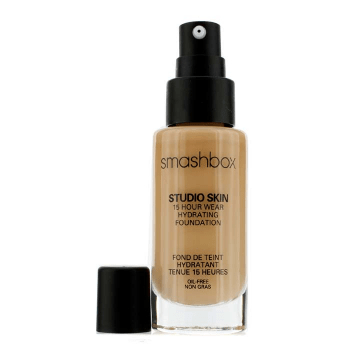
  • Smashbox Studio Skin- this is my go to foundation (on the few occasions I choose to wear it). It’s lightweight, but buildable and most importantly, durable. Once set, it will barely budge. You won’t find tear track marks down your cheeks from the slightest leak. I once wore this to a Green Day concert where it drizzled for the evening. While some did naturally come off in the rain, by 3am my makeup still looked intact 💪 If you want a day time foundation with SPF, I can also recommend Max Factor’s Facefinity (although I’m not the biggest fan of the smell)
  • Benefit’s Bo-oing concealer- this industrial strength concealer can hide a multitude of blemishes and truly lasts against the tide of tears. I also highly recommend YSL’s Touche Éclat concealer for touchups after a meltdown. I often carry this concealer pen in my handbag for nights out as its precision head is ideal to fix any dark smudges round your eyes if your makeup fails you
  • Urban Decay Naked Eyeshadow range– These eyeshadow palettes are a must have. They have great pigment and longevity when paired with a decent eye-primer, and won’t run off your face during a meltdown
  • Victoria Beckham Satin Kajal liner- this eyeliner pencil has been going viral the last couple of years and for a good reason! It’s creamy, waterproof, smudge free and the pigment will last all day, even against an unexpected flood of tears
  • Charlotte Tilbury Exagger-Eyes Mascara– and now to the heaviest hitter. The new Exagger-Eyes Mascara has been going viral in recent months and I am here to tell you to believe the hype! It’s smudge proof, humidity proof, flakeproof and clump proof, that can last through sweat, tears and meltdowns! I have even worn this during a spin workout and it did not budge one bit. Word of caution though, if you are spraying a setting spray after applying, make sure that the mascara has dried or else you will find yourself with black rings under your eyes🙈 I also highly rate Benefit mascaras. I started wearing these shortly after my diagnosis and they have survived many a meltdown- there’s a very good reason that Benefit’s mascara range is one of the top sellers in the world. For an everyday option, I recommend their waterproof Badgal Bang- great volume, great pigment and takes industrial strength remover to scrub off 😂

Pro-tip– Avoid NYX Worth the Hype mascara. Worth the hype it may be in terms of look… but that’s exactly the brand I was wearing in the meltdown I described at the beginning 🙈 They have since brought out a waterproof formula though, so if you must wear that brand, make sure to get the waterproof one 🙃

Hope you enjoyed this post dear Earthlings! Never let a meltdown get in the way of looking fabulous 😎

Have a lovely weekend! 🙂

Aoife

Autism in ‘Grey’s Anatomy’

Greetings Earthlings! 🙂

I’ve recently been re-watching clips from medical drama ‘Grey’s Anatomy’ on Facebook, and came across some old episodes featuring a doctor with Asperger’s syndrome. As I watched these episodes prior to my diagnosis (and never made any connection to my own experiences), this week I’d like to take a closer look at Dr. Dixon and the depiction of autism.

For those of you who are unfamiliar, Grey’s Anatomy is the longest running primetime medical drama of all time (entering into it’s 21st season in the coming weeks), following the personal and professional adventures of Dr. Meredith Grey through her surgical internship (and beyond).

In 2008 during it’s 5th season, the show introduced the character of Dr. Virginia Dixon for 3 episodes- a renowned heart surgeon with Asperger’s syndrome. This was perhaps the first on screen depiction of autism I had ever seen, and it’s easy to see why I didn’t connect with the character at the time.

Despite being a woman with autism (which given this was 2008 was quite progressive), Dr. Dixon’s character has been completely panned by the autistic community and branded as difficult to watch. She’s highly stereotyped with a high IQ, monotone voice, no social skills, rule oriented and completely emotionless– a particular pain point for misunderstood autists everywhere. In addition, the stereotyping isn’t even consistent with how most autistic women present as she doesn’t make any attempt to mask her differences whatsoever. A lot of autists were particularly irked by a scene where Dr. Dixon has a complete meltdown after a patient excitedly hugs her. Given that she is a high functioning adult with autism, her response to the incident has been seen as completely over the top given that most of us by this age have adapted coping mechanisms to deal with these sorts of situations.

Here’s a video with some clips of Dr. Dixon in action:

I personally didn’t find issue with the episodes when I initially watched the show, but given what I now know about autism, I would have to agree with the community. While I can appreciate the attempt to raise awareness about the condition, it really wasn’t handled the best. I found it particularly irksome during the meltdown scene, as when a fellow doctor was asked to hug Dr. Dixon to help calm her, she made a quip about giving a thorazine shot instead (a common anti-psychotic medication). Autists aren’t crazy, it’s just a different operating system 😒.

All in all, it will not be taking a spot on my recommendation list. Great show, bad autism.

Hope you enjoyed this post dear Earthlings!

Have a lovely weekend! 🙂

Aoife

Autism and ‘Pebbling / Penguin Pebbling’

Greetings Earthlings! 🙂

This week I’d like to discuss another more unusual autistic behaviour- pebbling.

Ah Aoife, you must be making these up now!

You couldn’t be more wrong!

Before I lose you completely, let me explain.

Pebbling is where an autist spontaneously shows their loved ones affection through thoughtful gestures and tokens. The behaviour is so named as it mimics the act of pebbling in penguins. Gentoo penguins mate for life, so when a male penguin is interested in a female, he will collect, smooth shiny rocks for her as part of the courtship ritual. If she is interested, she will use the pebbles to build a nest to lay eggs in. Here’s a clip of the penguins in action:

Autists often struggle with social interactions and displaying affection, but pebbling can be our way of making up for it. ‘I love you’ isn’t always easy to say, but pebbling does the talking. It’s our way of showing we love you and are thinking about you- a unique form of affection, communication and connection.

Personally, when I heard about pebbling, I immediately identified with it! I’ve been unconsciously pebbling the ones I love my entire life. If I’m out shopping, I will often pick up little trinkets that remind me of my loved ones and their interests, or I might grab their favourite treats to bring home. Other times I might bake their favourite sweets for no reason, or craft them something they might like, or just a simple gesture like offering to do something for them.

This video explains it pretty well:

Not all autists display pebbling behaviours, and pebbling can take various forms, but it’s a pretty cool way to show love to the people you care about 🙂

Hope you enjoyed this post dear Earthlings!

Have a lovely weekend! 🙂

Aoife

Blog at WordPress.com.

Up ↑