Broad Autism Phenotype (BAP)

Greetings Earthlings! 🙂

Today we’re going to discuss a type of autism that lies just outside the spectrum- the broad or broader autism phenotype (BAP).
Image result for what gif

What on earth is that when it’s at home?!

BAP is a term used to describe a wider range of individuals just beyond the spectrum who have difficulties with language, personality, and exhibit a number of social and behavioural traits at a higher level than the average neurotypical, but not so high as to be diagnosed with autism.

In other words, this means that you have “a touch of autism” or “not quite autism (NQA)”. The individual has a high number of mild traits, but not enough to interfere with daily life.

So what do we know about BAP?

bap.png

Relatively little- it doesn’t even have a Wikipedia page!

This intermediate description is most commonly associated with family members (parents, siblings, and other extended family members) of those with ASD diagnoses (14–23%), but it can also be found in the general population as well (5–9%).

Interestingly, evidence of an intermediate autism phenotype has existed since the late 1970’s (the term itself was coined in 1994), but it is only in recent years, with the expansion of the spectrum, that it has become a source of research interest for scientists seeking to understand the range of ASD’s that lie beneath the spectrum rainbow.
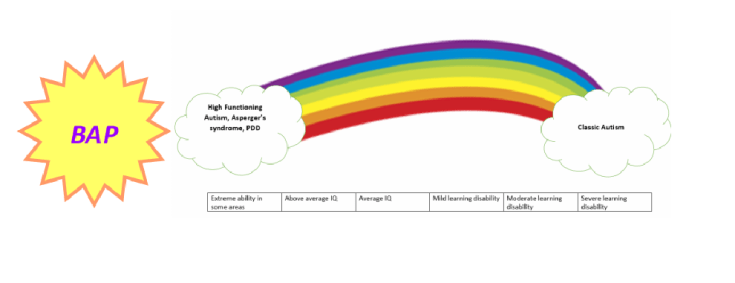
Broader autism phenotype

Much of the research in this area involves using the BAP to better understand autism- in particular it’s severity and genetics. By analyzing autism traits in families through the prism of BAP for example, researchers may be better able to identify the specific genes which underpin ASDs, paving the way for better therapies for autists.

Apologies for the shortness of this post dear Earthlings, but there is sadly very little information out there about BAP. Perhaps in the future there may be new research that will shed greater light on this subject 🙂

Have a good weekend everyone! 🙂

Aoife

Autism and Smell

Greetings Earthlings! 🙂

As I mentioned in last weeks post on taste sensitivity, this week we’re going to discuss sensitivity to smell in autism.

Image result for smell gif

As with other senses we have discussed, autists can be either hyposensitive or hypersensitive to odours. One autist may enter a malodorous environment without noticing anything amiss, another autist may wretch, or worse!

As a child, my nose was particularly sensitive to my environment (although judging by how I could taste the beer my friends were drinking yesterday evening from the fumes alone, this may still be the case on occasion 😛 ). Bad smells were especially trying- the smell of salads, fish, cigarette smoke, incense, even something so simple as a bag of popcorn could easily turn my stomach.

But it wasn’t all bad- this sensitivity comes with a heightened appreciation for pleasant smells too 🙂

Baking, chocolate, nice perfumes, the outdoors, the smell of metal (don’t ask me why I love this one so much- must be something to do with my taste in music! 😛 😉 )- in fact, such smells are not only a sensory sensation, but can also be used to help calm an autist.

As easily as an unpleasant smell could unsettle me, the right smell could calm me back down again as a child.  I always kept a teddy or a blanket near at hand that I could smell to help soothe and calm me and to lull me off to sleep- I couldn’t sleep without one particular teddy until I was 16!

teddy.png

^^^^My teddy was a lot more raggedy than this…😬

So why does smell affect autists so much?

Interestingly, some studies indicate that there are no differences in sensitivity to smell between autists and their neurotypical peers, however, much research points to the cortex of the brain. This region is heavily involved in smell processing, and yep, you guessed it- the autistic brain shows signs of dysfunction in this region. In fact, the pre-frontal cortex shows signs of overgrowth and excessive linkage in the neurons (just like an overloaded plug), so no wonder sensory perception is altered in autists! This region is also associated with the formation and retrieval of long term memories, which could also explain why smells are often tied to memory recall in autists (which I will explore in more detail at a later stage 🙂 ).

One study also shows that autists may not inhale smells in the same way to their neurotypical peers. Evidence suggests that autists inhale deeply and intensely for both pleasant and unpleasant smells, whereas neurotypicals will tentatively sniff in the presence of an offending odour, which could further explain differences in scent processing.

In addition to this, research suggests that alterations in smell can influence social behaviours. A recent study in fact suggest that autists cannot smell fear and that there is a reversal in their response to fear. In this study, a group of autists were calm when presented with a sample of sweat from a skydiver, whereas their neurotypical peers exhibited classic signs of fear. In contrast, their fear levels increased when presented with the sweat sample from a calm individual!

In other words, an autists social behaviour may be affected by an inability to interpret social cues carried in odours- the mind boggles!

So there we have it dear Earthlings- hope this post didn’t ‘stink’ too badly 😛 😉

bitmoji-2090425460.png

Enjoy the weekend everyone! 🙂

Aoife

Autism and Taste

Greetings Earthlings! 🙂

As we have discussed in previous posts (such as sensory issues, light sensitivity and sound sensitivity), people with autism are highly sensitive on a sensory level, so naturally, taste is no exception.

Related image

Many autists have highly sensitive taste buds wherein we find a number of flavours and foods too strong and overpowering to tolerate. This sensitivity to tastes can make life very difficult when it comes to taking medicines, food selection (which we will discuss in greater detail at a later stage) and maintaining a somewhat neutral expression when put in awkward public tasting scenarios (perhaps one of my biggest personal challenges 😛 ).

bitmoji1419645621.png

On the other hand, some autists can in fact be hyposensitive to taste, often preferring foods with stronger flavours

So what’s causing these alterations in tongue sensitivity?

The research into this aspect of autism is currently quite limited, however, some neurological studies indirectly suggest that there is evidence of taste dysfunction in autism.

Many studies have shown evidence of brainstem dysfunction in the neurodiverse brain such as hypoplasia, or under development of the facial nerve nucleus (a collection of neurons in the brainstem that innervate the face). This nerve network carries taste information from the tongue and relays it to the brain. Any dysfunction or damage to this pathway can affect a persons ability to detect tastes.

Furthermore, the ability to identify tastes and flavour perception is controlled by a complex nerve network involving several different brain regions such as the thalamus, insula/operculum, the orbitofrontal cortex (OFC) and our old friend the amygdala. Many of these regions have been implicated in autism, suggesting that dysfunctions in these regions may influence an autists taste buds.

bitmoji1029366338

Recent evidence also suggests that autists may be more sensitive to bitter tastes due to genetic mutations in the TAS2R38 taste receptor. Alterations in the TAS2R38 gene can cause autists to perceive bitter tastes differently to their neurotypical peers which could explain why our taste buds are so sensitive (and why alcohol makes me gag 😛 )

Finally, an increased sensitivity to smell also feeds into these alterations in taste which I will examine next week 🙂

Until next time Earthlings! 🙂

Aoife


Autism and Light Sensitivity

Greetings Earthlings! 🙂

As twinkling Christmas lights are rapidly being erected around me, I’ve been thinking a lot about autism and light sensitivity this week.

Light sensitivity, also known as photophobia (although the phobia part has never really made sense to me! 😛 ), is quite common for autists.

Image result for the light it burns gif

We are hypersensitive to other sensory stimuli such as sound, so naturally, light too can cause sensory issues for many autists. The wrong lighting environment can cause a whole host of problems that can exacerbate behavioural issues.

If lighting is too bright, this can distort vision, cause headaches and sleep disturbances, and of course, sensory overload and meltdowns. Equally, some autists can be hypo or under sensitive to light. This can cause issues with depth perception, coordination and clumsiness in addition to blurred vision.

In my experience, I have some minor sensitivities to light. Bright lights don’t bother me as such, but I find that I sometimes need to wear sunglasses to take the edge off of a sunny day- sometimes even on a grey one. There exists many photos of me climbing a mountain in the midst of a rain storm wearing my sunnies without a care in the world!😂

rain sun.png

Getting to sleep can also be a minor issue for me if the lighting is wrong- a past trip to Norway during 24 hours of light was an absolute nightmare! (it’s just not right!! 😛 )

So why are we more sensitive to light?

Well, as with many aspects of autism, there has been little research into this particular trait. One study has shown that the pupillary light reflex (the reflex that causes our pupils to either shrink or dilate in response to light) is noticeably different between autists and neurotypicals. Results from this study indicated that this reflex is delayed in autists, where the pupils constricted at a slower velocity and a smaller amplitude (i.e. the maximum size the pupil could constrict to) to neurotypicals. If our pupils are not regulating the entry of light into our eyes as efficiently as our neurotypical peers, this could explain why light can sometimes overwhelm us.

Optic nerve hypoplasia (a condition where the nerve connecting the eyes and the brain is underdeveloped) has also been indicated in a number of cases of autism, with photophobia being one of the main symptoms. So perhaps the development of the optic nerve may be impacted in the autistic brain.

So what can you do to help navigate this sensory issue?

  • Wear sunglasses– Ah, my best friends! I carry a pair in my handbag at all times as you never know when the sun might unexpectedly peep out- even in Ireland! 😛 For night time, why not try an eye mask (although if you’re as fidgety as I am at night, this could end up on the floor before dawn! 😂)!
  • Install a dimmer switch– A useful tool to help optimize light levels to suit the individual (and loads of fun to play with! 😉 )
  • Coloured Filters (overlays or lenses)– These are designed to block specific wavelengths of light which a person may be sensitive to in order to manage visual stress; however, there is no real research to support this claim. But as I always say- if it works for you, give it a try! 🙂

sun.png

Hope you enjoyed this post Earthlings! 🙂

Have a great weekend! 😀

Aoife


Autism and the Benefits of Animals

Greetings Earthlings! 🙂

We all love our furry and feathered friends dearly don’t we? Seems hard to imagine the internet without funny animal videos these days!

Image result for funny animal gifs

Animals are so important to us that they are not just friends, but an integral part of the family.

For autists, an animal in the home can be this and so much more (#specialistinterest 😉 )!

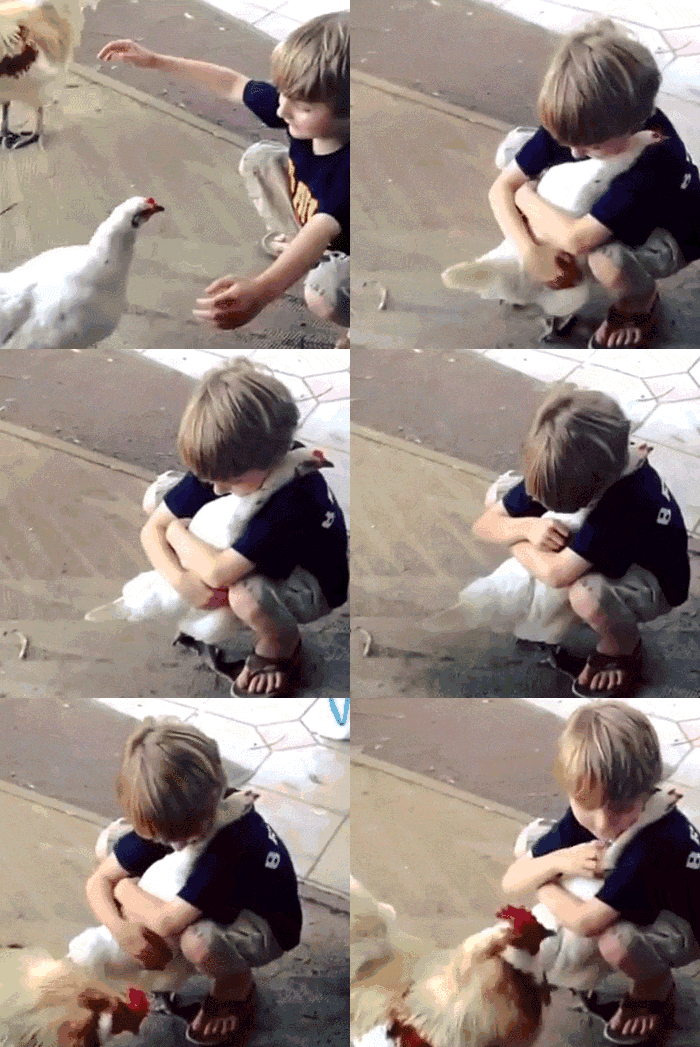
Research suggests that animals can play a very important role in the social, emotional and cognitive development of children and can also aid the development of empathy. Animals such as assistance dogs (which I hope to write a post on at a later stage), cats, horses, guinea pigs, and interestingly keeping chickens is the latest trend to help improve these skills in the autistic community!

Image result for hugging animal gif

Studies have shown that the social skills of autists who live with an animal are much greater than those who do not have a pet. Pets are often considered “social lubricants” wherein they provide autists with a source of conversation which can encourage better engagement.

Sometimes we find it a lot easier to relate to animals. I’ve often remarked growing up that life would be so much easier if we were all dogs for example. With a dog, life is black and white (fun fact– they aren’t colour blind!). You take care of them, they love you forever-simple. There are no games or tricks (well, unless like my dog yours spins round in circles when you try to brush him to make you dizzy in the hope that you will go away 😛 ), you never have to wonder where you stand with a dog, they’ll make it very clear if they love or hate you!

dfgerhrtsghs

Studies have also shown that animals in fact can have a measurable biological effect on people with autism! A recent study measured “excitement” levels in children with autism when performing such tasks as reading out loud and playing with a group. The results showed that in these situations, the excitement levels were higher in the brain indicating stress. However, when these levels were measured whilst playing with an animal they  plummeted as stroking the animal induced biological calm.

Finally!

Scientific proof that I should spend more time cuddling my dogs!!! 😉


However, as beneficial as animals can be, experts advise that the individual needs and sensitivities of the child are taken into consideration when choosing a pet. A dog might seem like a good idea, but whilst many autists may gravitate towards the soft and furry, others may be repulsed by the texture of their hair, the smell or may even be overwhelmed by their energetic nature.

Aoife’s Top Tip– Try to expose your child to different animals to gauge their reactions before making any firm decisions on a pet- they are a big commitment! The research shows that any pet, even a spider, can be beneficial 🙂

There we have it dear Earthlings- another, scientifically proven reason to love animals all the more! 😀

What better way is there to spend the bank holiday weekend than relaxing with your pet? 😉

bitmoji1415319073

Aoife

Sleep and Autism

Greetings Earthlings! 🙂

Did you know that between 40% and 80% of autists reportedly have sleep problems?

bitmoji-1207141827.png

I have spent many a restless night tossing and turning whilst my mind races. Like a washing machine on the highest spin setting, my mind keeps going round and around when I turn out the lights.

This is a fairly accurate (and cute) representation of my efforts to sleep at night:

gif.gif^

I struggle to get comfy and start thinking and stressing about my day, about tomorrow, about that embarrassing time when I got an answer wrong in class and everyone laughed at me…and it keeps rolling on in a similar never-ending loop. The pillow starts heating up (did you know that thoughts produce heat? ), I start stressing about not sleeping and how soon the alarm will go off, get frustrated and inadvertently end up even more awake than before!

Eventually I pass out, and when the sun comes up the next morning…

ugh.png

….I wake up feeling like death in a tangle of bedclothes, wearing my sheet as a scarf! 😛

It doesn’t happen every night, but on occasion, especially if I have to be somewhere important or catch a bus early the next morning. I spend so much time thinking about needing sleep that I end up chasing away any tiredness! 😛

But why are we prone to disturbed sleeping patterns?

As with many aspects of autism, it’s unclear why exactly we struggle with sleep, but the experts have a few theories on the subject:

  • Melatonin, the hormone which controls sleep and wakefulness, is thought to contribute to sleep issues in autism. The amino acid tryptophan is needed for the body to produce melatonin, an amino acid which research has shown can be either higher or lower than normal in people with autism. Ordinarily melatonin is released in response to darkness (to induce sleep) with levels dropping during daylight hours (to keep us awake). However, studies have shown the opposite in some autists, where higher levels of melatonin are released during the daytime and lower levels at night. So that explains why I’m often inexplicably dying for a nap in the middle of the day!                                                   sleepy.png
  • Sensory issues are also thought to contribute to these sleep problems. Many autists have an increased sensitivity to such stimuli as touch, light, noises, etc. During my first year in college I became somewhat of an insomniac due to city noises, late night fire alarms and paper thin walls…
  • A number of autists, such as myself, are night owls. Recent brain imaging scans have shown that there are physical differences in the brains of night owls and morning larks. Night owls show signs of reduced integrity in the white matter of the brain (fatty tissue that enables brain cells to communicate with each). This compromises the speed of transmission between neurons which can cause insomnia, daytime sleepiness, antisocial personality disorder and interfere with cognitive functioning. Differences in the integrity of white matter have been linked to ASD’s, so this could explain why we struggle to sleep at night. But it’s not all bad- some studies have shown that night owls are more productive, have more stamina and can display greater analytical and reasoning abilities than morning larks! 🙂
  • Anxiety problems are also thought to contribute to troubled sleeping

So what can you do to improve your sleep?bitmoji-330321839.png

Weighted blankets are often recommended to help manage autism. As I’ve discussed previously, autists have higher levels of stimulatory neurotransmitters and lower levels of calming neurotransmitters. Weighted blankets contain metal or plastic beads in the quilted layers to apply deep, calming pressure to the user- like simulating a hug. This pressure is designed to stimulate the release of serotonin (which helps regulate the sleep cycle and temperature) and dopamine to relax and calm the mind and to better help us to sleep.

Some studies have shown that weighted blankets do not noticeably improve sleep for autists, however many people, neurotypical and neurodiverse alike, have found that they get a much better night’s sleep from using them- so it’s worth a try!

Personally, I’ve discovered that using screens too close to bed time can make it harder for me to nod off at night. Scientists have found that the blue light emitted by most screens can interfere with the production of melatonin, making it more difficult to fall asleep. If melatonin disturbances are indeed contributing to your sleep issues, it would be wise to decrease screen time in the night time.

Aoife’s Top Tip: Ditch the laptop before bed, read a book instead! 😉

Experts also recommend avoiding caffeine, getting more exercise, establishing a routine and taking measures to manage stress.

In my experience, stress management is key to getting a good nights sleep. My memories of being an angsty teenager are littered with sleepless nights spent fretting about everything! Once I got on top of my stress, peaceful sleep was quick to follow 🙂

Sleep will come, you just have to find what works for you.

Goodnight dear Earthlings, I’m feeling a nap coming on 😉

Enjoy the weekend!

bitmoji1631749140.png

Aoife

Inside the Autistic Brain

Greetings Earthlings! 🙂

Today I’m going to dive into the physiology of the autistic brain to explain what’s actually going on at the neurological level. I’ve touched on aspects of the science in previous posts, but I wanted to give you a quick overview post where the main points in the one place 🙂

So let’s get down to some science! 🙂

247171_588045804539417_1828609848_ndg.jpg

Hyper-connected Neurons:

Scientific evidence suggests that neurons in the autistic brain are hyper-connected. Specifically, studies indicate that autists have too many synapses in the brain. The synapse is basically a gap or a junction between two neurons where chemical messengers (neurotransmitters) carry information like a ferry from one neuron to the next. It looks a little bit like this:

Image result for synapse

During normal brain development, about half of the synapses we are born with are “pruned” off. In autism, this process is slowed down, and so autistic children have an excessive amount of synapses compared with their neurotypical peers. As these connections are essential to communication between neurons, this can greatly effect how the brain works and processes information.

Dysfunction at the Junction:

In addition to possessing an excessive number of synapses, communication at these neuronal junctions is also impaired in the autistic brain.

Animal studies have indicated that synapses function differently in the autistic brain as a result of genetic mutation. Mutations cause certain proteins to be absent in autism- proteins that are essential to the normal functioning of the synapse. As a consequence of this, the transmission of information between neurons is affected, resulting in a number of social and behavioral issues.

Think of physical junctions on a busy road- if something goes wrong at the junction, a chain of chaos will ensue!

Image result for junction crash gif

Hyper-excitable Neurons:

Research shows that in many cases of autism, neurons in certain regions of the brain are more excitable than others. This means that these neurons are more sensitive to stimulation. For example, the neurons located in the sensory cortex of the brain (which processes sensory information such as smell), are more sensitive and excitable than other neurons. This is kind of like how a person can be more ticklish in some parts of the body than another- the nerves in the underarm are more excitable than those of the arm.

This sensitizes the autistic brain to all kinds of stimuli as discussed here.

Dysregulated Neurotransmitter levels:

As previously mentioned, information travels across the synapses in the brain via chemical messengers known as neurotransmitters. In the autistic brain, the levels of these neurotransmitters are dysregulated- or out of sync. Research indicates that individuals with autism tend to have higher levels of excitatory neurotransmitters (e.g. glutamic acid) and lower levels of calming neurotransmitters (e.g. GABA, serotonin) causing neurons in the autistic brain to fire excessively. In addition to this, levels of the neurohormone (a chemical that acts as both a hormone and neurotransmitter) oxytocin, which plays an influential role in trust and social behaviours, are also out of balance. Moreover, dopamine (a neurotransmitter which can both calm and excite) is also dysregulated in autism. Together, the action of biochemicals like these influences a number of autistic behaviours and issues such as ADHD, mood, appetite, sleep, anxiety, sensory processing, social behaviours, learning, memory and emotional responses.

Male vs Female Brain

Perhaps one of the most fascinating  things that I have discovered about autism are the anatomical differences between the brains of the male and female autist. Brain imaging studies have revealed that autistic women have brains that are anatomically similar to neurotypical male brains, and the brains of male autists share anatomical similarities to those of neurotypical female brains.

In short- this indicates that men with autism have feminine brains, and women with autism have masculine brains!!!

bitmoji543288982.png

I know!!!!

It sounds weird, but it makes a world of sense. Oftentimes I’ve felt like I had a male brain growing up- my tomboyish interests, my fashion sense, my preference for male company, my inability to walk in heels; it all fits!

Strange but true! 🙂

There we have it Earthlings- hope you enjoyed this brief insight into the physiology of the autistic brain 🙂 There is no clear mechanism through which autism acts, these are just some of the likely pathways involved. I’ll explore other possible mechanisms in a later post.

Have a good week everyone! 🙂

Aoife


Vaccines and Autism

Greeting’s Earthlings! 🙂

Yep…I’m going there today- the autism vaccine controversy.

Image result for exchange shocked looks gif

This issue has been thoroughly debated by scientists in recent years, so I’m going to discuss this once, and once alone.

In 1998, the now completely discredited scientist Andrew Wakefield published this paper in The Lancet:

Image result for wakefield paper

Notice the word ‘RETRACTED’ in bold red letters.

In this paper, Wakefield suggested that the MMR (measles, mumps and rubella) vaccine is linked to inflammatory bowel disease and autism.

This is what I like to call:

bitmoji-546088588.png

Subsequent to the publication of this paper, serious conflicts of interest and falsified data were discovered. This led to the paper’s ultimate retraction and Wakefield was struck off the medical register in the UK. Countless studies have endeavored to replicate the results of Wakefield’s work, but none have succeeded, proving that there is no medical link between the MMR vaccine and autism.

bitmoji1545013222.png

Here are the real facts about the case:

Wakefield’s work had multiple conflicts of interest:

  • When the paper was first submitted for publishing, he failed to disclose that he was in receipt of funds (~£435,000 or $674,000) from lawyers acting on the behalf of parents that believed the MMR vaccine was harmful!
  • During the course of his investigation, Wakefield filed a patent for a new measles vaccine, standing to gain financially from the downfall of the currently available vaccine
  • Patients were recruited to the study through anti-MMR campaigners

Several ethical codes were broken by Wakefield when conducting his research:

  • Wakefield unethically collected blood samples from children at his son’s birthday party (reportedly for £5 a pop)
  • Patients were subjected to unnecessary invasive procedures such as lumbar punctures and colonoscopies without prior ethical approval
  • The company that Wakefield sought to establish following the paper’s publication was to be headed by the father of one of the patients included in his study
  • Wakefield further tested out his new measles vaccine on a child without recording it in his medical notes or discussing it with the child’s GP
  • Most serious of all- Wakefield falsified and manipulated his findings!! It was discovered that Wakefield had either misrepresented or altered medical histories in ALL cases described in the study!

Aside from evidence tampering, the design of the study was quite poor. Wakefield’s research examined a very small patient cohort (only 12 children) using case reports- one of the weakest forms of medical research. Large scale studies examining hundreds of thousands of cases have not established a link between the vaccine and autism.

Image result for vaccine

Of the 12 children examined in the study, 5 showed signs of developmental delay prior to receiving the MMR vaccine, and a further 3 patients did not in fact have autism.

But what of other research in this area?

Studies which are often cited in the MMR controversy suggest a link between thimerosal, (a mercury containing compound), in vaccines and autism- a link which has been largely refuted. Additionally, thimerosal has been removed from or reduced to trace amounts in currently available vaccines- but autism rates still continue to rise.

Studies have also been conducted to explore the impact of the anti-vax movement on autism rates. These studies compare autism rates in those who did and those who did not receive the MMR vaccine. The result- no difference in autism rates between both groups!! 

Furthermore, following the publication of his paper, Wakefield proposed that 3 separate vaccines for measles, mumps and rubella was a safer alternative to the combined vaccine.

But did he have a point?

bitmoji2072993471.png

Nope- in countries where the practice of giving 3 separate vaccines at 3 separate stages was adopted, autism rates continued to rise regardless.

So there we have the facts about the MMR vaccine controversy. If you’re still a little bit skeptical, I’ll leave you with one final thought:

Wakefield has repeatedly refused to deny or replicate the findings of his study. If there was nothing to hide, then why not prove his claims?

bitmoji42958429.png

Aoife

Impulsivity and Autism

Greetings Earthlings! 🙂

In continuation from the previous post exploring curiosity and autism, today we’re going to take a look at impulse control in autists.

Many people with autism report issues with impulsivity.

All my life I’ve struggled with this issue. Too often I’ve felt like Didi in ‘Dexter’s Laboratory’, dying to know what the button will do and being unable to keep myself from pushing it! 😛

tumblr_lnvvttAUbb1qzc8l4o1_250.gif

As a child I was highly impulsive. I never knew when to stop eating, would impulsively give up on a book halfway through in favour of another (at one point I had 9 books on the go!)  and when overwhelmed I would often try to run away.

During one particularly interesting meltdown I began to impulsively throw all items that my mother had given me out of my bedroom window (which is a storey high I might add), whilst my sisters in the room below gleefully retrieved them, each determined to claim ownership…Clear example of black logic at work! 😛

So why do we struggle with impulsiveness?

Impulsivity in autism can be explained by deficits in what is known as executive functioning.

Image result for huh gif

Don’t worry- it’s not as complicated as it sounds! 😛

Executive functioning is simply a broad umbrella term referring to the mental processes involved in cognitive, physical and emotional self control. Examples of executive functions include planning, memory, cognitive flexibility (the ability to adapt thinking to new and unexpected situations) and most importantly response inhibition– aka the ability to suppress unnecessary or inappropriate actions.

But what causes these deficits in executive functioning?

Many autists also suffer from attention deficit disorder (ADD) or attention deficit hyperactivity disorder (ADHD), both of which have an effect on executive functioning and impulsivity. I’ll explore these disorders at a later stage 🙂

Experts believe that ASD’s share a common genetic basis with ADD and ADHD, indicating that genetic mutation may be at the heart of these deficits in executive functioning.

Impulse control can be quite challenging at times (it’s a real struggle not to run squealing to every single puppy I encounter for a cuddle! 😛 😉 ) but as I always say, it is by no means a cause for despair. You will eventually learn control with time 🙂

Granted I can still be quite impulsive at times- feeling the urge to curl up asleep on the floor like a dog in company (an urge I feel quite a lot! 😛 ), wondering what it would feel like to step on hot ash/coals or wanting to draw designs all over my face with makeup; the difference being that now I am able to choose whether to ignore or act upon an impulse 🙂

Well…for the most part! Still haven’t fully cracked compulsive eating…or maybe I just don’t want to! 😛 😉

bitmoji1655674740.png

Enjoy the weekend everyone! 🙂

Aoife

Curiosity & Autism

Greetings Earthlings! 🙂

Today I’m going to explore an aspect of autism that’s not widely discussed- curiosity 🙂

Many people find that curiosity is in fact diminished among members of the autistic community because of our preference for routine. In my experience, the opposite is true.

To quote Albert Einstein, who is widely believed to have been on the autistic spectrum:

I have no special talent. I am only passionately curious.

Passionately curious.

That’s how I would describe my insatiable sense of curiosity about the world.

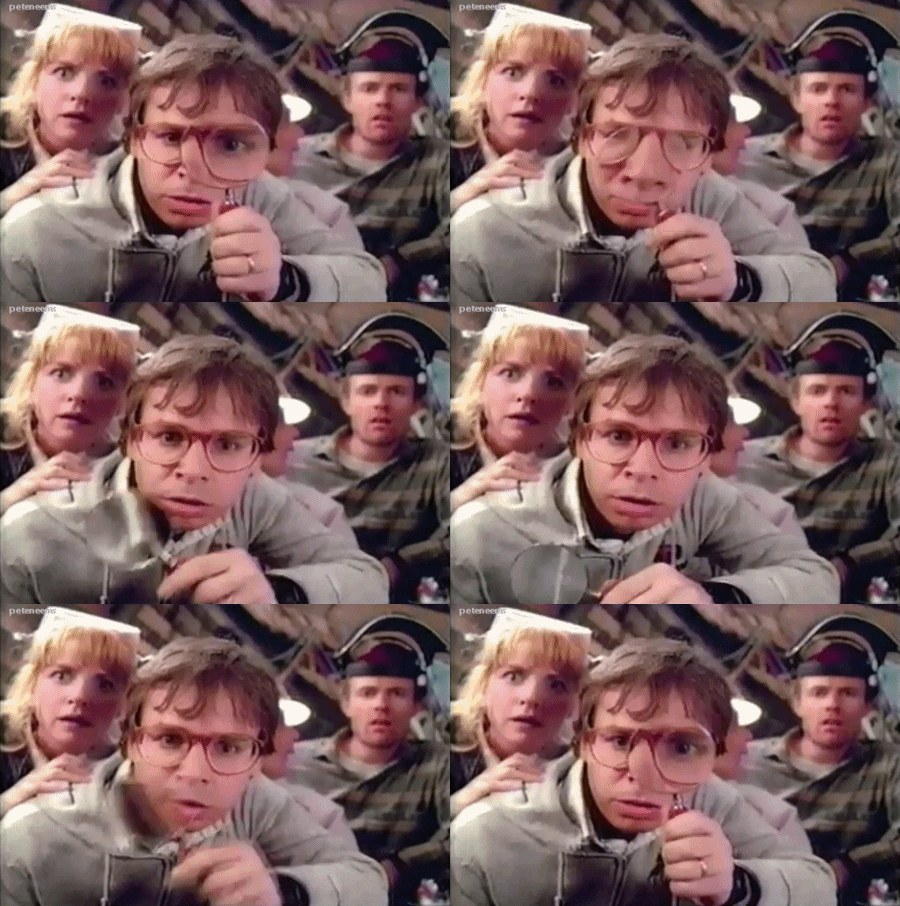
Image result for magnifying glass gif


Throughout my entire life I have been driven by my desire to acquire knowledge. The words who, what, when, where, why and how are rarely ever far from my lips. For me, it’s more than just a desire, it’s a need.

I need to know how the world works, I need an encyclopedic knowledge of those I care about, I need to know why did the chicken really cross the road??!!

If I had had Google as a child I would have been a nightmare! 😛

If I don’t get the answers I crave, it drives me insane, getting under my skin like an itch I can’t scratch. A friend recently told me she had news for me right at the exact moment I lost my WiFi signal! I nearly screamed with frustration over the next two hours trying to reconnect long enough to find out what her news was!!

Curiosity does have its uses though when it comes to the likes of science, motivating you to stick with the building blocks that will one day lead you to understand entire systems.

Buuuuuttt…as we all learned from ‘Alice in Wonderland’, curiosity can sometimes get us into a spot of bother…

Image result for curiosity gif

Many autists have issues with impulse control (which I will explore in detail on Friday 🙂 )  and as such, in my experience, curiosity can be impulsive.

For instance, I scorched the kitchen door as a child when I set fire to a drawing with a candle out of curiosity…

Another such incident (which I have no memory of but have been assured happened 😛 ), saw my younger cousin and I trap my kitten between two buckets until my horrified mother caught us in the act!

The only explanation that I can offer for my behaviour based on similar experiences is that I was interested to know what would happen! 😛

Thankfully in this instance, curiosity did not kill the cat! 😉

bitmoji343820677.png

Curiosity can also be an issue in social situations. Countless times I’ve landed myself in hot water for asking inappropriate questions, often unintentionally coming across as nosy. As with all things autism however, with time, you learn to reign in your curiosity and channel it towards something more positive, like keeping up with the latest research 🙂 (even if the unasked questions do irritatingly press on the brain 😛 )

But why am I so curious?

Unfortunately, I don’t have much to offer in the line of concrete scientific explanation I’m afraid. There doesn’t appear to be much research in this aspect of the autistic experience.

However, in terms of the general science of curiosity, the neurotransmitter dopamine plays an important role. Curiosity activates brain regions associated with pleasure and reward through the activity of dopamine, giving us that pleasurable feeling of satisfaction when our curiosity is quenched. Many addictive drugs operate through this pathway, so you could say that I’m addicted to learning! 😉

 school big bang theory sheldon cooper mind expanding drug GIF


In autism, dopamine levels are dysregulated, which may influence curiosity as a result. Moreover, increased activity in the midbrain is associated with curiosity. Brain analyses of autistic individuals reveal structural changes in this region, suggesting that perhaps these changes contribute to and account for differences in curiosity levels among autists.

Stay tuned for Friday’s post where we’ll be putting impulsivity under the microscope! 🙂

Aoife

Blog at WordPress.com.

Up ↑