Autism & Spiky Profiles

Greetings Earthlings! 🙂

This week I’d like to discuss an autistic concept that you probably haven’t heard of- spiky profiles.

What on earth is that when it’s at home?!
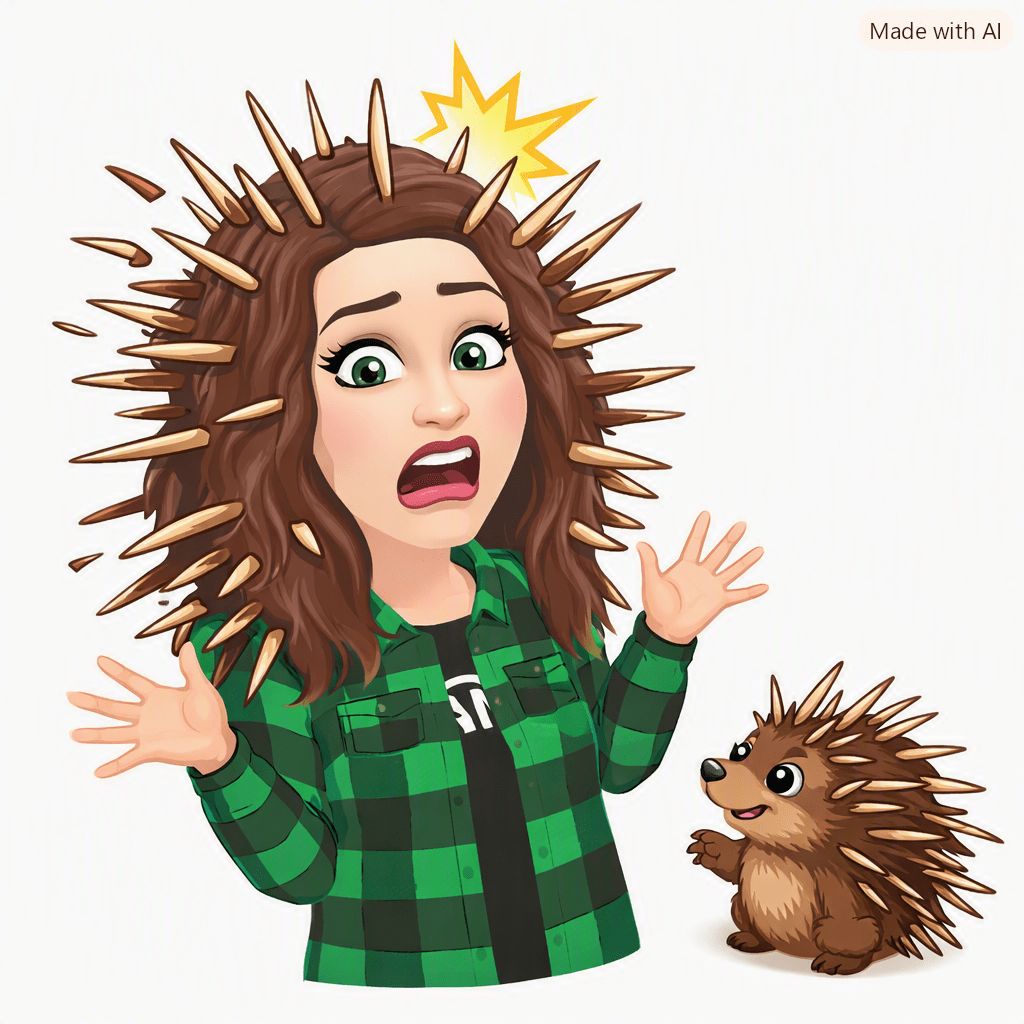
Ok, it’s not THAT literal (as prickly as many of us can be)!

Spiky profiles describe the uneven distribution of skills and abilities where an autist might be gifted in one skill, but faces significant challenges with other skills.

I know what you’re thinking, where would you get ‘spiky profiles’ out of that? The name comes from plotting an autists skills and challenges on a graph where you have massive spikes in some areas like pattern recognition, memory and attention to detail, with large valleys for challenges like social skills, sensory processing and executive functioning. In contrast if you plot this out for a neurotypical, the graph remains a flat-ish line where skills are relative to challenges. You can see an example I created to depict spiky profiles below with the neurotypical trend for comparison in grey.
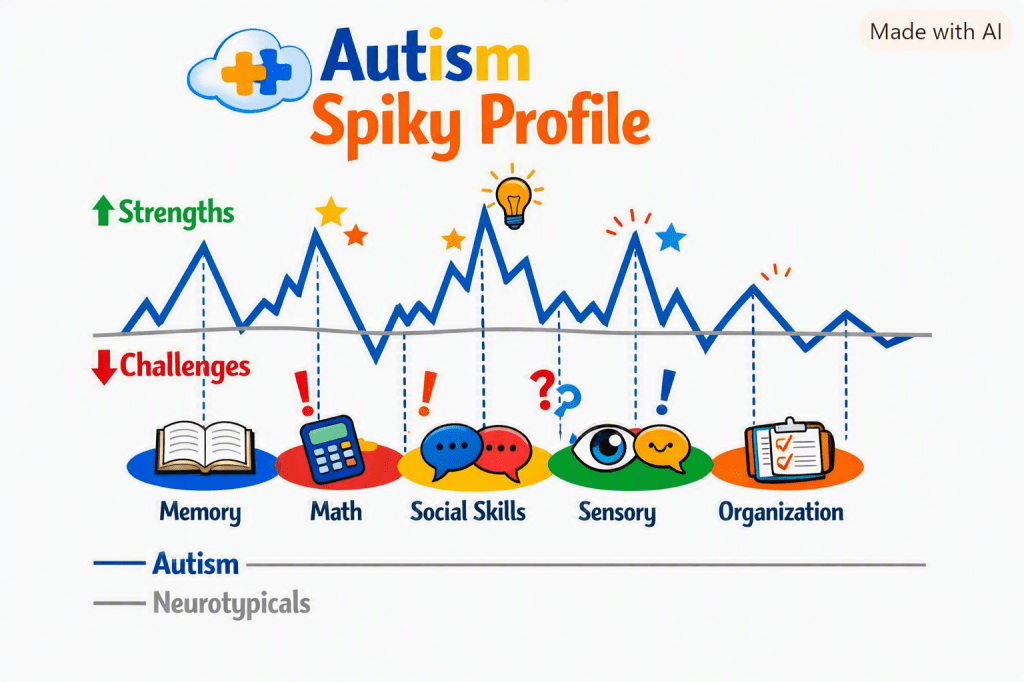
Spiky profiles certainly describe my experience of autism. My memory, my academic skills and reading levels were above average in school, buuuttttt then I would have valleys in my social skills, emotional regulation and fine motor skills. I was hyperlexic going through books faster than my mother could buy them, and yet I couldn’t tie my shoelaces- there was no in-between! A classic spiky profile.

Now you might wonder why these spiky profiles matter. It explains skill patterns, but what value does it actually bring?

It helps us to better understand that autists may have significant gaps in their skillset. Spiky profiles can hide support needs as high achievement in one area can give a false impression of the autists needs. If you’re really good at one thing, it can mislead a teacher to think that you just aren’t applying yourself in other areas, which may deny students support in their areas of need. Moreover, standardized testing and IQ scores will often average out these peaks and valleys which further gives a false impression of an autists daily needs.

In my case, no one ever picked up on my social valleys in school as my academic peaks distracted from them. It put all the onus back on me that I wasn’t trying hard enough with knitting, or that I was deliberately doing things socially that didn’t help myself, so no one figured out that I needed a different tact to support those needs. Teachers needs to be aware of spiky profiles if we are to properly give autists sufficient support as they travel through the education system.

Hope you enjoyed this post dear Earthlings! 🙂

Have a lovely weekend!

Aoife
Autism and Foot Problems

Greetings Earthlings! 🙂

This week I’d like to talk about yet another unusual autistic co-morbidity- foot problems! As I was recently being re-fit for new orthotics, I got to thinking about my feet and whether or not there was a link to autism. Annnd wouldn’t you know it- there is! Just another co-morbidity to add to my ever growing list!🤣

So what’s the story?

There are a number of common foot problems associated with autism:

  • Flat feet- where the arches of the foot collapse so the entire flat of your foot touches the ground causing balance issues, foot fatigue and foot and leg pain
  • Toe walking– where a person walk on their toes or forefoot without the heels touching the ground. This causes problems with the feet and legs such as tightness in the achilles tendon. While there’s no physical reason for this behaviour, it’s highly common in autists and thought to be a sign of understimulation or a stimming behaviour
  • Supination/underpronation– aka walking or standing on the edges of your feet. This causes inflexible feet which can cause foot issues and make you more prone to ankle injuries
  • Foot problems associated with stimming– autists may use their feet to stim in unusual ways which can have a knock on impact on foot health

But why are autists more prone to these problems?

As discussed in previous posts, autists have a lot of issues with coordination, balance and spatial awareness. These issues all have an impact on how you walk, putting excessive pressure on the feet and ankles. In addition, sensory sensitivities can cause discomfort when walking or when wearing certain footwear which can cause foot problems from lack of support or any altered movement patterns employed as a coping mechanism.

Issues with flat feet on the other hand have a slightly more physiological root. Roughly 50% of autists have a tendency towards low muscle tone (hypotonia) caused by poor neurological signaling between the brain and the muscles. Delays in communication between these causes a more floppy resting muscle tone. This weakness in leg and feet muscles can cause fallen arches among other foot problems.

Thankfully, foot issues associated with autism can be easily treated and managed with proper corrective support, specialist footwear and physiotherapy to strengthen your muscles and improve gait 😀

Hope you enjoyed this post dear Earthlings!

Enjoy the long weekend! 🙂

Aoife

Autism in your social circle

Greetings Earthlings!

This week I’d like to talk about something that a lot of neurodivergents have observed in their social circle- that lot’s of our friends are also neurodivergent! Prior to my autism diagnosis, I did not have any friends on the spectrum, or so I thought… Over the past 11 years, many of my friends have sought or are currently seeking autism and ADHD assessments. In the last year alone I’ve had four friends seek my advice about getting diagnosed.

During my school years, I didn’t really have a core group of close friends; people just didn’t get me, nor I them. Going to university opened up an entirely new world, widening my social pool and enabling me to meet more likeminded people. I quickly found tribes of friends who were equally quirky with similar interests that I connected with on a level that I couldn’t explain. We would connect within minutes as if we had known each other our whole lives, feeling completely comfortable in each others presence, unknowingly unmasking.

After my diagnosis, I slowly started to notice common autistic traits among my friends. At first I thought it was funny when friends would say the more they listened to me talking about my traits, the more paranoid they became that they had autism, but now I see the grains of truth. I’ve spoken about this with my neurodivergent friends and they have also noticed similar patterns in their social circles.

There isn’t really any research on this topic, but it seems that there is a general pattern of neurospicy birds of a feather flocking together. Autists tend towards sameness and familiarity, so naturally our social preferences also mimic these patterns. Studies have shown that friends tend to have similar brain activity patterns called neural synchrony- so on a biological level, we are designed to seek out minds that are similar to our own. In addition, studies have shown that our noses play an important part in forming friendships as we tend to gravitate towards people with natural scent profiles similar to our own. Given how autists are sensitive to smell, it’s fair to say that perhaps our nose is handpicking neurodivergent friends for us!

Hope you enjoyed this post dear Earthlings!

Have a lovely weekend! 🙂

Aoife

Celebs with autism part 5

Greetings Earthlings! 🙂

As autism diagnoses are very popular at the moment, more and more celebrities are coming out of the autism closet. So this week I’d like to continue on from my previous 4 posts on the subject and let you know about some more autistic celebs:

Talia Mar

British singer and Twitch streamer Talia Mar was diagnosed with autism in her mid twenties after years of suspecting that she was on the spectrum. She began to connect the dots after hearing about the condition as a teenager, subsequently learning to mask her struggles with eye contact and discomfort around hugs as so many autistic women do. She has also been critical of media representations of autism as they tend to focus on the severe end of the spectrum.

You can see a short clip of her discussing her autism assessment here:

Emer Maguire

Northern Irish comic and fellow science communicator Emer Maguire was diagnosed with autism in her 20’s after years of jokes from her friends that she was on the spectrum (they playfully nicknamed her ‘Autismo’). She uses her platform to educate people about autism in fun ways, performing many comedic songs about life with autism.

You can see her giving a talk and singing about her experiences of autism here:

Gregg Wallace

Controversial TV chef and former MasterChef UK host Gregg Wallace recently announced on Instagram that he has been diagnosed with autism (his son was diagnosed in 2022). However, there has been a lot of backlash from the autistic community as his diagnosis is seemingly being used to excuse the allegations of inappropriate behaviour on MasterChef for which he is currently being investigated. Moreover, he is also suing the BBC for discrimination on the grounds of his disability… Let’s move on!

Andy Warhol

While we can’t officially diagnose artist Andy Warhol (as he died in 1987), but many people have retrospectively speculated that he likely had Asperger’s syndrome. I mean, who else but a neurodivergent would famously paint a can of soup?! You can read this article in The Guardian from 1999 where they explored how autism likely influenced his art https://www.theguardian.com/uk/1999/mar/14/vanessathorpe.theobserver

Hormona Lisa

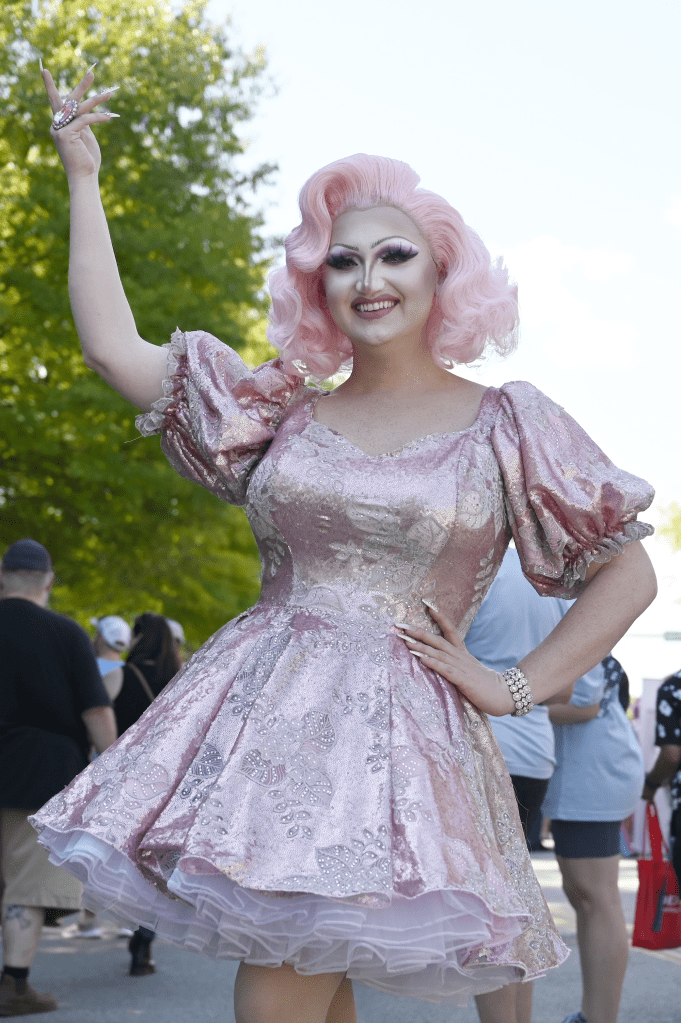
American drag queen and 2025 Ru Paul’s Drag Race contestant Hormona Lisa was diagnosed with autism 7 years ago and opened up about her experiences on Reddit. Hormona said:

“I briefly mentioned this after my elimination, but I want to officially share that I have been diagnosed with autism. I received my diagnosis nearly 7 years ago, and it really helped explain a lot of my life experiences, like never quite fitting in, no matter how much I wanted to, or people not quite understanding me. It can be frustrating at times, especially when I feel like I’m expressing something one way, but others don’t see it the same way. Still, it’s a part of who I am, and I wouldn’t change it!”

Emily Bronte

Many people have remarked that Wuthering Heights author Emily Bronte may have been autistic. Biographers believe that her genius, tendency towards frustrated, angry outbursts and her discomfort in social situations may indicate that she had Asperger’s syndrome.

Cat Burns

British singer songwriter and recent Celebrity The Traitors contestant Cat Burns was diagnosed with autism in 2023 in her early twenties. Cat has said in interviews that she always felt different to everyone else but didn’t have a name for it, but gradually identified symptoms as she got older. She learned to mask by copying her older sister’s mannerisms and from watching how people were supposed to act in films.

You can see her discussing her autism in the clip below:

Professor Green

English rapper Professor Green (real name Stephen Manderson) was recently diagnosed with autism at the age of 40 after seeking an ADHD assessment. Like many of us, the diagnosis came as a relief, allowing him to better understand his past relationships and experiences when viewed through the lens of autism.

You can watch a quick clip of him talking about his late autism diagnosis in the reel below:

Julia Fox

Actress, model and media personality Julia Fox revealed she was autistic in the comments section of one of her videos. One of her fans commented on how fascinating her random knowledge is to which she replied that it was her autism.

You can see a clip of her discussing her experiences of co-morbid ADHD and OCD here:

Hope you enjoyed this post dear Earthlings!

Have a lovely weekend! 🙂

Aoife

Autism in ‘The Unbreakable Boy’

Greetings Earthlings! 🙂

This week I’d like to take a look at autism in the film ‘The Unbreakable Boy‘ based on the book ‘The Unbreakable Boy: A Father’s Fear, a Son’s Courage, and a Story of Unconditional Love’ by Scott Michael LeRette and Susy Flory.

Starring Zachary Levi, the film tells the true story of Scott and Susy’s experiences as first time parents to Austin who has both Osteogenesis imperfecta (brittle bone disease) and autism. The film gives us an honest depiction of the ups and downs of caring for a child with needs like Austin’s and the strain that this can put on the family unit.

You can see a trailer for the film below:

So how did I rate the films depiction of autism?

It’s always interesting to see how Hollywood will handle an adaptation of a true story about an autistic child, but this film did a pretty good job. Keeping with the current trend in autistic representation, Austin is played by autistic actor Jacob Laval (who also happens to have Osteogenesis imperfecta) which always helps to truly translate the autistic experience. In the film, we get to see some of the classic signs of autism we’re used to like lining up toys and counting them, nerdy specialist interests like Star Wars and dinosaurs, violent meltdowns, OCD, food issues and literal thinking. I did get a chortle when Austin is told he was asked to do something 100 times for him to respond that it’s only been 4 times 🤣

However, the film does showcase some lesser known autistic traits like constant talking (which is rare given how often we’re presented with the non-verbal/introverted autist), tendencies towards daydreaming and fantasies, issues with hand-eye coordination, and sensory issues around clothing. In one particular scene, Austin takes off all of his clothes in the bathroom at church- a behaviour that’s common among some autists who struggle with clothing sensitivity.

The real Scott and Austin at the film premiere

On another level, while I don’t know much about the author, Scott’s character in the film certainly shows some higher functioning autistic traits himself, which is often true for parents of autists. Throughout the film, Scott struggles to cope with parenthood and develops issues with substance abuse to get through. There’s also a throwaway comment about money being wasted on Scott’s hobbies and gadgets which could be a subtle indicator of specialist interests. However, a lot of critics have remarked that focusing on Scott’s experiences in the movie tend to sideline Austin who is the primary focus of the book.

Whilst the film was a fairly lackluster affair (it doesn’t quite hit the warm and fuzzy wholesome feels you’d expect from this type of film), the depiction of autism and the strains it places on the family unit are fairly spot on, charting the highs and lows that come from life on the spectrum.

Hope you enjoyed this post dear Earthlings! 🙂

Have a lovely weekend!

Aoife
Autism and Homelessness

Greetings Earthlings! 🙂

Leading on from my previous post about autism and employment, this week I’d like to discuss the link between autism and homelessness. I was shocked to learn recently that people with autism are at a higher risk of experiencing and remaining homeless than the general population. Research varies, but estimates of autism in the homeless range from 3%- 18.5%. This is a staggering statistic given that autism in the homed population is roughly 1-2%.

But why are autists more likely to experience homelessness?

As I’ve mentioned previously, 75-85% of autists are unable to find and maintain employment. Moreover, many autists struggle with co-morbid mental health issues and can be more likely to suffer from addiction issues- all of which can be contributing factors for homelessness. As a result of these struggles, autists do not have the same means that neurotypicals do to reduce their risk of homelessness and the ability to change their circumstances once homeless.

Autism is a condition that thrives on routine, stability and regulation of sensory environments which homelessness only serves to exacerbate. The sensory struggles with weather, the unfiltered noise of the city, the nasty smells from your surroundings can be completely overwhelming. Your mental health is on a knife edge and symptoms worsen without support and understanding. Most countries already struggle to provide adequate resources for housed autists and the general homeless population, making it even harder to properly support homeless autists. There is a serious lack of understanding of autism among workers in the homeless sector, especially with regard to the female experience. Surveys among workers in the homeless sector in the UK and Ireland have highlighted these gaps with over 90% of respondents noting the low levels of support for homeless autists and the need for autism specific training.

This is clearly a challenging issue that needs care and consideration to properly support the autistic community in both preventing and reversing homelessness.

Hope you enjoyed this post dear Earthlings!

Have a lovely weekend!

Aoife
Autism and Displaced Anger

Greetings Earthlings! 🙂

Leading on from my previous posts about meltdowns, emotions and alexithymia (the inability to identify emotions in the self and others), this week I’d like to take a close look at the specific issue of displaced anger.

As I’ve discussed multiple times, autists process emotions differently to their neurotypical peers, often because they aren’t able to properly recognise what they’re feeling. In my experience, anger is one of the worst offenders. I have often had issues with displaced anger, misdirecting my wrath at everyone and anyone around me because I hadn’t been dealing with the source. Just walking around for weeks lashing out at the slightest annoyances because I hadn’t twigged that I was bothered by something else entirely.

Interestingly, I have also resorted to anger as a cloak in the past. I often found when on the verge of a meltdown being angry and rude were much easier emotions to project than what I was truly feeling. Anger was much easier to control, with less likelihood of dissolving into tears (not to mention the repellant effect). I just knew that were I to make eye contact or speak without anger in those scenarios, the floodgates would open, and it was too overwhelming to have to explain them.

There is also a cognitive emotional processing condition which can contribute to displaced anger outbursts known as anger rumination. This happens when an autist has a tendency to dwell on past experiences of anger and frustration. By focusing on these experiences, autists develop difficulties in properly processing and responding to anger. Persistent rumination on past stressors depletes your ability to self regulate resulting in behavioural inhibition, which makes you more hostile and prone to displaced anger outbursts.

While it’s never nice to be on the receiving end of these anger outbursts, try to bear in mind that you’re unlikely the cause. You might have triggered a reaction, but usually the issue runs deeper. Try to give an autist some space in these scenarios to give them time to calm down. Talking after the red mist has passed can be very helpful in allowing an autist to process their emotions in a healthy way in a safe, nonjudgmental environment.

Hope you enjoyed this post dear Earthlings!

Have a lovely weekend!

Aoife
Do people with autism look younger?

Greetings Earthlings! 🙂

Leading on my from my previous post about autism and ageing, this week I’d like to discuss whether or not people with autism look younger.

Yep, apparently there appears to be a link between autism and looking younger!

In my own experience, it has been mentioned that I look far younger than my age. I’ve always had a youthful complexion, but I’d just chalked it down to good skincare, genes and the lack of a man to turn my hair grey 😂 Never in my wildest dreams did I think that my autism might be linked to my appearance!

So let’s explore why autists look younger.

As I’ve discussed in my previous post about autism and joint hypermobility, some autists have co-morbid hypermobility conditions such as Ehlers-Danlos Syndrome (EDS). This causes structural tissues like collagen to be weaker and more elastic which causes stretchy joints. However, this increased elasticity can result in a more youthful appearance as the skin is more resistant to damage, which can delay or even prevent the appearance of wrinkles🫨

Facial expressions may also contribute to a youthful visage, as autists tend to produce facial expressions less frequently and for shorter durations than neurotypicals. A less expressive face = less wrinkles.

It’s also possible that our youthful appearance may be more behavioural than biological. A lot of autists tend to be introverted and prefer indoorsy activities away from the elements, especially those with light sensitivity. As a result, lower UV exposure may be preserving our skin from the ageing impact of the sun. My nickname was ‘Dracula’ as a teenager as I would spend summers indoors reading, often returning from sun holidays with little to no tan🙈. On another level, our tendency towards naivety, more childish interests and behaviours can make us seem younger by association rather than looks.

However, while the evidence does seem to suggest autists do look younger, there equally is evidence that some autists look a lot older. As much as EDS increases skin elasticity, it can also lead to thin, fragile skin that can be more prone to bruising, resulting in premature ageing. One study even suggests that autists experience a faster rate of ageing and that they have an older facial age. This may however be correlated to poor self care, lifestyle and the higher levels of biological stress experienced by autists, buuuttt the same can largely be said for neurotypical ageing🤷‍♀️.

Hope you enjoyed this post dear Earthlings! 🙂

Happy Easter!

Aoife

Autism and Boredom

Greetings Earthlings! 🙂

This week I’d like to discuss a topic that many autists struggle with- boredom. We all know the feeling, that mental itch that makes you want to jump out of your skin, but for autists boredom can be so much worse.

Many autists, especially those with co-morbid ADHD, crave constant stimulation. As a result, boredom occurs more easily than neurotypicals. A simple lack of interest in a topic, if a task is too easy, or feeling overwhelmed can trigger boredom and autists will tune out fast. When this happens, it can lead to negative behaviours where an autist will act out and be destructive and disruptive, it might even trigger a meltdown in chronic scenarios (I have had this happen in work following months of tedious tasks🙈).

Boredom has always been a challenge for me. I constantly need to be working on something. In school I often got in trouble for reading/drawing/writing during class as I would get ahead of my work and need to keep my hands busy while waiting for the lesson to move forward. If anything they should have encouraged my habit for productivity in my downtime! 🤷‍♀️

But what does the science have to say?

As I’ve discussed previously, autists have higher levels of stimulating neurotransmitters and lower levels of calming neurotransmitters, so their neurons are firing excessively in the brain. When they aren’t able to channel this excess stimulation into something, boredom takes over which can lead to negative behaviours that cause problems. Autists also have dysregulated levels of the neurotransmitter dopamine- the chemical involved in motivation, pleasure and reward systems. When dopamine levels are low, motivation is low, so when an activity is not enjoyable, autists won’t have the brain power to engage and boredom will set in.

On another level, there have been reports from doctors claiming that FMRI scans of ADHD brains show that areas of the brain associated with pain light up when they experience boredom, suggesting that boredom might actually be a painful experience for neurodivergents. However, other neuroscientists have refuted this claim as the human pain response largely remains a mystery, so making this assumption from the data is a bit of a stretch.

Hope you enjoyed this post dear Earthlings!

Have a lovely weekend!

Aoife

Animal Whisperer Autism

Greetings Earthlings! 🙂

Leading on from my previous posts about autism and animals, alpacas, and assistance dogs, this week I’d like to discuss a concept that has been floating around the neurodiversity reels on social media- “animal whisperer autism”.

There have been a number of reels floating around where autists claim to have “animal whisperer autism” and not “good at maths autism”, and I have to admit this sums me up in a nutshell 😂 I have always had a love and affinity with animals that has become increasingly apparent in recent years. It’s gotten to the stage lately where random dogs have pulled their owners towards me for snuggles walking down the street! 🙈

It’s not just dogs, all kinds of animals just tend to gravitate towards me- when I’m out walking my dog the local horses, cows and sheep all come up to the gate or follow along beside us in the field as we go. Once I was pulled out of bed to herd some cows that had escaped into our field (I’ve never herded cows in my life), I just walked up to them and they all randomly formed a line in front of me 😂🐄

But is there any explanation for our animal magnetism?

The evidence for this phenomenon is mainly anecdotal, so it’s not an easy one to explain. As I’ve discussed previously, animals have a calming influence on autists, so it’s possible that animals are responding to that calm- like a mutually shared vibe. In addition, studies have shown that some autists have an altered fear response wherein they show less fear than neurotypicals in a scary situation, so where many people might feel nervous around animals, an autist might not have that same fear.

Other explanations could be linked to our intuition and keen observational skills. Temple Grandin, one of the most famous autism advocates, is a leading livestock expert with particular expertise in the area of animal handling. Her observations on animal behaviour and their interactions with their environment have revolutionized humane animal treatment- the ultimate animal whisperer. With animals, there are no confusing social rules or games, so it’s easier for an autist to understand them.

Another wild explanation could be linked to body odour as different smells can control social behaviours. Studies have linked body odour to imitating behaviours in autists where an autist imitates the behaviour of their family in response to smell. If we were to apply this observation to animals, perhaps autists are becoming animal whisperer’s through imitation behaviours where we are subconsciously learning how to socially interact with animals through smell. In other words, the animals could be teaching us how to communicate with them!

However, some autists impaired perception of body odours causes them to misread social cues, so maybe this one is a long shot (or this group are not of the animal whisperer autism persuasion 🤷🏻‍♀️).

Maybe one day researchers will investigate this phenomenon properly. Who knows, maybe there’s a genetic mutation that makes us smell better to animals or some other random biological phenomenon that makes us irresistible to our feathered and furry friends? 🙃

Hope you enjoyed this post dear Earthlings!

Have a lovely weekend!

Aoife

Blog at WordPress.com.

Up ↑