Research News Update July 2018

Greetings Earthlings! 🙂

The world of research is fast paced- every day new studies are published telling us new and exciting things about the human body. As the scientific community has yet to pinpoint the exact underlying mechanisms involved in autism, the wheel of research is constantly churning out new evidence to provide us with a better picture of the autistic brain.

Since my previous post about the neuroscience of autism, there have been several new and exciting insights into the physiology of the autistic brain, so I’ve decided to give you a brief summary of the research! 🙂

research

Folding in the Brain

In recent weeks a study has emerged that suggest that symptoms of autism may be attributed to excessive folding in the brain.

No- I’m not talking origami, but the formulation of the squiggly ridges or ‘folds’ that make up the brain (by a process known as gyrification) as you can see in the gif below:

Image result for brain folding gif

Brain tissue folds to allow for a greater surface area for cognitive functioning within the cramped confines of the skull- like a bar of chocolate melts quicker when you break the pieces up, so too does the folded brain work more efficiently than if the surface were smooth.

Recent research shows that autists brains may not fold in the same way as their neurotypical peers. Some regions of the brain, such as those associated with facial recognition are smoother in autists, whereas other areas such as the temporal (sensory processing) and frontal lobes (memory and attention) show signs of exaggerated folding. Excessive folding in these areas could explain sensory sensitivities in autists, in addition to variations in memory and attention deficits. On the other hand, decreased folding in the occipital lobe may explain why autists struggle with facial reading and processing 🙂

Brain Shape

In addition to folding, recent research has focused on the cerebellum (meaning little brain in Latin) which contains roughly 80% of the neurons of the brain whilst only taking up 10% of it’s total volume! Thought to be associated with implicit learning (learning without awareness like learning to ride a bike or to swim), sensory function and cognitive function, 3D analysis of MRI data suggests that the shape and structure of the cerebellum may be different in autism. It appears that in some autists the cerebellum is flatter on the right side (the flatter the tissue, the lower the efficiency of the brain), but in autists with higher functioning social skills the structure is closer to that of a neurotypical individual- which may explain some of the communication difficulties associated with autism as the right side of the cerebellum is associated with language processing.
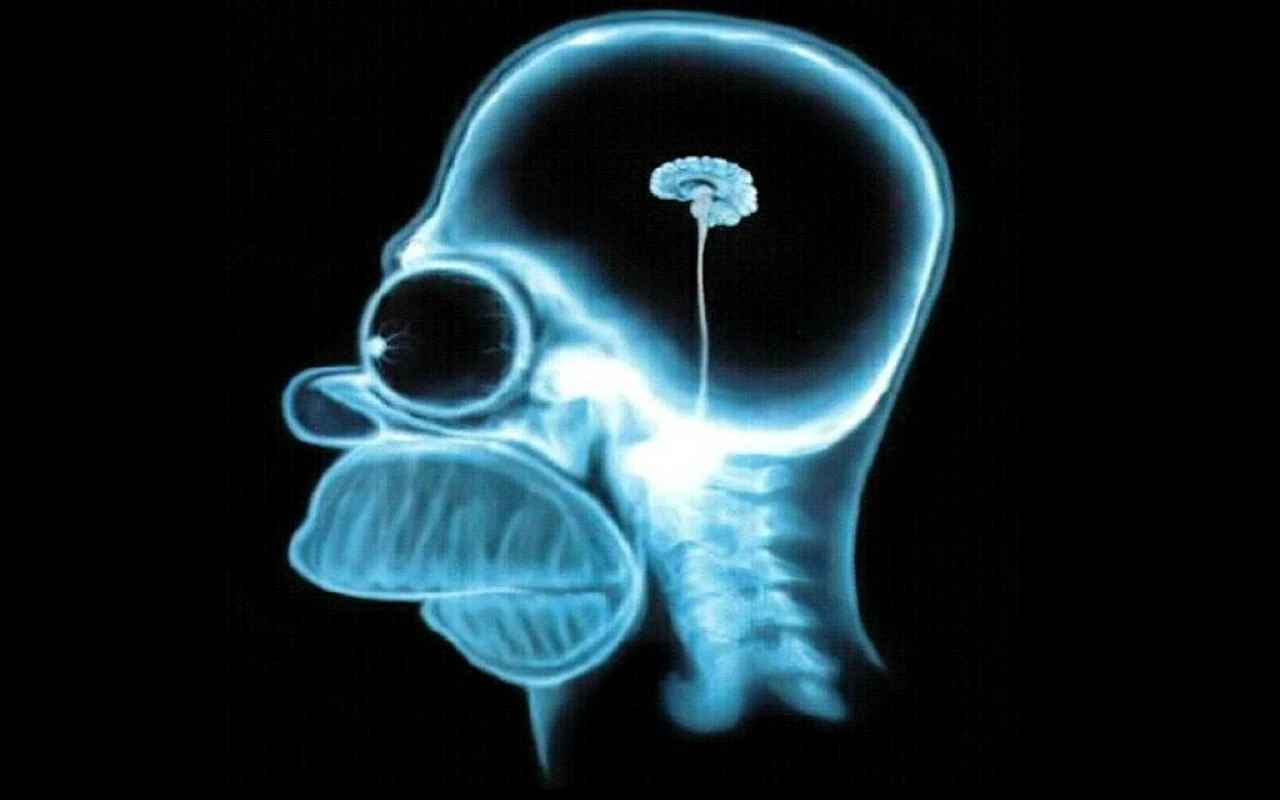
Image result for homer brain

Abnormal Brain Connections

MRI scans of preschoolers with autism have provided more evidence that the autistic brain is abnormally connected. In this study it appears that a number of brain networks connecting different areas of the brain show significant differences from neurotypicals. A number of components of the basal ganglia network in particular were altered in autism (which plays an important role in behaviour). Differences were also found in the para-limbic network which is also involved in behaviour in addition to emotional processing, motivation and self-control.

This may indicate the use of MRI scans to obtain faster autism diagnoses in the future, but it’s still very much early days 🙂

There we have it now dear Earthlings, hope you hadn’t missed me too much while I was away.

Enjoy the weekend everyone! 🙂

brain

Aoife

Autism and Memory

Greetings Earthlings! 🙂

In today’s post we’re going to explore the concept of memory and autism.

When we think of autism and memory, we often picture the ‘Rain Man‘ stereotype- an individual with superb, photographic memory.

Whilst this is a stereotypical view of autism, stereotypes often are based on fact. It is indeed true that many autists possess impeccable and often eidetic memories (although the scientific jury is still out as to whether or not true eidetic memories really exist).

Just check out this autstic artists sketch drawn entirely from memory! 😲

https://www.youtube.com/watch?v=x3IMP0fwlCM

However, the opposite is also true in that many individuals with autism equally possess a number of memory deficits such as difficulties with short term and working memory (a part of the short term memory that temporarily stores information for processing-e.g decision making, reasoning and behavior). As a result of this, children with autism often have poorer memory for more complicated information.

My own memory has always been kind of strange- I fall somewhere between having a normal memory and an eidetic one (I definitely don’t have a full eidetic memory- school would have been a lot easier if I had! 😛 )

bitmoji792226925Whilst I can’t recite the entire works of JK Rowling word for word, my brain does however, tend to randomly churn out eidetic memories every now and again (known as sporadic eidetic memory). I sporadically come out with full eidetic memories recalling such minuscule details as clothes, smells, songs, haircuts etc. My memories are so detailed that I once when recounting the previous night’s episode of Desperate Housewives to my Physical Therapist went so far as to mention the likely flavour of smoothie that the ladies of Wisteria Lane were drinking as they gossiped! 😂😬

I’ve unwittingly been dubbed the “family historian” as a result 😛

But what has the science to say about memory and autism?

bitmoji-386840795

The research is conflicting. Scientists have had great difficulty in obtaining consistent results across memory studies- they are as diverse as the spectrum itself!

However, there are a couple of areas in which scientists seem to agree:

  • Visual memory is thought to be a particular strength in autists due to increased activity in visual areas of the autistic brain, resulting in enhanced perceptual processing (and eidetic memory formation)
  • Deficits in working memory may arise from alterations in the brain networks involved in working memory such as the amygdaloid complex and the medial temporal lobe (MTL) affecting their ability to encode and process information

Fun Fact: The regions of the brain involved in declarative memory (memory of facts and events) are thought to compensate for social deficits in autism, becoming activated in social situations to allow autists to mask (for example using formulaic speech i.e. learned phrases)

That’s all for this week dear Earthlings- I hope this post was ‘memorable’ 😉

Enjoy the weekend! 😀

Aoife

Autism and Art

Greetings Earthlings! 🙂

This week I’d like to take a quick look at a more creative side of the spectrum- the benefits of art therapy 🙂

bitmoji-20180512031836.png

Too often we focus on the logic driven mathematical and scientific skills that autists often possess (*cough* ‘Rain Man‘), failing to see the array of creativity that exists within the spectrum. In fact, research suggests that there appears to be a link between milder/higher functioning forms of autism and artistic creativity- with many citing Andy Warhol (who as mentioned in a previous post (celebrities with autism) is thought by several experts to have had Asperger’s Syndrome) as a prime example. You can read about some of his bizzare traits here:  https://www.theguardian.com/uk/1999/mar/14/vanessathorpe.theobserver

Personally, I love all things creative- I  paint, I draw, I sculpt, I knit, decorate cakes and as you all know, I write. Many a weekend has been spent consumed by an art project over the years 🙂

bitmoji-20180514073006.png

In recent years, experts have begun to target creativity in autists by exploring the potential benefits of art therapy.

So what exactly is art therapy and how might it help?

With a key focus on sensory stimulation, art therapy is specifically designed with the aim of addressing deficits and problem behaviours, building life skills, promoting healthy self expression, communication and to help to instill calm.  As of yet, there is little research into art therapy, however, currently available evidence has shown that it promotes mental and emotional growth for autists through art making.

munch.png

In my experience, the calming effect of art can be quite powerful. As I’ve previously discussed, I often find it hard to switch off my brain at times. However, I have found sculpture to be a powerful way to quieten my mind in the past. I once spent an hour at Art Society in college making a sculpture of dolphins, realizing at the end that I had not thought about anything other than the movement of my hands for the entire duration! 😲 The physical effort can take up a surprising amount of your thought capacity! Granted, the moisture of the clay and drying sensation against the skin may not be great for some autists on a sensory level- but in exposing yourself to new smells and textures through a fun activity, this can greatly help to reduce your tolerance for unpleasant stimuli! 😀

Image result for ghost pottery gif

Knitting can also be quite useful to calm the mind, however, I found that the more I improved, the more room I had in my mind for thought- but hey, it’s still fun, and not as boring as it sounds (my approach should be renamed “extreme” knitting, I have in fact injured myself from my exertions and needed physio in the past… 😛 😂)!

All in all, art therapy offers us a unique way to help improve autistic behaviours by channeling them into something constructive, creative and above all fun 🙂

Enjoy the weekend Earthlings! 🙂

Aoife

Non-Verbal Autism

Greetings Earthlings,

Leading on from my recent post about voice control and autism, this week I’d like to briefly talk about non-verbal autism.

bitmoji-39779843

Granted, I cannot provide any personal insight into the matter, (I could never be described as non verbal 😛 ), but I’ll do my best to explain it! 🙂

So first things first, what is non-verbal autism?

Affecting approximately 25-50% of autists, non-verbal autism is pretty self explanatory- the autist is unable to speak.

So what causes non-verbal autism?

Again, as with most aspects of the spectrum, the cause is unclear. Non-verbal autism is highly under-researched and therefore poorly understood. However, one particular study does indicate that there may be differences in the structure of the brains of verbal and non-verbal autists in areas associated with language. Brain imaging analysis of toddlers indicated that autists who grew up to be verbal showed similar signs of activity in these areas to their neurotypical peers. Toddlers who grew up nonverbal however displayed signs of reduced brain activity in the same areas which would likely explain their struggles to formulate speech.

With early intervention and improved techniques, many nonverbal children can now learn to speak, however, a minority of autists will remain silent. But don’t despair, technological advancements in speech generating devices are now helping to reveal the inner voice of nonverbal autists.

Take the inspirational Carly Fleischmann for example. As I have discussed previously (lesser known ASDs), Carly is a non-verbal autist…and talk show host! :O Carly never let her inability to speak to keep her from her dreams of being a talk show host 🙂

Here’s a video of Carly in action 🙂 :

That’s all for this week dear Earthlings! 🙂

Enjoy the bank holiday weekend!! 😀

Aoife

Autism and Voice Control

Greetings Earthlings! 🙂

Today we’re going to briefly talk about an aspect of the spectrum that many of you may not be familiar with- voice control.


bitmoji-20180418040243

We’re all aware that autism is often accompanied by difficulties with speech (non verbal autism, apraxia, speaking in monotones etc.) however, few are aware of the challenges to control the pitch and volume of our voices.

This is especially challenging for me as I often struggle to accurately gauge my volume. For example, I may think that I am singing along at an appropriate volume, buuuuuut those who are listening to me may have slightly different reactions…

Screenshot_20180420-193011_2

I’ve probably deafened several members of my friends and family at this stage! 😛

For years I could never understand how I was chastised for my mumbling in school, but a shouter at home- I just could never seem to get the balance right.

I naturally tried to rationalize my shouting with waxy ears and struggles to be heard over the din of the school- but is there any scientific explanation for my struggles to regulate tone?

Many acoustic studies have found that prosody (an area of linguistics that focuses on linguistic functions such as tone, intonation, stress and rhythm of speech) is impaired in autists. Prosody is used to reflect emotional states, sarcasm, stress, emphasis and other areas of language that are not conveyed through grammar and vocabulary- an area where many autists struggle.

MRI studies have shown that the areas of the brain involved in the perception and processing of prosody (the left supramarginal gyrus (SMG)) are abnormally activated in autists compared to their neurotypical peers. Neurons in the left precuneus, the left medial prefrontal cortex and the right anterior cingulate cortex should be deactivated when exposed to prosody, however these areas are active in the autistic brain.

As a result, we are often unable to discern the exact pitch, tone or emphasis we should use in conversation. This  abnormal activation also explains why autists often struggle to accurately interpret another persons meaning/intention through their use of prosody in their speech.

Impairments in auditory processing of sound in the brain may also feed into this issue- so try not to judge me too harshly the next time I blow your eardrums out 😬 😉

Have a good weekend Earthlings! 🙂

Aoife

Autism and Smell

Greetings Earthlings! 🙂

As I mentioned in last weeks post on taste sensitivity, this week we’re going to discuss sensitivity to smell in autism.

Image result for smell gif

As with other senses we have discussed, autists can be either hyposensitive or hypersensitive to odours. One autist may enter a malodorous environment without noticing anything amiss, another autist may wretch, or worse!

As a child, my nose was particularly sensitive to my environment (although judging by how I could taste the beer my friends were drinking yesterday evening from the fumes alone, this may still be the case on occasion 😛 ). Bad smells were especially trying- the smell of salads, fish, cigarette smoke, incense, even something so simple as a bag of popcorn could easily turn my stomach.

But it wasn’t all bad- this sensitivity comes with a heightened appreciation for pleasant smells too 🙂

Baking, chocolate, nice perfumes, the outdoors, the smell of metal (don’t ask me why I love this one so much- must be something to do with my taste in music! 😛 😉 )- in fact, such smells are not only a sensory sensation, but can also be used to help calm an autist.

As easily as an unpleasant smell could unsettle me, the right smell could calm me back down again as a child.  I always kept a teddy or a blanket near at hand that I could smell to help soothe and calm me and to lull me off to sleep- I couldn’t sleep without one particular teddy until I was 16!

teddy.png

^^^^My teddy was a lot more raggedy than this…😬

So why does smell affect autists so much?

Interestingly, some studies indicate that there are no differences in sensitivity to smell between autists and their neurotypical peers, however, much research points to the cortex of the brain. This region is heavily involved in smell processing, and yep, you guessed it- the autistic brain shows signs of dysfunction in this region. In fact, the pre-frontal cortex shows signs of overgrowth and excessive linkage in the neurons (just like an overloaded plug), so no wonder sensory perception is altered in autists! This region is also associated with the formation and retrieval of long term memories, which could also explain why smells are often tied to memory recall in autists (which I will explore in more detail at a later stage 🙂 ).

One study also shows that autists may not inhale smells in the same way to their neurotypical peers. Evidence suggests that autists inhale deeply and intensely for both pleasant and unpleasant smells, whereas neurotypicals will tentatively sniff in the presence of an offending odour, which could further explain differences in scent processing.

In addition to this, research suggests that alterations in smell can influence social behaviours. A recent study in fact suggest that autists cannot smell fear and that there is a reversal in their response to fear. In this study, a group of autists were calm when presented with a sample of sweat from a skydiver, whereas their neurotypical peers exhibited classic signs of fear. In contrast, their fear levels increased when presented with the sweat sample from a calm individual!

In other words, an autists social behaviour may be affected by an inability to interpret social cues carried in odours- the mind boggles!

So there we have it dear Earthlings- hope this post didn’t ‘stink’ too badly 😛 😉

bitmoji-2090425460.png

Enjoy the weekend everyone! 🙂

Aoife

Autism and Taste

Greetings Earthlings! 🙂

As we have discussed in previous posts (such as sensory issues, light sensitivity and sound sensitivity), people with autism are highly sensitive on a sensory level, so naturally, taste is no exception.

Related image

Many autists have highly sensitive taste buds wherein we find a number of flavours and foods too strong and overpowering to tolerate. This sensitivity to tastes can make life very difficult when it comes to taking medicines, food selection (which we will discuss in greater detail at a later stage) and maintaining a somewhat neutral expression when put in awkward public tasting scenarios (perhaps one of my biggest personal challenges 😛 ).

bitmoji1419645621.png

On the other hand, some autists can in fact be hyposensitive to taste, often preferring foods with stronger flavours

So what’s causing these alterations in tongue sensitivity?

The research into this aspect of autism is currently quite limited, however, some neurological studies indirectly suggest that there is evidence of taste dysfunction in autism.

Many studies have shown evidence of brainstem dysfunction in the neurodiverse brain such as hypoplasia, or under development of the facial nerve nucleus (a collection of neurons in the brainstem that innervate the face). This nerve network carries taste information from the tongue and relays it to the brain. Any dysfunction or damage to this pathway can affect a persons ability to detect tastes.

Furthermore, the ability to identify tastes and flavour perception is controlled by a complex nerve network involving several different brain regions such as the thalamus, insula/operculum, the orbitofrontal cortex (OFC) and our old friend the amygdala. Many of these regions have been implicated in autism, suggesting that dysfunctions in these regions may influence an autists taste buds.

bitmoji1029366338

Recent evidence also suggests that autists may be more sensitive to bitter tastes due to genetic mutations in the TAS2R38 taste receptor. Alterations in the TAS2R38 gene can cause autists to perceive bitter tastes differently to their neurotypical peers which could explain why our taste buds are so sensitive (and why alcohol makes me gag 😛 )

Finally, an increased sensitivity to smell also feeds into these alterations in taste which I will examine next week 🙂

Until next time Earthlings! 🙂

Aoife


Autism and Pain

Greetings Earthlings! 🙂

As I am currently recovering from the removal of my wisdom teeth (contrary to popular belief- my mouth is too small 😛 ), I’ve decided to write about pain and autism this week.

Image result for pain gif

One might imagine that autists have a higher response to physical pain owing to our sensory sensitivities, however, pain perception, as with all aspects of the spectrum, is entirely individual to the autist.

Some are hypersensitive (touching the skin or simply brushing your hair can cause pain), whereas others may in fact have very high pain thresholds. Yours truly unknowingly lived with a permanent ulcer in their mouth from an impacted wisdom tooth for a couple of years due this without batting an eyelid! I thought that was how it was supposed to look…😂😬!

oops.png

So why the polar responses to pain?

The evidence as to why this is is unclear. For many years, researchers believed that people with autism were insensitive to pain as they did not always respond to pain in the usual manner (crying, seeking comfort etc), in addition to the display of self injurious behaviours. However, more recent studies have challenged this notion indicating that people with autism show signs of hypersensitivity to pain in the brain, experiencing greater physiological responses to pain than neurotypical peers.

The autistic brain clearly demonstrates alterations in “normal” pain pathways, but is there a root explanation?

Some evidence points to genetic mutations in such genes as the Shank genes (which have  recently been implicated in a number of autistic behaviours), however, the explanation could be much simpler. As discussed in previous posts, numerous neurotransmitters are dysregulated in autism- neurotransmitters which play an important role in our perception of pain.

Evidence suggests that Dopamine in particular plays an important role in the modulation of pain perception and analgesia in the body. Many studies have linked dopamine dysregulation to autism, which could explain why pain responses vary among autists 🙂

There we have it now Earthlings! 🙂 Hope this post wasn’t too “painful” for you! 😉

Okaaaay, that was a bad one! Sorry 😛

We’ll blame that pun on my wisdom teeth! 😉

bitmoji-630449596

Enjoy the weekend everyone! 🙂

Aoife

Autism and Light Sensitivity

Greetings Earthlings! 🙂

As twinkling Christmas lights are rapidly being erected around me, I’ve been thinking a lot about autism and light sensitivity this week.

Light sensitivity, also known as photophobia (although the phobia part has never really made sense to me! 😛 ), is quite common for autists.

Image result for the light it burns gif

We are hypersensitive to other sensory stimuli such as sound, so naturally, light too can cause sensory issues for many autists. The wrong lighting environment can cause a whole host of problems that can exacerbate behavioural issues.

If lighting is too bright, this can distort vision, cause headaches and sleep disturbances, and of course, sensory overload and meltdowns. Equally, some autists can be hypo or under sensitive to light. This can cause issues with depth perception, coordination and clumsiness in addition to blurred vision.

In my experience, I have some minor sensitivities to light. Bright lights don’t bother me as such, but I find that I sometimes need to wear sunglasses to take the edge off of a sunny day- sometimes even on a grey one. There exists many photos of me climbing a mountain in the midst of a rain storm wearing my sunnies without a care in the world!😂

rain sun.png

Getting to sleep can also be a minor issue for me if the lighting is wrong- a past trip to Norway during 24 hours of light was an absolute nightmare! (it’s just not right!! 😛 )

So why are we more sensitive to light?

Well, as with many aspects of autism, there has been little research into this particular trait. One study has shown that the pupillary light reflex (the reflex that causes our pupils to either shrink or dilate in response to light) is noticeably different between autists and neurotypicals. Results from this study indicated that this reflex is delayed in autists, where the pupils constricted at a slower velocity and a smaller amplitude (i.e. the maximum size the pupil could constrict to) to neurotypicals. If our pupils are not regulating the entry of light into our eyes as efficiently as our neurotypical peers, this could explain why light can sometimes overwhelm us.

Optic nerve hypoplasia (a condition where the nerve connecting the eyes and the brain is underdeveloped) has also been indicated in a number of cases of autism, with photophobia being one of the main symptoms. So perhaps the development of the optic nerve may be impacted in the autistic brain.

So what can you do to help navigate this sensory issue?

  • Wear sunglasses– Ah, my best friends! I carry a pair in my handbag at all times as you never know when the sun might unexpectedly peep out- even in Ireland! 😛 For night time, why not try an eye mask (although if you’re as fidgety as I am at night, this could end up on the floor before dawn! 😂)!
  • Install a dimmer switch– A useful tool to help optimize light levels to suit the individual (and loads of fun to play with! 😉 )
  • Coloured Filters (overlays or lenses)– These are designed to block specific wavelengths of light which a person may be sensitive to in order to manage visual stress; however, there is no real research to support this claim. But as I always say- if it works for you, give it a try! 🙂

sun.png

Hope you enjoyed this post Earthlings! 🙂

Have a great weekend! 😀

Aoife


Autism and Pensivity

Greetings Earthlings! 🙂

This week I’m going to talk a little bit about pensivity and autism, or as my sister describes it in my interview with her, “staring into the abyss.” 😛

We all have those moments where we retreat into ourselves. Our eyes glaze over, we tune out from our surroundings and make weird, subconscious facial expressions as we dreamily ride the thought train round and round.

why am i the way i am.png

For an autist, these spells of introspection tend to happen a little more frequently. Our minds move so fast that we often find it hard to concentrate, and somehow we slip into this abyss of swirling thoughts:

‘What do I want for dinner tomorrow?’

‘Is evolution real?’

‘What would I look like as a blonde?’

‘What would it be like to have an Alpaca farm!?’ (genuinely spent a weekend considering the practicalities once!)

These are just a few of the millions of questions that I spend my time pondering in the abyss, proceeding to explore these thoughts in minute detail! 😛

I’ve been known to spend almost an hour lying on my bed, staring into space without saying a single word to anyone!

bed

Once I’ve fallen in, my mind could literally go anywhere-I’ve even conjured up a musical based on the music of My Chemical Romance during one of these particular spells!

It’s not a bad thing in my experience, I get some of best ideas wandering the abyss, but people just don’t know what to make of me in this state in social situations. As my sister says, it really creeps her out watching me! 😛

I suppose I can’t blame her when I often sit around staring like this for 40 minutes:


bitmoji1032267440.png

Half the time, I’m not even aware that I’m doing it, which can be awkward on a night out.  If it get’s very loud or the conversation goes stale, I just slip down into the depths, awoken from my reverie several minutes later by bemused friends and colleagues! 😬

What people fail to understand however, is that I am perfectly content in my little bubble. Yes I look strange, and my face may not show it, but I’m perfectly fine 🙂 In fact I sort of enjoy thinking, just floating around exploring the darkness of the abyss. It’s actually a little bit soothing in an odd way.

Autists are not good with the unknown. We like structure, things we can predict and prepare for. By questioning, or pondering the unknown in our minds, this can help to make the world seem a little less scary. Knowledge is power after all!

So don’t panic if you see me stumbling into the abyss- I’m probably just wondering where I can buy an alpaca! 😛 😉

Enjoy the weekend everyone! 🙂

Aoife

Blog at WordPress.com.

Up ↑