Have you ever had any burning questions about autism that you’d like answered?
Is there any aspect of autism that you’d like to know more about?
For the past 18 months, you’ve listened to my ramblings about life on the spectrum, but now I’d like to turn it over to you guys! 🙂
For some time now I’ve been meaning to start a series called “Ask an Aspie” to allow you the opportunity to ask me questions/address the spectrum topics that you want to know more about 🙂
So write me a comment or send me an email and let me know what YOU want to know most about! 😀
Today I’m going to explore one of my favourite pastimes and it’s benefits for the autistic community- gaming! 🙂
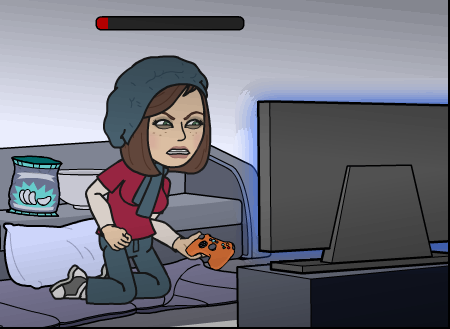
Ah gaming- one of the true loves of my life! 😛 😉 It keeps me entertained, it’s fun, and ironically helps me to switch off when my brain is cluttered with other matters, drawing me into the game and allowing me to escape from my troubles.
But gaming, whilst fun, hasn’t always been that well received. Concerns are regularly voiced about violence in shooter games, obesity, and the antisocial nature of gaming. In particular relation to the autistic community, expert Tony Attwood has expressed concern at the addictive nature of gaming (especially with regard to specialist interests) and it’s potential to isolate autists and discourage them from making social efforts.
I think it’s fair to say that I’ve wasted a significant portion of my life investing hours upon hours, weeks, months and even years into my craft, but has it all been a waste? Might gaming actually be beneficial?
Some studies have shown that gaming provides a number of cognitive benefits in improving basic mental abilities (think back to the days when brain training was a huge deal in the noughties). Other studies believe that gaming offers a healthier alternative to watching TV as gamers are less likely to snack on unhealthy foods versus a TV viewer (I’ve certainly forgone food and delayed bathroom breaks when I’ve been in the zone! 😂). Moreover, research suggests that gaming can help children develop executive, logical, literary, and even social skills- the latter being particularly beneficial for children with autism.
One game in particular has shown numerous benefits for autists- Minecraft. For those of you who are unfamiliar with the game, Minecraft is “a game about placing blocks and going on adventures”, where the player uses colourful blocks to create a 3D world in which to play. Experts say that the game encourages and motivates learning, increases perception, boosts creativity and improves hand eye coordination (I do have to wonder how much worse my coordination would be were I not a gamer 😛 😂).
Contrary to the belief that gaming encourages antisocial behaviour, Minecraft is helping children with autism build healthy social lives and relationships through the “Autcraft” community. In 2013, Stuart Duncan, a web developer, set up a special server exclusively for people with autism so that they could have a social experience through Minecraft within the safety of this online community. Autists can chat to and game with other players online allowing them to thrive socially in a safe environment where they don’t have to worry about social cues or facial expressions- just fun 🙂
Never been interested in playing it myself (I prefer higher quality graphics like in the Final Fantasy games), but the game certainly looks promising in helping autists 🙂
You can watch a Ted Talk below about the benefits of Minecraft for kids with autism:
So there you have it dear Earthlings, I hope you enjoyed this post! 🙂
This week I’d like to take a quick look at a more creative side of the spectrum- the benefits of art therapy 🙂
Too often we focus on the logic driven mathematical and scientific skills that autists often possess (*cough* ‘Rain Man‘), failing to see the array of creativity that exists within the spectrum. In fact, research suggests that there appears to be a link between milder/higher functioning forms of autism and artistic creativity- with many citing Andy Warhol (who as mentioned in a previous post (celebrities with autism) is thought by several experts to have had Asperger’s Syndrome) as a prime example. You can read about some of his bizzare traits here: https://www.theguardian.com/uk/1999/mar/14/vanessathorpe.theobserver
Personally, I love all things creative- I paint, I draw, I sculpt, I knit, decorate cakes and as you all know, I write. Many a weekend has been spent consumed by an art project over the years 🙂
In recent years, experts have begun to target creativity in autists by exploring the potential benefits of art therapy.
So what exactly is art therapy and how might it help?
With a key focus on sensory stimulation, art therapy is specifically designed with the aim of addressing deficits and problem behaviours, building life skills, promoting healthy self expression, communication and to help to instill calm. As of yet, there is little research into art therapy, however, currently available evidence has shown that it promotes mental and emotional growth for autists through art making.
In my experience, the calming effect of art can be quite powerful. As I’ve previously discussed, I often find it hard to switch off my brain at times. However, I have found sculpture to be a powerful way to quieten my mind in the past. I once spent an hour at Art Society in college making a sculpture of dolphins, realizing at the end that I had not thought about anything other than the movement of my hands for the entire duration! 😲 The physical effort can take up a surprising amount of your thought capacity! Granted, the moisture of the clay and drying sensation against the skin may not be great for some autists on a sensory level- but in exposing yourself to new smells and textures through a fun activity, this can greatly help to reduce your tolerance for unpleasant stimuli! 😀
Knitting can also be quite useful to calm the mind, however, I found that the more I improved, the more room I had in my mind for thought- but hey, it’s still fun, and not as boring as it sounds (my approach should be renamed “extreme” knitting, I have in fact injured myself from my exertions and needed physio in the past… 😛 😂)!
All in all, art therapy offers us a unique way to help improve autistic behaviours by channeling them into something constructive, creative and above all fun 🙂
So today I’d like to take a quick look at one of the most famous TV characters in recent years- ‘The Big Bang Theory’s‘ Sheldon Cooper.
Strictly speaking, the show’s creators have said that Sheldon is not specifically autistic (and have been frequently criticized for stereotyping autistic behaviour), however, the evidence is overwhelming that he is a cornucopia of autistic traits. In fact, having seen every episode (and many episodes dozens of times thanks to the constant replays on E4!), I believe that he has demonstrated practically every single common autistic trait, and also many rarer traits which the average viewer may miss.
In case you haven’t seen him in action, here’s a video of some of his best “sheldonisms:”
So let’s take a closer look at who exactly is Dr. Sheldon Cooper?
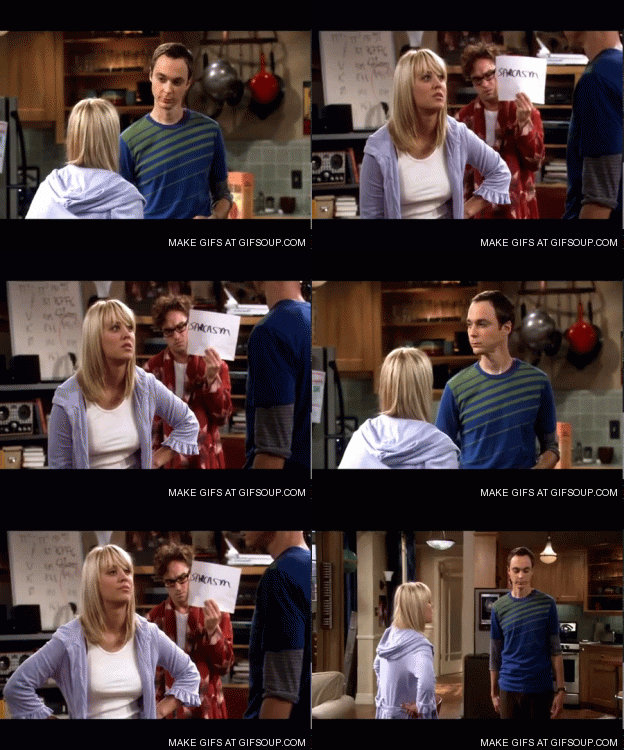
Sheldon is a socially awkward, routine obsessed, theoretical particle physicist of genius intellect (*cough stereotype*!) who’s array of outrageous quirks have been the cornerstone of ‘The Big Bang Theory’s‘ enduring success. Much of the show’s humour hinges on Sheldon’s OCD, specialist interests (such as trains, physics, comic books and sci-fi), mind blindness and bluntness, with particular attention to his struggles to perceive sarcasm. Sheldon constantly has to be coached on appropriate social behaviour, including one particularly memorable episode where he had to practice smiling to feign support when his friend Raj was being obscenely obnoxious.
It may surprise you to hear that many autists have struggles with smiling, particularly in forced situations such as in front of the camera (or in Sheldon’s case in an attempt to endear himself). I certainly went through a phase of not knowing what to do with my face in pictures as a child- there’s some pretty awful photos of me from one particular holiday until I copped how creepy it looked 😬!
Sheldon has also shown signs of synaesthesia (a phenomenon where one sense is perceived in terms of another i.e. hearing colours, smelling sounds etc- which I will talk about in a later post), a common, but not widely known autistic trait in the following scene:
Immortalized by the line “I’m not crazy; my mother had me tested!” (a line which I have jovially used since my own diagnosis 😛 😉 ), Sheldon can be a lot to handle. His narcissism, OCD, TMI and childish tendencies whilst comedic, often alienate him from friends, family and the world in general.
As annoying as Sheldon can be however, we have seen huge improvement in his character over the course of the last 11 seasons- he has become more socially aware of others, more in sync with the ins and outs of humour, more comfortable with touch and has even bagged himself a girlfriend who will soon become his wife in the current season finale 🙂 This character development is particularly poignant as it shows how in spite of the difficulties associated with autism, with time, effort and a LOT of patience, autists can overcome so much! 😀
All in all whilst Sheldon’s character is highly exaggerated with many stereotypical autistic behaviours, I think it’s really important that a character like Sheldon features so prominently in a prime time TV show to help normalize the autistic experience, and more importantly to see the lighter side of things. So often we fail to see the funny side of autism- what can you do but laugh when Disney films trigger a happiness meltdown (wouldn’t know anything about that happening…😬😂)?!
Leading on from my recent post about voice control and autism, this week I’d like to briefly talk about non-verbal autism.
Granted, I cannot provide any personal insight into the matter, (I could never be described as non verbal 😛 ), but I’ll do my best to explain it! 🙂
So first things first, what is non-verbal autism?
Affecting approximately 25-50% of autists, non-verbal autism is pretty self explanatory- the autist is unable to speak.
So what causes non-verbal autism?
Again, as with most aspects of the spectrum, the cause is unclear. Non-verbal autism is highly under-researched and therefore poorly understood. However, one particular study does indicate that there may be differences in the structure of the brains of verbal and non-verbal autists in areas associated with language. Brain imaging analysis of toddlers indicated that autists who grew up to be verbal showed similar signs of activity in these areas to their neurotypical peers. Toddlers who grew up nonverbal however displayed signs of reduced brain activity in the same areas which would likely explain their struggles to formulate speech.
With early intervention and improved techniques, many nonverbal children can now learn to speak, however, a minority of autists will remain silent. But don’t despair, technological advancements in speech generating devices are now helping to reveal the inner voice of nonverbal autists.
Take the inspirational Carly Fleischmann for example. As I have discussed previously (lesser known ASDs), Carly is a non-verbal autist…and talk show host! :O Carly never let her inability to speak to keep her from her dreams of being a talk show host 🙂
Following a recent trip to Amsterdam a very wise friend suggested that I discuss the subject of autism and travel in this weeks blog 🙂
We all love nothing more than a nice trip away for a new adventure or some much needed R and R. For autists however, travelling overseas, (like life in general 😛 ), can be very stressful.
The crowds, the smells, lack of sleep, ear popping, travel sickness, the stress of beeping going through airport security knowing that random people may invade your personal space- it’s a lot to process!
So how might one navigate some of these difficulties?
Pack plenty of snacks– one of the trickiest aspects of travel I find is to find “Aoife friendly” food. If you’re travelling long hours without something decent in your stomach, it can be very difficult to stay sane. Eating healthier snacks may also help you avoid some travel sickness. Aoife’s Top Tip– the discovery of Belvita Breakfast Biscuits has made my life sooooo much easier!
Sleep/Caffeine– I know it’s not the easiest of tasks, but try to get as much sleep as possible before/during a flight. Nothing frays my temper quicker than sleep deprivation. Caffeine is also useful to help get you through the slumps- or Diet Coke if you like me have sensory issues with hot drinks 🙂
Vigilance with metal– To avoid any unexpected pat downs, be sure to double check your pockets before security (you wouldn’t believe the things security have found in my granddad’s pockets- drill-bits to name but one memorable example! 😛 ). Be sure to also double check your hair clips and jewelry- real metals such as silver and gold won’t set the alarm off 🙂
Neck pillows- there’s a lot to be said for a good neck pillow on a flight! These can really help to make an autist more comfortable in the cramped confinings of a plane
Noise Cancelling Headphones/earplugs– These can be quite useful to help decrease the volume of your surroundings, and can also help to decrease the pressure round your ears in my experience. However, on my flight this week I learned that the use of large headphones is now forbidden for take off and landing- so you may need to check this out with your airline
In addition to this, airports are beginning to realize the importance of creating an autism friendly environment. Shannon Airport here in Ireland for example has established Europe’s first airport sensory room in the departures lounge. You can check it out here: http://www.shannonairport.ie/gns/passengers/prepare/autismandspecialneeds.aspx
Shannon airport have also implemented a customer care program for autists where special caps and wristbands are assigned so that airport staff can readily recognize and help an autist appropriately.
It’s only a matter of time before other international airports begin to follow suit 🙂
Today we’re going to briefly talk about an aspect of the spectrum that many of you may not be familiar with- voice control.
We’re all aware that autism is often accompanied by difficulties with speech (non verbal autism, apraxia, speaking in monotones etc.) however, few are aware of the challenges to control the pitch and volume of our voices.
This is especially challenging for me as I often struggle to accurately gauge my volume. For example, I may think that I am singing along at an appropriate volume, buuuuuut those who are listening to me may have slightly different reactions…
I’ve probably deafened several members of my friends and family at this stage! 😛
For years I could never understand how I was chastised for my mumbling in school, but a shouter at home- I just could never seem to get the balance right.
I naturally tried to rationalize my shouting with waxy ears and struggles to be heard over the din of the school- but is there any scientific explanation for my struggles to regulate tone?
Many acoustic studies have found that prosody (an area of linguistics that focuses on linguistic functions such as tone, intonation, stress and rhythm of speech) is impaired in autists. Prosody is used to reflect emotional states, sarcasm, stress, emphasis and other areas of language that are not conveyed through grammar and vocabulary- an area where many autists struggle.
MRI studies have shown that the areas of the brain involved in the perception and processing of prosody (the left supramarginal gyrus (SMG)) are abnormally activated in autists compared to their neurotypical peers. Neurons in the left precuneus, the left medial prefrontal cortex and the right anterior cingulate cortex should be deactivated when exposed to prosody, however these areas are active in the autistic brain.
As a result, we are often unable to discern the exact pitch, tone or emphasis we should use in conversation. This abnormal activation also explains why autists often struggle to accurately interpret another persons meaning/intention through their use of prosody in their speech.
Impairments in auditory processing of sound in the brain may also feed into this issue- so try not to judge me too harshly the next time I blow your eardrums out 😬 😉
This week I’d like to discuss something I’ve briefly touched upon in previous posts (women and autism, ‘Please Stand By‘)- autism and masking.
So what is masking?
Masking is a common behavioural trait within the autistic community wherein social mimicry is used to “mask” other autistic behaviours in social settings.
Basically this means that autists consciously employ techniques from social observation (such as forced eye contact and rehearsed conversations) in order to better blend into the social landscape to prevent their autistic traits from sticking out. You may not see the autism, but it’s still there behind the mask. Some autists even carry multiple masks to be used for different audiences.
Masking mainly tends to happen among girls with autism rather than boys (boys have also shown signs of masking but not to the same extent). Studies have shown that autistic women are generally better at recognizing emotions than their male peers (almost as good in fact as neurotypicals) and show greater social attentiveness which feeds into our ability to mask.
For example, take a quick look at this video I shared in my previous post where a group of autistic women go speed dating with an oblivious group of neurotypical men:
For me personally, social masking kept me under the ASD radar for many years. Without realizing it, I had been giving an Oscar worthy performance for most of my life.
I figured out how I was “supposed” to act from observing those around me, reading books and watching films (though sadly the amount of rom coms/romance films/novels I consume led to some unfortunate learning curves! 😛 ). I forced myself to make eye contact and to watch my mouth more, I even devised a sort of mental go-to phrase card with acceptable answers to such tricky questions as ‘How are you?’ or how to appropriately answer the phone (which I still dread by the way 😛 )
In one of my more extreme forms of masking, I somehow developed the ability to cry only out of my right eye when I would experience mini meltdowns in school so that the tears would roll down unseen behind a curtain of hair! 😬
I became really good at being invisible….well, at least between meltdowns! 😛 😉
Social masking in girls is thought to be one of the primary reasons that women with autism often go undetected into adulthood, if at all. Research suggests that the ability to mask may even prevent those who have been flagged for assessment from getting the formal diagnosis that they need. In addition to this, a recent survey of autistic adults reported universal exhaustion from their masking exertions which is why it is so important that we develop better diagnostic tools for women on the spectrum.
In this weeks edition of ‘autism on screen’, we’re going to take a look at a brand new film about autism- the 2018 film ‘Please Stand By.‘
What’s that I see in the poster? A young woman with autism?! 😲
FINALLY!
Nice to see Hollywood change things up a bit!
So what’s the story about?
Starring Dakota Fanning (was wondering what she was up to these days after Twlight!), ‘Please Stand By‘ tells the story of Wendy, a girl with Asperger’s syndrome living in a home for people with disabilities. When the opportunity arises to enter a screenwriting contest for ‘Star Trek‘ fan-fiction, Wendy must step outside her comfort zone and boldly cross the country alone (she ran away- a common trait in autistic women) in order to get her script to the studio on time.
You can check out the trailer for the film here:
So how did this film fare in it’s depiction of autism?
Well…as excited as I was to see this film…the reality did not live up to my expectations.
Indeed, Wendy showed the classic signs of autism- meltdowns, lack of eye contact, preference for routine, social awkwardness, literal thinking etc., but she did not stand out as a unique character. She was quirky, but there was nothing unique about her quirks, unlike Sigourney Weaver and her fondness for snow in ‘Snow Cake.‘
Surprisingly, Wendy didn’t appear to be a savant as in other films, however, she did have superb recall of the minutia of her specialist interest ‘Star Trek‘!
I am a little shocked seeing as her character was so derivative in other respects! 😛
What really bugs me about this film however were the missed opportunities. As Wendy spends much of this film by herself, ‘Please Stand By‘ had the perfect opportunity to focus in on the challenges of a high functioning female autist. To the outside world, most autistic women appear fine; we employ learned/observed techniques to blend in- known as ‘masking’. However, behind closed doors it’s a very different story.
Case in point-check out this clip from last week’s Channel 4 documentary ‘Are You Autistic‘:
You would never know that these women are on the spectrum, but you could pick Wendy out of a lineup!
The film uses a lot of narrative introspection to give us some insight (albeit minor) into the autistic psyche, but alas the full potential here was not harnessed. Wendy mainly spoke in ‘Star Trek‘ quotes which while poignant, this narrative could have been put to better use to give us true insight into the speed/and or disordered array of thought within the autistic mind. I often compare my thoughts to that of Marisa Tomei’s character in ‘What Women Want‘ (which by the way is just as funny 18 years on as it was when it was released… Man I feel old!😬).
To be quite frank, the film is kind of forgettable (I even had to look up Wendy’s name she left that little of an impression on me!)- it just didn’t draw me in and I found it incredibly tedious.
But as I say with all these films- if you think it’s your thing, why not check it out? One man’s trash is another man’s treasure after all! 🙂
Continuing on from my post discussing if you should tell your child that they have autism, this week I’m going to discuss how to talk to your child about their diagnosis.
When should I tell my child they are autistic?
As with autism, the answer to this question is entirely individual. Some higher functioning autists may be ready for this information at a younger age than others, or may even be so high functioning as to not need this information during their formative years (as in my case- though in hindsight it would have helped a lot!). Timing can also vary with the age of diagnosis. Girls for example are often diagnosed much later in life than boys with autism.
In general, many experts recommend telling your child around the time they start to become self aware of their differences to their peers- roughly around 6 years old, but this awareness will vary among autists. I, for example, always felt that I was different to my peers, but I never openly questioned it until after I had received my diagnosis in my 20’s.
How do I tell my child they are autistic?
As with when, there is no right or wrong way as to how you talk to your child about autism (just maybe don’t spring it on them out of nowhere the way my parents did 😛 ), but here are some tips and tricks that may help you:
Pick your moment– be very careful with you timing. Make sure that your child is content and calm in a familiar place, things will be much harder if they are anxious
Don’t rush– Ensure that there is plenty of time to talk things through with your child. They will have questions and may need extra time to process what you are saying
Keep it simple– There will be plenty of time to introduce them to the world of neurodiversity as they grow. Just introduce them to autism one toe in the water at a time. Top Tip– There are a lot of useful kids TV shows (such as Sesame street andArthur) and books explaining autism in an age appropriate way which could help this conversation 🙂
Emphasize that this is a good thing– Whilst an autism diagnosis can be difficult to process initially, ultimately it is a good thing. Your child will get the help and supports they need to thrive, they will better understand themselves and be understood. However, the black and white autistic mind deals in good and bad. Sometimes an autist cannot perceive the difference between a little bit bad and plain bad which can cause great distress (à la 6 year old Aoife who thought she had to leave home as she could not be good! 😛 ). Highlight the importance of difference and make it clear that this is not a bad thing for them- different, but not bad 🙂
How do I explain autism to my child’s siblings?
In much the same way as you would tell a child they are autistic, sit them down and have a casual chat about their sibling (or even friend- awareness in the community is crucial to changing societies attitudes for future generations of autists 🙂 ). Depending on the age of the child, what you tell them can vary to suit. Show them videos, give them a book, tell them a helpful analogy (I do love my Supergirl one!) etc to help them understand. Explain that their friend/sibling works a little bit differently and that they don’t always mean to say or do certain things, but we must love and accept them as they are 🙂












 A Is For Aoife Not Autism