Autism on Screen- The Assembly

Greetings Earthlings! 🙂

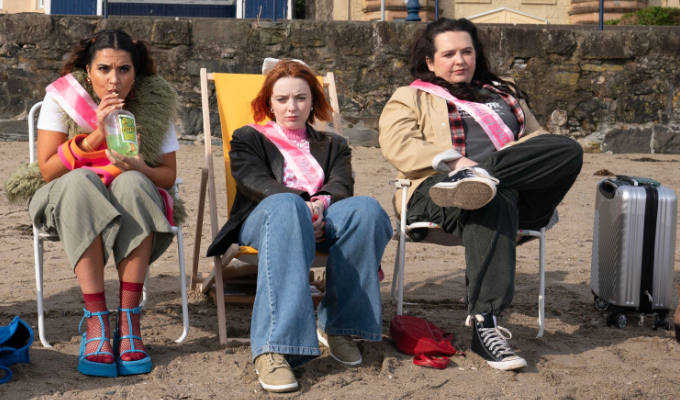
This week I’d like to talk about a new TV interview show on BCC called ‘The Assembly’. The format of this show involves a celebrity being grilled by a panel of journalists over the course of 3 hours (30 minutes of which are broadcast). Sounds simple enough, however, the unique thing about this TV show is that the panel is comprised entirely of 35 neurodivergent novice journalists! Bucking the growing trend of highly scripted, edited, agenda driven interviews, the show is an un-filtered breath of fresh air where no question is out of bounds.

The Assembly is carefully recorded with autists in mind to prevent sensory overload, such as recording in a room with lots of natural light (to avoid fluorescent artificial lights). This show is the UK adaptation of the popular French show ‘Les Rencontres du Papotin‘ where many French public figures such as Emanuel Macron were interviewed by a neurodivergent panel run by the newspaper Le Papotin. In honour of Autism Acceptance Week, the BBC broadcast an interview with Welsh actor Michael Sheen on Friday the 5th of April. There are no further episodes currently scheduled, but showrunners have lots of eager celebrities wishing to be interviewed should The Assembly be picked up for series. You can see a trailer for the series here:

The show is a very heartwarming and wholesome affair that has had reviewers raving about it. The questions are so unexpected (ranging from Michael’s opinions on the royal family to the age gap between him and his partner) with delightful results. Michael is such a kind and patient interviewee providing insightful and hilarious answers to the delight of his audience. In one particularly touching moment, a very shy interviewer named Leo is struggling to get past his nerves to ask his question, but Michael is patient with him, allowing him the time and space to ask a very insightful question about Michaels favourite poet.

All in all the show is a wonderful change to your regularly scheduled BBC interview, with the added bonus that the show provides visibility and creates opportunities for the often marginalized autistic community.

Hope you enjoyed this post dear Earthlings! 🙂

Have a lovely weekend!

Aoife

Learning and Autism

Greetings Earthlings! 😀

Leading on from my previous posts about autism and memory, IQ, and studying, this week I’d like to talk about the topic of autism and academic learning.

First things first, autism is NOT a learning disability. It’s a neurodevelopmental disorder which impacts how our brain develops and the rate at which it develops having an impact on motor learning, social learning, language learning etc. That being said, ASD‘s can be co-morbid with learning disabilities such as dyslexia, ADHD and dysgraphia.

Everyone’s academic learning journey is unique, especially among autists. Autists can have problems concentrating in classrooms due to sensory sensitivities, issues with social skills can make it harder to interpret teaching cues, and difficulties with executive functioning and information processing can make it hard to process new information.

I’ve always had a passion for academic learning, but even I’ve had my struggles. I struggled hugely with maths in my teenage years. Once letters came into equations I regularly had meltdowns and got overwhelmed when I couldn’t immediately make sense of the topic. One of my most enduring memories of school is throwing my maths book at the wall mid meltdown while doing my homework 🙈

Buuuuuttttt I would usually be able to make sense of the exercises once the meltdown had passed. My teachers unfortunately didn’t understand this (the joys of being undiagnosed) which often made my learning journey challenging. Had I been given the opportunity to work slowly 1:1 with maths, I would have picked topics up a lot quicker.

Everyone’s learning style is different, especially when considering the challenges of autism. There are several different learning styles:

  • Visual learning– where learners take in information better visually through pictures, graphs and mind maps to help make connections
  • Auditory learning– where learners listen to information for optimal processing
  • Verbal learning– using verbal approaches like reading out loud and mnemonic devices
  • Reading/writing learning– classical learning approach by reading and writing
  • Kinesthetic learning– physical learning by doing tasks or needing to move while learning
  • Logical learning– where logic and pattern recognition skills are used to connect concepts
  • Social/Interpersonal learning– where you learn best by observing others, and talking and communicating with a social group
  • Solitary/Intrapersonal learning– where you just need to be by yourself to learn on your own with no distractions

Sometimes a mix of learning styles can be the best approach- I have employed all of these styles at different points in my life, but I would largely fall into the visual and kinesthetic learner categories. Seeing things drawn out and or doing tasks is often the best way for me to process information. For example, I tend to take notes using coloured pens as the visual stimulation from the colours makes it easier to process and retain the information.

There are so many different ways to learn, it’s just a matter of sitting down and figuring out what kind of learning style works for you, or working out a plan to limit classroom issues like sensory challenges that can derail your learning process. Lot’s of apps and supports are available for autists these days that can help make learning a lot easier.

The key thing is to not get discouraged. No two autists are the same and it can take a while to find what learning style works for you. When I took maths and biostatistics in college, the lectures were overwhelming, but once I sat down to a tutorial session where we worked hands on with the sums in an intimate environment, I flew through the work and got excellent marks in my exams. It takes time, but once you find the right approach, learning can be a breeze 😊

Hope you enjoyed this post dear Earthlings! 🙂

Have a lovely weekend!

Aoife

Autism and Rejection Sensitive Dysphoria (RSD)

Greetings Earthlings! 🙂

This week I’d like to talk about another co-morbid condition with autism and ADHD– rejection sensitive dysphoria (RSD).

So what exactly is RSD?

RSD is an intense or overwhelming emotional sensitivity to rejection and criticism (both perceived and real). This can cause intense emotional pain that can be difficult to bear.

Looking back over my childhood, I really struggled with RSD. Whilst I am well versed in the art of rejection now that I’m in my thirties, growing up as an undiagnosed autist did not make for an easy ride. Even the slightest rejections could trigger meltdowns as my brain struggled to process the situation. Something as simple as someone not immediately having time for me, a passing comment in a raised tone, even constructive criticism could set me off. Once at a family event in a hotel I had a bad meltdown because my uncle was short with me for requesting a different flavour of ice-cream to the one that I had been given. Cue me hiding out in the toilets followed by 3 hours doodling in the back of the car instead of joining the party from my RSD over-reaction (I was 13 by the way! 🙈). I can’t even blame sensory issues for that over-reaction, I just didn’t feel like eating raspberry ripple that day! 😂

So is there any scientific reason for RSD?

RSD, like maladaptive daydreaming, is not a clinical diagnosis so it’s hard to underpin how it works. There isn’t exactly a scientific way to measure rejection. However, as it has been observed in patients with autism and ADHD, psychologists believe that it is caused by alterations in brain structure in the regions that regulate and process emotions such as the frontal lobe and the amygdala- both regions where structural changes have been linked to autistic symptoms.

As discussed previously, autists often have a warped sense of perception and logic so it can be very easy to misconstrue and over-react to rejection. The tendency towards perfectionism and black and white thinking in particular can make us far more susceptible to such negative reactions. For example, if someone told me that they didn’t like my shoes, even though it’s only one component of my outfit and just a passing comment, my younger self would have spiraled.

Life is often all or nothing for an autist, so if someone rejects one small thing, it may skew our entire perception of ourselves.

You don’t like my shoes = you don’t like me.

The shoes are wrong, I chose the shoes, the shoes are on my body, therefore, I’m wrong. The world is black and white so if I’m wearing the wrong shoes, everything else about me has to be wrong by extension- you’re either wrong or right, you can’t be both.

RSV can be pretty exhausting for an autist, so understanding of our responses to rejection is vital to supporting us. If you’re struggling with RSV, cognitive behavioural therapy (CBT) can help you learn how to better process feelings of rejection, but medication such as ADHD drugs and anti-depressants can be useful for more severe cases.

Hope you enjoyed this post dear earthlings!

Have a lovely weekend! 🙂

Aoife

Autism and Clothing

Greetings Earthlings! 🙂

This week I’d like to briefly expand on something that I touched on in my previous post about skin sensitivity, -the importance of clothing and autism.

bitmoji-20190401080206

No, I’m not going to talk about fashion, but function!

For many autists, it can be quite difficult to pick out clothes. A stray fiber, an itchy label or a prickly seam can unleash a storm of sensory discomfort. Gene mutations cause the nerves in our skin to be extra sensitive to certain stimuli. This coupled with hyperactivity in the cortex and the amygdala (both regions involved in sensory processing) don’t make for the happiest of bedfellows.

But what if the clothes that irritate us could in fact be used to manage autistic symptoms?

bitmoji431833082

Clothes are now being designed and adapted to cater for the different needs of autists. Companies are now producing  seamless socks and underwear, looser fitting clothes made from softer materials, and most interestingly, weighted and compression clothing.

Based on the research of the great Temple Grandin and her hugging machine, both weighted and compression clothing provide calming, deep pressure stimulation much like a soothing hug. The pressure switches off the sympathetic nervous system (fight or flight) to the parasympathetic nervous system (rest and digest), promoting the release of “feel good” neurotransmitters. Based on this, it’s thought that autists are better able to cope with sensory issues, hyperactivity, motor skills and sleeplessness when wearing sensory clothing.

It’s a really interesting premise- there’s even been an inflatable sensory scarf produced that’s designed to provide soothing pressure in addition to emitting calming aromas! Check it out:

https://www.wired.com/2015/08/odd-looking-clothing-designed-help-autistic-kids/

In reality however, the results are mixed. Scientific studies indicate that weighted and inflatable vests do not appear to be effective and are not clinically recommended, yet the personal testimonials of families across the globe beg to differ. One testimonial claimed that a child’s meltdowns went from 12 a day to having none in 3 years!

Either way, nothing ventured nothing gained, so if you think that sensory wear may be of benefit to you or a loved one with autism, why not give it a shot? 🙂

With the variety of sensory wear available, you’ll at the very least look fabulous! 😉

bitmoji216715141


Enjoy the weekend everyone! 😀

Aoife

Autism and Mental Health

Greetings Earthlings! 🙂

Did you know– autistic children have higher levels of depressive symptoms and are 28 times more likely to have thoughts of suicide than their neurotypical counterparts? 😲

bitmoji1256098968In recent years our awareness of and willingness to tackle mental health issues has increased significantly, however, the autistic community is often forgotten in our discussions.

Mental health issues such as OCD, anxiety, depression, eating disorders, ADD, psychosis, personality disorders and bipolar disorder are frequently co-morbid with ASD diagnoses, but aside from OCD and anxiety, you will rarely hear about these other issues in relation to autism. In fact, such mental health issues can even obscure ASD diagnoses in higher functioning autists as clinicians often diagnose the co-morbid condition without seeing the underlying ASD.

This is a particularly big issue for women on the spectrum as experts have found that we tend to exhibit greater depressive symptoms and higher anxiety levels than our male counterparts as we tend to internalize and ‘mask‘ our struggles. Moreover due to differences between male and female presentation of ASD’s and male bias in the development of the diagnostic criteria, women with autism are often misdiagnosed as having mental health issues, but the root ASD continues to evade.

bitmoji-20190226102522

But are there any scientific reasons why mental health issues are so prevalent among autists?

A recently published study has suggested that perhaps the gut may influence an autists mental health. As gastrointestinal issues are often co-morbid with an ASD diagnosis, and as the microbes that live in the gut can have an influence on the brain and behaviours, it has been proposed that perhaps a “dysbiosis” or imbalance in gut microbes may have an influence on an autists mental health 😲

Interestingly studies have also identified an overlap between the genes that cause schizophrenia, bipolar disorder and autism wherein certain points on these genes encode proteins that are involved in the formation and strength of synapses (which act as chemical bridges between neurons) suggesting that these disorders may act through a similar neurological pathway. Moreover, dysregulation of neurotransmitters (biochemical messengers in the brain) has also been implicated in depression, anxiety, bipolar disorder, ADHD and autism (as we have discussed in multiple previous posts) indicating further neurological overlaps.

In short, it seems that the biological basis of both autism and mental health issues are intertwined, which could explain why so often the two walk hand in hand.

bitmoji-20190226101111

Hope you enjoyed this post dear Earthlings! 🙂

Until next time!

Aoife


Autism and “Stimming”

Greetings Earthlings! 🙂

Today I’d like to touch on one of the most commonly observed autistic behaviours- “stimming”.

So what exactly is “stimming?”

Self-stimulatory behaviour, (also known as stereotypy or “stimming”), refers to many of the repetitive behaviours often exhibited by autists. Examples of these behaviours include scratching or rubbing the skin, noise making, smelling objects and the classic examples of rocking and  hand flapping, although in my experience it’s a lot more like ‘Jazz hands’ than flapping!

jazz hands.gif

There are two psychological theories as to why autists stim:

  • As a response to overwhelming sensory stimuli
  • As a means of relieving stress and anxiety

From a physiological perspective, there are a number of possible biological reasons.

Some researchers believe that stimming provides the autist with sensory stimulation. Contrary to common belief, many people with autism have a reduced sensitivity to certain sensory stimuli. Dysfunctions in the circuitry of the brain mean that the body craves sensory stimulation, and so we adapt repetitive behaviours in order to stimulate and excite our nervous system.

Deficits in dopamine levels in the brain can also interfere with our reward pathways, leading autists to engage in behaviours, such as stimming, which will provide the extra hit of dopamine that the brain needs.

So that’s why I’m drawn to fluffy things! 😉

Image result for stroking fluffy gif

Aside from being drawn to stimulatory texures, I have a particular tendency to fidget with the silver chain around my neck. I just find something oddly soothing about the rough sensation of the metal against my skin! 😛

In my experience, I also find that stimming isn’t always a response to stress, but born from a need to keep my hands busy.

As I’ve discussed previously, research shows that autists have higher levels of excitatory neurotransmitters such as glutamate, and lower levels of calming neurotransmitters in the brain. As a result, we are often hyper-stimulated. Stimulation of the brain’s reward system, i.e.  dopamine release through “stimming” behaviour, causes a decrease in glutamate levels, effectively calming the brain!

This would explain why I’ve often found that stimming sometimes helps me to concentrate and clear my mind by channeling any excess energy into a physical action. I find this particularly helpful when I’m studying, or writing, and for some strange reason while I’m waiting for the microwave to ping! 😛 #excitedforfood

Image result for fidgeting gif

Stimming can also be considered a form of self injurious behaviour, but I’ll write a separate post on this topic at a later stage 🙂

So is there anything that can be done to control this type of behaviour?

bitmoji339468972

  • Try replacement behaviours– if the stim is not socially acceptable or harmful, as in the case of biting behaviours, attempt to replace the stim with another one such as a fidget toy or chewing rubber
  • Exercise– there is evidence to suggest that exercising can decrease the frequency of stimming behaviours, although the research is unclear why
  • Cognitive behavioural therapy (CBT)– is thought to be useful as self stimulatory behaviour operates in a similar way to OCD tendencies which are often managed through CBT techniques
  • Medication– Seems there’s a pill for everything these days! Medications can be used to help modify compulsive behaviours such as stimming, but I personally would not advocate this route

So there we have it Earthlings, a brief insight into stimming behaviours in autism! 🙂

Enjoy the weekend everyone! 🙂

Aoife

Autism on Screen- Atypical

Greetings Earthlings! 🙂

So today I’m going to place Netflix’s latest original offering ‘Atypical‘ under the microscope.

Image result for atypical

The series has been widely discussed within the autistic community this week, but in case you haven’t heard about it- ‘Atypical‘ is a coming of age series which follows Sam, an eighteen year old boy with high functioning autism as he sets out to find a girlfriend.

You can watch a trailer for the series here:

The series has received mainly positive reviews from critics (Forbes claim it to be the greatest series Netflix has ever made- uh, ‘Daredevil‘ anyone? 😛 ), but some have critiqued the stereotypical nature of the character of Sam.

So what did I make of it?

fgsdtr

Show creator Robia Rashid, who herself has experience of autism in her personal life, conducted a lot of background research and hired autism consultant Michelle Dean to review all scripts and cuts- and in my opinion, it shows!

I found ‘Atypical’ to be a quite enjoyable and endearing series. I particularly enjoyed the coming of age angle, taking us away from the typical child/awkward adult portrayals that we see all too often on screen. It’s refreshing to see autism from the perspective of a teenager on the spectrum, a particularly turbulent time in the life of a change resistant autist (even more turbulent if navigated undiagnosed as in my case).

And guess what- the creators didn’t resort to savant stereotypes! 😀

Granted, Sam is highly intelligent with an excellent memory, but these traits are subtly infused within the fabric of his personality. I particularly found the acting from lead Keir Gilchrist, who based his portrayal on his experiences with autistic friends, to be quite excellent, especially for an actor of his age.

Image result for atypical

However, as excellent an actor as Gilchrist may be, many have criticized the show for casting a neurotypical actor in the main role. On the other hand, show creators did feature actor Anthony Jacques (seen on the right below), who is himself autistic. Alas, while described as a “supporting” character in many reviews of the show, he briefly appears in only two episodes.

Capture.PNG

Nevertheless Jacques’ character of Christopher forms a refreshing addition to the cast with his quirky enthusiasm, representing a higher functioning bracket of the spectrum.

Perhaps the thing I enjoyed most about the show was how it focused not just on how autism impacts Sam’s life, but it also gave equal screen time to the impacts of autism within his wider social circle. We see the toll that autism has placed on Sam’s parents and their marriage, the responsibility that Sam’s younger sister burdens herself with and the reactions of friends and others in the community towards Sam.

As much as I personally enjoyed the show however, there were times where Netflix veered towards the stereotypical. For example, I felt that Sam was a little too literal in his thinking/responses:

Zahid (Sam’s friend): “I’m taking you to Poon-city!”

Sam: “That’s not a real place”

We have our moments yes, but not everything is quite that literal.

Related imageRelated image

I also found issue with how Sam always speaks in measured monotones- a common autistic stereotype. Whilst, yes, this is characteristic of some within the autistic community, it is not for all. My tone of voice for example can be anywhere from high pitched to a deep drawl depending on the mood I’m in (or an opportunistic head cold 😉 ). This stereotype crops up time and time again in on screen portrayals and it is really starting to bug me! 😛

Once again as I watched this show, I felt as though I were seeing yet another carbon copy autistic person dance across my screen. The show talks about neurodiversity, but the character of Sam is, to my eye, far from diverse.

Perhaps Netflix would do well to feature an autistic female lead if the show is renewed for a second season.

All in all, ‘Atypical‘ is a mostly enjoyable affair so check it out if you have a spare 4-5 hours for a weekend binge watch 🙂

Aoife

Inside the Autistic Brain

Greetings Earthlings! 🙂

Today I’m going to dive into the physiology of the autistic brain to explain what’s actually going on at the neurological level. I’ve touched on aspects of the science in previous posts, but I wanted to give you a quick overview post where the main points in the one place 🙂

So let’s get down to some science! 🙂

247171_588045804539417_1828609848_ndg.jpg

Hyper-connected Neurons:

Scientific evidence suggests that neurons in the autistic brain are hyper-connected. Specifically, studies indicate that autists have too many synapses in the brain. The synapse is basically a gap or a junction between two neurons where chemical messengers (neurotransmitters) carry information like a ferry from one neuron to the next. It looks a little bit like this:

Image result for synapse

During normal brain development, about half of the synapses we are born with are “pruned” off. In autism, this process is slowed down, and so autistic children have an excessive amount of synapses compared with their neurotypical peers. As these connections are essential to communication between neurons, this can greatly effect how the brain works and processes information.

Dysfunction at the Junction:

In addition to possessing an excessive number of synapses, communication at these neuronal junctions is also impaired in the autistic brain.

Animal studies have indicated that synapses function differently in the autistic brain as a result of genetic mutation. Mutations cause certain proteins to be absent in autism- proteins that are essential to the normal functioning of the synapse. As a consequence of this, the transmission of information between neurons is affected, resulting in a number of social and behavioral issues.

Think of physical junctions on a busy road- if something goes wrong at the junction, a chain of chaos will ensue!

Image result for junction crash gif

Hyper-excitable Neurons:

Research shows that in many cases of autism, neurons in certain regions of the brain are more excitable than others. This means that these neurons are more sensitive to stimulation. For example, the neurons located in the sensory cortex of the brain (which processes sensory information such as smell), are more sensitive and excitable than other neurons. This is kind of like how a person can be more ticklish in some parts of the body than another- the nerves in the underarm are more excitable than those of the arm.

This sensitizes the autistic brain to all kinds of stimuli as discussed here.

Dysregulated Neurotransmitter levels:

As previously mentioned, information travels across the synapses in the brain via chemical messengers known as neurotransmitters. In the autistic brain, the levels of these neurotransmitters are dysregulated- or out of sync. Research indicates that individuals with autism tend to have higher levels of excitatory neurotransmitters (e.g. glutamic acid) and lower levels of calming neurotransmitters (e.g. GABA, serotonin) causing neurons in the autistic brain to fire excessively. In addition to this, levels of the neurohormone (a chemical that acts as both a hormone and neurotransmitter) oxytocin, which plays an influential role in trust and social behaviours, are also out of balance. Moreover, dopamine (a neurotransmitter which can both calm and excite) is also dysregulated in autism. Together, the action of biochemicals like these influences a number of autistic behaviours and issues such as ADHD, mood, appetite, sleep, anxiety, sensory processing, social behaviours, learning, memory and emotional responses.

Male vs Female Brain

Perhaps one of the most fascinating  things that I have discovered about autism are the anatomical differences between the brains of the male and female autist. Brain imaging studies have revealed that autistic women have brains that are anatomically similar to neurotypical male brains, and the brains of male autists share anatomical similarities to those of neurotypical female brains.

In short- this indicates that men with autism have feminine brains, and women with autism have masculine brains!!!

bitmoji543288982.png

I know!!!!

It sounds weird, but it makes a world of sense. Oftentimes I’ve felt like I had a male brain growing up- my tomboyish interests, my fashion sense, my preference for male company, my inability to walk in heels; it all fits!

Strange but true! 🙂

There we have it Earthlings- hope you enjoyed this brief insight into the physiology of the autistic brain 🙂 There is no clear mechanism through which autism acts, these are just some of the likely pathways involved. I’ll explore other possible mechanisms in a later post.

Have a good week everyone! 🙂

Aoife


Autism on Screen- Adam

Greetings Earthlings! 🙂

Today we’ll be taking a look at the representation of Asperger’s syndrome in the 2009 (although filmed in 2005) romantic drama film ‘Adam‘ starring Hugh Dancy and Rose Byrne.

Adamposter09.jpg

Adam‘ focuses on the relationship between Adam, a man with AS, and Beth, his neurotypical next door neighbour, as they embark on a romantic relationship. The film charts their relationship from unorthodox origins (Adam unwittingly asks Beth if she is aroused one night when struggling to read her emotions) to (**SPOILER ALERT**) strained ending, as both parties endeavor to better understand the other.

Check out the trailer below:

So how does ‘Adam‘ rank in it’s depiction of autism?

Scientifically speaking, ‘Adam‘ presents the audience with many of the classic characteristics of AS, providing insight into the emotional, sensory and social issues which many of us deal with on a daily basis, such as Adam’s struggles with job interviews.

One of the finer details in the film that stood out for me was how Adam separates different foods on his plate so that nothing is touching. This can be seen in the screenshot below:

adam.png

I remember reading ‘The Curious Incident of the Dog in the Night-Time‘ by Mark Haddon as a teenager and identifying with how Christopher does not like his foods to be touching as ‘Adam‘ demonstrates here.

For me, certain foods that touch contaminate flavours and textures so I often endeavor to separate them on my plate. It’s a logical thing- I’m not crazy, I swear!!! 😛 😉

Ironically, I never put two and two together about having AS myself! 😛

The film is flawed however, in that the character of Adam is a highly intelligent electronic engineer with a photographic memory, further perpetuating the rare savant stereotype…

Dear film makers/screenwriters-enough with the savant skills already! It’s been done to death! 😛

In addition to this, there is one slightly insulting moment in the film wherein Adam is not considered “dating material” in Beth’s social circle. Granted, Beth largely ignores the advice of friends and family to pursue a relationship with Adam, buuuut (* *SPOILER ALERT**) ultimately agrees that they are from two different worlds and cannot make the relationship work.

Indeed, relationships can be hard for us, but that does not mean that we are incapable of making them work (I know several neurodiverse-neurotypical romantic pairings). One of the biggest problems in the relationship between Adam and Beth is that Adam is unable to tell Beth that he loves her. Believing that Adam sees their relationship practically and not emotionally, Beth makes the decision to break up with him as a result.

As previously discussed (Discussion: Love and Romance), saying ‘I love you’ can be quite difficult for an autist, but that does not mean that love isn’t there. I may struggle to say the words to the ones I love, but love them I do.

In watching the film, it’s obvious that Adam loves Beth, he just has a different way of showing her- something that parents, friends and significant others alike should be aware of. We do love you, it’s just hard for us to show it sometimes 🙂

All in all, ‘Adam‘ is a quirky affair that balances both the positives and negatives of life on the spectrum to give a relatively (we’ll let the high IQ/memory slide this time) realistic insight into the autistic experience 🙂

Aoife

Social Awkwardness & Autism

Greetings Earthlings! 🙂

Soooo today we’re going to talk about perhaps one of the biggest banes of my life- social awkwardness! 😛

I’m not going to lie- social awkwardness is not fun. The constant fear of saying the wrong thing or not knowing what to say, the burning sensation in your face that’s never far away (huzzah for unintentional rhyming! 😀 ).

This article sums up the feeling pretty nicely through gifs’ s:

http://mashable.com/2013/08/15/awkward-gifs/#N36QeeXevGqn

Sitting awkwardly by yourself waiting for friends to arrive in a pub, tapping your glass and constantly sipping just to look like you belong, the pitying glances of bar staff when they see you at a table alone-the awkwardness can be all consuming.

ddddd.png

I can’t tell you how many times I’ve wanted to run from/avoid social encounters because of this awkward feeling.

Awkwardness is worse still when you’re hit by memories of previous awkward encounters! It’s a real domino effect- one awkward memory brings dozens more to the surface until you’re drowning in the red hot embarrassment of a cringe attack! 😛

I am constantly haunted by memories of my social awkwardness, buuuut as time goes on, you eventually learn not to dwell on your social failings 🙂

It’s a struggle yes, but you can push through the awkwardness. Over the years I’ve devised ways to navigate the rapids- making self deprecating jokes, keeping a mental list of backup topics for awkward silences, chugging a drink you’ve been bought (but don’t like) while your friend is in the bathroom so they don’t see your disgusted facial expressions 😛 😉

Social awkwardness may be a pain, but ultimately you can’t let the fear of getting wet keep you from swimming the social seas 🙂

Who knows-you might even put your awkward stories to good use in a blog some day! Comedy is tragedy plus time after all! 😛 😉

But is there any scientific reason for our social awkwardness?

Remember oxytocin?

Scientists have linked gene variations in the oxytocin receptor (which allows oxytocin to bind and interact with the body) to autism. Evidence indicates that people with autism have a specific variation in the oxytocin receptor (rs53576) which makes it more difficult for them to empathize, read facial expressions and social situations- predisposing us to social awkwardness.

In addition to this, psychologists have suggested that social awkwardness is all about perception. Awkwardness is thought to be influenced by the individuals perception of how a social situation should play out versus reality. If a social interaction does not go as planned…then the awkward turtle swims into view!

Image result for awkward turtle gif

This is a particularly interesting hypothesis. Oftentimes I find myself feeling awkward when silence falls in social settings as I perceive conversational silence to be awkward….aaaand then I tend to ramble on nonsensically to fill that silence! 😛

In reality, the silence may not in actual fact be awkward. Companionable silence is perfectly natural; the awkwardness I feel may inadvertently be of my own creation!

So it seems that perhaps social awkwardness in autism comes from the disparity between perception and reality in social interaction.

Social awkwardness is also thought to ironically help people improve their social skills! It has been theorized that social awkwardness acts as a warning system to help us to recognize that we have made social mistakes so that we will not repeat them in the future.

Seeing as autists struggle with social communication and interaction, it stands to reason that we often feel awkward so that we might improve our social skills in the future.

So social awkwardness may in fact serve a purpose in autism! 😉

Enjoy the weekend everyone! 🙂

Aoife

Blog at WordPress.com.

Up ↑