Autism and Homelessness

Greetings Earthlings! 🙂

Leading on from my previous post about autism and employment, this week I’d like to discuss the link between autism and homelessness. I was shocked to learn recently that people with autism are at a higher risk of experiencing and remaining homeless than the general population. Research varies, but estimates of autism in the homeless range from 3%- 18.5%. This is a staggering statistic given that autism in the homed population is roughly 1-2%.

But why are autists more likely to experience homelessness?

As I’ve mentioned previously, 75-85% of autists are unable to find and maintain employment. Moreover, many autists struggle with co-morbid mental health issues and can be more likely to suffer from addiction issues- all of which can be contributing factors for homelessness. As a result of these struggles, autists do not have the same means that neurotypicals do to reduce their risk of homelessness and the ability to change their circumstances once homeless.

Autism is a condition that thrives on routine, stability and regulation of sensory environments which homelessness only serves to exacerbate. The sensory struggles with weather, the unfiltered noise of the city, the nasty smells from your surroundings can be completely overwhelming. Your mental health is on a knife edge and symptoms worsen without support and understanding. Most countries already struggle to provide adequate resources for housed autists and the general homeless population, making it even harder to properly support homeless autists. There is a serious lack of understanding of autism among workers in the homeless sector, especially with regard to the female experience. Surveys among workers in the homeless sector in the UK and Ireland have highlighted these gaps with over 90% of respondents noting the low levels of support for homeless autists and the need for autism specific training.

This is clearly a challenging issue that needs care and consideration to properly support the autistic community in both preventing and reversing homelessness.

Hope you enjoyed this post dear Earthlings!

Have a lovely weekend!

Aoife

Virtual Autism

Greetings Earthlings!

This week I’d like to talk about a new type of autism that is emerging- virtual autism!

Em… what on earth is that?

No, it’s not some kind of futuristic disease or new computer virus. The reality of this condition is far more concerning.

Virtual autism is being used to describe a growing trend of developmental delays in children that mimic autism due to excessive digital device usage. In other words, screen usage is causing children to falsely present as autistic!

The term was first coined in 2018 by Romanian psychologist Marius Zamfir to describe behavioral abnormalities observed in children between the ages of 0 and 3 resulting from a lack of motor, sensory and social stimulation after spending >4 hours a day in a virtual environment. Symptoms observed  include communication issues, social withdrawal, lack of eye contact, attention problems, sleep issues, physical inactivity, and developmental delays which overlap with the early signs of classic autism. Similarly, other studies have backed up these observations by confirming the presence of autism like symptoms in toddlers that used electronic screens excessively.

Whilst the condition is too new to be recognized as a genuine diagnostic form of autism, experts are nonetheless warning parents about the risks and dangers of virtual autism. The good news is that unlike other forms of autism, virtual autism is easily preventable by monitoring and restricting screen usage. Similarly, virtual autism can be reversed and improved in most cases by reducing screen time, encouraging face to face interaction and playing with toys. The brain is highly adaptable, especially in childhood, so fear not if you think your child is showing signs of virtual autism. If you are unsure if your child is truly autistic or showing signs of virtual autism, cutting out excessive screen usage is a good first step to rule out virtual.

Hope you enjoyed this post dear Earthlings!

Have a lovely weekend! 🙂

Aoife

Autism assessments for trans kids?

Greetings Earthlings!

Leading on from my previous post about gender identity and autism, this week I’d like to discuss NHS proposed guidelines in the UK where children who are referred to gender clinics will also be assessed for neurodevelopmental conditions like autism and ADHD.

But is this a good thing?

While some people believe that this is part of the growing anti-trans agenda in the UK, the majority feel that this is a positive step for the autistic community as experts estimate that trans patients could be 3-6 times more likely to be diagnosed as autistic. As such, it’s important that gender dysphoric patients are properly assessed so that they can be fully supported. This is especially important given the long term ramifications if a patient transitions but their dysphoria was a temporary product of their autism.

I have read many stories over the years from families with undiagnosed autistic kids who identified with trans ideology as they did not feel like they fit in. These children then began the transitioning process, only to find that after an autism diagnosis, they no longer felt at odds with their birth gender. Statistics among de-transitioning patients are difficult to estimate, but studies have found that as many as 15-20% of these are autistic.

It’s actually quite common for neurodiverse children to temporarily disassociate from their bodies as they naturally approach puberty. In my own case, I often felt that life would be so much easier if I could just click a button around 9 years of age (after having the dress up experience of one’s first holy communion of course 😂🙈) to switch genders as being a man seemed so much better than the realities of womanhood. Other than these passing thoughts as an undiagnosed kid, I have never ever felt at odds with my gender. Despite being quite tomboyish in my younger days, my friends describe me as quite feminine in my 30s with a wardrobe that’s bursting with dresses. Were 9 year old Aoife to express such thoughts today, I would likely be landed in a gender clinic being assessed for gender dysphoria, when what I really needed was an autism assessment.

Whilst many autists may be genuinely transgender, we need to do due diligence in gender assessments to ensure that no decisions are rushed. In my opinion, this is an excellent plan from the NHS to ensure that autists and people with gender dysphoria are getting the best care possible.

On the other hand, this proposal begs the question as to why similar guidelines have not been recommended for other conditions that are often co-morbid with autism. Many people who are assessed for ADHD are receiving subsequent autism diagnoses. Overlap is estimated to be as high as 80%, yet an autism assessment is not always considered during ADHD assessment. Moreover, it’s thought that 23-32% of patients with eating disorders are also autistic, an issue that is quite common for undiagnosed women, yet autism assessments are not factored into treatment. These co-morbid issues impact an arguably higher number of autists than gender dysphoria, yet patients are generally not co-screened for autism.

A larger conversation is clearly needed around co-occurring mental health and neurodiversity if we want to properly support the autistic community.

Hope you enjoyed my post dear Earthlings!

Have a lovely weekend!

Aoife

Do people with autism look younger?

Greetings Earthlings! 🙂

Leading on my from my previous post about autism and ageing, this week I’d like to discuss whether or not people with autism look younger.

Yep, apparently there appears to be a link between autism and looking younger!

In my own experience, it has been mentioned that I look far younger than my age. I’ve always had a youthful complexion, but I’d just chalked it down to good skincare, genes and the lack of a man to turn my hair grey 😂 Never in my wildest dreams did I think that my autism might be linked to my appearance!

So let’s explore why autists look younger.

As I’ve discussed in my previous post about autism and joint hypermobility, some autists have co-morbid hypermobility conditions such as Ehlers-Danlos Syndrome (EDS). This causes structural tissues like collagen to be weaker and more elastic which causes stretchy joints. However, this increased elasticity can result in a more youthful appearance as the skin is more resistant to damage, which can delay or even prevent the appearance of wrinkles🫨

Facial expressions may also contribute to a youthful visage, as autists tend to produce facial expressions less frequently and for shorter durations than neurotypicals. A less expressive face = less wrinkles.

It’s also possible that our youthful appearance may be more behavioural than biological. A lot of autists tend to be introverted and prefer indoorsy activities away from the elements, especially those with light sensitivity. As a result, lower UV exposure may be preserving our skin from the ageing impact of the sun. My nickname was ‘Dracula’ as a teenager as I would spend summers indoors reading, often returning from sun holidays with little to no tan🙈. On another level, our tendency towards naivety, more childish interests and behaviours can make us seem younger by association rather than looks.

However, while the evidence does seem to suggest autists do look younger, there equally is evidence that some autists look a lot older. As much as EDS increases skin elasticity, it can also lead to thin, fragile skin that can be more prone to bruising, resulting in premature ageing. One study even suggests that autists experience a faster rate of ageing and that they have an older facial age. This may however be correlated to poor self care, lifestyle and the higher levels of biological stress experienced by autists, buuuttt the same can largely be said for neurotypical ageing🤷‍♀️.

Hope you enjoyed this post dear Earthlings! 🙂

Happy Easter!

Aoife

Autism and Limerence

Greetings Earthlings! 🙂

Leading on from my previous posts about autism and love and sexuality, this week I’d like to discuss the psychological state of limerence and autism.

Who in the what now?

Yes it’s not a term I had heard of either, but it’s certainly something that I have experienced many times as an autist- I just never knew it was a thing!

Limerence is a strong feeling of infatuation with another person that may be confused for romantic feelings (though it can also happen in platonic relationships). We’re not just talking your regular crush, limerence can be an intense, intrusive, all consuming involuntary obsession, mirroring the experiences of addiction, withdrawal and OCD.

You’re completely consumed by your feelings for the other person whether you want to be or not. It can occur in a romantic relationship, with someone you barely know, or even someone you’ve never met like a celebrity. Unlike with real love however, the obsession is usually one sided, marked by uncertainty and driven by excitement, adrenaline, stress and confusion. It plays havoc with your mental health and in extreme cases can lead to compulsive behaviours like stalking and harassment. Autistic women are particularly susceptible to limerence as we have a tendency to make people our specialist interests.

So many times I thought I was in love in the past, but more and more since my diagnosis I felt that these incidences were passing infatuations. Limerence really hits the nail on the head. When I would fall for someone, I would fall hard out of nowhere for walking red flags, people that I did not want to be attracted to, but drawn I was. Lovesick is a good description of it as it’s like an illness. I would obsess over them, they would invade most of my thoughts, I’d say and do stupid things, getting high off the slightest interactions and becoming irrationally jealous when they would spend time with others. It’s not a want, it feels like a need, this compulsion t0 be with that person constantly.

On the surface it seems like a typical crush, but no crush is this destructive. Limerence wreaks complete havoc with your mental health. Like addiction, you can think of little else other than your next fix. You spend nights tossing and turning thinking of only them, feeling like you could burst or die if your feelings go unreciprocated for one more minute. You over-analyse every single interaction you’ve ever had, searching for the slightest shred of evidence that they feel the same, clinging on to the slightest scraps to keep the dream alive. Your thinking is so clouded you totally ignore every red flag or paint it green to keep the fantasy alive. Any time spent with them is marked by exhilaration, stress and anxiety all at once. There’s no calm like there is when love is truly there.

And when the bubble finally bursts it’s the worst feeling in the world as you grieve what never was. Well, maybe not always! Sometimes it’s a simple “thank you- next” depending on the severity of your limerence.

Is there any scientific reason why autists are prone to limerence?

As with many neurological aspects of the spectrum, it comes back to imbalances in neurotransmitters and hormones. Limerence triggers many of the same chemicals in the body that are released when in love, and given that so many autists have issues with alexithymia, it’s no wonder we can’t tell the difference. Autists often have dysregulated levels of key love hormones such as dopamine, oxytocin and serotonin which are involved in pleasure, reward, and attachment. So if these chemicals are out of whack, this can easily develop into limerence.

The object of your limerence is usually filling a gap in an attempy to balance the chemicals that your brain is desperately craving, so it’s kind of like a twisted form of self regulation- your brain creates these attachments to get it’s fix. Certainly some of my more serious attachments were formed during particularly tumultuous periods in my life with my brain forging these highs to counteract the lack of stimulation I was getting. Paramore’s song Brick by Boring Brick sums this up nicely- “You built up a world of magic, because your real life was tragic!”. 🫠🙈

Much better to find a healthier specialist interest like crafting or music- something that will stimulate the same chemicals with none of the side effects! 😉

Hope you enjoyed this post dear Earthlings!

Have a lovely weekend!

Aoife

Autism and Overthinking

Greetings Earthlings! 🙂

You can imagine my surprise this week to discover that I have never written a post about overthinking and autism!

Before I was diagnosed, overthinking was probably one of my strongest autistic traits. My brain was often compared to a washing machine set on high spin going round and round and out of control. I analyzed every single detail of my life, rehearsed potential conversations and social scenarios (usually catastrophizing them), and mentally abused myself daily with self critique. I would spend hours on the pillow staring into space unable to sleep as my mind raced out of control. My brain would be going so fast my head would be on fire on the pillow with all the heat generated from my neural activity!

Granted, I still have a tendency to rehearse and think through scenarios from multiple angles, but I find it much easier to rein in the horses before they start to race. Knowing why my mind works the way it does was a huge help, enabling me to be much kinder to myself, but also firmly stop the thoughts when needed.

But are there any scientific explanations for why we overthink?

There are a number of potential reasons why autists overthink. Sensory sensitivities and social anxiety may trigger overactive thoughts as an autist tries to process overwhelming stimuli and social interactions. As autists can be quite detail oriented and rigid in their thinking, it can also be hard to pivot from certain thoughts leading to overthinking. On another level, overthinking could have a physical cause in the way our brains are wired. As I’ve discussed previously, autists have too many synapses (connections between neurons where information is exchanged) so the brain is over-connected. With so many extra connections and ways information can travel, perhaps over-connectivity could be contributing to the issue of over-thinking.

So is there anything that can be done to manage it?

Here are some of my top tips for reining in your racing thoughts:

  • Weighted blanket or a weighted plushie– weighted blankets have been a game changer in helping me to sleep at night. They are scientifically designed to dampen the chemicals that stimulate your brain so less stimulation means less racing thoughts
  • Keep your hands busy– diverting all your nervous energy from your brain to your hands is great to slow your thoughts. I took knitting back up in college to try to slow my mind and found it immensely therapeutic. I was so busy concentrating on what my hands were doing that my brain didn’t have any capacity to think about anything else. Similarly, I’ve found sculpture and cake decorating have the same effect, so get your hands stuck into a project!
  • Exercise– is there anything a good walk can’t cure? Exercise can be great to help manage overthinking. I find that spin classes are great to switch off as you have to concentrate so completely on the task you don’t have any space in your head for anything else
  • Talk it out– discuss some of your thoughts with a friend or family member. A problem shared is a problem halved. I buried so many negative thoughts for so long my mental health suffered greatly, but things got so much easier once I started to talk through my problems. You don’t need to shoulder your struggles alone
  • Write it out– similarly, writing out your thoughts can be very therapeutic. I’ve often found that the simple act of getting my thoughts on paper was enough to get them to leave my head

Hope you enjoyed this post dear Earthlings!

Have a lovely weekend! 🙂

Aoife

Autism and Snow

Greetings Earthlings! 🙂

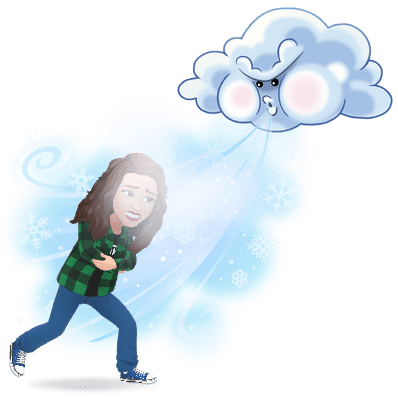
Happy new year! 😀 As I am snowed in this week, I thought I would take some time to discuss this weather phenomenon and how it can have a ‘polarizing’ impact on autists❄️.

As I’ve discussed in previous posts, autists can be sensitive to temperature and changes in weather, so snowy conditions can be particularly triggering. Extreme cold temperatures and the added glare and brightness from our snow covered environment can be a real sensory challenge. Textural changes in our surroundings can also bring added challenges with new crunching sounds and the feeling of snow against the skin, not to mention the sensory impact of wearing many constrictive layers to combat the cold. There are also additional challenges for those of us who have coordination issues on slippery surfaces (I may have taken a tumble on walk with my dog the other day as a car was coming up the road straight at us🙈) as well as stressful routine disruption due to snow related travel restrictions.

On the other hand, many autists find snowy conditions to be a rather positive experience. They relish the peaceful silence that accompanies snowfall, muffling the often overwhelming noises of the world. Moreover, they view the time out from the hustle and bustle of every day life to be soothing. With dangerous impassable roads (especially in rural Ireland where we are not prepared for heavy snowfall), school, work and social plans are often cancelled, allowing autists to take some socially acceptable time out to retreat from the world. Having had an especially busy and socially heavy Christmas period, I have been particularly grateful for the weather this week as it has allowed me much needed time to recharge my batteries 🙃

Snow can also be a rich source of sensory stimulation for some autists. The simple tactile sensations of running in the snow, making snow angels, rolling snowballs and building snowmen can be soothing, with the added benefit of building your coordination, and spatial awareness skills.

Hope you enjoyed this post dear Earthlings!

Have a lovely weekend! 🙂

Aoife

Does Santa have autism?

Greetings Earthlings! 🙂

This week I’d like to take a lighthearted look on whether or not our favourite bearded man may in fact by autistic- yep, I’m talking about Santa Claus!🎅

I know it seems crazy but hear me out, as many people have observed Santa’s autistic traits:

  • Restrictive diet– Santa’s diet is known for being very fatty and restrictive, mainly consisting of milk, cookies and other holiday treats like mince pies. Many autists can relate to this tendency towards beige foods
  • Christmas is his specialist interestFor us mere mortals Christmas comes but once a year. Santa’s entire life however, revolves around this single calendar day and his efforts to make it the best day possible for children all over the world
  • Tendency towards sameness and routine– Santa wears the same clothes day in day out which are loose fitting and comfy (which could be indicative of sensory issues). Moreover, his choice of red clothing is interesting as red is a colour often dismissed by autists, meaning he could have diminished sensitivity to the colour red making it an ideal colour choice for someone with colour sensitivity. Santa also works on the 25th of December every year without fail, completing the same working routine in children’s homes across the world
  • Black and white thinking/rule orientated– Naughty and nice list, need I say more?
  • Repetitive behaviours– Lining up and naming out his reindeer over and over, repeatedly saying Ho Ho Ho, and checking the list twice are all classic repetitive behaviours
  • Avoids social interactions/unaware of social rules– He slips into our homes in the dead of the night, but never engages with us, just get’s the job done and moves on to the next house. Similarly, he is completely oblivious to how casually breaking into someone’s home to deliver presents in the middle of the night isn’t exactly a socially acceptable behaviour 😂
  • Santa is an introvert– Santa prefers to live in his own space in the North Pole far away from the prying eyes of the world with only Mrs Claus and the elves for company
  • Creative thinker- When the whole world bullied Rudolph for his nose, Santa found a way for him to be useful, highlighting neurodivergent creative thinking at it’s finest

So there you have it Earthlings- do you agree that Santa might be one of the most famous autists in the world? 🤔

Wishing you and yours a very merry Christmas and every blessing for 2025!

Aoife

Autism 10 years on

Greetings Earthlings! 🙂

This week marks a bit of a milestone in my autism journey- the 10 year anniversary of my diagnosis. It’s mind boggling how fast these years have flown by, not to mention how much my life has changed in that time.

In September 2014, I was a complete wreck. I was suffering with social anxiety, my mental health was a mess, and I was struggling with work and the social dynamics of my workplace. I had never been so stressed in my entire life (which is saying something given that I was bullied in school) and was at breaking point. Out of nowhere, I found myself tricked into an autism assessment (kudos to my parents for that 😛 ) and my entire world flipped- but in the best possible way.

Admittedly, things were rough for the first year as I learned to adjust to this newfound knowledge, and it took an additional year to relax enough to not mention the diagnosis every 5 minutes, but my life has ultimately changed for the better. I spent my first 24 years on this earth feeling like I didn’t belong, like a wonky puzzle piece that couldn’t slot into society. Everyone misunderstood me, but I guess when I didn’t even understand myself, how could the rest of the world? Most twenty somethings will have a quarter life crisis on their journey of self discovery, but I had the ultimate one. One little word held the key that allowed me to fully embrace the person I was always meant to be.

10 years later, I barely recognize myself. I’m in a job that I enjoy, I have amazing, supportive friends, and a (very) busy social life. Looking back on my past through the lens of autism, I have become a lot kinder to my younger self, learning to laugh and channel my experiences to help others like me. I feel less self conscious of my differences, know my triggers and how to sidestep them. This has enabled me to grow in confidence to a point where I have never felt more comfortable in my own skin.

Before my diagnosis, I was always shy and introverted, but by fully understanding myself, I’ve been able to unleash my inner extrovert, comfortably smiling and chatting with strangers wherever I go. Having a name for my differences normalized my feelings and gave me ownership, allowing me to overcome my anxieties and manage my sensory issues. I have autism, but autism does not have me.

If you had told me ten years ago what this one little word would do to my life, I don’t think I would have believed you.

I find it quite hard to imagine what my life would look like now had I not received my diagnosis. I have previously discussed if parents should tell their child about their diagnosis, and while the decision depends on the individual, based on my experience I would highly recommend divulging. It was initially a tough pill to swallow, but my life is better for it.

There’s so many things I wished I knew about autism before I was diagnosed, even now I’m still learning every day, but I suppose the biggest thing was to know that I would still be me at the end of it all- just a shiny, happier model. As I’ve discussed on many occasions, while an autism diagnosis shouldn’t change anything in theory, knowledge changes everything for the autist. It’s a lot to process, and it can be hard to see beyond the label, but you will emerge from the chrysalis a fully fledged butterfly. Initially it seemed like autism weighed me down, but that was just my wings poking through ready for flight 🦋

So for those of you working through your diagnosis right now, cringey cliché that it is to say, it does get better. To quote ‘The Middle‘ by Jimmy Eat World:

“It just takes some time
Little girl, you’re in the middle of the ride
Everything, everything’ll be just fine
Everything, everything’ll be alright, alright.”
❤️

Hope you enjoyed this post dear Earthlings! 🙂

Have a lovely weekend!

Aoife

Autism in ‘Dinosaur’

Greetings Earthlings! 🙂

As autism awareness month comes to a close, this week I’d like to talk about autism in the new BBC Scotland sitcom Dinosaur.

So what exactly is Dinosaur about?

Dinosaur follows autistic palaeontologist Nina (played by autistic actress, comedian and show co-writer Ashley Storrie) who is content with her life in Glasgow, but finds her life upended by her sister’s impulsive decision to marry a man she has known for only 6 weeks. Cue hilarious chaos as Nina tries to navigate this transition whilst balancing the pressures of work, love, and being her sisters maid of honour.

You can check out a trailer for the series here:

So what did I make of it?

Aside from the fact that Nina’s dinosaur obsessions is ever so slightly stereotypical, I loved this sitcom and found it a refreshingly honest portrayal of life on the spectrum. Too often scriptwriters tend towards the hyperbolic when it comes to autism, but this show hits the mark perfectly for what life is like for a high functioning autist.

The show is highly self-aware tackling common stereotypes head on in humorous fashion. When Evie’s fiancé Ranesh starts talking about Nina’s autism, Nina pre-empts his stereotypes muttering “Don’t’ say it!” under her breath, before Ranesh describes having autism as a “superpower!” Another episode see’s Nina’s boss, (while reprimanding her for saying that Jurassic Park should have been named ‘Cretaceous Park’), tell her that they don’t want to give the impression of paleontologists as being “rigid and a bit autistic” for her to respond, “But I am autistic!” leaving her boss completely mortified.

More importantly, Nina doesn’t take herself too seriously. In one conversation with her sister (in an episode where everyone was pretending to be something they were not for Evie’s soon to be father-in-law), Nina gives Evie a pep talk telling her that she can keep up the pretense if Nina can and ” [she is] literally autistic”! This particularly made me chuckle as I have often made this remark with regard to neurotypicals claiming they aren’t able to do some basic things that I as an autist have no issues doing! 🙈

Nina’s unfiltered moments land casually without the need for exaggeration. Her stimming is subtle, like playing with her necklace, and tapping and fidgeting with her fingers when she is getting overwhelmed. No stereotypical hand flapping or head banging here! I particularly liked how they showed Nina having a meltdown when trying on bridesmaid dresses- shopping being a situation where I often get overwhelmed. The pressure from the salespeople, being under pressure for time after she arrived late, the heat of the shop, the itchy fabric, being told a dress is fabulous on her that really does not suit her etc. Nina promptly had to exit the shop and scream into a bush from the pressure of the task- a feeling I know all too well.  In a later episode they showed Nina crying and struggling to breathe during a meltdown- finally showing a realistic portrayal of how most of my meltdowns manifest.

Another positive aspect of the show was the portrayal of Nina naturally pursuing a relationship. Often these types of storylines are forced like ‘I want to have/should have a girlfriend/boyfriend, so I’m on a mission to get one and here’s how I’m going to do it’, buuuuuuut that isn’t exactly realistic. In the show, Nina starts to connect with her new barista and bravely decides to ask him out. Her autism is casually discussed, it’s not a huge issue like in other shows- she’s just a neurospicy girl going out on an awkward first date like anyone else. Moreover, the show doesn’t portray her as a sexually inept weirdo as many shows tend to. In a particularly humorous moment during a spicy confession game at her sisters hen party, Nina’s mother tells her to cover her ears, only for Nina to boldly tell her mother that she’s done it 13 times (much to her mothers surprise)! 🤣🙈 The show truly does Nina justice by showing the world that we’re just out here living our lives like everyone else; we just think a little bit differently.

While it would have been nice if Nina had had a slightly more ordinary job, especially given that it tends to be more male autists that obsess over dinosaurs than women, all in all this show is an excellent depiction of autism with some great laugh out loud moments to boot.

Hope you enjoyed this post dear Earthlings! 😊

Have a lovely weekend!

Aoife
Blog at WordPress.com.

Up ↑