Leading on from my previous post about autism and mental health, this week I’d like to discuss the issue of Seasonal Affective Disorder (SAD) for autists.
Thankfully, I have never had any issues with SAD personally, however many other autists struggle.
So what exactly is SAD?
SAD, also known as ‘Seasonal’ or ‘Winter’ depression, is a form of depression that is triggered by seasonal changes. Onset is usually triggered in the autumn/winter months, however, it has also been known to occur during the brighter months in rarer cases. Depressive symptoms tend to start out mild and progressively worsen as the days get shorter, beginning to level out and disappear with the return of the spring/summer season. The symptoms are similar to clinical depression, the primary difference being the seasonal nature. For autists who experience SAD, the condition can be compounded by communication difficulties and other co-morbid mental health issues.
But is there a scientific link with autism?
While there is no official link to autism, many autists report issues with SAD. Melatonin, the hormone that regulates sleep, is generally thought to be the main driver of SAD. The release of melatonin is mediated by exposure to light, so lack of sunlight during the winter months can cause the body to produce more melatonin than is needed, causing you to feel sleepy and sluggish. Light therapy is currently the recommended treatment for SAD to better manage melatonin levels. Interestingly, melatonin levels are dysregulated in autists which could explain why they may be more likely to be impacted by seasonal changes in melatonin levels.
Other studies have linked SAD to serotonin as there can be seasonal variations in serotonin levels. In addition, serotonin is at the heart of the chemical imbalance theory of depression and levels are often dysregulated in autists, which could explain why there might be a link. Buuuutttt a lot of these research papers come from the 1990s. In recent years, the chemical imbalance theory of depression has been disproved, which could also negate this theory for SAD.
This week I’d like to talk about the role that hormones (or horror-mones as my younger cousin used to call them) and fluctuations in hormone levels may play in autism.
So first off the basics, what exactly is a hormone?
We’ve all heard of them, but not all of us are aware of how they work.
Hormones are powerful biochemical messengers that travel through the blood in the body influencing a number of bodily changes and functions such as growth, mood, metabolism, puberty and reproduction to name but a few. Secreted by the endocrine glands of the body (e.g. adrenal glands, thyroid, pancreas etc.), it only takes a small amount of hormone to trigger large changes in the body, so fluctuations in normal hormone levels can have serious consequences for bodily functions.
So what impact do hormone changes have for autists?
Research suggests that a number of hormonal imbalances can contribute to autistic behaviours. The primary hormones thought to contribute to autism are oxytocin and vasopressin- also referred to as the “love” or “social” hormones. These hormones are involved in social bonding, trust, sexual behaviours and processing of sensory information. Studies have revealed that autists have lower levels of both of these hormones, and that treatments designed to increase these hormones may help improve social behaviours.
Most recently, new evidence suggests that growth hormone and the digestive hormone ghrelin may contribute to autism. A recent study showed that children with autism have lower levels of these hormones compared with their neurotypical peers. Ghrelin has a wide range of physiological functions such as stimulating the release of growth hormone, memory and learning, the formation of new brain synapses between neurons (i.e biochemical junctions joining one brain cell to the next) and it is involved in triggering satiety after meals (guess that explains why I’m always hungry 😛 ).
As many of these functions are disrupted in autism, low levels of these hormones likely contribute to their pathology. Moreover, ghrelin is thought to have a protective effect against reactive oxygen species in the brain which are also thought to contribute to autism (as I’ve discussed in previous posts) so reduced ghrelin levels could reduce the brains protection against these chemicals.
Hormone fluctuations are also thought to cause sleep issues for autists. The amino acid tryptophan is needed for the body to produce melatonin (aka the hormone that controls sleep and wakefulness), an amino acid which research has shown can be either higher or lower than normal in people with autism. Ordinarily melatonin is released in response to darkness (to induce sleep) with levels dropping during daylight hours (to keep us awake). However, studies have shown the opposite in some autists, where higher levels of melatonin are released during the daytime and lower levels at night- which certainly explains why I often have the urge to nap throughout the day 😛
In addition to these, higher stress hormone levels are thought to be the driving force behind a number of autistic behaviours such as meltdowns, shutdowns and issues with anxiety. As I’ve discussed in a number of previous posts, stress hormones such as cortisol and adrenaline are released in response to stressful situations from the hypothalamic–pituitary–adrenal axis or HPA axis. This is a complex interconnecting network that comprises the hypothalamus, the pituitary gland andthe adrenal gland (i.e. HPA) to control our response to stress- a network that is hyperactive in autists. Following exposure to a stressful situation, stress hormone levels should return to normal, however, research has shown that stress hormone levels tend to persist in autists, which can make us more susceptible to stress related outbursts and meltdowns. In other words, we’re constantly living in a state of fight or flight. Long term activation of the stress system can lead to a number of health problems such as poor mental health, weight gain, sleep issues, digestive and cardiovascular problems to name but a few- many of which are regularly comorbid with autism.
Sex hormones are also thought to contribute to the development of autism. Research in recent years has indicated that exposure to higher levels of testosterone and/or oestrogen in the womb may predispose developing babies to autism- this is known as the sex-steroid theory of autism. It’s thought that these elevated hormone levels likely interact with genetic factors that may affect the developing brain. There is a particular trend among women who suffer from polycystic ovarian syndrome (PCOS) as the ovaries produce abnormal amounts of testosterone.
Moreover as I’ve discussed in previous posts, hormone imbalances are also thought to contribute to changes in behaviour in autistic women due to fluctuating hormone levels at different points in their menstrual cycle. In addition, behavioural changes are also associated with autistic women going through the menopause.
With the interplay of all these different hormone fluctuations, it’s no wonder our brains are a little muddled trying to cope with the constant change (as if we don’t find change hard enough! 😛 )
In continuation from my blog post about autism in the workplace, this week I’m going to give some of my tips and tricks for finding and maintaining employment for autists.
Finding employment:
Job seeking can be a daunting prospect for anyone, but for autists in particular, this can be quite the overwhelming experience. Navigating career search engines, filling out applications, preparing for interviews, coping with rejection- it’s a lot to handle.
When it comes to applying for jobs, there are a few important questions that an autist should consider:
Is this job a good fit for me?
What areas may be challenging for me in this role?
Is this an equal opportunities employer?
It’s important that you apply to jobs that cater to your strengths with an employer that will support both you and your needs 🙂
Top Tip: Glassdoor is an excellent online tool for job hunters. It allows you to look up different companies, read employee reviews and interview experiences, giving you invaluable insight into what life could be like for you within that company.
Next comes the dreaded interview- a real struggle for autists, but it doesn’t have to be 🙂
Fun Fact: According to career experts, 95% of interview questions can in fact be predicted and prepared for in advance! And there’s nothing we love more than predictability 😉
There are a number of organisations out there that are dedicated to advising, training and preparing people with autism for the workplace. For example, Specialisterne is an international organisation dedicated to creating jobs for people with autism through partnership with several companies in the science and technology sector. Specialisterne coaches people with autism and Asperger’s syndrome to prepare them for the workplace and additionally provides employers with training so to best support their employees.
There are also numerous career coaches and communications agencies out there which can sit you down and help you to prepare for an interview, run through mock questions, give you tips on body language etc.
Here are a few tips that I’ve found helpful to get you through an interview:
Preparation is Key– research the company, prepare answers to common questions, look up your interviewers on LinkedIn (don’t worry, you can use a private setting so they won’t know you’ve looked them up! 😉 ) etc. A mock interview can also be very useful. The more you prepare, the more comfortable you will feel in the interview.
Keep your answers relevant to the question– I know it sounds obvious, but if you’re anything like me, beware of tangents!
Ask for a moment to think– if a question throws you, drink some water and ask for a minute to think. It’s perfectly acceptable to ask for this. It gives you time to gather your thoughts whilst remaining in control.
Aoife says ‘Relax’! – Easier said than done, I know, but it was only when I began to relax in interviews that I was finally offered a job 🙂
Maintaining Employment:
Congratulations-you’ve gotten through the interview stage and the job is yours! 😀 However, a number of people with autism will struggle to maintain this job. The workplace can be quite overwhelming as I’ve discussed, and we often do not receive the support we need from our employers.
So what can you do?
If you feel comfortable disclosing your diagnosis to your employer, steps can be taken to help accommodate your needs. For example, autism training can be arranged so that other members of staff can better understand and support you.
Having a work mentor or job coach to talk to and advise you about your workplace can also be helpful. This person can advise you on workplace ettiquette, social skills, interacting with co-workers and the unwritten rules of your place of work.
There are also some steps that you can take to better cope with the pressures of working life:
If you struggle with organization as I often do, making use of lists, diaries and Google Calendar can help you to stay on top of things
As I’ve said before, talk to someone about your problems with work- let it all out!
Take a breath- if you feel overwhelmed or a meltdown coming on, take a moment away from your workstation. Go to the bathroom, step outside the door (if possible), grab a coffee or a glass of water- do anything to distract yourself until you feel well enough to return to work 🙂
Try to maintain a good work- life separation. At the end of the day, we all need to leave work at work. It can be hard to switch off at the end of the day, especially for autists, so try to relax! Why not take up a hobby that will engage a different part of your brain such as art, exercise, music or gaming? Do what you have to do to unwind!
Take care of yourself- Keep snacks nearby, stay hydrated and get to bed early! Sleep tip– Blue light from screens interferes with the hormone that induces sleep, Melatonin. So ditch the laptop before bed; read a book instead!
Finding and maintaining employment as an autistic adult can be challenging, but remember, you have just as much to offer as any other candidate out there 🙂
Did you know that between 40% and 80% of autists reportedly have sleep problems?
I have spent many a restless night tossing and turning whilst my mind races. Like a washing machine on the highest spin setting, my mind keeps going round and around when I turn out the lights.
This is a fairly accurate (and cute) representation of my efforts to sleep at night:
^
I struggle to get comfy and start thinking and stressing about my day, about tomorrow, about that embarrassing time when I got an answer wrong in class and everyone laughed at me…and it keeps rolling on in a similar never-ending loop. The pillow starts heating up (did you know that thoughts produce heat? ), I start stressing about not sleeping and how soon the alarm will go off, get frustrated and inadvertently end up even more awake than before!
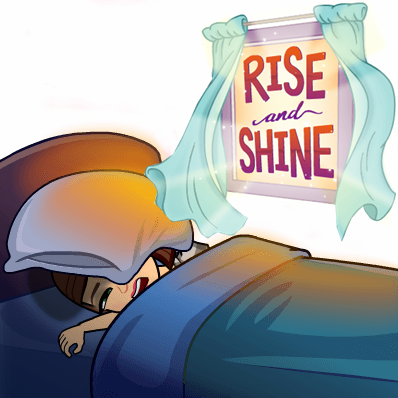
Eventually I pass out, and when the sun comes up the next morning…
….I wake up feeling like death in a tangle of bedclothes, wearing my sheet as a scarf! 😛
It doesn’t happen every night, but on occasion, especially if I have to be somewhere important or catch a bus early the next morning. I spend so much time thinking about needing sleep that I end up chasing away any tiredness! 😛
But why are we prone to disturbed sleeping patterns?
As with many aspects of autism, it’s unclear why exactly we struggle with sleep, but the experts have a few theories on the subject:
Melatonin, the hormone which controls sleep and wakefulness, is thought to contribute to sleep issues in autism. The amino acid tryptophan is needed for the body to produce melatonin, an amino acid which research has shown can be either higher or lower than normal in people with autism. Ordinarily melatonin is released in response to darkness (to induce sleep) with levels dropping during daylight hours (to keep us awake). However, studies have shown the opposite in some autists, where higher levels of melatonin are released during the daytime and lower levels at night. So that explains why I’m often inexplicably dying for a nap in the middle of the day!
Sensory issues are also thought to contribute to these sleep problems. Many autists have an increased sensitivity to such stimuli as touch, light, noises, etc. During my first year in college I became somewhat of an insomniac due to city noises, late night fire alarms and paper thin walls…
A number of autists, such as myself, are night owls. Recent brain imaging scans have shown that there are physical differences in the brains of night owls and morning larks. Night owls show signs of reduced integrity in the white matter of the brain (fatty tissue that enables brain cells to communicate with each). This compromises the speed of transmission between neurons which can cause insomnia, daytime sleepiness, antisocial personality disorder and interfere with cognitive functioning. Differences in the integrity of white matter have been linked to ASD’s, so this could explain why we struggle to sleep at night. But it’s not all bad- some studies have shown that night owls are more productive, have more stamina and can display greater analytical and reasoning abilities than morning larks! 🙂
Anxiety problems are also thought to contribute to troubled sleeping
So what can you do to improve your sleep?
Weighted blankets are often recommended to help manage autism. As I’ve discussed previously, autists have higher levels of stimulatory neurotransmitters and lower levels of calming neurotransmitters. Weighted blankets contain metal or plastic beads in the quilted layers to apply deep, calming pressure to the user- like simulating a hug. This pressure is designed to stimulate the release of serotonin (which helps regulate the sleep cycle and temperature) and dopamine to relax and calm the mind and to better help us to sleep.
Some studies have shown that weighted blankets do not noticeably improve sleep for autists, however many people, neurotypical and neurodiverse alike, have found that they get a much better night’s sleep from using them- so it’s worth a try!
Personally, I’ve discovered that using screens too close to bed time can make it harder for me to nod off at night. Scientists have found that the blue light emitted by most screens can interfere with the production of melatonin, making it more difficult to fall asleep. If melatonin disturbances are indeed contributing to your sleep issues, it would be wise to decrease screen time in the night time.
Aoife’s Top Tip: Ditch the laptop before bed, read a book instead! 😉
Experts also recommend avoiding caffeine, getting more exercise, establishing a routine and taking measures to manage stress.
In my experience, stress management is key to getting a good nights sleep. My memories of being an angsty teenager are littered with sleepless nights spent fretting about everything! Once I got on top of my stress, peaceful sleep was quick to follow 🙂
Sleep will come, you just have to find what works for you.
Goodnight dear Earthlings, I’m feeling a nap coming on 😉








 ^
^



 A Is For Aoife Not Autism