Autism and Making Friends

Greetings Earthlings! 🙂

Today we’re going to talk about something that many autists find difficult-making friends.

When it comes to making friends there is no exact science, something which can trip up many a logically thinking autist.

It’s not that we don’t want to make friends, but we often struggle to navigate the social playing field, sometimes choosing our own company to avoid the various trials and tribulations of social interaction.

There are no set rules when it comes to friendship, and we just can’t seem to wrap our brains around it.

Image result for how not to make friends

In my own experience, I found that connecting with my peers was a real barrier to formulating friendships in school. We had different tastes in music and film, were interested in different hobbies, wanted different things, held opposing beliefs etc. I found it really challenging to find common ground to converse on.

Making friends isn’t the easiest of tasks, but there are some things that I’ve learned over the years to make the process a little less challenging :

  • Take classes- I found that dance classes were a great social outlet as a child. I partnered up with different children, got invited to a lot of birthday parties (although I have many memories of wandering off to be by myself! 😛 ) and it helped with my coordination. Speech and drama classes can also be very useful in helping to build your confidence and social skills.
  • Try to find common ground with your peers. When in conversation, ask the other person about TV shows, bands, films, sports etc. you may be surprised at what you have in common.
  • Don’t be discouraged if you’re struggling to connect with your peers- I was 11 before I truly made a lasting friendship, and it wasn’t until college that I finally felt that I belonged socially. The average school-goer can often be small minded when it comes to befriending people who dare to be different. While some amazing efforts are being made to de-stigmatize and embrace autism in the younger generation, there will always be some who rebel against difference. Forget the haters- there are so much better people out there who are worthy of your friendship 🙂

5284_583670671643597_310296445_n.jpg

  • Try not to compare yourself to your neurotypical peers- We all make friends in different ways, prefer different types and sizes of social groups. What seems to work for others may not work for you. Social mimicry may seem logical, buuuutt, it doesn’t always work.
  • Be yourself- As cheesy as it sounds, it’s true! 😛 I have spent many a year feigning interest in matters that I thought my peers would respond to, but when I stayed true to myself, that’s when I discovered true friendship. True friends love you for you 🙂

Image result for best friends know how weird you are

  • And if that all fails, you can always do what I do- bake to make friends! Nothing like a plate of home made sugary goodness to create a lasting impression 😉 Even if you burn it, you’ll still get a funny story out of it! As I’ve grown into adulthood, the stories of my many mishaps have become quite the conversation starter 😛 😉

If things don’t work out, don’t be so hard on yourself about it. Not all friendships are built to last. One of the biggest mistakes that I make is to hyper-analyse why a friendship breaks down in my efforts to understand where I went wrong to avoid future problems. Whilst yes, social lessons can be taken from past experiences, there’s no use in torturing yourself about it- you may not even have made a misstep.

Sometimes, these things just happen.

But that does not mean that you should not try again. The social complexities of formulating friendship can be overwhelming, but the reward is great 🙂

I have been so blessed in the friends that I have made in my lifetime, people who love and accept me as I am- even embracing my quirks.

Sometimes people are not always the most accepting of those who dare to be themselves, but that doesn’t mean that you do not belong socially. It took me years to find my pack, but in the end, I found my place 🙂

Image result for friendship memes

Have a great week everyone! 😀

Aoife
Autism Management- Concerts

Greetings Earthlings! 🙂

Ah, live music! There’s nothing I love more than a decent rock concert!

“But wait- wutt?! 

You’re autistic! Surely you can’t enjoy a loud, flashy, crowded rock concert?!”

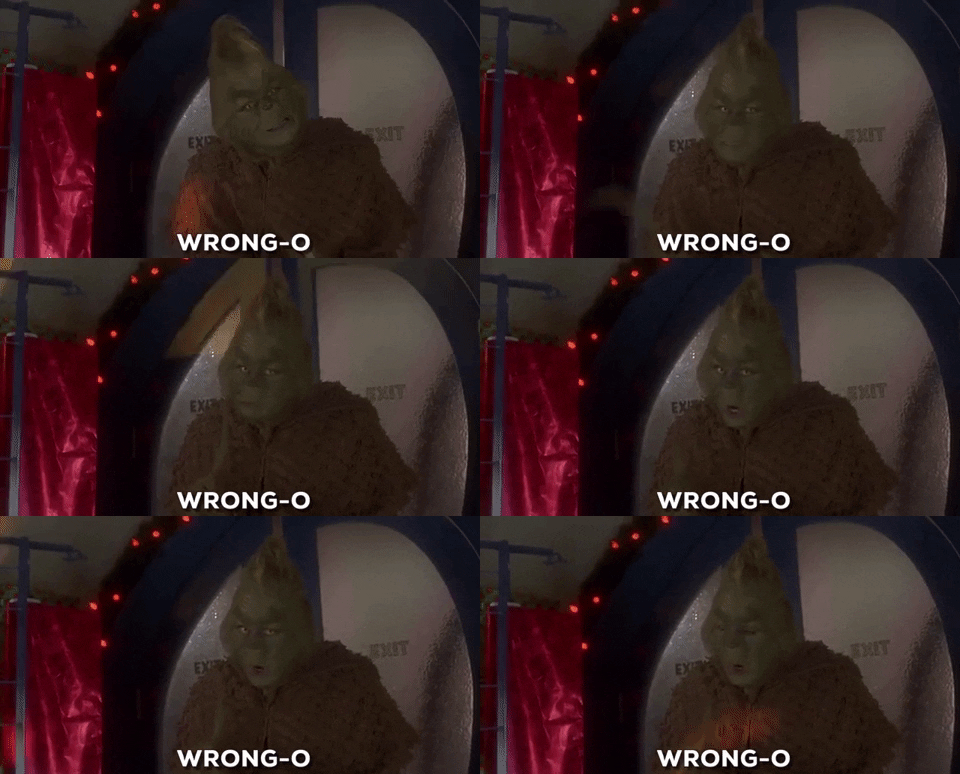
Image result for wrongo gif

Plleeeeeeeeeeeeeeease! 😛

What do I always say? No two autists are alike!!!!

Sure, sudden noises can make me jump, but in actual fact I love the noise! I relish the chaos of alternative rock! The vibration of the music through your body, the bright lights, the pyrotechnics, the showmanship- it’s really hard to beat a decent concert.

That being said, my love for gigs has not come without it’s challenges.

At my very first gig (Paramore’s Brand New Eyes tour, 2009), I suffered both a meltdown AND a shutdown! The crowd made me very unsettled and uncomfortable moshing during Paramore’s opening number, so I spent the remainder of the concert on the sidelines crying and alone! 😛 We subsequently almost missed our bus home, the stress from which brought on a shutdown.

Certainly a memorable and eventful night! 😛

Indeed, concerts can be overwhelming for both neurotypical and neurodiverse alike, but that does not mean that a concert can’t be an enjoyable experience. It’s all about finding what works for you 🙂

Here are my tips for finding comfort at a concert:

bitmoji-1572203057

  • Outdoor vs indoor venues: This is one that I’m learning the hard way. Outdoor gigs, whilst a little easier on the ears than indoor venues, can be a real mixed bag in terms of enjoyment. Crowds are bigger, snagging a good vantage point can be tricky and security have far less control over crowd behaviour. I spent much of my last gig being kicked in the back by a girl sitting on her boyfriends shoulders. Take my advice- choose indoor gigs for your favourite artists.
  • Choose seating– After my first “pit” experience, I have made a point of always choosing to pay a few euros more for a decent seat in large arenas. This way you avoid strangers touching you, claustrophobia, tall people, reduce exposure to potentially unpleasant odours (outdoor gigs are a real pain if you hate smoking as I do) and prevent being unexpectedly hit by stray “balloons”, flying glasses of beer and, on one random occasion, black nail varnish! Don’t you just miss the emo kids of the mid noughties? 😛

 emo ryan higa nigahiga how to be emo GIF

Alternatively, if you’d rather be closer to the action, smaller venues (< 2000 capacity) generally offer more comfortable standing experiences. Crowds are spaced out more and are better behaved with security always close at hand 🙂

  • Sunglasses-Not as crazy as it sounds I promise! Sunglasses are my best friend as they really help to take the edge off bright lights. I’ve even been known to wear them on a night out in the club on occasion! Don’t worry about what other people think- it’ll be dark and everyone will be too focused on the stage to notice 🙂
  • Earplugs– This one may seem a little bit counter productive, but lot’s of people do it. Loud music is part and parcel when it comes to gigs, but sometimes the noise can be a little excessive. Take my most recent concert just last week. I was standing in front of a girl who insisted upon screaming every 5 seconds for 2 and a half hours- not like your average fangirl, but a murder victim (the kind of piercing scream that makes you jump every time you hear it)! Quite frankly, she’s lucky she wasn’t my murder victim! 😜😂 I was rather envious of a nearby concertgoer for having had the sense to bring a pair!

So there we have it, my top tips for managing autism at a gig!

As I always say, you should never allow an autism diagnosis to hold you back- if you can’t climb the mountain, there’s always a way around it 🙂

So rock on dear Earthlings! 😉

bitmoji-725899322.png

Aoife
Sensory Screenings

Greetings Earthlings! 🙂

Ah the cinema- giant screens, surround sound, confectionery counters, reclining chairs; a perfect treat in many respects (until you need to dash for the loo, or eat too much sugar! 😛 ).

Image result for cinema gif

But for many people with autism, a trip to the cinema can present a number of sensory challenges- the brightness of the screen and overly loud audio can be quite distracting for example.

In recent years, a number of cinemas have begun to host special sensory screenings for children with autism.

In case you hadn’t noticed from all of the autism on screen posts I write, I’m a bit of a film buff, so naturally when I saw that my local cinema was hosting a sensory screening of ‘Diary of a Wimpy Kid: The Long Haul‘ I had to give it a try! 🙂

For anyone thinking of seeing the film, it’s not as good as the previous ones- the cast change didn’t really work! 😛

So what’s different about a sensory screening?

A sensory screening differs from the average cinema experience in the following ways:

  • A special sheet of acetate (it reminded me of a giant plastic pocket) appeared to cover the usual backdrop to reduce the screen brightness
  • There are no trailers (woohoo 😀 !)
  • Sound levels are reduced
  • The lights remain on throughout at a dimmed level

This last part was quite nice actually as I did not emerge from the cinema with the usual vampire-esque response to daylight! 😉

Image result for vampire light gif

So what did I make of the experience?

Well, to be honest it was a little weird for me at first as someone who frequents the cinema quite regularly. I wasn’t expecting the lights to stay on, but you adapt pretty quickly. It was quite a pleasant transition to go from dark to light scenes without feeling blinded! 🙂

This did however, make it a little bit harder to see any of the night-time scenes which I found a tad distracting.

But all in all I found the experience quite nice and would highly recommend it for anyone who struggles with sensory issues 🙂

However, I would have a slight critique to make in the choice of sensory films that are shown. Any films that I have seen advertised as sensory friendly here in Ireland fall into the family friendly/childrens category. While it is brilliant that many children with autism are afforded the opportunity to attend these screenings, we often forget that children with autism grow into adults with autism, adults who may want to watch the latest Marvel or James Bond movie, or a racy rom com in sensory comfort.

As they say- a lot done, more to do.

Enjoy the weekend everyone! 🙂

bitmoji1352147995.png

Aoife


Can animals have autism?

Greetings Earthlings! 🙂

Today I’d like to explore something I’ve been wondering about a lot recently: can animals be autistic?

We’ve often been told how closely related human and animal genomes are, but what about our brains?

I often look at my German Shepherd and see a lot of autistic traits in him- he has ADHD and anxiety, behaves inappropriately, thinks creatively (he once buried a bone in a mattress) and never really grew out of his puppy brain despite recently turning 6!

Image result for crazy dog gif

^^^Not my dog, but similarly bonkers! 😛 😉

Naturally, I could be imagining it (as a scientist it’s hard not to over analyse), but what does the evidence have to say?

In clinical research, there are a number of animal models which have been genetically bred to exhibit autistic traits including rats, fruit flys, monkeys and most commonly mice. These animals will have mutations in genes that have been linked to autism which causes them to exhibit some common autistic traits. In the mouse model for example, mice show signs of repetitive behaviours, deficits in social interaction and reciprocation, memory deficits and increased aggression.

But what about in nature?

There is very little evidence to suggest that animals can be autistic, however, a recent study by veterinary behaviorists in the USA has indicated that there is evidence of canine autism! 

 whoa shock waynes world waynes world 2 GIF

I know!

Maybe I should get my dog diagnosed… 😉

In fact, vets have considered the possibility of autism like symptoms in dogs since 1966!!

The 2015 study examined tail chasing behaviours in bull terriers in addition to running DNA analysis.  These researchers found that tail chasing was associated with trance-like behaviour and random outbursts of aggression in these dogs. In addition to this, tail chasing was more common in males than females- just like human ASD’s. This group also suggested that the physical features of these bull terriers (long face, high-arched palate, and large ears) could be indicative of Fragile X Syndrome-  a genetic condition where 15-60% of this population are additionally diagnosed with autism.

This study is not definitive, but it does open us up to the possibility that autism may naturally exist in the animal kingdom.

As autism can be difficult enough to diagnose in humans, you never know- other animals could quite possibly have autism, we’ve just never considered it! 🙂

bitmoji-1628445894.png

Aoife

Autism and Music

Greetings Earthlings! 🙂

Today I’m going to be exploring the benefits of music for people with autism.

We all know that feeling we get when we listen to our favourite songs- the rush, the rippling chills, the feeling that the music is physically running up and down your spine.

Image result for music gif

But what if I told you that music can do so much more than just entertain us?

Research has shown that music therapy can greatly benefit people with autism by helping to improve social behaviours and interactions, focus and attention, coordination and spatial awareness in addition to reducing stress and anxiety. Music therapists aim to improve the wellbeing of their patients through music by encouraging singing, listening to, moving to and discussing music among other actions.

So how does music benefit the brain in this way?

The simple act of learning to play an instrument can greatly improve brain processing, fine motor skills and non-verbal reasoning skills. Interestingly, physical changes are taking place in your brain when you learn to play an instrument. As children grow up, the outer layer of the brain (the cortex) can grow thinner in certain regions which can lead to such issues as anxiety, depression and attention difficulties. Evidence suggests that learning to play an instrument however thickens the cortex in areas associated with emotional processing, executive functioning, and impulse control– functions that are affected in many people on the spectrum.

bitmoji1128635568

Studies have also shown that the vibration of music can help to stimulate and improve brain and muscle function in patients with Alzheimer’s and Parkinson’s!

Recent evidence suggests that dopamine plays a role in the brains response to music. As I’ve discussed in previous posts, dopamine regulates emotions and mood. Researchers have found that music encourages dopamine release and positive mood changes, whereas noise exposure negatively impacts mood. As dopamine levels are out of sync in people with autism, music could really help our brains to better control mood swings and improve emotional processing.

In my own life, music has been highly beneficial to help process my emotions.

I have had a lifelong passion for music. The riffs, the vocals, the lyrics- there’s nothing quite like it! Music has always held a special place in my heart, but especially the lyrics from my favourite songs.

As I’ve discussed previously, many autists struggle to identify and/or describe what they are feeling, a condition known as alexithymia (from the Greek meaning “no words for mood“). Many years ago, long before my diagnosis, in times of strife I found myself intensely drawn to music. The lyrics soothed my soul and calmed my mind allowing me to process the storm of emotion passing through. Whenever I could not make sense of my emotions, I could always find a song that would verbalize my struggles, and after a time, everything became a little clearer 🙂

eryhres

There we have it Earthlings! We’ve all felt the power of music, and the science shows it’s potential.

So grab your ipod and dust off your guitar this bank holiday weekend- your brain will thank you! 😉

Aoife
Autism on Screen: Forrest Gump

Greetings Earthlings! 🙂

Today we’re going to have a look at the portrayal of autism in the multi-award winning 1994 classic ‘Forrest Gump‘.
I know, it’s not a film that specifically mentions autism, but it’s on a list of films featuring autism by the Autism Research Institute so we’ll have a look anyway! 🙂

In actual fact, ‘Forrest Gump‘ was based on a book of the same name by Winston Groom (1986) in which the title character is an autistic savant with great mathematical ability! I’ll have a read of this at some stage and discuss it in the future 🙂

Forrest Gump Cover.jpg

So what’s ‘Forrest Gump‘ about?

In short, the film details the life and adventures of one Forrest Gump native of Greenbow, Alabama. Slow witted, but kind hearted, Forrest find’s himself in the midst of some of the most pivotal events in modern American history, showing everyone that mental disability does not preclude you from living a most extraordinary life.

For anyone who has yet to see the film- here’s a little trailer:

So how does ‘Forrest Gump‘ fare in it’s portrayal of autism?

Whilst ‘Forrest Gump‘ may not intentionally portray autism as in the book, nevertheless Forrest displays many autistic characteristics consistent with a diagnosis of Asperger’s syndrome. He does not always display socially appropriate behavior, as demonstrated by the memorable scene in the White House where he tells JFK that he has to pee! Forrest doesn’t always make eye contact, has some specialist interests (such as Jenny and Ping Pong) and can often ramble on, speaking in monotones as is often associated with AS. Forrest also demonstrates that he is a literal thinker in the film, often leading to some of the more humorous moments.

Image result for have you ever been with a girl forrest gump

Interestingly, the film depicts Forrest in a more realistic light than in the book. Whilst he is described in both as having a low IQ in the 70’s, Forest is not portrayed as a stereotyped mathematical savant in the film.

FINALLY! A bit of realism! 😛 😉

Although entirely fictional, this film delivers the audience an encouraging message of hope. In spite of his mental limitations, Forrest goes on to lead not just a “normal”, but an extraordinary life.

Forrest’s tale truly shows us how, as I’ve often remarked in this blog, you should never allow autism to hold you back. An autism diagnosis can be a challenge yes, but it does not mean that you can’t live a “normal”, happy and fulfilling life 🙂

To quote Sally Field in this film:

Image result for forrest gump gifs

Enjoy the weekend everyone! 🙂

Aoife

Autism on Screen-Mozart and the Whale

Greetings Earthlings! 🙂

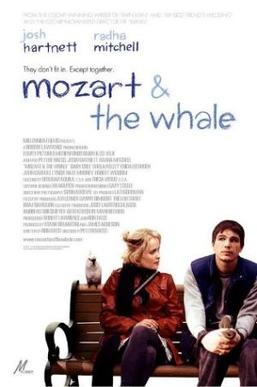
To mark the end of autism awareness month, today I’d like to tell you about a film that in my opinion, is probably the most realistic representation of autism on screen- the 2005 romantic-comedy-drama film ‘Mozart and the Whale.

Image result for mozart and the whale

(This film is also called ‘Crazy in Love‘ in some parts of the world)

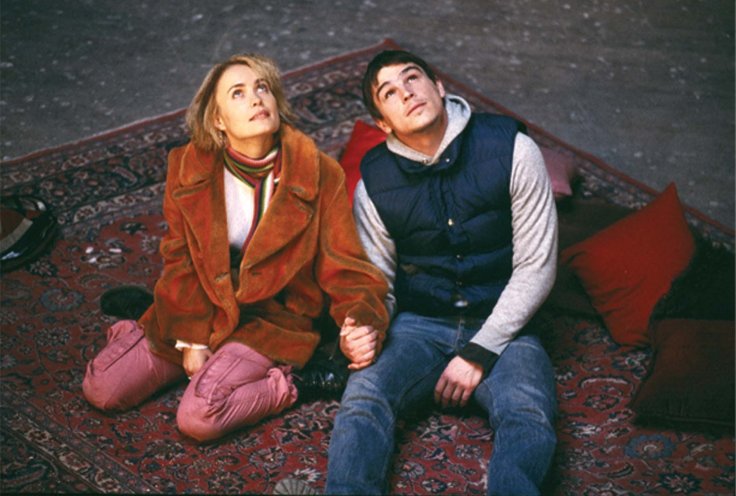
The film follows the turbulent relationship between Donald (Josh Hartnett) and Isabelle (Radha Mitchell)- two adults with Asperger’s syndrome who meet at an autism support group.

Check out the trailer below:

What makes this film stand out from the crowd is that the film illustrates two very different pictures of AS and two different levels of functionality.

Donald, contrary to the OCD stereotype, lives in a hoarders paradise surrounded by birds (and their droppings…), and works as a taxi driver as he is unable to navigate job interviews to make use of his university degree. Isabelle in contrast lives in a highly organized environment, hairdressing by day and painting by night; maintaining a relatively normal social life and appearing to outsiders as merely eccentric.

Mozart and the Whale

In watching their interactions, a clear difference emerges in their expression of AS. In addition to this, the background support groups also provide us with different pictures of autism with no two characters appearing the same.

Autism is unique, and this film remains true to that.

Another key element to this film is that of gender and autism. Other films such as ‘Snow Cake‘, have a tendency to portray women using the male experience of the condition, however, in this film we can see that there is a clear difference between autistic men and women.

Unlike Donald, Isabelle appears relatively normal to an outsider, albeit eccentric. She performs better socially and in the workplace, and largely appears to be in control. The film also hints at Isabelle’s developed social coping skills when she says:

I can’t keep from shocking people so I make it work for me.

As someone who made great efforts in college to turn qualities that were once perceived as weird into (hopefully) endearing eccentricities, this remark completely resonated with me.

However, like many women with autism, Isabelle struggles with issues of mental health and she is seeing a therapist. This film gives us a true insight into the realities faced by many women living with AS.

This film has divided some critics as to it’s accuracy in it’s portrayal of autism. On the one hand, it has been praised by many critics as one of the truest cinematic representations of autism, however, others have criticized the film for portraying the leads as having savant skills (Donald is mathematical; Isabelle has artistic and musical savant skills).

I know, I sound like a hypocrite as I often give out about this over-representation,

BUT

the characters in ‘Mozart and the Whale‘ are based on a true story!! 😀

The film is loosely based on the love story of Jerry and Mary Newport, two people with AS who are savants!

Image result for jerry and mary newport

You can read a bit more on their story over on Goodreads:

http://www.goodreads.com/book/show/163483.Mozart_and_the_Whale

Fun Fact about the Film: The screenplay for ‘Mozart and the Whale‘ was written by Ron Bass- the same screenwriter for ‘Rain Man‘!

This fact is made even more interesting by the fact that ‘Rain Man‘ is often considered inaccurate, while ‘Mozart and the Whale‘ is perceived as the most accurate.

In comparing both films, we can really see a clear change in attitudes towards autism in the intervening 17 years. We move from a dramatic and stereotyped vision of autism to a friendlier, more accurate portrayal of the autistic condition.

If you want to watch a film about autism, this is the one to see.

This film definitely get’s Aoife’s ‘A’ of approval 😉

bitmoji670813364.png

Aoife

Autism 101- Shutdowns

Greetings Earthlings! 🙂

Leading on from the previous post, I’d like to talk to you about shutdowns and autism.

So what exactly is a shutdown?

rfffffff

A shutdown is basically an episode where the brain briefly stops processing and making sense of information in response to stress or sensory overload.

The lights are on, but nobody’s home.

bitmoji710932570.png

These episodes are much more discrete than meltdowns, and can often go unnoticed by the outside world. Sometimes meltdowns can turn into shutdowns and vice versa.

So what does a shutdown feel like?

Like meltdowns, shutdowns can manifest differently among autists. Some people go completely limp and unresponsive, some withdraw completely from those around them, some even become really sleepy and nod off.

For me personally, a shutdown is like entering a state of shock. You might struggle to move (as discussed in my diagnosis story), formulate sentences, or even think. It can be a completely overwhelming experience. When I first started to become aware of them as a teenager, I had no idea what was going on; I just knew that I felt, for lack of a better word, “wrong”.

Like meltdowns, in my experience, shutdowns can be either mild or severe:

Mild shutdowns tend to happen in social situations, especially in confrontation. Someone throws me off or says something that I hadn’t anticipated…aaaannnd my mind freezes up. I go limp and say nothing, whilst the other person talks on oblivious. To an outsider it looks like I’m just listening or defeated by an argument; in reality, my brain can’t formulate the words to respond.

The minute the conversation ends my brain reboots and suddenly all that I could or should have said comes rushing back- great timing! 😛

Severe shutdowns, like meltdowns, are brought on by serious stress, or a shock. Think of your brain like a computer that’s been attacked by a virus. The system get’s overwhelmed by the attack and needs to shuts down to recover. When this happens, it feels as though I’ve been locked out of my own brain.

bitmoji669112089.png

However, unlike a meltdown situation, I’m locked out yes, but the brain hasn’t been hijacked. I’m not in a state of total control, but I’m not out of control either- a little bit purgatorial in nature.

It’s a very odd sensation.

I find myself in an overwhelming situation and fail to react. I know that I don’t feel right about the situation, so I try to break down what happened and process. However, when I go to think about the event, it’s as if a firewall has gone up and all of the files in my brain have been encrypted. You keep trying to access your files so you can run a scan to diagnose the problem, but your brain keeps locking you out.

It feels sooo weird, like my mind is flashing this giant ‘NOPE’ sign at me every time I try to think! 😛

bitmoji642446296.png

^^^accurate representation of my “access denied” face 😛 😉

During a particularly bad shutdown, I once spent about 5 minutes of going “um…ah… what it is… er…you see…uh” down the phone to my mother before I could coherently form a sentence to tell her what had happened. My mind simply refused to let me go there!

But why do shutdowns happen?

There’s not a lot of information out there as to the biological cause of shutdowns, but experts seem to think that it is the result of an abnormal stress response like the meltdown, possibly linked to the high and persistent levels of stress hormones in autism. Some have theorized that the shutdown is almost a preventative form of meltdown wherein the autist shuts down to prevent further sensory input and injury- like playing dead to avoid a fight.

Shutdowns can be difficult, but you just have to give them time to pass 🙂

Top Tip: Like a meltdown, you can sometimes speed up a shut down through music. Animals are also particularly good to release the hold of a shut down. My dogs always seem to sense when something’s wrong with me- a concerned look from them will often get the waterworks flowing 🙂

Remember- your brain needs time to recover after a stressful incident- there’s a reason you need to leave your computer a few minutes rest after a reboot 🙂 😉

sfgf.PNG

Enjoy the bank holiday weekend! 🙂

Aoife

Autism 101- Meltdowns

Greetings Earthlings! 🙂

Leading on from Friday’s post, I’d like to place the autistic meltdown under the microscope today.

So what exactly is a meltdown?

To an outsider, meltdowns appear like temper tantrums. You see a petulant, naughty child that didn’t get their way. Screaming, throwing things, violent behaviour- it seems like a tantrum, but the reality is very different.

bitmoji-1905262164

Meltdowns are described as a temporary loss of behavioural control in response to an overwhelming situation or stimulus. This can manifest physically (lashing out, kicking, biting etc.), verbally (shouting, crying, screaming) or both.

So what’s happening in the brain that causes these outbursts?

The human body increases secretion of what are known as stress hormones (e.g. adrenaline, cortisol) in response to a stressful situation. Studies have shown that autists have higher levels of these stress hormones than their neurotypical peers.

When a stressful situation passes, stress hormones should return to normal levels. In the case of autism however, these hormones persist in the body for some time afterwards. The autist is left with residual levels of biological stress which make us more susceptible to stress related outbursts.

Release of stress hormones is controlled by the hypothalamic–pituitary–adrenal axis or HPA axis, a complex interconnecting network that comprises the hypothalamus, the pituitary gland and the adrenal gland (i.e. HPA). This system controls how the body reacts to stress. Research suggests that this system is hyper-reactive to stress in the case of autism.

In particularly stressful or harmful situations, our bodies enter a heightened state of physiological stress which triggers the “fight or flight” response. High levels of stress hormones such as cortisol and adrenaline increase the release of glucose (to give a burst of energy) and increase blood pressure (to divert blood to the muscles) in order to prepare you to either fight the danger or run away from it.

This response is triggered in the case of a meltdown.

Excessive stress hormone release pushes the brain over the edge. The brain thinks it’s under attack and instructs the body to protect itself at all costs. The autist is in instinctual fight or flight mode at the mercy of their stress hormones.

Meltdowns manifest differently from person to person. When I would meltdown, it appeared as though I were throwing temper tantrums as I stood and fought my corner; other times I would run away from my trigger somewhere quiet. Sometimes I fought and then ran away.


My parents tried everything to get me to control my “tantrums”. Taking away toys, sending me to my room, bribery, guilt, you name it!

Bribery was perhaps one of the more successful tactics they used. My meltdowns were at their worst around the age of 6, so my mother implemented a sticker reward system. If I behaved myself, I got a sticker for the day on the calendar. At the end of the month if I had a full set of stickers I would get a present.

It didn’t really work though…I only managed maybe two months without incident, and I doubt that they were consecutive. I still think fondly of that hard earned Monkees greatest hits tape (such a Hipster child! 😛 ) and Hula Hair Barbie! 😉

Anyone else remember her?

One year, I was even asked to give up losing my temper for lent!!! 😛 I lasted about 4 weeks, had a meltdown and subsequently felt like the worst person in the world for letting Jesus down!

It seemed biology had a different plan- how naive we were! 😛

So what does a meltdown look like for me?

I like to classify the severity of a meltdown on a scale from 1 to 3:

Stage 1: These are very mild and normally pass within a few minutes. Usually these entail getting a little bit overwhelmed and starting to cry unexpectedly- often mid sentence! Think of these moments as opening the steam valve to cool the system 🙂 Maths classes for example triggered many of these mini meltdowns- I wouldn’t understand a concept or problem, get frustrated, aaaannnnd suddenly find myself choking back tears while my exasperated maths teacher attempted to break things down for me (or if this happened mid-homework I’ve been known to throw my book at the wall 😛 ).

bitmoji177867876.png

Stage 2: This type of meltdown is a little more intense spreading out over several minutes, hours, and if particularly overwhelmed, on and off again over days. A situation, rumination or accumulation of stress tends to set these guys off. If wound particularly tightly, something very simple may tip the scales in this case- “You don’t want to play with me? FINE!” **Core meltdown activated**! Tears flow, your chest gets tighter and breathing can be difficult. This tends for me to be a “feeling” or cathartic stage. You’re in overload and need to feel, think and process the triggers until the storm passes.

TIP: I find that reasoning and music (songs that relate to the emotion or trigger) often work well to calm you and speed up the process. Hugs are also greatly appreciated as deep pressure calms and eases stress 🙂

In this stage I find that shutdowns can also happen, wherein I struggle to speak, think and even act (an experience I’ll delve into further on Friday 🙂 )

rfffffff.png

Stage 3: Enter the dragon! These are full scale, out of control meltdowns. Fight or flight is triggered and you are working on autopilot. The brain has been pushed too far and launches all out war. These tend to be brief, (gradually abating to a stage 2 meltdown when the adrenaline wears off), but are highly destructive. You can literally say or do anything in this heightened adrenal state. Your mind believes it’s at war and will act accordingly to protect itself. Reason is useless; scolds are futile. The real Aoife is locked outside her brain, banging on the door desperately trying to re-enter the cockpit. I’m aware that I’m out of control and want it all to stop, but am powerless to do so. Nothing can be done but wait until the door is unlocked once more.

bitmoji-641126129.png

TIP: Anger and attempts at restraint are useless in this situation, it only fuels the fire. Remaining as calm as possible until the mist passes is key.

I know these can sound a little scary, but they do decrease in frequency with time and stress management. It takes a significant stressor to trigger a stage 3 for me anymore 🙂 Happy stage 1 meltdown’s, like hearing the Phantom of the Opera overture, can even be quite amusing! 😛 😉

Meltdowns are tricky, but easily managed when you understand them for what they are. In the years leading to my diagnosis, without knowing it, I developed methods to help ease these passing hurricanes. Deep breathing, writing out my emotions, hugging a pillow or giant teddy, talking, and praying, but most importantly music. Music is key for me personally. The melodies, the riffs, but especially the lyrics; they soothe my soul. They verbalize the emotions I’m struggling to identify and process, guiding me safely past the storm 🙂

A meltdown is not a tantrum; it is not attention seeking behaviour; believe me- no one wants it to stop more than I do.

It is a biological response to excessive stress. We have no control over it. Punishments and judgments will only make things worse. Growing up would have been so much easier had my friends, family and (most importantly) I understood this.

Love, support and understanding are critical to meltdown management.

So try not to judge that kid crying hysterically in the corner at a party- there may be far more to it than you realize 🙂

Aoife

Does Autism Make Me A Bad Person?

Greetings Earthlings! 🙂

So today I’m going to share with you something that I’ve been musing on a lot lately:

Does autism make me a bad person?

bitmoji-1085719112.png

When it comes to autism, there is a very fine line between bad behaviour and autistic behaviour.

To an outsider, meltdowns appear like temper tantrums. Inappropriate statements and behaviours seem to hint at a naughty child.

It can be very hard to discern the difference.

As a child, I spent much of my time being branded as naughty. Growing up in an Irish household, I was no stranger to the dreaded wooden spoon…

Image result for wooden spoon meme

I was notorious for my “temper tantrums”, I always seemed to say and do the wrong things, and I consistently found myself fighting with those around me. In short, I was a nightmare!

Worse still was the nightmare I lived on the inside.

I never could understand why I said or did bad things back then. My sisters never seemed to find themselves in the trouble that I always did. Something simple would just set me off like a rocket and there would be no turning back. After the smoke had cleared, sitting in a pool of tears surrounded by the wreckage of a meltdown, I felt like the worst person in the world.

“Why did I say that?”

“Why did I throw lego at my parents?”

“Why was I so violent?”

I was always left shocked and appalled my behaviour, crying for hours afterwards at the consequences I faced.

Oftentimes I felt as though I were little more than a criminal. My parents even threatened my bad behaviour with the police on a number of occasions- once going so far as to put my PJs in a plastic bag after telling me that they were coming to take me away! 😛

I tried so hard to behave, but I never could seem to keep it up for more than a few weeks. As I’ve told you before, I even tried running away because I couldn’t be good and felt obliged to leave.

But none of this behaviour was ever intentional.

Autists have no control over meltdowns; the brain is completely overwhelmed. In this state, literally anything can happen. Like Elvis, any trace of rationality has left the building. I’ll explore meltdowns next week in greater detail.

My tendency towards mimicry and my twisted sense of logic also impacted my bad behaviour.

I graffiti-ed a desk in school after perceiving previous samples around me to be the norm, I practiced swearing like a sailor and flipping the bird (I struggled with the dexterity of it) before secondary school to blend in – I even forced the habit of chewing pens as I thought that I needed a “bad” or “cool” habit when I went there!!!! Don’t ask me how I rationalized that one! 😛

Chewing On Pen GIFs - Get the best GIF on GIPHY

Not good for your teeth kids!

Over the years I’ve better learned to control and prevent public meltdowns and restrict my social faux pas’, but on occasion I will wind up in a spot of bother just like everybody else.

Autism has huge influence over my behaviour, but do my actions make me a bad person?

This is a tricky one.

I’m not perfect. I often say or do things that can rub people up the wrong way, but for the most part, I don’t intend to do people wrong. Having been wronged many times in my own life, the thought of hurting another person greatly upsets me. When I unintentionally put my foot in it, I’ll torture myself for hours, weeks, even years afterwards for my missteps.

But I’ll always try my hardest to make amends and be better.

bitmoji2049295878.png

Even before I received my diagnosis I made serious efforts to try to modify my negative social behaviours. I oftentimes find that I overcompensate with my friends for fear of being perceived as bad like my childhood all over again. I’ll proofread your project at 2 in the morning, I’m always baking and making gifts, I even overcompensate with emojis for fear of the wrong sentiments coming across. I forever spend my days worrying how others may take me up wrong.

I’m constantly in a state of high alert that I’ll do something bad. In many ways I’ve spent much of my adult life trying to be the sort of person that I couldn’t seem to be as a child, as if by being good now somehow undoes the wrongs, or acts as a safety net in case I meltdown or lodge my foot in my mouth.

Yes, there are times in my life when I can be bad, say or do the wrong things or lose control; but that doesn’t make me bad. Autism can make me act badly sometimes, but it doesn’t mean that the person is bad.

I’m by no means Mother Teresa, but I’d like to think that I’m a good person 🙂

That being said, just because a person is autistic, does not mean that they are entirely blameless if they act badly. Indeed, much of my poor behaviour as a child can be attributed to autism, but there were also times where I knowingly chose to be bad, just like any other child.

Autism can’t always be used as an excuse for my actions.

Some psychologists for example, have theorized that Hitler likely had Asperger’s syndrome, but we couldn’t give him a free pass now could we?

Autism is a spectrum– there are both good and bad among us. We are human, we make mistakes- we just tend to make a few more of them than others 😉

Having autism doesn’t make a person bad, it merely makes us human 🙂

dfgsfh.png

Aoife

Blog at WordPress.com.

Up ↑