Autism and T-Rex Arms

Greetings Earthlings! 🙂

This week I’d like to talk about a somewhat unusual aspect of the spectrum that has been brought to my attention in recent months- T-Rex arms.

Yes- you read that correctly, and no I have not joined the spectrum dinosaur brigade (I don’t think I’ll ever understand the fascination 🙈).

So what on earth are T-Rex arms?🦖

Well, it’s pretty much what it says on the tin. T-Rex arms are when an autist holds their arms in a position reminiscent of the mighty T-Rex- arms shortened and tucked into chest, hands bent forward and curled in like claws.

Ok… but how does this behaviour relate to autism?

This unique posture is commonly observed in autism (and in some overlapping ADHD cases) with many autistic and ADHD content creators poking fun at the behaviour. Since I’ve been made aware of this phenomenon, I keep catching myself holding my hands in this position at random times- most notably when I’m in the middle of a busy task like baking or cleaning.

So why do we do it?

The reasons are quite varied. Some autists say it’s because it feels natural and comforting, some say it’s because they don’t know what to do with their hands. Others, like myself, see it as more of an accessibility issue, where you keep your hands close to your chest ready for action mid-task, or a spatial issue where you have greater control of your hands by clutching them close rather than at your sides.

But is there a scientific reason?

Here’s where things get interesting. Scientists think that T-Rex arms are a form of stimming, so it’s likely to be a sensory related behaviour. They believe that autists keep their arms close to their chest as a natural coping mechanism to comfort and calm when experiencing sensory overload. In some cases T-Rex arms can be viewed as a sign of impending sensory overload, a form of non-verbal communication that experts advise parents to look out for so that they can anticipate a meltdown and take action as needed.

T-Rex arms have been particularly linked to sleep, with many autists adopting this position when they lay down at night. Experts believe that this helps neurodivergents to relax and sleep better, kind of like how weighted blankets work on the nervous system by applying deep pressure to release calming neurotransmitters. Maybe this explains why I often wake up with numb arms in the morning 🙈😂🦖.

Hope you enjoyed this post dear Earthlings! 🙂

Have a lovely weekend!

Aoife

Autism and AuDHD

Greetings Earthlings! 🙂

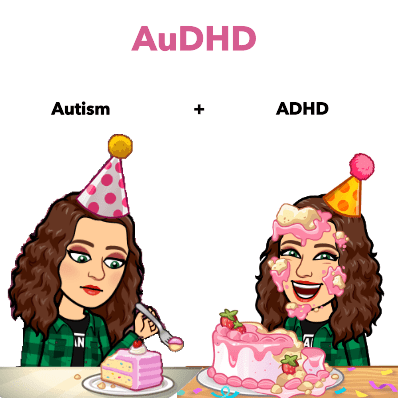
Leading on from my previous post about autism and ADHD, this week I’d like to expand on the topic by discussing the concept of AuDHD- aka autism + ADHD.

ADHD has been getting a lot of online attention in the last couple of years with many adults getting late life diagnoses as knowledge of the condition has advanced. Up to 10 years ago, it was thought that both autism and ADHD were completely separate diagnoses with no overlap. Now, it’s thought that 30-80% of autists also have ADHD, with many discovering they had autism during an ADHD diagnosis and vice versa.

When I previously wrote about this topic, I estimated that I was mildly ADHD, but the more stories I have been hearing about the experiences of female ADHDers, I exhibit a lot more traits than I originally thought. Because I wasn’t fitting the classic impulsive/hyperactive model of ADHD, I never thought to dig much deeper, buuutttttt, just like autism, it turns out that there are differences in symptoms between men and women. The original research observed more men than women (there’s a whole history of women being under researched in medicine) and so it was believed to impact more males than females, but, as with autism, sex differences and masking behaviours have made it very difficult to diagnose ADHD in women. ADHD also operates on a severity spectrum which can make it difficult to pick up on.

With all this overlap, enter the concept of AuDHD.

One of the most fascinating aspects of AuDHD is it’s paradoxical nature:

  • Autists like routine, but ADHD makes it difficult to maintain
  • ADHDers crave stimulation, but autists get easily overstimulated
  • Autists are rigid with rules, timekeeping and planning, but ADHDers suffer from time-blindness, impulsivity and hyperactivity making it difficult to follow plans and rules
  • ADHDers can be messy and chaotic, but autists like order and systemising

Effectively in AuDHD, the paradoxes can camouflage each other, making it much harder to diagnose either disorder. It’s like having 2 different brains fighting for control, but only one or the other will win out at any given time. For example, today you might do a weeks worth of work, tomorrow you might struggle to find the dopamine to do anything.

At other times, the symptoms are symbiotic. For example in my case, I can have complete time-blindness when I’m in the middle of something, but if I need to keep an appointment, the social rules governing lateness force me to be on time. AuDHD is a constant seesaw between the two conditions, a separate presentation in itself.

While it’s not a separate diagnosis yet, given the prevalence of comorbidity, who knows what the future will hold as neurodivergent research increases.

Hope you liked this post dear Earthlings! 🙂

Have a lovely weekend!

Aoife

Celebrities with Autism Part 3

Greetings Earthlings! 🙂

As neurodivergence is increasing in popularity, more and more celebrities are divulging their autism diagnosis/spectrum suspicions. Leading on from my previous two posts about celebrities with autism, it’s time for part 3 of this series.

David Byrne

The eccentric former front man of new wave band Talking Heads identifies as being on the autistic spectrum (he’s specifically mentioned Asperger’s syndrome). In interviews, David has talked a lot about his social struggles and see’s autism as a superpower that has allowed him to hyperfocus on all of his musical projects. However, David has not been professionally diagnosed.

Fern brady

Scottish comedian Fern Brady has been very open about her autism diagnosis and how stand up comedy has really helped her. She finds it very reassuring having her comedy routine set so that every night she stands up and says the same words to her audience. Outside of comedy she spends a lot of time, like many maskers, rehearsing what she is going to say to people. She recently wrote a book about her experiences and diagnosis journey Strong Female Character. Here’s a clip of Fern talking about the book and her experiences of autism:

James McClean

Republic of Ireland and Wrexham footballer James McClean, like many adults, discovered he was autistic after his daughter was diagnosed. He noticed similar traits and pursued a diagnosis, going public during autism awareness month 2023 to support his daughter, and attributes his success in football to his specialist interest in the sport.

Sam Thompson

British TV personality Sam Thompson was diagnosed with autism, tic syndrome and ADHD in 2023 as part of a Channel 4 documentary. Sam said: “I’ve always known there was something slightly different about me, but it’s only since I’ve started to ‘adult’ a bit more that I’ve wanted to figure it out, because a lot of symptoms were getting worse.”

Bradley Riches

Heartstopper actor Bradley was diagnosed with autism at the age of 9 and has written a children’s book called ‘“A” Different Kind Of Superpower‘ to help kids celebrate their neurodivergence. Bradley recently’ opened up about his experiences of autism during his stint on Celebrity Big Brother and how living in the Big Brother House can be challenging, but he is determined to push through with his coping mechanisms to enjoy his time on the show.

Tallulah Willis

This week, daughter of Bruce Willis and Demi Moore, Tallulah Willis revealed that she was diagnosed with autism in 2o23, saying that the diagnosis has changed her life. She made the announcement by sharing a video on Instagram from the red carpet with her father as a child where she is stimming on his ears.

Carrie Grant

British singer, vocal coach and TV presenter Carrie Grant was diagnosed with autism as an adult in 2023 at the age of 58. All of her children are neurodivergent and for many years people had been asking her when she was going to be assessed herself.

Holly Madison

Former Playboy bunny Holly Maddison opened up about her autism diagnosis which she received as an adult in the last couple of years. “The doctor told me that I have high executive functioning, which means I can pretty much go about my life and do things ‘normally,'” Holly said. “I think because I’m more quiet, I’ve only recently learned to make eye contact. I’m often in my own thoughts, things like that, so people take that as offensive. … I’m just not on the same social wavelength as other people but don’t take it personally.”

Kanye West

Supposed texts between US rapper Kanye West and Elon Musk shared online have claimed in recent months that Kanye thinks he has autistic traits after a car crash 20 years ago and that he is not Bipolar after all. Now this is an interesting one as autism is a lifelong condition, not just something that happens after a car crash (not to mention that having autism doesn’t preclude you from having Bipolar as the two conditions are often co-morbid). It’s quite possible that Kanye is indeed on the spectrum as his behaviour can be quite erratic and impulsive (throwback to interrupting Taylor Swift to praise Beyoncé at the VMAs), but this is also consistent with Bipolar on it’s own. Nevertheless, it’s an interesting one to keep an eye out for- perhaps he will seek a formal diagnosis going forward.

Hope you enjoyed this post dear Earthlings!

Have a lovely weekend! 🙂

Aoife

Autism and Allergies

Greetings Earthlings!

Leading on from my previous post about the immune system, this week I’d like to talk about the interesting link between autism and allergies.

I’ve developed a lot of allergies during my lifetime- sticking plaster, grass, common medicines, certain shampoos, perfumes and hand soaps, and according to my blood work, I’m a tiny bit allergic to cow hair😂 Interestingly, I recently found out that there is a link between autism and allergies.

Studies have shown that children with autism tend to have higher levels of IgE and IgG (immunoglobulin E and G)- the antibodies that are produced in response to allergens. Other studies have suggested that autists may be twice as likely to suffer from food allergies and that boys with autism have higher rates of respiratory and skin allergies than their neurotypical peers.

But first things first, what exactly are allergies and what’s happening to your body?

An allergy occurs when the immune system thinks that normally harmless foreign substances are a threat to the body. The immune system then attacks healthy tissues in an attempt to defend the body against that substance, inflaming them and resulting in an allergic reaction. Symptoms can vary but common reactions may include itching, rashes, sneezing, headaches, nausea and swelling. Severe allergic reactions can cause anaphylaxis- a life threatening reaction where the immune system floods the body with chemicals which can cause it to go into shock requiring an Epipen injection.

So why might autists be more prone to allergies?

As previously discussed, the immune system tends to be abnormally activated in autists resulting in higher levels of inflammation and autoimmune diseases, making the body more likely to overreact to a harmless substance. Why the immune system behaves this way remains unclear. As with most autistic co-morbidities, an unknown genetic mutation likely underpins it. Furthermore as I’ve discussed in previous posts, some theories suggest that dietary sensitivities may contribute to autistic symptoms. Given that autists are twice as likely to suffer from food allergies, it’s possible that these could in fact play a role in autism.

Hope you enjoyed this post dear Earthlings!

Have a lovely weekend! 🙂

Aoife

Learning and Autism

Greetings Earthlings! 😀

Leading on from my previous posts about autism and memory, IQ, and studying, this week I’d like to talk about the topic of autism and academic learning.

First things first, autism is NOT a learning disability. It’s a neurodevelopmental disorder which impacts how our brain develops and the rate at which it develops having an impact on motor learning, social learning, language learning etc. That being said, ASD‘s can be co-morbid with learning disabilities such as dyslexia, ADHD and dysgraphia.

Everyone’s academic learning journey is unique, especially among autists. Autists can have problems concentrating in classrooms due to sensory sensitivities, issues with social skills can make it harder to interpret teaching cues, and difficulties with executive functioning and information processing can make it hard to process new information.

I’ve always had a passion for academic learning, but even I’ve had my struggles. I struggled hugely with maths in my teenage years. Once letters came into equations I regularly had meltdowns and got overwhelmed when I couldn’t immediately make sense of the topic. One of my most enduring memories of school is throwing my maths book at the wall mid meltdown while doing my homework 🙈

Buuuuuttttt I would usually be able to make sense of the exercises once the meltdown had passed. My teachers unfortunately didn’t understand this (the joys of being undiagnosed) which often made my learning journey challenging. Had I been given the opportunity to work slowly 1:1 with maths, I would have picked topics up a lot quicker.

Everyone’s learning style is different, especially when considering the challenges of autism. There are several different learning styles:

  • Visual learning– where learners take in information better visually through pictures, graphs and mind maps to help make connections
  • Auditory learning– where learners listen to information for optimal processing
  • Verbal learning– using verbal approaches like reading out loud and mnemonic devices
  • Reading/writing learning– classical learning approach by reading and writing
  • Kinesthetic learning– physical learning by doing tasks or needing to move while learning
  • Logical learning– where logic and pattern recognition skills are used to connect concepts
  • Social/Interpersonal learning– where you learn best by observing others, and talking and communicating with a social group
  • Solitary/Intrapersonal learning– where you just need to be by yourself to learn on your own with no distractions

Sometimes a mix of learning styles can be the best approach- I have employed all of these styles at different points in my life, but I would largely fall into the visual and kinesthetic learner categories. Seeing things drawn out and or doing tasks is often the best way for me to process information. For example, I tend to take notes using coloured pens as the visual stimulation from the colours makes it easier to process and retain the information.

There are so many different ways to learn, it’s just a matter of sitting down and figuring out what kind of learning style works for you, or working out a plan to limit classroom issues like sensory challenges that can derail your learning process. Lot’s of apps and supports are available for autists these days that can help make learning a lot easier.

The key thing is to not get discouraged. No two autists are the same and it can take a while to find what learning style works for you. When I took maths and biostatistics in college, the lectures were overwhelming, but once I sat down to a tutorial session where we worked hands on with the sums in an intimate environment, I flew through the work and got excellent marks in my exams. It takes time, but once you find the right approach, learning can be a breeze 😊

Hope you enjoyed this post dear Earthlings! 🙂

Have a lovely weekend!

Aoife

Autism and the Heart

Greetings Earthlings! 🙂

This week I’d like to focus on the impact of autism on a specific organ of the body- the heart.

People with autism are at an increased risk of developing cardiometabolic diseases such as cardiovascular disease, heart attacks, stroke, diabetes etc. The risk of developing atherosclerotic heart disease in particular (where plaques clog up the blood vessels in the heart causing failure) is an estimated 47% higher in autists. Furthermore, there appears to be a link wherein people born with congenital heart disease (where the heart is not structured properly at birth) are 33% more likely to receive an autism diagnosis in later life.

Fun stuff…

So why autism? Why are there links to heart diseases?

One of the most plausible theories suggests that prolonged activation of the fight or flight response system (autonomic nervous system) in autists in response to stressors may be negatively impacting the heart. We all know that stress is bad, but as I’ve previously discussed, biological stress in autists tends to persist following a stressful situation when compared with their neurotypical peers, damaging the heart over time.

In terms of the link to congenital heart disease, researchers believe that alterations in blood flow to the brain caused by defects in the heart may predispose the brain to injury and developmental delays both in utero and in the postnatal period. These flow changes are thought to cause damage to white matter fibers which act like a train network connecting the brain. As a result, damage to this system could be negatively impacting learning and behaviour.

In addition to the links to heart diseases, alterations in heart systems may also be contributing to autistic symptoms. One theory suggests that alterations in the normal functioning of the fight or flight system may be contributing to a number of autistic behaviours such as meltdowns. Researchers have also noted that autists tend to have lower variability in their heart rate compared with their neurotypical peers. Higher variations in heart rate tend to indicate a more relaxed body where the rest and digest system (parasympathetic nervous system) is more active, but lower variability has been linked to difficulties recognizing emotions and social cues in addition to intellectual issues.

So the heart is seemingly far more connected to autism than we might have realised!

Prolonged periods of stress may indeed damage the heart, but with successful interventions, autists can better navigate life’s stressors. As with all disease risk, just because there is an increased risk, does not mean that it will manifest, but we should all be looking after our hearts- neurotypical and neurodivergents alike. It’s the only one we’ve got 🙂

Hope you enjoyed this post dear Earthlings!

Have a lovely weekend 🙂

Aoife

Autism and Diabetes

Greetings Earthlings! 🙂

This week I’d like to discuss the topic of diabetes and how it can be linked to autism.

But before we get into that, what is diabetes?

In the body, the hormone insulin is produced by our friend the pancreas (in the image above) to control the absorption of sugar into our cells. Diabetes mellitus is a condition where blood sugar levels are uncontrolled due to insufficient insulin production. Elevated blood sugar levels (hyperglycemia) can cause a range of health issues such as nerve damage in the hands and feet (peripheral neuropathy), permanent damage to eyesight (diabetic retinopathy) and life threatening ketoacidosis (where substances called ketones build up in the body making blood more acidic).

There are a few different types of diabetes:

  • Type 1 or insulin dependent diabetes– this occurs when the pancreas ceases to produce insulin (caused by the immune system attacking insulin producing β cells) leading to high blood sugar levels. Replacement insulin must be injected to keep blood sugar levels stable.
  • Type 2 diabetes– occurs when the body develops insulin resistance so insulin is no longer able to control blood sugar levels. It usually occurs in adulthood as a result of poor diet, obesity and lack of physical exercise
  • Gestational diabetes– this type of diabetes occurs during pregnancy in women who have never previously had diabetes. It usually goes away following birth of the baby, but does increase your risk for type 2 diabetes in later life

That’s great Aoife, but what has all this got to do with autism?

Research suggests that idividuals with autism may have a 57% higher risk of developing diabetes compared with their neurotypical peers; specifically the risk is roughly 64% higher for type 1 diabetes, and a whopping 146% higher for type 2 diabetes!

So why are autists more susceptible?

In the case of type 1 diabetes, as I’ve previously discussed, autists tend to have an overactive immune system (likely due to genetic mutation) which could be damaging the pancreas preventing insulin production. Research has also found that type 1 diabetic mothers are at a higher risk for giving birth to an autistic child as it’s thought that autoimmune diseases like type 1 diabetes produce antibodies that can attack the developing brain in the womb. Similarly, gestational diabetes has been linked to a slightly increased risk in the development of autism and ADHD due to exposure to high blood glucose levels in utero.

The massive type 2 link on the other hand has a lot more to do with lifestyle. Sensory processing issues relating to food can lead to quite a restrictive diet. This diet is often high in sugar which may lead to type 2 diabetes in adulthood. Some autists with ADHD also have impulsive issues with over-eating for sensory stimulation, while others struggle with insatiable hunger (polyphagia), especially those with co-morbid Prader–Willi syndrome. Physical limitations due to co-morbid issues like of dyspraxia can also reduce and limit physical activity increasing the risk for diabetes. In addition, some studies have found genetic links to autism and weight gain which further compound this risk.

As with all things in life, just because there is an increased risk does not mean that the disease will manifest, but it’s useful to be aware of the risk nonetheless.

Hope you enjoyed this post!

Have a lovely weekend!

Aoife

Autism and Contraception

Greetings Earthlings! 🙂

This week I’d like to talk about a rarely discussed topic when it comes to autism- contraception!

When it comes to autism, the narrative doesn’t tend to discuss sex and relationships due to the archaic perceived notion that most of us are asexual.

Newsflash- autistic people have sex! As such, it’s important to discuss the topic of contraception.

The use of contraception is entirely individual, but for autists there may be additional sensory issues that may influence their decisions. Texture and smell may be issues for latex products, contraceptive patches may aggravate skin sensitivities, and contraceptive injections and implants may freak an autist out (don’t get me started on how much I shudder every time a friend has shown me the contraceptive bar in their arm!😖).

Hormonal contraceptives on the other hand may negatively impact an autists mental state and behaviours. There are no studies on the impact that hormonal contraceptives may have on autists, but as discussed in my previous posts about the impact of hormonal fluctuations during puberty, menopause and menstruation, it’s quite likely that behaviours and mental health could be impacted by their use. I’ve seen many neurotypical friends get knocked about by hormonal contraception, so I can only imagine how much worse these side effects could be for an autist. Some autists have reported that their anxiety issues increased significantly when on certain contraceptive drugs, finding that their panic attacks completely disappeared after switching to a different drug. In contrast, others have found that taking oral contraceptives has improved their mental health as it has made sensory issues and pain around their periods easier to manage, particularly contraceptives that prevent periods. Studies have also found that oral contraceptives may be useful to reduce pica behaviours in autists.

Researchers have also made an interesting connection between hormonal contraceptive use and autism rates. In 2014 a hypothesis was proposed that the increase in autism rates over the last 60 years correlates to the increased use of hormonal contraceptives.

Yep- they are suggesting that contraception may contribute to the development of autism!

The hypothesis suggests that hormonal contraception alone would not cause autism, but a ‘double hit’ mechanism of contraceptive exposure in tandem with other environmental and genetic factors may increase the risk. It’s thought that when an egg is exposed to artificial hormones in the ovary it can cause damage to the egg increasing the autism risk. Hormonal contraceptives work by preventing the release of an egg, and as such, the retention of eggs in the ovaries could be exposing them to these hormones for prolonged periods of time with negative consequences. There are multiple studies on how prenatal exposure to testosterone increases autism risk, so it’s not implausible that the same could be said for other hormones. Progestin (artificial progesterone used for contraception) in particular has been linked to the regulation of brain activity and impaired cognitive responses during foetal development, with animal studies showing autism-like behaviour after prenatal exposure to the synthetic hormone. Much research is needed to confirm that the rise in hormonal contraception is indeed contributing to the increase in autism rates, but it’s a very interesting hypothesis!

Hope you enjoyed this post dear Earthlings! 🙂

Have a lovely weekend!

Aoife

Autism-Headaches & Migraines

Greetings Earthlings! 🙂

This week I’d like to talk about something that isn’t normally discussed in relation to autism- headaches and migraines.

Anyone can get headaches or migraines, but it appears that there is a link between autism and their frequency , with one study even suggesting that autistic children are twice as likely to experience migraines when compared with neurotypicals. Further studies are required to confirm comorbidity, but the studies that do exist suggest a lot of overlap.

So have they any idea why there is a link?

One of the most popular theories suggests that issues in sensory processing may make autists more susceptible to headaches and migraines. For both autists and migraine sufferers, differences in sensory processing can impair how the brain registers and modulates responses to sensory stimuli like light and sound which can trigger migraines following a sensory overload. There are a lot of structural changes in the brains of both autists and migraine patients which could further explain this sensitivity.

Research has also reported that autists have altered pain sensitivity which can distort their perception of headaches, so, what might be an ignorable ache in a neurotypical individual may be much more severe for an autist.

Interestingly, there may also be a link between headaches/migraines and our digestive health. The gut is innervated by a network of nerves known as the enteric nervous system, often nicknamed a second brain. Migraines are often co-morbid with gastrointestinal problems where issues in the second brain can influence changes in the main brain via the brain-gut axis. GI issues are frequently co-morbid with autism so this could be the most logical explanation for the link. I know I’ve certainly triggered migraines from eating things that didn’t agree with me, only to have the migraine immediately dissipate the minute my stomach hit the ejector button! 😂

Migraines have also been linked to low levels of serotonin in the brain. As previously discussed, serotonin levels are dysregulated in autists so this could also explain the link. This is particularly interesting as 95% of serotonin production occurs in the gut, so this further indicates a gut related link to headaches and migraines in autism.

Joint hypermobility could also be contributing to headaches. People with connective tissue disorders like Ehlers Danlos syndrome (EDS) frequently experience headaches. Weakness in supporting tissues like collagen can cause instability in the neck and spine which can pinch nerves, interrupting the flow of blood to the brain and triggering headaches and migraines. As joint hypermobility can be co-morbid with autism, this could further explain the link.

As with many aspects of the spectrum, susceptibility to headaches and migraines could also be genetic as there is an overlap in some genes linked to both autism and migraines.

Hope you enjoyed this post dear Earthlings!

Have a lovely weekend! 🙂

Aoife

Autism and Daydreaming

Greetings Earthlings! 🙂

In today’s post, I’m going to discuss the subject of daydreaming (or as my sister likes to call it “staring into the abyss”) and autism.

d2142b24be609ef7907c0ff7f909c98e8d43e94eadf4bd22518ca238e81c15de.0

*Cue six year old Aoife singing the Monkees ‘Daydream Believer‘ at the top of her lungs!*

Image result for daydream believer gif

All of us daydream at some point or other in our lives, but according to researchers, autists daydream differently to others. When we daydream during times of rest, certain regions of the brain (known collectively as the default mode network) are activated to help us reflect and process emotions. However in the autistic brain, it appears that activity in these daydreaming regions is dampened due to lower levels of brain connectivity. As daydreaming is an essential component for self reflection, researchers believe that autists struggle to create a “normal” internal picture of themselves and others which could be linked to social issues often experienced in autism.

On the other hand, autism and ADHD have also been linked to maladaptive daydreaming. First described in 2002, maladaptive daydreaming is a mental health issues where someone daydreams excessively, sometimes even for hours at a time. People who tend to daydream like this conjure extremely vivid and detailed daydreams, often developed as a coping mechanism or a form of escapism. There is limited research on this topic as the condition has not been officially recognized yet, but some estimate it to effect as many as 20% of those with ADHD which often overlaps with autism. It is thought to be a compulsive issue, which given the issues of impulsivity and autism could explain the link.

In my own life, I’m a terrible woman for daydreaming. My mind is constantly drifting in and out of focus to daydream about potential future scenarios or to create elaborate fantasies to escape from my problems. There were certainly periods during more turbulent times where one might consider my daydreaming to have been maladaptive. If I’m being honest though, I think I tend to daydream more out of boredom than anything else- I just fill my head with all these interesting scenarios to keep my brain stimulated when I’m not doing much else with my time 🤣

So who knows- maybe daydreaming is a spectrum within the spectrum! 🤷‍♂️

Hope you enjoyed this post dear Earthlings!

Have a lovely weekend! 🙂

Aoife

Blog at WordPress.com.

Up ↑