Autism in ‘The Pitt’

Greetings Earthlings! 🙂

This week I’d like to discuss autism in the brand new medical drama that everyone’s talking about- The Pitt.

So The Pitt is a unique new medical drama set in the emergency room of the fictional Pittsburgh Trauma Medical Hospital (hence the name). Unlike conventional dramas however, the show happens in real time, with each episode focusing on one hour of the doctor’s shift. By the end of the season, there will have been 15 episodes documenting one single 15 hour shift in the E.R. The show has been praised for how realistic it is, not shying away from the squeamish reality of medicine like close up surgeries, gory injuries and uncovered birth scenes.

And before any of you guys ask, yes that is the guy from E.R.- Noah Wyle (a little bit typecasty bringing him back to lead another series set in an E.R. but everyone is raving about his performance!).

So to autism!

In episode 7, Terrance (played by autistic actor Coby Bird) comes into the E.R. with a sprained ankle. His autistic traits are immediately obvious to the trained eye (his lack of eye contact, constant questions, interrupting his doctor, monotone voice and language use) buuutttt his doctor does not pick up on any of it. Instead he leaves frustrated giving out that he couldn’t take a patient history from the constant questions. Thankfully another doctor’s spidey senses start to tingle, and she quickly spots his autism diagnosis in his medical history file in the hospitals computer.
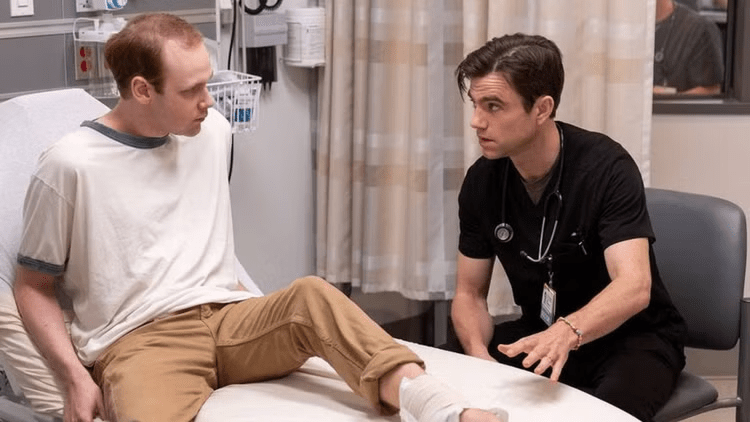
Mel has an autistic twin sister (played by autistic actress Tal Anderson) and immediately volunteers to take over. She calmly enters the room, closes the doors to the noisy E.R., turns off the lights, and disables some alarms going off on the wall. This allowed her to have a calm conversation with Terrance to understand his concerns about his ankle and assess his injury. She quickly reassures him that his injury won’t keep him from a table tennis tournament, explains the scans that need to be performed, and even shows him a model of the bones in his foot to show what kinds of injury he could have.

Here’s a quick short from the episode:

This was such a heartwarming moment in the episode to see an autistic patient getting the proper care and understanding they need in a medical setting. Medical environments can be very overwhelming on a sensory level before you add in your fears, uncertainty and uncomfortable procedures. I’ve had minor meltdown’s every time I’ve had a cannula placed in my hand, but thankfully the nursing staff were aware of my diagnosis and made every effort to make things easier for me where others would have told me to grow up and stop crying. They got me to start talking about alpacas and my blood pressure dropped right back down to normal 🙃🦙

On another level, Mel herself has many neurodivergent traits, as is often the case with siblings of autists. Several members of the autistic community believe she is on the spectrum and feel seen by her portrayal. Taylor Dearden (daughter of Breaking Bad’s Bryan Cranston) is herself neurodivergent (she has ADHD) which she says has really helped her to shape the character of Mel. As Mel goes forward into the rest of this season and beyond (it’s already been renewed for season 2), I can’t wait to see what other neurodiversity story lines we may encounter.
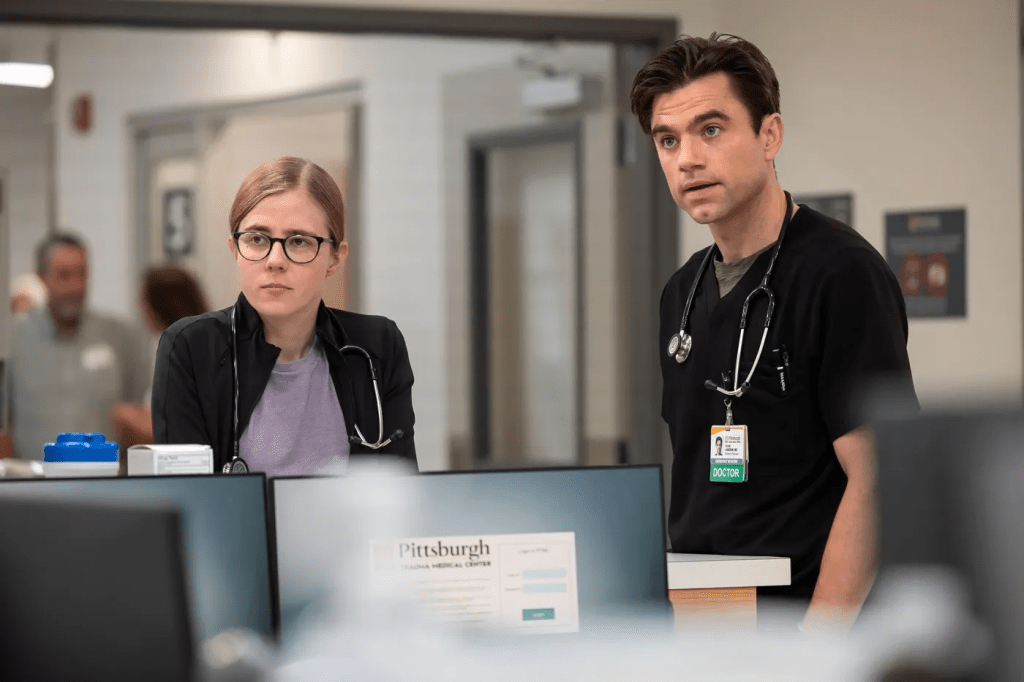
Autistic patients come up a lot in medical dramas, but rarely are they treated with this level of understanding. It’s great to see The Pitt demonstrating the true reality of this experience. If medical drama’s are your jam, I highly recommend you check it out 🙂

Hope you enjoyed this post dear Earthlings!

Have a lovely weekend!

Aoife

Autism and AI

Greetings Earthlings,

This week I’d like to discuss a bit of a hot button topic at the moment- Artificial intelligence (AI).

Once upon a time, AI used to mean that atrocious Steven Spielberg film, but now AI is creeping into our every day lives. Chat-bots, deepfakes, AI research models, advanced searches and content recommendations- we can’t escape it. The applications are seemingly limitless, with great potential for people with autism.

But first things first, what exactly is AI?

AI is the technology that enables computers and other digital devices to do the things that humans do like read, write, learn, talk, analyze etc. While not human, the combination of human-like abilities and machine thinking can make it a powerful tool to be reckoned with.

So how can we leverage AI when it comes to autism?

Now here’s where things get cool. Robots are being used to help manage autism! Researchers are training robots how to interact with children with autism so that autists can get practice identifying facial expressions and social cues and help them to learn how to respond appropriately. Robots are the ideal companions as they have limitless patience and allow autists to practice their skills in a safe, non-judgmental environment. There are also a number of new AI apps that similarly work to help autists to practice their social skills, with AI technology being used to help move and learn what works best for the autist and help suggest the right kind of calming exercises depending on their mood.

In addition, AI models can be used to study the MRI’s of autists to help us better understand the condition, particularly how neurological changes and autistic traits vary between neurodivergents.

Most recently new AI systems has been developed that can quickly and accurately diagnose autism- one system by measuring how water travels in the brain by analyzing MRI images; and another that detects autism by measuring responses to a flash of light in the eye. This could revolutionize how we diagnose autism, allowing autists to get access to services sooner for better overall outcomes. Other cool AI apps allow parents to upload videos of their child’s behaviours to be analyzed by clinicians for remote diagnosis using AI to help categorize and assess them.

On the other hand, AI is a force that we must be careful with. It has great potential for use, but we need to be careful where we tow the line. This is especially true of Elon Musk’s Neuralink- a computer chip that can be implanted in the human brain, allowing us to control mobile devices through the power of thought. This week saw the first reported successful (though the evidence remains to be seen) implant where the patient has recovered well and is able to control a mouse on a screen with their brain. What was once the stuff of science fiction is rapidly becoming a reality. Aside from these tech applications, Musk claimed in 2019 that Neuralink has untapped medical potential to help “solve” neurological diseases like Parkinson’s, Alzheimer’s, Schizophrenia and…. autism.

Now… this was naturally met with a lot of backlash from autism charities- especially given that Musk has openly discussed how his autism has contributed to his success. Autism is a different way of thinking, it is not something that the majority of autists would like to “solve”. New approaches to help autists navigate life in a neurotypical world yes, but most would not wish to get rid of their autism if given the choice. Would modifying autistic traits through AI really help autists, or could it make things worse by taking away our unique way of thinking?

It’s a very fine line we tread, so we must proceed optimistically with caution when applying AI to autism.

Hope you enjoyed (or were horrified by) this post dear Earthlings!

Have a lovely weekend!

Aoife

Autism and Clinical Research/Trials

Greetings Earthlings! 🙂

This week I’d like to discuss a little more unusual- the participation of autists in clinical research and trials.

Now before we get into this post, I’d like to preface things by reiterating my stance from previous posts that autism is not something to be “cured”, but that being said, pharmaceutical interventions can be useful in the treatment of conditions that are co-morbid with autism such as OCD, bipolar disorder, ADHD, GI issues etc., not to mention every day illness, so research participation can be highly beneficial for autists.

So what exactly is clinical research and why do we need it?

In a nutshell, clinical research is a branch of medicine that determines the safety and efficacy of treatments intended for use in humans. It differs from lab based research in that human volunteers are involved to advance our knowledge of health and medicine- most of the studies that I refer to in my posts would be classified under clinical research. Research is split into two branches:

  • Observational studies -where groups are observed/monitored to gather health data
  • Clinical trials/interventional studies– where a treatment/drug is administered to a group of volunteers to assess its safety and efficacy. Depending on the trial phase the volunteers may be healthy or target patients for the drug/treatment

Human studies are the only way to truly determine drug safety and efficacy prior to marketing, so clinical research is essential to the advancement of medicine. Diversity in clinical investigations is particularly important as it allows us to better predict potential patient outcomes after treatment roll out. Historically speaking, trials were not particularly diverse and didn’t always cater to target patients. Many trials were subject to gender bias with males dominating the data- there were even breast and uterine cancer studies conducted exclusively on males! We now understand the importance of enrolling biologically diverse groups, hence autists participation in clinical research could be greatly beneficial.

But clinical research can be daunting for anxious autists, not just at the prospect of poor outcomes and side effects, but there are many barriers that may make participation difficult for an autist. There are often a lot of sensory challenges in the clinical setting with bright fluorescent lights, strong smells from medicines and cleaning products, alarms and noises from medical devices etc. which would need to be addressed by clinical staff when enrolling autists in studies. Co-morbid ADHD can also be an issue as autists may find it difficult to pay attention during visits and may become distracted by their surroundings making it difficult to collect data. Similarly ADHD can also impact patients motivation and interest in the trial which can make it tougher to get them to stick with it. Autists also often have difficulty with taking medicines on a sensory level so non-compliance with any treatment regimes will not generate usable data for investigators.

Many of these barriers can be overcome through environmental modifications, frequent breaks and adequate educational and emotional support during research studies. If clinicians and autism advocates work together to make research more accessible for autists, who knows what good may come in future clinical investigations!

Hope you enjoyed this post dear Earthlings!

Have a lovely weekend! 🙂

Aoife

Autism and Illness

Greetings Earthlings! 🙂

As we head into flu season, I thought I’d explore some of the challenges that face autists when it comes to feeling unwell.

We all know the glorious sensations that accompany common illnesses, the coughing, the vomiting, aches and pains and that delightful swollen head feeling that makes it hard to remember what breathing feels like! 😛

Image result for i'm dying sheldon gif

Now imagine you have autism- you are hypersensitive to stimuli such as temperature changes, struggle with change, and do not cope well with discomfort. On top of this, your struggles to communicate might make it difficult to convey that something is wrong. Most children will tell their mother that their tummy hurts; an autist may struggle to identify or describe a medical problem to a parent or doctor, especially in nonverbal cases.

It might just be a simple cold or bug to a neurotypical, but to an autist, it may be an entirely overwhelming experience.

One of the biggest challenges that I faced growing up was not so much coping with illness, (I have been known to go out clubbing whilst suffering from a bug or the flu!) but treating it.

I HATED taking medication!

Taste aversion was a big issue, mostly because medication came in foul tasting liquid form! Here’s a fairly accurate representation of my face after swallowing medicine:

bitmoji586634746.png

Every year my mother and I would go to war to get me to take my cough bottle or antibiotics. I would try it once, discover it tasted rancid, aaaaannnd then do everything my twisted sense of logic would come up with to avoid taking it. I would often pour out the medication when she wasn’t looking, or pretend I was old enough to dose myself so I could get away with not taking it! 😂

Didn’t work out so well though when things got worse… 😛

I know! I should have know better- but don’t  judge me too harshly, seven year olds are not well versed in the concept of antibiotic resistance! 😛 😉

Tablets were a little easier, but tricky to get used to the sensation of swallowing them at first. Once I discovered that antibiotics came in tablet form as an adolescent however, I became far more amenable to knocking them back! As the guys from Pringles say- “Once you pop, you can’t stop!” 😉 Although I may still recoil as the tablet slips down on occasion, especially if it has an unfortunate taste, or even worse, a powdery texture…!😬

Image result for swallowing tablet gif

Getting an autist to take medication can indeed be quite a daunting task, but here are some of my top tips for parents struggling with this problem:

  • Mix liquid medications into another drink or yoghurt– Ok, I know this feels a little bit like wrapping tablets in meat to get your pet to take them, but there is method in the madness! My mother used to mix antibiotics or antihistamine in with my juice or flat coke when I would refuse to take them. For the most part this worked, but sometimes I found the combination tasted just as bad- so trial and error! Just make sure that they consume the whole thing to get their full dose.
  • Ask for tablets not liquids– Granted, you can’t get tablets before the age of 12, but if given the choice- take the tablets. There is far less chance of taste related rejection!
  • Bribery- My mother was always particularly fond of this approach. To first encourage me to take propolis tablets, I was promised a fun-size bag of Malteasers if I swallowed them without complaint! Needless to say- it worked! 😉
  • Make a game of it- Why not try and use a specialist interest to encourage them to take their medicine? ‘It’s a magic potion to make you feel better!’, ‘This is what makes the Hulk strong!’ ‘See- it’s pink like Barbie; her favourite drink!’ My mother tried something like this by writing a note on a box of meringues to say that she had cast an engorgement spell on them to keep me from eating them! I was a bit older at the time, so I mostly ignored it, but I got a chuckle out of it at least! 😛 😉 Had I been a stubborn 6 year old however, I definitely would have fallen for it.

Failing all that- try to stay healthy folks! Wear your warm jumpers, take your multivitamins (although the scientific jury is out on whether or not these are actually useful!) and your apple a day and hopefully you will keep the doctor away 😉

bitmoji562267823.png

Enjoy the weekend everyone! :)`

Aoife

Autism on Screen-The Good Doctor

Greetings Earthlings 🙂

Today I’m going to explore the most recent portrayal of autism on screen- the pilot episode for the new ABC drama ‘The Good Doctor‘.

A Review of the Good Doctor | The Art of Autism

So what’s it all about?

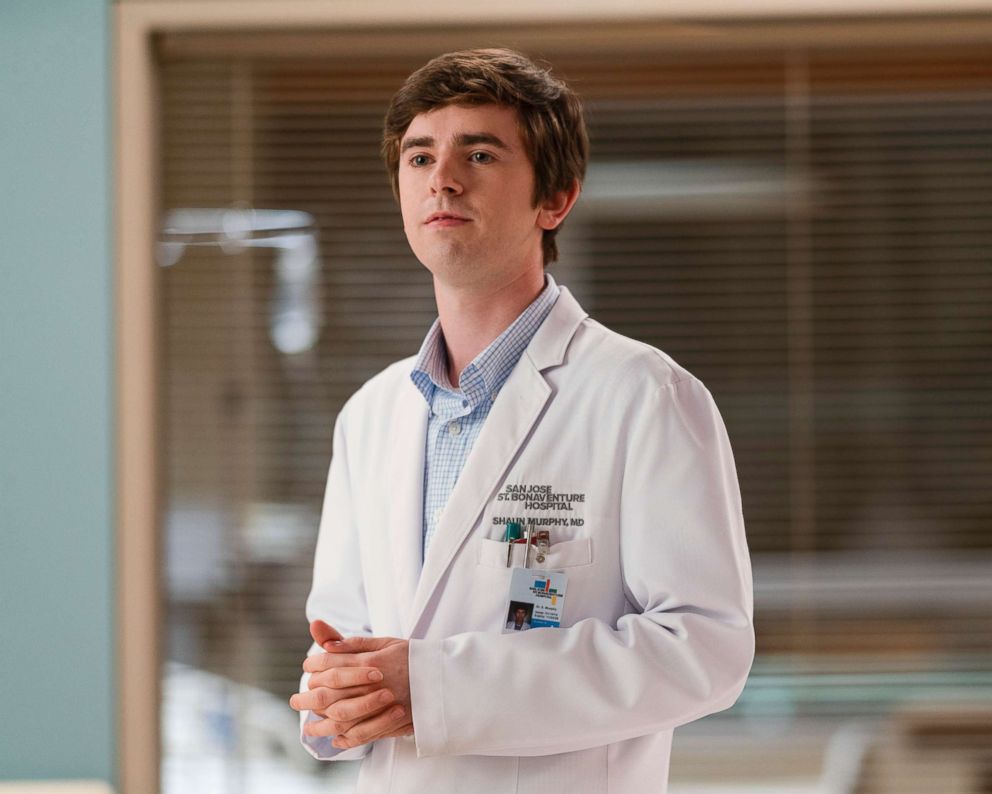
Well the name is fairly self explanatory- the series follows Dr. Shaun Murphy (played by Freddie Highmore- can’t believe he’s all grown up!), a surgical resident with autism and savant syndrome (Really?Again! 😛 ) as he sets out to save lives.

You can watch a trailer for the show here- but word of warning, it’s a bit spoilery for the first episode so if you’d really like to watch it- maybe skip the trailer 🙂

But how does it’s depiction of autism fare?

Granted, this was merely the pilot, but so far the show has portrayed some of the classic symptoms very well- repetitive movements, truthfulness, literal thinking, awkward gait, eye contact issues etc. Like ‘Atypical, the show strives for subtly in Shaun’s idiosyncrasies rather than highlighting the obvious differences to his surgical peers. For example, Shaun struggles to open a ribbon, a simple, subtle struggle that few would associate with autism. Why just this evening I had to ask my housemate to open some freezer bags for me as I just couldn’t seem to crack it!

Unlike other portrayals of autism, I felt that the acting was far more natural, as if I were encountering a real person and not another hyperbolic autist.

For the first time, I felt like I could identify with Shaun as he awkwardly went about- I particularly identified with his descriptions of smells and how he uses different scents for recall (I’m notorious for using unusual identifiers to recall memories!).

However, as the title character is a savant, once again we are seeing an over-representation of a rare autistic trait. Nevertheless in the context of this series, it makes sense that Shaun has a brilliant mind and excellent recall- skills which are essential in the medical field.

Good Doctor' star Freddie Highmore on playing an autistic character,  breaking down stereotypes - ABC News

The pilot also touched on a very important issue- the struggle for autists to gain employment. Following the decision to hire Shaun, the hospital held a meeting to debate the validity of his candidacy as a surgical resident given that he is autistic. This meeting largely focused on all the areas where Shaun may fail, with little attention given to how he might succeed.

Given my own struggles to break into the world of employment this past year, one has to wonder if similar debates were held when I left the interview.

Why is it automatically assumed that we will not be capable, or that we will struggle in a job? Would such a meeting have been held for any other equally capable doctor in Shaun’s workplace?

Thousands of undiagnosed autists have successful careers, and yet the mention of the a-word could see them doomed to failure.

Companies are not allowed to discriminate on the basis of gender, age, educational background etc., so why does it have to be different for autism? How will you know if we are capable if you never give us the chance?

All in all, I really enjoyed the pilot and will be very interested to see how this show progresses 🙂 I would highly recommend it- but be warned it may not be for the squeamish (I’m not particularly, but there was one moment during that episode where I physically recoiled! 😛 )

Have a good weekend everyone! 🙂

Aoife

Autism- A History

Greetings Earthlings! 🙂

Today, in continuation from my post exploring autism through the ages, I’d like to give you a brief intro into how we came to know of  autism.

So how about a bedtime story then Earthlings? 🙂

bitmoji485231286.png

A long time ago in the land of Austria, two researchers were born that would go on to make medical history- Leo Kanner and Hans Asperger. Whilst these men interestingly did not collaborate, together their respective research laid the groundwork for our current understanding of ASD’s.

So how did it all begin?

Whilst some of the earliest documented cases of autism dates back to the 1700’s, the new Latin term autismus (“isolated self”) was first coined by Swiss psychiatrist Eugen Bleuler (who also coined the term schizophrenia) in 1910. Derived from the Greek word “autós” (meaning ‘self’), Bleuler used the term to describe a sub group of people with schizophrenia that were removed from social interaction.

Image result for eugen bleuler

The term autism first began to take it’s modern form in 1938 when Hans Asperger adopted the term ‘autistic psychopaths’ in a German lecture on child psychology. During this period, Asperger was investigating the ASD which would later bear his name, examining a group of four boys of normal intelligence who struggled with social integration and empathy. Asperger dubbed these boys “little professors” due to their ability to lecture at length on their favourite subjects!

Fun Fact: Asperger himself is widely thought to have displayed many of the symptoms of his discovery himself!

Image result for hans asperger

In 1944 Asperger published an article in German titled ‘Autistic psychopathy’ in childhood, a publication which largely went unnoticed within the English speaking medical community until the 1980s when child psychiatrist Lorna Wing brought his work into the limelight.

This obscurity was also due in part to the work of his contemporary Leo Kanner at the prestigious John Hopkins University in the USA, who pipped Asperger to the post with his paper Autistic Disturbance of Affective Contact in 1943.

Image result for leo kanner

In this work, Kanner described a group of 11 (8 boys, 3 girls) socially isolated children with a “need for sameness” and a “resistance to (unexpected) change.” Kanner claimed to have discovered a new medical condition which he named “infantile autism”, garnering much attention and praise within the medical community.

But was it coincidence that these men happened to work in tandem on such similar projects 4000 miles apart?

In his lifetime, Kanner claimed that he had never heard of Asperger’s work, however, it would appear that this was not the truth.

Author Steve Silberman has since discovered that Kanner likely heard of Asperger’s work through George Frankl- a work colleague from Vienna, and former chief diagnostician at Asperger’s clinic in 1938. Driven by an ambition to make his mark on medical history, it would appear that Kanner sought to recreate Asperger’s work in America, repacked it and claimed it as his own!!

Image result for fainting gifPoor Asperger- but at least his name lives on in Asperger’s syndrome! 🙂


So what did these early researchers believe to be the root of autism?

Difficult as it may be to imagine, Kanner firmly believed in something called the “refrigerator mother hypothesis“- a since (rightly) discarded theory which claimed that autism is caused by a lack of maternal warmth or love!!!

Image result for outraged gif

I know!!!!!

Madness!

In addition to this, Kanner’s reuse of Bleuler’s term autism resulted in decades of confused terminology where autism and schizophrenia were one and the same.

Thankfully, the research caught up to give us a clearer insight into the physiological roots of autism (although it took about 20 years for the experts to catch on! 😛 ), leading to the establishment of autism (and later Aspergers syndrome in 1994) as a separate diagnosis in it’s own right in 1980.

And that is the history of autism dear Earthlings, I hope you enjoyed your bedtime story! 😉

Enjoy the weekend everyone! 😀

Aoife

Blog at WordPress.com.

Up ↑