Autism and Puberty

Greetings Earthlings! 🙂

This week I’d like to talk about a frequently sidelined aspect of life on the spectrum- puberty. So often people focus on childhood autism we forget that autistic children will grow up and go through puberty just like everyone else.

Puberty is a challenging time for everyone, but often even more so for those on the autistic spectrum. Research is limited on pubescent autists, but some studies have suggested that behaviours can worsen in autists during this time, in particular, aggressive behaviours. The smallest of changes to routine can trigger meltdown’s in an autist, so imagine how this response is amplified when your entire body decides to change. You couldn’t pay me to go through puberty again- the raging hormones were a minefield (although there are day’s during this pandemic where I might consider it to travel back to a time when I had freedom 😛 )!

There can be a lot of sensory issues arising from the onset of puberty that can trigger further distress- body odours, sensory reactions to hygiene products, and my own personal hell, the sensory discomfort from wearing a bra. As I’ve discussed in previous posts, I went to war for years with my mother against wearing one as the sensation of it against my skin freaked me out and I was incredibly uncomfortable- but as I was un-diagnosed, this was passed off as just being awkward 😛

During puberty, socialising, an already challenging task for autists, becomes even more complicated. When you’re a child, everything is easier as kids haven’t developed a filter yet, but once those hormones kick in, conversations become more nuanced, boys and girls interact differently and your peers start to become aware of your mind blindness and excentricities. It can be quite a socially lonely time for autists.

So how can we navigate this difficult time in an autist’s life?

  • Talk openly about the facts of life– Talk them through the changes their body will experience in clear, concrete language. Don’t leave any room for confusion or misinterpretation so that they will be fully prepared and less thrown by the changes to come- there were certainly a few books that I read growing up where overly simplified language such as “a special hug” was used to describe sex that would only confuse and misinform the more literal autist
    • An important thing to know about puberty and autism is that it can have a much earlier onset in girls. Studies have shown that female autists tend to enter puberty and start menstruation on average 9 and a half months earlier than their peers, so girls need to be prepared and educated about the facts of life earlier than you might expect
  • Use visual tools– Sometimes words are not enough to create the correct mental picture for an autist. Illustrated books about puberty can be very useful here, and there are now many books specifically targeted at autists which can really help them to navigate this time
  • Discuss appropriate/inappropriate behaviours– don’t leave it at just the facts themselves. Autists will need to be taught about consent, sexual behaviours and inappropriate conversational topics just like anyone else. As female autists often mask their behaviours, it is especially important that they are taught about these things as they can be quite innocent and may be taken advantage of if not adequately prepared for adulthood
  • Sensory friendly clothing– For the young women out there, the market is now opening up to produce sensory friendly bras to help combat the issues of traditional brassieres. Bralette’s and lightweight sports bras may also be helpful alternatives
  • Normalise the experience– Reassure them that everyone goes through this, that it’s a normal part of growing up. Don’t attribute the entire experience to their autism
  • Be positive– Don’t assume things will be harder for your child as everyone is different. A positive attitude can go a long way to easing your child into the murky depths ahead

Hope you enjoyed this post dear Earthlings!

Have a lovely Easter weekend! 🙂

Aoife
Autism in Books: Diary of a Young Naturalist

Greetings Earthlings! 🙂

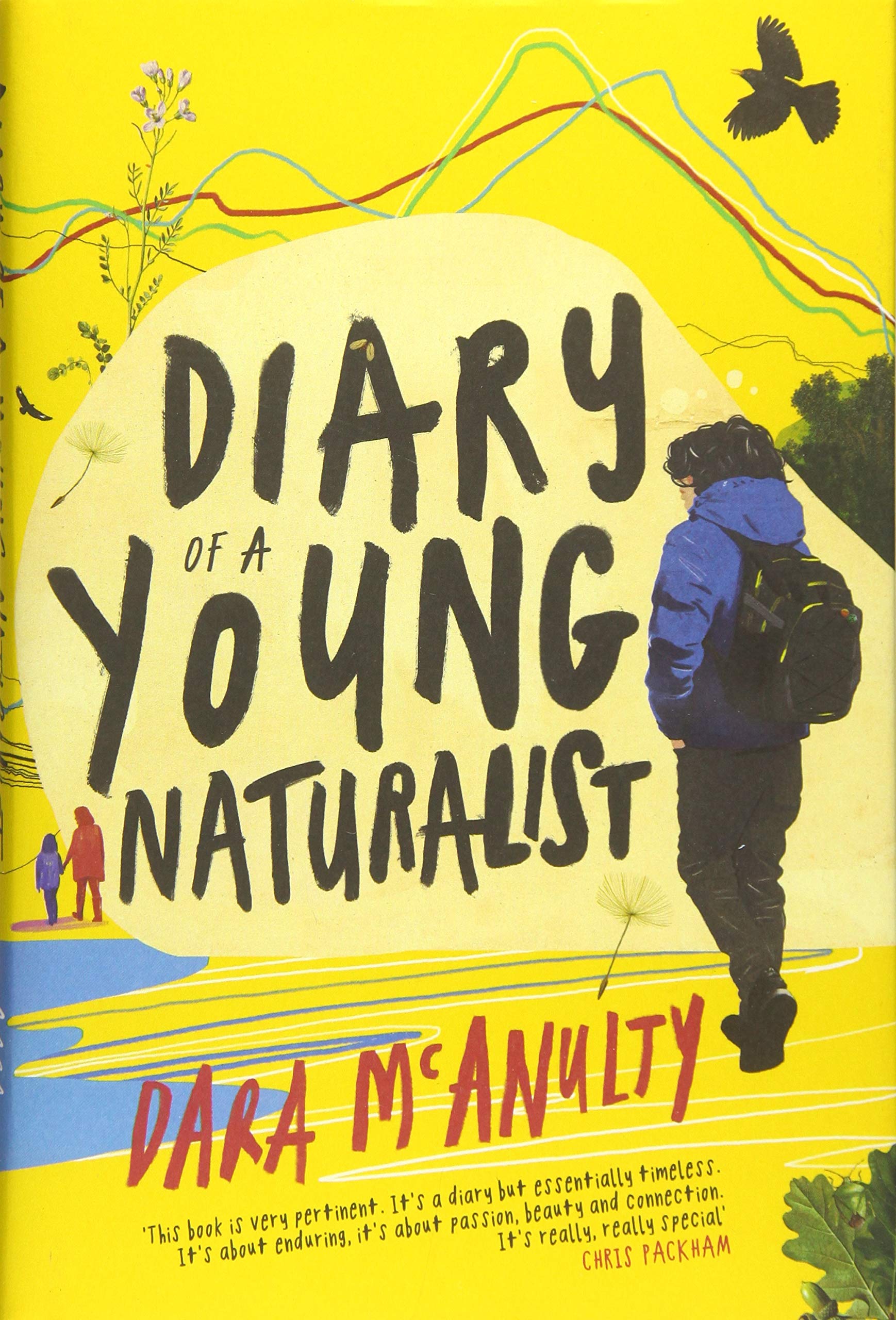
As we have just celebrated St. Patrick’s Day here in Ireland, this week I’d like to review a book by a young Irish author- Diary of a Young Naturalist by Dara McAnulty.

Diary of a Young Naturalist: WINNER OF THE 2020 WAINWRIGHT PRIZE FOR NATURE  WRITING: Amazon.co.uk: McAnulty, Dara: 9781908213792: Books

Dara is a 16 year old autistic naturalist and author who wrote ‘Diary of A Naturalist‘ to chronicle his fourteenth year on this planet. In the book, Dara gives us beautiful insight into his intense connection to nature and how it provides him with an escape to cope with his autism. The book has won numerous literary awards, making Dara the youngest recipient of the Wainwright prize for nature writing and the RSPB (Royal Society for the Protection of Birds) medal in the UK.

Here’s a video of Dara discussing his experience of how nature helps him manage his autism:

So what did I make of the book?

The book is beautifully written, powerfully evoking vivid imagery of the Northern Irish landscape and it’s local wildlife where Dara lives with his family. You really feel Dara’s intense passion for the natural world through his writing whilst giving us an insight into his everyday experiences of autism. Dara bravely tells us about his struggles with bullying, sensory overload and mental health showing a maturity way beyond his 16 years. Autists so often struggle to describe their emotions (as many of us have alexithymia), it’s a real privilege to have such an intimate insight into Dara’s mind.

Perhaps one of the most powerful aspects of the book for me personally, although small, was Dara’s account of his struggles with change and his mental turmoil as his family moved to a different part of Northern Ireland. I experienced a similar situation when I was 11 after selling my childhood home. We only relocated a few miles down the road (to a new house that was designed in a near identical layout to our previous house), but the change was devastating to my mental health. I always felt ridiculous that something seemingly so small could have such an effect on me, but it’s comforting to know that I’m not alone in this experience.

May be an image of 1 person and book

All in all, this book is a must read for anyone who is passionate about the natural world and conservationism 🙂

Hope you enjoyed this post dear Earthlings! 🙂

Have a lovely weekend!

Aoife

Autism in ‘The Imitation Game’

Greetings Earthlings! 🙂

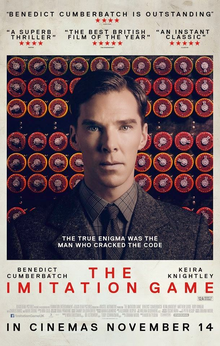
This week I’d like to have a look at the depiction of autism in the 2014 historical drama ‘The Imitation Game‘ starring Benedict Cumberbatch and Keira Knightley.

The Imitation Game (2014).png

So what’s the film about?

Based on a true story, ‘The Imitation Game‘ follows computer scientist and mathematician Alan Turing during World War II as he works together with a group of code breakers to decrypt the German cipher machine Enigma, successfully intercepting key messages for British Intelligence. In designing his own computer (the Turing Machine) to decrypt the messages, Turing’s efforts allowed the allies to win a number of key battles in the war, with experts estimating that the war was shortened by as many as 2 years saving 14 million lives.

A trailer for the film can be found here:

Now this film isn’t strictly about autism, but as Alan Turing is widely believed by scholars to have had Asperger’s syndrome, it’s worth looking into the portrayal of Turing on the big screen.

So how did ‘The Imitation Game‘ fare?

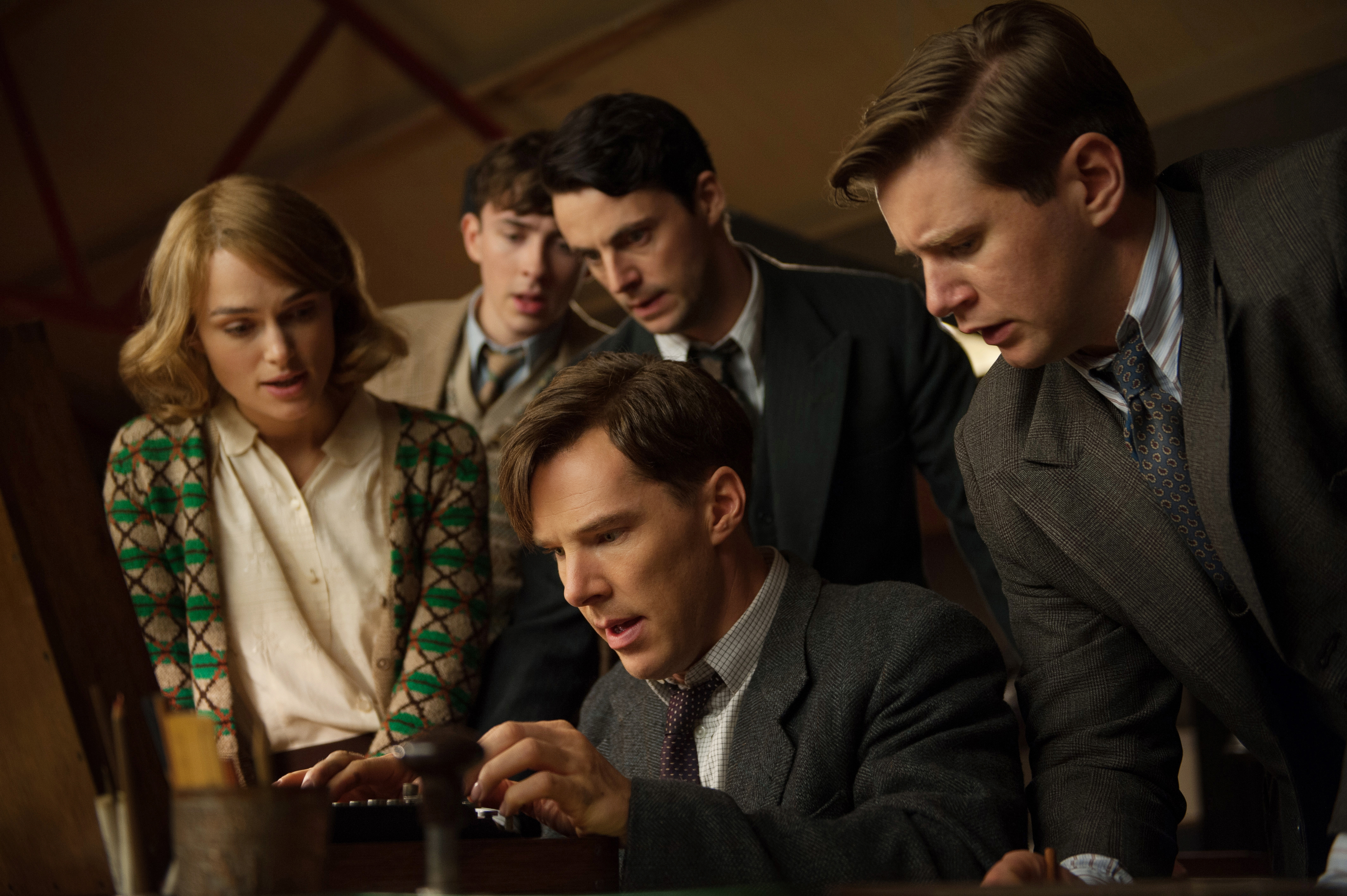
In my opinion, I found Cumberbatch’s characterization of Turing to be very convincing of a man with Asperger’s syndrome- a blunt, literal, socially awkward character, with poor eye contact and a tendency towards unusual verbose language (although I will admit that these are once again, highly stereotyped autistic traits). It helps that Benedict Cumberbatch is no stranger to autism- for his turn in Danny Boyle’s Frankentein, Cumberbatch did a lot of research about autism and met with many individuals on the spectrum, his experiences of which would likely have influenced his portrayal of Alan Turing.

The True Story of The Imitation Game | Time

On the other hand, Turing’s intellect does further perpetuate the stereotype of the autistic genius, however, as in the case of ‘Mozart and the Whale‘ (also based on a true story), it’s hard to downplay a historical figure that is in fact a genuine genius 😛 We just need to get Hollywood on board with showing us a more diverse range of autistic characters in fiction films 😉

Interestingly, historians have criticized the film’s depiction of Turing as the autistic traits depicted do not align with Turing’s adult personality. Turing has been described as quite sociable and friendly with a good sense of humour, a man who did not have issues working with others- so it would appear that the filmmakers took some liberty with the facts in an attempt to convey that Turing was likely on the spectrum. Perhaps a more subtle portrayal of Turing’s autistic traits would have led to a more accurate portrayal of an alleged real life autist.

All in all, it’s a really interesting biopic and worth a watch to while away the lock-down blues 🙂

Hope you enjoyed this post dear Earthlings!

Have a lovely weekend!

Aoife

Autism in The Rosie Result

Greetings Earthlings! 🙂

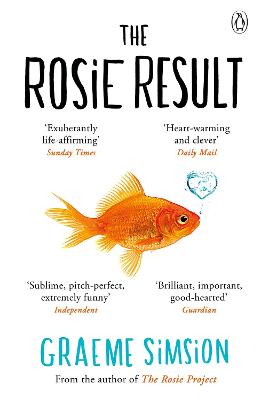
This week I’d like to conclude my review of the Rosie trilogy by discussing autism in the book ‘The Rosie Result‘ by Graeme Simsion.

The Rosie Result by Graeme Simsion | Waterstones

So what is the book about?

The third book in the series picks up with Don and Rosie several years after ‘The Rosie Effect‘ as they prepare to move back from New York to Australia with their son Hudson. Hudson naturally shares many of his fathers quirks, and following his enrollment at a new school, the teachers are quick to recommend him for an autism assessment. Determined that his son will not be disadvantaged or pigeonholed by such a diagnosis, Don takes a sabbatical from his career as a geneticist so that he can devote his time to Hudson and impart on him the many coping mechanisms that he himself has used to “fit in” (aka ‘The Hudson Project’).

Here’s a fun little trailer for the book:

So how did this book compare with the others in the series in it’s portrayal of autism?

I really enjoyed the book, however, many ranked this book as their least favourite, with some even criticizing it for portraying autistic characters as “caricatures” of autism. For the first time in the trilogy, the subject of autism is tackled head on, and to an extent I would have to agree with this summation of the books portrayal of autism. There are several autistic characters in the book, and indeed many of them are quite stereotypically nerdy, Sheldon-Cooper-esque types. Hudson is indeed cut from the same cloth as his father, and naturally has many of the same classic symptoms of Asperger’s Syndrome, such as his aversion to change, fondness for routine, niche specialist interests, sensory sensitivities etc. Granted, as Don’s son you would expect similarities, but as autism is unique to the individual, it would have been nice to add a different twist to Hudson’s traits.

The Rosie Result by Graeme Simsion | Hilarious, Rosie, Author

Regardless of this, it was a highly entertaining read and I would highly recommend it as a lockdown distraction. Yes, the character’s are stereotyped, but this book does challenge our perceptions of autists in a lighthearted humorous manner- a refreshing change from the doom and gloom that is often depicted around autism in popular culture 🙂

Hope you enjoyed this post dear Earthlings! 🙂

Have a lovely weekend!

Aoife

Blog at WordPress.com.

Up ↑