Autism and Constructive Criticism

Greetings Earthlings! 🙂

Leading on from my previous posts about rejection sensitive dysphoria (RSD) and teaching students with autism, this week I’d like to focus in on the topic of constructive criticism.

Naturally, no one likes to be criticized, but with autists criticism can be quite devastating. As I’ve discussed many times, autists are black and white thinkers so when criticized, even constructively, we don’t tend to see the positives. Things are wrong and right, so if a mistake is made or an error pointed out, then it’s not just this one tiny thing that’s wrong, we perceive everything about us to be wrong. This can be particularly problematic in an educational setting where constructive criticism is essential to the learning process.

I found criticism particularly difficult in school. As a high achiever, it was a very bitter pill to swallow when I made a mistake. To this day I still cringe about the time I confused Lee Harvey Oswald and Mark David Chapman (I mean they were both high profile assassinations after all, it’s an easy mistake!) and had to embarrassingly hang my head after eagerly waving my hand around like an eejit to answer 🙈😂

In particular I struggled with constructive criticism when it came to art. It was one of my favourite subjects at school, but I was always butting heads with the teacher every time she tried to provide me with constructive feedback to the point that she felt she couldn’t give me any feedback at all based on my reactions. My parents had words with me, but while I adjusted my attitude as best I could, my teacher and I were at odds right up ’til the end of school as neither of us could seem to see the other’s perspective.

When it comes to education, this sort of relationship doesn’t help anyone. The teacher was frustrated with me, I was upset and frustrated with her, and my creative education was suffering as a result. While it is difficult for an autist to deal with constructive criticism, there are some ways to manage the situation.

  • Time and place– Be conscious of the situation and environment. Autists are often hyperaware of their differences, so you don’t want to make a scene in front of their peers that will only add to their distress. Moreover, you need to consider the timing and state the student might be in to avoid conflict. In one particularly memorable moment during my leaving cert (Irish state exams to get into university), my teacher attempted to question my approach and design for my piece DURING MY FINAL EXAM. Naturally in my stressed state, I had a moment and quite loudly gave out to her for disturbing me during my exam! Pick your moments carefully- and try not give feedback in a test setting 😛
  • Be specific– Don’t give vague feedback on areas for improvement. We need specific, concrete advice, otherwise we will catastrophize and drive ourselves demented wondering ‘What did they mean by X?’, or we may invest time working on the completely wrong thing. Don’t say ‘Your essay needs improvement’. Tell them they need to make it longer, include quotes, better spelling and punctuation, make a plan etc. When I worked in a lab and my experiments kept failing, each day for several weeks I was told ‘Not good enough‘, but no one took the time to sit with me and find out that I was missing one step every time (a step that they had failed to include in my instructions). All I knew was that I had failed and had to try and blindly figure it out on my own, which didn’t help anyone. I kept failing, they kept getting angry and my education suffered. Like any construction project, constructive criticism requires clear instructions
  • Focus on solutions, not problems– Similar to the previous point, focus on problem solving when giving constructive criticism. If the focus of feedback is all negative, this will likely overwhelm the student and trigger a meltdown (especially if they suffer from RSD) and they will learn nothing
  • Compliment sandwich– Lead with praise, deliver negative feedback, and close with praise. This can help to soften the blow for an autist making it clear that they didn’t exactly go wrong, but improvements can be made. This piece of advice is not just for those teaching an autist, but can also be useful for an autist who has to deliver constructive criticism to avoid complete bluntness and seeming lack of empathy . The TV show The Good Doctor used this technique to help autistic doctor Shaun Murphy educate his new autistic intern

Hope you enjoyed this post dear Earthlings!

Have a lovely weekend! 🙂

Aoife
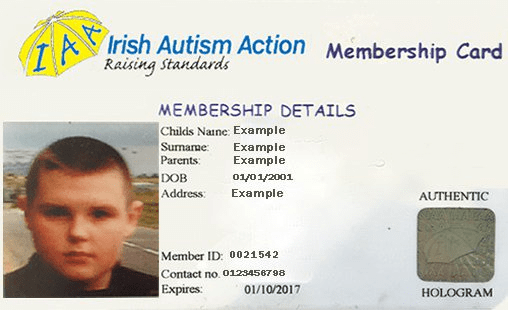
Autism ID Cards

Greetings Earthlings! 🙂

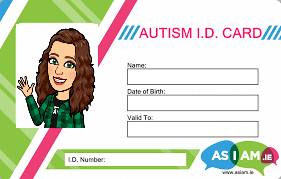
As it’s autism awareness month, this week I’d like to discuss the topic of autism ID cards for individuals on the spectrum.

So what exactly are autism ID cards and what are the benefits?

Many autism organizations and charities offer autists the opportunity to apply for an ID card stating their autism status which they can carry on their person. This card can be provided to people to alert them of your diagnosis if you are struggling to communicate. For example, you can show your card in a restaurant to alert staff that you may need a little extra time, assistance or that you might have awkward dietary requirements (especially as some places can be weird about specific requests and substitutions). This can help reduce stress for autists knowing they have the card to help them communicate their needs better in social situations.

It can also be useful to have in your wallet for emergency services in the event of an accident. Having a card you can quickly produce in a crisis can rapidly help to de-escalate situations with emergency services where there is often confusion and miscommunication. My friends have often joked how they would love to have my literal autism card so that they could throw it down on the table in a social situation to get out of a bad conversation🤣

For a small fee, autists can fill out a form and provide a passport photo and proof of their autism diagnosis to the organization they are applying to to secure their card. Other organisations offer a simpler version of ID cards which inform the reader that the person showing them the card is autistic and provides emergency contact details.

In addition to their usefulness for emergency situations, depending on the ID card provider, some cards entitle you to discounts with corporate partners and free carer admittance. For example. you can see some of the discount benefits with ASD Ireland’s autism ID card here.

There is also another type of autism ID card called a JAM (just a minute) card. These free cards can be ordered for people with invisible disabilities like autism which can be presented in difficult social situations like in shops or on public transport so that people will be more understanding and give you extra time in an easy and private way. They also offer a JAM app if you do not want to use the card.

All in all, autism ID cards can be a very useful tool to have in your back pocket.

Hope you enjoyed this post dear Earthlings! 🙂

Have a lovely weekend!

Aoife

Autism and AI

Greetings Earthlings,

This week I’d like to discuss a bit of a hot button topic at the moment- Artificial intelligence (AI).

Once upon a time, AI used to mean that atrocious Steven Spielberg film, but now AI is creeping into our every day lives. Chat-bots, deepfakes, AI research models, advanced searches and content recommendations- we can’t escape it. The applications are seemingly limitless, with great potential for people with autism.

But first things first, what exactly is AI?

AI is the technology that enables computers and other digital devices to do the things that humans do like read, write, learn, talk, analyze etc. While not human, the combination of human-like abilities and machine thinking can make it a powerful tool to be reckoned with.

So how can we leverage AI when it comes to autism?

Now here’s where things get cool. Robots are being used to help manage autism! Researchers are training robots how to interact with children with autism so that autists can get practice identifying facial expressions and social cues and help them to learn how to respond appropriately. Robots are the ideal companions as they have limitless patience and allow autists to practice their skills in a safe, non-judgmental environment. There are also a number of new AI apps that similarly work to help autists to practice their social skills, with AI technology being used to help move and learn what works best for the autist and help suggest the right kind of calming exercises depending on their mood.

In addition, AI models can be used to study the MRI’s of autists to help us better understand the condition, particularly how neurological changes and autistic traits vary between neurodivergents.

Most recently new AI systems has been developed that can quickly and accurately diagnose autism- one system by measuring how water travels in the brain by analyzing MRI images; and another that detects autism by measuring responses to a flash of light in the eye. This could revolutionize how we diagnose autism, allowing autists to get access to services sooner for better overall outcomes. Other cool AI apps allow parents to upload videos of their child’s behaviours to be analyzed by clinicians for remote diagnosis using AI to help categorize and assess them.

On the other hand, AI is a force that we must be careful with. It has great potential for use, but we need to be careful where we tow the line. This is especially true of Elon Musk’s Neuralink- a computer chip that can be implanted in the human brain, allowing us to control mobile devices through the power of thought. This week saw the first reported successful (though the evidence remains to be seen) implant where the patient has recovered well and is able to control a mouse on a screen with their brain. What was once the stuff of science fiction is rapidly becoming a reality. Aside from these tech applications, Musk claimed in 2019 that Neuralink has untapped medical potential to help “solve” neurological diseases like Parkinson’s, Alzheimer’s, Schizophrenia and…. autism.

Now… this was naturally met with a lot of backlash from autism charities- especially given that Musk has openly discussed how his autism has contributed to his success. Autism is a different way of thinking, it is not something that the majority of autists would like to “solve”. New approaches to help autists navigate life in a neurotypical world yes, but most would not wish to get rid of their autism if given the choice. Would modifying autistic traits through AI really help autists, or could it make things worse by taking away our unique way of thinking?

It’s a very fine line we tread, so we must proceed optimistically with caution when applying AI to autism.

Hope you enjoyed (or were horrified by) this post dear Earthlings!

Have a lovely weekend!

Aoife

Autism and Sensory Rooms

Greetings Earthlings! 🙂

Continuing on from my last post, this week I’d like to discuss sensory rooms and how they can benefit autists.

As I mentioned in my last post, while trying out the sensory pod on the Carlow campus of South East Technological University (SETU), I also had the pleasure of trying out the campus sensory room for students on the spectrum.

But first things first, what exactly is a sensory room and how can it help autists?

Sensory rooms are designated safe, calming spaces where an autist can retreat when overstimulated. Here they can relax and stim in a room designed to stimulate the senses and regulate emotions. As with sensory pods, sensory rooms are all different, but they may have dimmed LED lighting, water features, light projections, soft furnishings, swings, textured pads, sensory toys, punch bags etc. The concept is surprisingly not a new one, dating back to the 1970’s in the Netherlands where Dutch psychologists wanted to awaken sensory perception in individuals with disabilities through sensory stimulation.

Fun fact– they were originally called ‘snoezelen’, a portmanteau of the dutch word to sniff (snuffelen) and to snooze (doezelen).

Here’s a video discussing how sensory rooms can help neurodivergents in their education:

So how did I find the sensory room?

I booked in for half an hour into the sensory room and found that like the sensory pod, it was incredibly soothing. It was so nice to be able to take some time out on the beanbag in this soundproofed room away from the hustle and bustle of the busy student centre. I wasn’t a big fan of the whirring sound from the water pipe in the room, however, one of the great things about the sensory room was that I had the power to customize my experience. I was handed 2 remotes when I walked in which allowed me to control the lighting, water features, projections etc. so I could tailor the room to my needs- an essential feature given the level of diversity in sensory needs. Like the pod, this facility would have been great to have during my third level education to take time out when assignments and exams were frying my brain.

You can check out a quick Tik Tok of the sensory room I visited here:

While facilities like this are great in an educational setting, you can also create your own sensory room at home to allow yourself or your kids some needed respite during an overload. There is no one size fits all model for sensory rooms. Different autists have different sensory needs, so being able to create your own room with sensory stimuli that specifically calm you is a game changer. Here’s a handy article that gives some tips on how to build your own room https://www.irishtimes.com/life-style/2022/10/15/a-quiet-place-how-to-build-a-sensory-room/.

Hope you enjoyed this post dear Earthlings!

Have a lovely weekend! 🙂

Aoife
Autism and Sensory Pods

Greetings Earthlings! 🙂

This week I’d like to talk about sensory pods and how they can be beneficial for autists!

So first things first, what is a sensory pod?

A sensory pod is an enclosed space designed to be calming and relaxing for autists. Each pod can be different but they are generally soundproofed to reduce outside noise, dimly lit with LED lighting (which has been scientifically linked to behavioural improvements) and may have cushions or a comfortable mat to sit on. Pods may also allow you to adjust the temperature, play white noise, project visuals on the wall, and you can further add in sensory toys, weighted blankets, vests, plushies etc. As autists can struggle with sensory processing and overload, sensory pods are an ideal way to help manage an overwhelming situation. You can see a video about sensory pods here:

I recently booked into the sensory pod on the Carlow campus of South East Technological University (SETU) to give it a try. The university has two sensory pods in the library that neurodivergent students can avail of for time out, or even just a quiet place to study.

So what was my experience like?

I can highly recommend the sensory pod. While it was a bit awkward climbing into it as a fully grown adult in her thirties, once I was lying down in the pod it was so soothing. The room was kitted out with an interactive screen on the wall where you could avail of streaming services like Netflix to take some chill time out from your studies. There was a mirror on the wall with a panel of dials to adjust the lighting to your liking- blue, green, red, white and even no lights. The college even provided a USB mouse and keyboard that students could avail of if using the pod to study. Lying there on the squishy mat, I could easily have fallen asleep with the sounds of the library dulled around me. You would forget that you were in the middle of a busy college campus on a Friday evening!

It’s great to see a sensory facility like this for neurodivergents in an academic institution, I would love to have had something like this to study in back when I was in university (then again, I was only diagnosed as I was leaving third level education 🙃).

I also had the opportunity to try out the sensory room on campus which I will talk about in my next post.

Hope you enjoyed this post dear Earthlings!

Have a lovely weekend! 🙂

Aoife

Autism and Rapid Prompting Method (RPM)

Greetings Earthlings! 🙂

Leading on from a previous post about non-verbal autism, this week I’d like to discuss a popular communication method for non-verbal autists- the rapid prompting method or RPM for short.

So what exactly is RPM?

RPM, also known as ‘spelling to communicate’ is a communication technique that allows non-verbal autists to communicate through a system of writing, typing, or pointing at a letter board.

You can see a video of RPM in practice here:

But is it effective?

Now this is where things get interesting. As far as the scientific community is concerned, RPM is pseudoscience- they can’t generate evidence to prove that it really works. There are concerns that the facilitator of the method may unconsciously prompt and influence an autists answers in the way they move the communication device, and as such, many in the community discourage the practice of RPM until the efficacy and safety can be established.

That being said however, there are so many positive stories out there about how life changing RPM has been for non-verbal autists.

Here in Ireland there was a recent documentary on RTÉ called ‘Speechless‘ about how RPM has completely changed life for non-verbal autist Fiacre Ryan. The documentary followed Fiacre and his family over an eight year period, showing his journey with RPM and how it has enabled him to communicate with his family and give them an insight into his world- as his sister described it, it was like getting to know a completely new person. After discovering RPM, Fiacre went from having only basic playschool level knowledge to a wealth of vocabulary and an aptitude for calculus. With the help of an aide to facilitate RPM, he was able to attend mainstream school. Fiacre went on to be the first non-verbal student to sit the Leaving Certificate exam using RPM (passing with flying colours!), and is currently working with a publisher to create a book of his poetry! 😀 Before RPM, Fiacre says that his mind was very cloudy and dark, but communication has given him a new lease of life.

If you’re in Ireland (or have a really good VPN blocker) you can check out the documentary here: https://www.rte.ie/player/movie/speechless/264381992324

So while RPM may officially be considered pseudoscience, the stories speak for themselves. As with most autism interventions, take it with a pinch of salt.

Hope you enjoyed this post dear Earthlings! 🙂

Have a lovely weekend!

Aoife

Travelling on the Autistic Spectrum- When Things Go Wrong

Greetings Earthlings! 🙂

Leading on from my previous post about managing autism while travelling, after a recent mishap with a suitcase in the airport on my way to Italy, this week I’d like to talk about when things go wrong.

Ordinarily, travelling on my own through an airport is no great hassle for me. I’ve done it loads of times before with no issue, however, with all the disruptions to travel since the start of the pandemic, flying has become a little bit more stressful. Due to reduced capacities on public transport, I started out my journey on the wrong foot by driving the 2 hours to Dublin up a very busy motorway on a Friday afternoon- not the most calming of scenarios given some of the issues autists can have driving. Arriving in the terminal after a lengthy search for a free parking space (despite pre-booking), I made my way directly to bag drop off to relieve myself of the ginormous suitcase I was carrying, laden with goodies from home for an overseas relative.

That’s when things started to go awry…

The suitcase wobbled and rolled off of the self service scales as it was recording the weight, so the label the machine printed off displayed an incorrect value. I proceeded to put the bag on the drop off conveyor… buuuttt it wouldn’t take my suitcase! Now as we are in Covid times, there were crowds of people round me travelling, but not a lot of staff to ask for help from at these desks in order to reduce interactions. So I tried to re-weigh and reprint my tag a second time to find that my bag was 0.8 kg over the limit, leading me to frantically kneel down in the middle of the floor, pulling out shoes and baked goods to shove them in my carry on. I was enduring this stress while still wearing my coat and a face mask, so the heat from the situation was rising, not to mention I was still coming down from the stressful drive, was tired, hungry, and in need of the bathroom- so my sanity was hanging on by a thread! Once I had reduced my weight sufficiently, the machine then refused to print another label for my luggage, and tried to charge me €60 for the pleasure! 🙈

Sooo I frantically searched for a an attendant to advise me, who did not have a solution only that I join the massive queue at the ticket desk…aannnnd then the meltdown hit! Thankfully it wasn’t more than a few tears, and once I communicated that I was autistic to the attendant, she was very nice and supportive 🙂

But the saga wasn’t quite over yet! As I proceeded towards the ticket desk for assistance, another attendant saw me and asked where I was going with my suitcase (as the desk was in the opposite direction to the drop off). I communicated my issue and this no-nonsense lady firmly told me to stop crying! Believe me, I wouldn’t be crying in my thirties over something so stupid as an overweight suitcase if I had the choice 😛 She eventually steered me direct to the drop off and fired the suitcase on the conveyor with a final parting order to stop crying. Five minutes later, I was sitting calmly in McDonald’s, my crisis was over and the mortification set in 😳

Granted, this experience was resolved quickly and could have been a lot worse (I’ve had a 24 hour delay on a previous family holiday), but it was still an extremely stressful few minutes!

Based on this mortifying experience, here are some modified tips for dealing with autism while travelling when it’s too late for prevention:

Take a moment to collect yourself– if you feel like a meltdown could be coming on, take a step back. My stress over increased airport traffic with international travel opening up pushed me to keep going, but I should have paused to take off my coat, grab a snack from my bag, and try the suitcase again.

Take a break in a sensory friendly room (if available)– Irish airports have pioneered sensory friendly rooms for travelling autists to enable you to take some chill time to come down from stressful scenarios. If a space like this is available, take some time out.

Approach a member of staff for help– if you feel that you are struggling and are in a position to communicate your struggles, reach out to a member of airport staff and they should be able to help make your journey a little easier. Dublin Airport, among others, has a special lanyard that you can get to alert staff that you are autistic if you are in need of assistance, so the training is there for staff to help you in your time of need.

Take a break from your face maskface masks can be quite problematic for a lot of autists, but are a requirement for travel at present. If you’re getting overwhelmed from wearing the mask for too long, go to the bathroom for a few minutes to pull down your mask and take some deep breaths privately. Pro tip– spend as long as you can in the food court as you will not be required to wear your mask in this area.

Bonus tip– If you’re using a self service scale, place your bag on it’s side, not on it’s wheels- learn from my mistakes 😛 😉

Perhaps the best tip I can offer is to make use of autism assistance programs where available. I have not previously used this service as I have not needed it, and also because other airports like Shannon Airport advocate the use of bright orange hats to quickly identify an autist, which as an adult, this concept would make me feel like a bit of a sore thumb 😛 Check out if the airport you are going to has an assistance program for autists that you can avail of so that in the event that something does go wrong, you will be taken care of. Once I was able to communicate that I was autistic, the staff were happy to help, but other autists may not be able to communicate this mid-meltdown, so make sure to check out assistance programs ahead of time to ensure that the help is available to you in the event that things go wrong 🙂

Hope you enjoyed this post dear Earthlings!

Have a lovely weekend!

Aoife

Autism and Noise Reducing Earplugs

Greetings Earthlings! 🙂

Leading on from my previous post about sound sensitivity, this week I’d like to explore the subject of noise reducing earplugs. In recent weeks, I’ve been getting a lot of Facebook ad’s for noise reduction earplugs, so I finally decided to take the plunge and buy a pair to see what all the fuss is about.

So how exactly do these noise reduction earplugs work? Isn’t the whole function of earplugs to reduce noise anyway?

Noise reducing earplugs are different to your garden variety earplug in that they are designed to reduce background noise without compromising audio quality in your immediate surroundings. Most earplugs will muffle sounds, but this next generation of earplugs focus on filtering them instead of blocking them. There are a lot of different models out there at the mo, but I chose to test drive Loop Earplugs. Loop are designed with an acoustic channel in the earplug to mimic the auditory canal in your ear, and use a mesh filter to reduce the volume of your surroundings. They are particularly designed with concerts in mind, as music is often played above safe levels (85 decibels) which can permanently damage eardrums in as little as 15 minutes. They have a couple of audio reduction levels from as high as 27 decibels down to 18 (which I tried) so you can purchase whatever reduction level suits your needs.

Loop Earplugs Perfect for Work

So how did I find them?

This weekend, I tested them out on a busy day in the noisy city of Dublin. I popped them in while walking down the street and found it really did reduce the sounds around me, but I could still hear everything I needed to, such as the noises from pedestrian crossings. As I was attending a musical, I also gave them a test run in the theatre for a couple of songs. I was really surprised at the results as the songs were just as clear with the earplugs in and out, just different volume thresholds. Unlike other earplugs, the loop in the plug is quite cool, and looks like a trendy piercing in your ear, so it’s also great that you don’t feel self conscious for having awkward things sticking out of your ears (like those ugly yellow foamy ones they give you on airplanes).

Earplugs that Resemble Fine Jewelry  - Core77

However, while these filtered out a lot of background noise, they did amplify and alter some internal noises. My voice sounded really distant and far away like I was down a tunnel, but everyone around me sounded fine. While walking to the theatre I ate a Magnum ice cream, and as I ate, the earplugs increased the volume of the chocolate crunching in my mouth to unsettling levels, and I could hear my jaw clicking as the upper and lower jaws rubbed against each other. It really weirded me out so I would not recommend eating while wearing them! I also found they didn’t sit in my ear that well and kept popping out, but I do have smaller ears (or so I’m told) so it’s possible that my ears are just not built for earplugs! 😛

I would definitely recommend trying out these earplugs or similar models (there are some that are more geared specifically for noise sensitivities such as Calmer) if you need to turn the volume of your surroundings down a smidge- I will certainly be adding mine to my handbag for days when I find myself in an auditory nightmare.

Hope you enjoyed this post dear Earthlings!

Have a lovely weekend! 🙂

Aoife

Autism and Early Intervention

Greetings Earthlings! 🙂

This week I’d like to talk about a recent landmark study showing the importance of early intervention for long term outcomes for autists.

For many years, studies have reported great benefits for autists when early interventions are taken. The research suggests that the earlier interventions are put in place, the better the outcomes for autists. Putting the right behavioural therapies in place as early as 18 months, such as applied behavioural analysis (APA), can be effective in improving language ability, social interactions and IQ for autists. Other programs advocate practical social interventions, peer intervention programs and active family involvement.

Recently, a new type of early intervention has been in the news showing really interesting results. An Australian clinical trial was conducted on a group of autists that showed early behavioural signs of autism to assess the impact of preemptive interventions long before any autism diagnosis (the group were all between 9-14 months old). The intervention used in this study is called iBASIS-VIPP (Intervention within the British Autism Study of Infant Siblings- Video Interaction to Promote Positive Parenting. Talk about a mouthful!). This intervention is a parent led, video aided therapy which is used to improve social communication and development in infants by helping parents to understand their child’s communication style and to learn how to adapt to it. Parent-child interactions were filmed during 12, 2 hour sessions over a period of 5 months and discussions were held focusing on both child and parent behaviours and how to address them to improve social interaction.

So what did the study find?

Results showed significant reductions in the severity of autistic behaviours throughout early childhood. The most interesting finding however, was that this preemptive intervention had greatly reduced the odds for meeting the diagnostic criteria for autism than those who received normal care from 21% down to 7%- that’s 2/3 reduction! 😲 In other words, use of iBASIS-VIPP in early childhood greatly reduces the severity of autism symptoms, and the odds of receiving an autism diagnosis.

Although given how many of us pass through the radar undetected, implementing a program like iBASIS-VIPP on a wider scale is easier said than done. Some early signs may be too subtle to detect, so later bloomers may not reap the same benefits. Nevertheless, early intervention, where possible can have serious lifelong benefits for autists.

Hope you enjoyed this post dear Earthlings!

Have a lovely weekend! 🙂

Aoife

Autism and Shopping

Greetings Earthlings! 🙂

Leading on from my previous post about autism friendly shopping, this week I’d like to elaborate a little bit more on the subject. 

5f6f5c1e6a2e4824ca00e20742725f419533f29ebee5142fe5d2a1f4d8bb5aaf.0

Shopping can be quite an overwhelming experience for an autist- the hustle and bustle, bright lighting, loud noises, overwhelming choices, strong smells etc. It can be a real sensory assault. Personally, I HATE shopping (although I’m surprisingly good at it- I even buy my Christmas and birthday presents for friends and family months in advance!).  It’s never been my thing, I’ve hated it for as long as I can remember; could never explain it. I did everything to avoid it growing up, so much so that when I was 16, I couldn’t figure out how to work the coin slot on the trolley! 🙈 But as time has gone on, I’ve had to adapt and get used to the process 🙂 

While shopping can be troublesome for an autist, there are many alternative options to help you navigate the experience more smoothly. 

Here are some of my top tips for making the shopping process a little easier:

  • Make lists- if you find that you get overwhelmed by the choices on offer in the shops, I find it very useful to write out a list to bring with me to keep me from getting distracted and to ensure that I hit all my targets as quickly as possible. Pro- tip, try writing the items you’re seeking in the order you would encounter them in the shops e.g fruit and veg first, meats and cold items, frozen foods etc. This way you can get in and out as quickly as possible without forgetting anything important.
  • Shop online-the joys of modern technology! In the last year, the online retail industry has exploded, so now you don’t even have to leave your house to get your shopping done. There’s websites for everything, and in most cases, the shipping costs are fairly low, so if you’re really anxious, just pull up your laptop and let your shopping come to you.dc855bea69ee17a435c9bae5ab45be12b4f4ed11ecbf0d76dd154fc18c55a1b4.0
  • Avail of autism friendly shopping times- as I previously discussed in my linked post, most supermarkets have regular autism friendly shopping hours where the atmosphere is adjusted to be more sensory friendly. Even busy shopping centres have dedicated autism times to allow autists to pass through and browse the shops without fear of getting overwhelmed. 
  • Set spending limits– if you have impulsivity issues surrounding shopping, try to set a spending limit to keep you from going overboard. Many financial apps can do this for you. You can even remove the tap feature on your debit card to discourage you from impulsively tapping your funds away. 
  • Keep it short and sweet– to prevent a meltdown, keep your shopping visits nice and short until you feel more comfortable with longer shopping periods. You can slowly build up your tolerance over time.
  • Make use of sensory tools– as discussed in many of my previous blogs, using such sensory tools as noise reducing or cancelling headphones, sunglasses/tinted lenses, weighted clothing or even an item in your pocket to stim with can help to reduce some of the sensory impact of your surroundings.

aff1c53dd96cb615e4721f8fe17a1bb0daa39198ea61affafe34d0d4cba00d0c.0


Shopping can be a scary sensory experience, but if you follow some of the above tips, you’ll find the experience so much easier 🙂 

Hope you enjoyed this post dear Earthlings! 

Enjoy your weekend!

Aoife

Blog at WordPress.com.

Up ↑