Talking to your Child about Autism

Greetings Earthlings! 🙂

Continuing on from my post discussing if you should tell your child that they have autism, this week I’m going to discuss how to talk to your child about their diagnosis.

When should I tell my child they are autistic?

bitmoji-439980263.png

As with autism, the answer to this question is entirely individual. Some higher functioning autists may be ready for this information at a younger age than others, or may even be so high functioning as to not need this information during their formative years (as in my case- though in hindsight it would have helped a lot!). Timing can also vary with the age of diagnosis. Girls for example are often diagnosed much later in life than boys with autism.

In general, many experts recommend telling your child around the time they start to become self aware of their differences to their peers- roughly around 6 years old, but this awareness will vary among autists. I, for example, always felt that I was different to my peers, but I never openly questioned it until after I had received my diagnosis in my 20’s.

How do I tell my child they are autistic?

bitmoji-20180320082126.png

As with when, there is no right or wrong way as to how you talk to your child about autism (just maybe don’t spring it on them out of nowhere the way my parents did 😛 ), but here are some tips and tricks that may help you:

  • Pick your moment– be very careful with you timing. Make sure that your child is content and calm in a familiar place, things will be much harder if they are anxious
  • Don’t rush– Ensure that there is plenty of time to talk things through with your child. They will have questions and may need extra time to process what you are saying
  • Keep it simple– There will be plenty of time to introduce them to the world of neurodiversity as they grow. Just introduce them to autism one toe in the water at a time. Top Tip– There are a lot of useful kids TV shows (such as Sesame street and Arthur)  and books explaining autism in an age appropriate way which could help this conversation 🙂
  • Emphasize that this is a good thing– Whilst an autism diagnosis can be difficult to process initially, ultimately it is a good thing. Your child will get the help and supports they need to thrive, they will better understand themselves and be understood. However, the black and white autistic mind deals in good and bad. Sometimes an autist cannot perceive the difference between a little bit bad and plain bad which can cause great distress (à la 6 year old Aoife who thought she had to leave home as she could not be good! 😛 ). Highlight the importance of difference and make it clear that this is not a bad thing for them- different, but not bad 🙂

How do I explain autism to my child’s siblings?

jgg

In much the same way as you would tell a child they are autistic, sit them down and have a casual chat about their sibling (or even friend- awareness in the community is crucial to changing societies attitudes for future generations of autists 🙂 ). Depending on the age of the child, what you tell them can vary to suit. Show them videos, give them a book, tell them a helpful analogy (I do love my Supergirl one!) etc to help them understand. Explain that their friend/sibling works a little bit differently and that they don’t always mean to say or do certain things, but we must love and accept them as they are 🙂

Hope you found this post useful Earthlings!

Enjoy the weekend! 🙂

Aoife

Autism and Smell

Greetings Earthlings! 🙂

As I mentioned in last weeks post on taste sensitivity, this week we’re going to discuss sensitivity to smell in autism.

Image result for smell gif

As with other senses we have discussed, autists can be either hyposensitive or hypersensitive to odours. One autist may enter a malodorous environment without noticing anything amiss, another autist may wretch, or worse!

As a child, my nose was particularly sensitive to my environment (although judging by how I could taste the beer my friends were drinking yesterday evening from the fumes alone, this may still be the case on occasion 😛 ). Bad smells were especially trying- the smell of salads, fish, cigarette smoke, incense, even something so simple as a bag of popcorn could easily turn my stomach.

But it wasn’t all bad- this sensitivity comes with a heightened appreciation for pleasant smells too 🙂

Baking, chocolate, nice perfumes, the outdoors, the smell of metal (don’t ask me why I love this one so much- must be something to do with my taste in music! 😛 😉 )- in fact, such smells are not only a sensory sensation, but can also be used to help calm an autist.

As easily as an unpleasant smell could unsettle me, the right smell could calm me back down again as a child.  I always kept a teddy or a blanket near at hand that I could smell to help soothe and calm me and to lull me off to sleep- I couldn’t sleep without one particular teddy until I was 16!

teddy.png

^^^^My teddy was a lot more raggedy than this…😬

So why does smell affect autists so much?

Interestingly, some studies indicate that there are no differences in sensitivity to smell between autists and their neurotypical peers, however, much research points to the cortex of the brain. This region is heavily involved in smell processing, and yep, you guessed it- the autistic brain shows signs of dysfunction in this region. In fact, the pre-frontal cortex shows signs of overgrowth and excessive linkage in the neurons (just like an overloaded plug), so no wonder sensory perception is altered in autists! This region is also associated with the formation and retrieval of long term memories, which could also explain why smells are often tied to memory recall in autists (which I will explore in more detail at a later stage 🙂 ).

One study also shows that autists may not inhale smells in the same way to their neurotypical peers. Evidence suggests that autists inhale deeply and intensely for both pleasant and unpleasant smells, whereas neurotypicals will tentatively sniff in the presence of an offending odour, which could further explain differences in scent processing.

In addition to this, research suggests that alterations in smell can influence social behaviours. A recent study in fact suggest that autists cannot smell fear and that there is a reversal in their response to fear. In this study, a group of autists were calm when presented with a sample of sweat from a skydiver, whereas their neurotypical peers exhibited classic signs of fear. In contrast, their fear levels increased when presented with the sweat sample from a calm individual!

In other words, an autists social behaviour may be affected by an inability to interpret social cues carried in odours- the mind boggles!

So there we have it dear Earthlings- hope this post didn’t ‘stink’ too badly 😛 😉

bitmoji-2090425460.png

Enjoy the weekend everyone! 🙂

Aoife

Supporting a Child with Autism

Greetings Earthlings! 🙂

For a change today, I’d just like to write a quick post for all of the autism parents out there.

I recently received an email about special needs parenting and it got me thinking about ‘autism parents’. How they must be feeling, the difficulties they face, the struggle to understand, teach and support their child. They really should be called ‘awesome parents’- I certainly didn’t make life easy for mine! 😛

Autism is not the easiest of diagnoses for a parent to hear, but there are many simple ways that you can support your child. Granted, I’m not an autism parent, but as someone who has been on the other side of the fence, I’ll do my best to give you my top tips to support and encourage your child 🙂

bitmoji84905202.png

Educate yourself– Read, read read! Understanding is key to helping your child. A mechanic can’t help your engine if he doesn’t know how it works first.

Don’t believe everything you read–  You’ll quickly learn that one size does not fit all when it comes to autism. Each case of autism is different, every autist will have different needs and experiences to the next. The advice and experience of others can be useful, but remember to take everything with a pinch of salt.

Try to put yourself in their shoes– The world is often alien to us, we don’t always fit in or understand it’s ways. We don’t mean to act weird or meltdown and cause trouble, but oftentimes our brain has other ideas. Try to understand how we see the world before you judge us too harshly 🙂

Know their limits, but don’t limit them– This can be a challenging balance to strike. As I have discussed previously, we should endeavour to understand the capabilities of autistic children, but we must not use autism as an excuse– explanation yes, but never excuse. When we repeatedly excuse an autists behaviour, or tell them they “can’t” do something, we keep them from reaching their potential. For example, as a child, I could not seem to master the humble skip. Had my parents told me to give up due to my coordination difficulties, I would never have overcome this struggle- and would have looked pretty stupid in school shows where such simple choreography was the cornerstone of many a dance number! 😛 😉

Image result for skipping gif

Never underestimate the power of small victories– whether it’s getting your child to wear a bra, tie their shoelaces or a mastered skip, sometimes it’s the little steps that can have the greatest impact. Had I not overcome my seemingly left feet, I would not have discovered a love of dance, never danced on stage or gone out to clubs. Without this small victory I would never have gone on to help choreograph my school play or even teach dancing to kids as a teenager! The victories seem small, but they just may be the tip of the majestic iceberg lurking underneath 🙂

Accept the A-word– Acceptance is at the heart of supporting a child with autism. Without this, they can never truly fulfill their potential. There’s no use in burying your head in the sand. We won’t grow out of autism, we need to accept and grow around it.

Always remember:

Image result for autism end of the world beginning of a new one

So there you have it Earthlings- my top tips for supporting a child with autism. However, like I said, I can only speak from my experiences of autism, so here are some other helpful advice links on more specifc ways to support autistic children:

At the end of the day Earthlings, armed with a little bit of knowledge, understanding and most importantly love- there’s no better way to support your child 🙂

support

Aoife

Accepting your Autism Diagnosis

Greetings Earthlings! 🙂

To kick off the new year I’m going to expand a little bit on something I’ve touched on briefly in the past- coming to terms with your autism diagnosis.

As I’ve stated many times, getting my Asperger’s diagnosis was one of the best things that could have happened to me. Two little words clarified a lifetime of questioning, confusion and misunderstanding.

My entire life finally began to make sense.

bitmoji-1865562563.png

Whilst this diagnosis was indeed a welcome one (in spite of the way my diagnosis was sprung on me 😛 ), I struggled to come to terms with it for some time afterwards. As an adult, the diagnosis shouldn’t have changed anything- Asperger’s syndrome explains me, but it does not define me.

However, just because the shoe fits does not mean that you will break it in overnight.

Logically, there was no issue in being diagnosed; the emotional aspect on the other hand was much tougher.

Getting my diagnosis was like seeing myself for the first time in a mirror. It felt like I had made a revolutionary discovery, and yet  somehow, I was ill at ease. The more I read about Asperger’s, the more self conscious I became of my mannerisms and behaviours. I was hyper-aware of everything that I did.

I knew and accepted that Asperger’s didn’t define me, however, I felt compelled to define it. I talked about Asperger’s incessantly possessed by the niggling urge to explain every single thing I did for fear of being misunderstood. As a friend recently told me, she barely knew my name before I had filled her in about my diagnosis! 😂

There were times when I felt as though I were beginning to disappear behind the smokescreen of the diagnosis, constantly questioning what was me and what was just Asperger’s.

bitmoji-386840795.png

It took me over two years to learn to fully relax and embrace my diagnosis- somewhere along the way it just clicked. I no longer feel this need to go on about it. Indeed, there are times when I want to talk about it (for example in this blog), but I am also perfectly content to keep people guessing 😉

Asperger’s is a big part of my life, but it’s not the whole picture 🙂

Here’s just a couple of things that helped me on my journey towards acceptance:

  • Talk about it– Real original- I know, but if it ain’t broke don’t fix it!
  • Try CBT– Now I know that I’ve said CBT wasn’t particularly useful for me from a management perspective, buuuuuut cognitive behavioural therapy did help to increase my knowledge of autism and better understand who and why I am 🙂
  • Write it out– I know I’ve said it before, but writing can be so cathartic. It really helps to verbalize what you can’t describe, especially if you have alexithymia. My laptop is full of mini essays from deflating my overly full skull at 3am! 😛
  • Read – Whilst this may have partially fueled my hyper-analysis, it also allowed me to better understand and accept myself. The more I learned, the easier it was to accept and embrace my quirks. Just maybe steer away from some of the novelizations of autism- these don’t always paint the most realistic of pictures 😛

Learning to accept an autism diagnosis (as cheesy as it sounds) is a journey. There may be twists and turns and many a speed bump along the way, but you will one day reach your destination 🙂

distance.png

Aoife


Should I tell my Employer I Have Autism?

Greetings Earthlings! 🙂

In continuation from my previous post, I’d like to discuss a very important question for autists in the workplace: should you tell your employer that you are on the spectrum?

bitmoji148542879.png

This is a tricky one to tackle.

On the one hand, your employer can better support you and help to adjust aspects of your role to suit your needs; on the other, many employers are poorly informed about autism. As a result of this, you may be misjudged and your true potential overshadowed by the big bad ‘A’ word.

In my career, I have had both positive and negative experiences when informing my employer. One employer was highly supportive- my diagnosis was openly discussed and viewed as an asset. In another position, my abilities were overshadowed by my diagnosis. Having Asperger’s was seen as a problem, and my career was reluctantly diverted down an entirely new road (which thankfully was fruitful). As a result of this, I chose not to reveal my diagnosis to my current employer in order to allow my work to speak for itself without an autism filter.

So what should you do?

Image result for hmm

There is no right or wrong answer to this question; the answer is entirely individual. In my case, thankfully my needs are minimal (a bottle of water and some snacks go a long way towards managing my more eccentric behaviours, and the occasional cake will help distract from foot-in-mouth tendencies 😛 😉 ). I am in the lucky position where I can pass for neurotypical, however, there are many autists out there that may struggle in the workplace if not adequately supported by their employer.

Ultimately the “right” answer is what is right for you.

Assess the situation- Do you need the extra support? Would you feel more comfortable/uncomfortable if your co-workers were aware? Is this the kind of company that will support you if you choose to tell them?

At the end of the day, it’s up to you.  You are under no obligation to reveal this information if you are no comfortable doing so.

And remember- whatever your decision, it will all come right in the end. If an employer doesn’t want you, then you don’t want them.

There are much better opportunities waiting out there for you 🙂

bitmoji1293571427.png

Aoife

Autism on Screen- Sesame Street: Meet Julia

Greetings Earthlings! 🙂

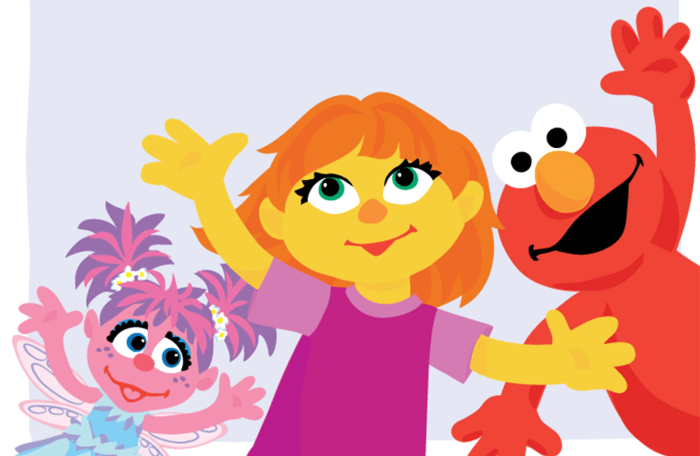
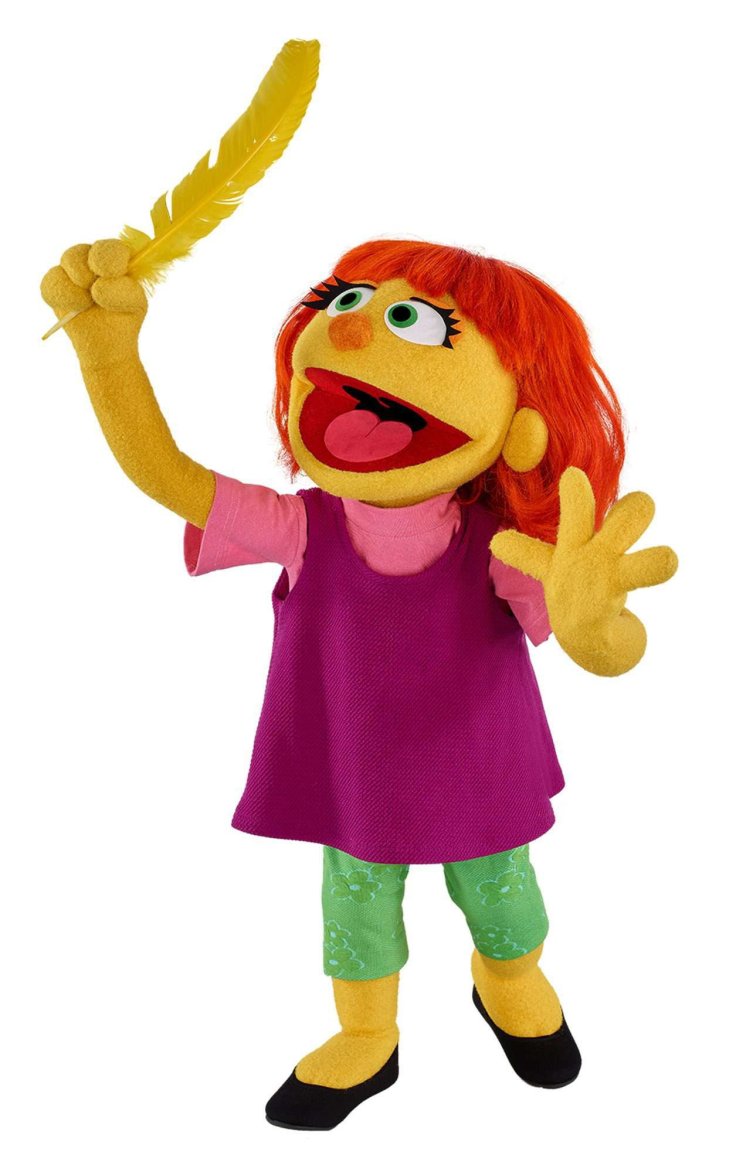
Earlier this week, popular children’s TV show Sesame Street officially debuted a new puppet with a twist- a puppet with autism! 😀 The character of Julia was introduced as part of Sesame Street’s autism initiative, first appearing on Monday to rave reviews from fans, experts and parents everywhere.

Image result for julia sesame street

Whilst only making the news in recent months, Julia has in actual fact been around since 2015, having first appeared in an online storybook about autism as part of ‘Sesame Street’s’ autism initiative- ‘Sesame Street and Autism: See Amazing in All Children’.

The creators of Sesame Street established this initiative in 2015 in order to promote better understanding of the condition after a study revealed that children with autism are more than five times more likely to be bullied than their peers!! This initiative was developed in partnership with autism workers, advocates, parents and autists themselves in order to ensure that the topic is handled in the best possible way.

You can find out more about the initiative here:

http://autism.sesamestreet.org/

It’s a nifty little website providing videos for kids, videos for parents, daily routine cards and loads of other useful materials for children and adults alike 🙂

So what is Julia actually like?

Image result for julia sesame street

Julia first appears onscreen quietly painting with her friends Elmo, the fairy Abby Cadabby and Alan. When Big Bird comes on the scene, Julia largely ignores him, completely engrossed in her painting. The other puppets are engaging in finger painting, but Julia makes noises of disgust and uses a paintbrush instead, with Abby remarking that Julia hates the feeling of paint on her fingers.

With their paintings finished, Abby gives Julia’s painting huge praise (it was easily better than Abby and Elmo’s efforts), remarking that she is very creative- casually demonstrating the talents that autists possess without veering into savant stereotypes. Big Bird tries to hive five Julia for her efforts, but still she ignores him, making no eye contact. When Julia hops off to play tag with the other puppets, Big Bird questions whether Julia likes him or not. This leads Alan to explain autism to Big Bird so that he understands that Julia does things a little differently, “in a Julia sort of way“- but she’s also lots of fun! 🙂

Later in the episode, Julia hears nearby sirens and covers her ears in response to the noise, needing to go somewhere quiet for a bit, subtly demonstrating how an autist can struggle with sensory sensitivity. Julia also carries around Fluster, a rabbit toy which she strokes to help her calm down, showing the audience ‘stimming’ in action.

The primary focus of this segment is to demonstrate that although Julia has autism, she can play and be your friend just like everyone else. After Big Bird remarks that Julia is not like any friend he’s ever had before, Elmo and Abby point out that none of them are exactly the same, bird, monster, fairy- they are all different, but are friends regardless. Julia talks a little differently, repeats sentences, flaps her arms when she gets excited- but she’s just another playmate, however different, at the end of the day 🙂

You can watch Julia’s debut in full in the video below 🙂 :

My school life would have been so much easier had other children been better able to understand and accept me as the other puppets accept Julia, but with initiatives like this at work I have great hope for the next generation 🙂

This episode was handled both sensitively and intelligently to provide children everywhere with an insight into autism. All behaviours are explained, little is left for the audience to guess at. Julia is different to the other puppets yes, but the episode normalizes her differences so that when children encounter real people like Julia, they will be treated with acceptance and understanding 🙂

Here’s a behind the scenes look at how the character was brought to life:

Fun Fact: Julia’s puppeteer (who can be seen in this video thumbnail) is a mother to an autistic son in reality!

This was a pleasure to watch and I look forward to seeing all of Julia’s future adventures in the show! 🙂

Aoife

Inside the Autistic Brain

Greetings Earthlings! 🙂

Today I’m going to dive into the physiology of the autistic brain to explain what’s actually going on at the neurological level. I’ve touched on aspects of the science in previous posts, but I wanted to give you a quick overview post where the main points in the one place 🙂

So let’s get down to some science! 🙂

247171_588045804539417_1828609848_ndg.jpg

Hyper-connected Neurons:

Scientific evidence suggests that neurons in the autistic brain are hyper-connected. Specifically, studies indicate that autists have too many synapses in the brain. The synapse is basically a gap or a junction between two neurons where chemical messengers (neurotransmitters) carry information like a ferry from one neuron to the next. It looks a little bit like this:

Image result for synapse

During normal brain development, about half of the synapses we are born with are “pruned” off. In autism, this process is slowed down, and so autistic children have an excessive amount of synapses compared with their neurotypical peers. As these connections are essential to communication between neurons, this can greatly effect how the brain works and processes information.

Dysfunction at the Junction:

In addition to possessing an excessive number of synapses, communication at these neuronal junctions is also impaired in the autistic brain.

Animal studies have indicated that synapses function differently in the autistic brain as a result of genetic mutation. Mutations cause certain proteins to be absent in autism- proteins that are essential to the normal functioning of the synapse. As a consequence of this, the transmission of information between neurons is affected, resulting in a number of social and behavioral issues.

Think of physical junctions on a busy road- if something goes wrong at the junction, a chain of chaos will ensue!

Image result for junction crash gif

Hyper-excitable Neurons:

Research shows that in many cases of autism, neurons in certain regions of the brain are more excitable than others. This means that these neurons are more sensitive to stimulation. For example, the neurons located in the sensory cortex of the brain (which processes sensory information such as smell), are more sensitive and excitable than other neurons. This is kind of like how a person can be more ticklish in some parts of the body than another- the nerves in the underarm are more excitable than those of the arm.

This sensitizes the autistic brain to all kinds of stimuli as discussed here.

Dysregulated Neurotransmitter levels:

As previously mentioned, information travels across the synapses in the brain via chemical messengers known as neurotransmitters. In the autistic brain, the levels of these neurotransmitters are dysregulated- or out of sync. Research indicates that individuals with autism tend to have higher levels of excitatory neurotransmitters (e.g. glutamic acid) and lower levels of calming neurotransmitters (e.g. GABA, serotonin) causing neurons in the autistic brain to fire excessively. In addition to this, levels of the neurohormone (a chemical that acts as both a hormone and neurotransmitter) oxytocin, which plays an influential role in trust and social behaviours, are also out of balance. Moreover, dopamine (a neurotransmitter which can both calm and excite) is also dysregulated in autism. Together, the action of biochemicals like these influences a number of autistic behaviours and issues such as ADHD, mood, appetite, sleep, anxiety, sensory processing, social behaviours, learning, memory and emotional responses.

Male vs Female Brain

Perhaps one of the most fascinating  things that I have discovered about autism are the anatomical differences between the brains of the male and female autist. Brain imaging studies have revealed that autistic women have brains that are anatomically similar to neurotypical male brains, and the brains of male autists share anatomical similarities to those of neurotypical female brains.

In short- this indicates that men with autism have feminine brains, and women with autism have masculine brains!!!

bitmoji543288982.png

I know!!!!

It sounds weird, but it makes a world of sense. Oftentimes I’ve felt like I had a male brain growing up- my tomboyish interests, my fashion sense, my preference for male company, my inability to walk in heels; it all fits!

Strange but true! 🙂

There we have it Earthlings- hope you enjoyed this brief insight into the physiology of the autistic brain 🙂 There is no clear mechanism through which autism acts, these are just some of the likely pathways involved. I’ll explore other possible mechanisms in a later post.

Have a good week everyone! 🙂

Aoife


Autism on Screen- Snow Cake

Greetings Earthlings! 🙂

In continuation from the previous post, today I’m going to have a look at a female character with autism in the 2006 indie romantic-comedy drama (that’s a LOT of genres! 😛 )  ‘Snow Cake‘.

Snowcake.jpg

As discussed in my last post, gender bias is often an issue when it comes to women on the spectrum. Autism is viewed as a predominantly male condition, and as such this is reflected in Hollywood portrayals of autism.

We’ve all heard of ‘Rain Man’, but “Rain Woman” is rarely seen.

Snow Cake‘ is a really interesting example of this seemingly rare portrayal of autistic women on screen.

Starring Sigourney Weaver and the late Alan Rickman, ‘Snow Cake‘ explores the unusual relationship between Linda (a woman with high functioning autism) and Alex- a man who comes to visit Linda after her daughter Vivienne is killed in a car accident in which he was involved. Feeling guilty that he survived the accident, Alex set’s out to meet Linda and bring her some gifts that Vivienne had bought prior to her death, finding himself reluctantly drawn into her world.

You can view a trailer for this film below:

Before I get into the discussion of this, there is one line in the film (that can be seen in this trailer) that stands out for me:

I know all about autism- I’ve seen that film!”

bitmoji891163261.png

Granted, this line was likely included as a slight from the screenwriter, (a parent to an autistic child), towards public perceptions of autism, buuuutttt it does reinforce the importance of not believing everything Hollywood tells you of autism- something that one need bear in mind as to the portrayal of autistic women in this film in particular.

In terms of scientific portrayal of autism, the film gives a fairly accurate depiction of the symptoms.

BUT!

There is one major flaw…

Linda displays mostly male characteristics of autism!!

This is a common problem in on screen portrayals of autistic women as much of the information available to actors refers to male experiences of autism. For example, Diane Kruger was advised by a man with autism for her portrayal of Asperger’s syndrome in the series ‘The Bridge‘. When AS was featured in an episode of ‘Grey’s Anatomy‘ many years ago, a behind the scenes featurette revealed that the actress based her performance on a boy she knew with autism!

For her role in ‘Snow Cake‘, Sigourney Weaver conducted a lot of research into the role and was actually coached by a woman with autism- Ros Blackburn. Aside from her endearing eccentricities however, the character of Linda does not differ greatly from other films featuring male characters.

The problem here may lie in the script for the film, as screenwriter Angela Pell is mother to a boy with autism, and her writing would have been heavily influenced by her experiences.

However, the film does provide a good reflection of the reality of autism in that Linda is not a savant or overtly intelligent as is often over-represented.

In addition to this, Alan Rickman interestingly chose not to research autism ahead of filming in order to accurately reflect the reactions and frustrations that an outsider would experience in an encounter with an autistic individual, adding a further dimension of realism to the film.

Image result for snow cake

All in all, gender issues aside, ‘Snow Cake‘, while not the most riveting of films (wasn’t my cup of tea) does paint quite a realistic picture of life with autism.

Happy Friday everyone! 🙂

Aoife

Discussion:Women & Autism

Greetings Earthlings! 🙂

Today, I’m going to discuss a very important issue within the autistic community- gender bias and the misdiagnosis of women with autism.

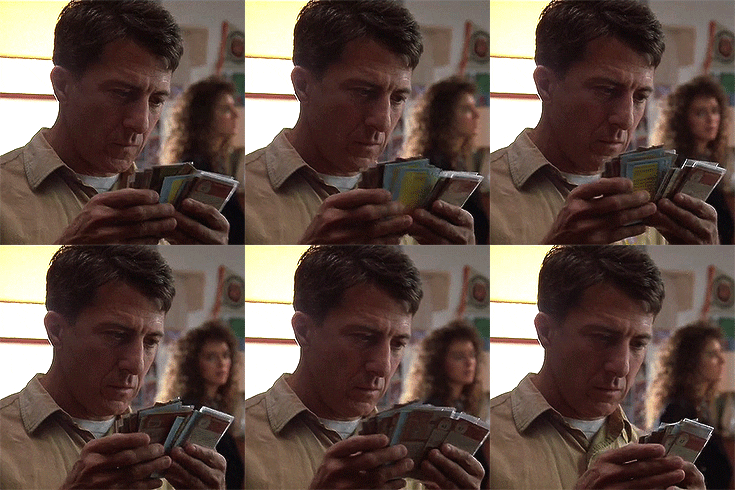
If I asked you to close your eyes and picture a person with autism, the majority of you will have pictured a man (most likely Dustin Hoffman! 😛 ).

Image result for rain man gif

The current ratio for male to female diagnosis of autism is estimated at 4:1 as the condition is thought to be rarer in women; however, many experts now believe that this figure may be as low as 2:1.

So why the discrepancy?

Did you know: Women with autism present differently to males on the spectrum?!

bitmoji169946342.png

Yep- as neurotypical men are from Mars and women from Venus, so too are autistic men and women from entirely different planets (maybe Krypton and Daxam for the DC nerds out there 😉 )!

So how do women with autism differ from men?

For starters, several neurobiological studies have shown distinct anatomical differences between the male and female autistic brain (which I will explore in a separate post at a later stage 🙂 ). Girls with autism are thought to have more active imaginations than boys and participate more in pretend play, often creating elaborate fantasy worlds (I had a particular penchant for this. My sister and I created an elaborate world for our teddies each night, so elaborate that our star couple had their own imaginary portable mansion when we went on holidays!! 😀 ). Reports also indicate that women have lower levels of restrictive and repetitive behaviours than men.

Evidence has also shown that women are better at recognizing emotions than males, almost as well as their neurotypical peers in fact, and demonstrate signs of better attentiveness in social situations.

As a gender, women are more socially inclined than men, and so female autists feel a greater need to make an effort socially. It is expected that women should be more social than men when it comes to communication, and as a result, we are often held to greater social standards. I can’t count how many times a teacher/my mother pulled me aside to advise or chastise me for my social ineptitude! 😛 It was thought that I struggled, not because something was wrong, but that I simply didn’t try hard enough socially. Had I been a boy this would not have been the case.

One of the biggest differences between men and women with autism is the tendency among women towards social mimicry. Girls are particularly adept in masking their symptoms through observation of their peers, obscuring them from the view of parents, teachers and medical professionals.

I’m particularly guilty of doing this. For example, when someone asks ‘How are you?’, I honestly don’t know how to respond! Should I just say fine? Should I reciprocate the sentiment? Should I detail the many ways my life sucks at present?! Three of the simplest words in the English language and I struggle to respond! I eventually developed a mental phrase card in my head for common questions like these so that I would have a standard answer when called for, and 90% of the time you pass for a functioning human being! Other times you get caught off guard and situations like this happen 😛 :

15978097_10209539652072238_4508618477815437814_n.jpg

My life is full of these little social coping mechanisms, which I’ll expand on separately at a later stage 🙂

Finally, as previously discussed, when it comes to specialist interests, female autists tend to have interests resembling those of their neurotypical peers (horses, books, soap operas, boybands etc.), which can additionally hide them from view. Psychologists have also noted a ‘mothering’ tendency among peers of autistic girls, taking autists under their wing and adopting them into a social group. This further creates an illusion of social functioning for teachers, allowing these women to further slip beneath the radar.

As a result of all these differences, women are diagnosed much later than men, (men on average are diagnosed in childhood (~7 years); women as teenagers or adults)  if at all.

But why it it only now that these gender differences are emerging?

Gender bias in autism can trace it’s lineage to the original observations of both Leo Kanner (described autism) and Hans Asperger (described Asperger’s syndrome) in the 1940’s. In Kanner’s work, ‘Autistic Disturbance of Affective Contact’ (1943), Kanner observed a group of 8 boys, but only 3 girls with autism. Hans Asperger on the other hand, exclusively observed groups of boys, believing that AS was uniquely male! As a result, AS was not described in women until the 1990’s!!

whatgif_zps8269bc70.gif

I know!

Consequently, the diagnostic criteria for autism has been largely based on the male model of the condition, and as such, many women like me have slipped under the diagnostic radar.

Due to our inherent talent for social mimicry, women with autism unknowingly find themselves hidden from view. The warning signs that are obvious in males are not always visible, and as a result thousands of women go un-diagnosed, or worse still are misdiagnosed.

Mental health issues such as OCD, eating disorders, ADD, bipolar disorder, anxiety and depression are frequently linked with ASD’s and are particularly prevalent among women.
Experts believe that women with autism tend to internalize their autistic symptoms, leading them to exhibit greater depressive symptoms and experience higher levels of anxiety than male autists.

Women are frequently mis-diagnosed with mental health issues, whilst the underlying root ASD goes unnoticed.

The internet is filled with stories of these women who spent years in mental anguish without receiving the one diagnosis they needed. I recently came across an article where it took “10 years, 14 psychiatrists, 17 medications and 9 diagnoses” before a 21 year old girl got her autism diagnosis! You can read the article here: (https://spectrumnews.org/features/deep-dive/the-lost-girls/).

Researchers and clinicians have in recent years begun to adapt the diagnostic criteria to better serve autistic women, but there is much work still that needs to be done.

Rain Man‘ has dominated for too long- we need now to focus on “Rain Woman”.

bitmoji-1475045929.png

Aoife

Blog at WordPress.com.

Up ↑