Autism 101- ADHD

Greetings Earthlings! ๐Ÿ™‚

So today I’m going to be talking a little bit about-

squirrel-up-dog-gif.gif

Haha! Sorry about that! ๐Ÿ˜› Although fun story- genuinely stopped mid conversation to cry “SQUIRREL” when out with a friend recently! ๐Ÿ˜‰

Yes that’s right, today we’ll be talking about ADHD in autism- also known asย attention deficit hyperactivity disorder.

ADHD is commonly diagnosed in autists (in the region of 29-83%), causing such difficulties as impulsiveness, over-activity and poor attention.

There are 3 main types of ADHD:

  • Inattentive ADHD (formerly known as ADD (attention deficit disorder))-ย This can manifest in a number of ways such as aย lack of attention to detail, losing things, organizational problems, making careless mistakes, having trouble completing tasks and struggling to sustain attention.
  • Hyperactive-Impulsive ADHD-ย Signs of hyperactivity and impulsivity include restlessness, excessive talking (Guilty!) fidgeting, interupting others, impulsive descisions and activities etc.
  • Combined Inattentive and Hyperactive-Impulsive ADHD

Personally, I would have really mild combined ADHD tendencies. In addition to my sometimesย impulsive nature, I have a habit of zoning out of lessons and conversations, sometimes even films, books and TV shows for brief moments, completely lost in my own thoughts.

I can be pretty easily bored and distracted!

Half the time I’m not even aware of it happening. I could be reading a page in a book one minute, and suddenly find myself halfway down the next page, without any idea of what I was supposed to have taken in! Other times I find myself in a room in the house unsure as to why I came in as I hopped onto another train of thought mid action! I often have to repeat tasks over and over in my mind to ensure I don’t forget them.

My mind just completely wanders off…

Image result for homer brain gif

But somehow I’ve always managed to hide my inattention. It never really posed a problem at school. Teachers knew I was away with the fairies, but could never seem to catch me out when pressed! ๐Ÿ˜› I suppose my deductive skills must have learned to compensate for my temporary lapses in concentration! ๐Ÿ˜‰

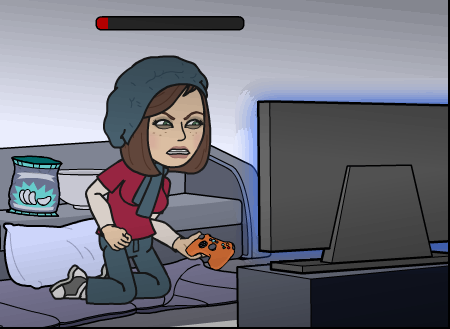
Top Tip: Studies have suggested that playing video games may be beneficial to improving concentration in ADHD.

sdgsd.PNG

Just because concentration can be a struggle however, does not mean that you can’t concentrate.

Interestingly, there occurs a concentration paradox in ADHD and autism known as hyperfocus- an intense form of concentration where you are completely absorbed by a task, something that I like to call “The Zone”. I’ll write a separate post on hyperfocus at a later stage ๐Ÿ™‚

Aoife’s Top Tip: Applying specialist interests to tasks can encourage concentration. Last year I was struggling to write an essay for college, I found an angle that allowed me to write about Eurovision and suddenly I couldn’t stop writing! ๐Ÿ™‚

In addition to my lapses in focus, I can also be a little bit hyperactive. Now, hyperactive doesn’t necessarily mean bouncing off the walls like a child high on sweets, it can also mean abnormally active.

I am quite a restless individual. On the outside, I may look like I’m staring at a wall, in my mind I could be designing a cake, a knitting project, writing a story or drafting a hypothesis. I once spent a train ride visualizing, staging and arranging a musical based on the music of My Chemical Romance!๐Ÿ˜‚

I always have this need to be productive, even if it’s as simple as building my trophy collection on the Playstation or binge watching a TV series.

My brain never turns off!

If I’m excited enough, I do bounce around the place on occasion too ๐Ÿ˜‰

Image result for wild child bouncing gif

But what’s going on in the brain that interrupts our concentration?

It is not clear what exactly causes ADHD in the brain, but remember neurotransmitters? (Inside the Autistic Brain,ย Autism 101-Sensory Processing,ย Autism 101- Digestive Problems)

Most current models point to low levels of the neurotransmitters Dopamine and Noradrenaline. Pathways involving these chemical messengers project to the striatum and prefontal cortex of the brain- areas which are responsible for executive functionย (i.e. memory, planning, organization, behaviour control etc.). If these neurotransmitters are out of sync, this will have an effect on these functions. As neurotransmitters are also dysregulated in the autistic brain, this would explain why ADHD so commonly occurs in autism.

ADHD, like autism, can’t be cured, but it can be treated with cognitive behavioural therapy (CBT) and medication in severe cases, however, the side effects of medical treatment for ADHD have been controversial, and long term usage studies have yet to be completed.

However, like autism, ADHD need not hold you back in life. Some of the most successful people in the world have ADHD, such as Sir Richard Branson, Justin Timberlake, Simone Biles, will.i.am, Russell Brand, Ryan Higa, Jamie Oliver, Jim Carrey and Solange Knowles ๐Ÿ™‚

So to conclude Earthlings-

Wait! What was I saying again?! ๐Ÿ˜‰

adhd no transparency.png

Have a good weekend guys!! ๐Ÿ˜€

Aoife

Autism and Driving

Greetings Earthlings! ๐Ÿ™‚

Soooo….driving…

uyghl.png

Wouldn’t be high on my list of favourite activities I’ll admit! ๐Ÿ˜› Stressful roundabouts, merging onto busy roads, idiot drivers, getting lost, the noise of hitting a pothole- it can be a lot for an aspie to handle!

My coordination issues did not make it the easiest of tasks to get the hang of, that’s for sure!

Coordinating pedal movements and gear changes, difficulties with spatial awareness, not to mention the stress and anxiety of learning to drive on country roads (Irish country roads tend to be narrow, winding, and full of potholes! ๐Ÿ˜› ) made this a highly frustrating experience!

driving-gif.gif

I never could understand why I found it so hard to get the hang of driving when my sisters took to it so easily, but after I got my diagnosis, my struggles began to make a world of sense!

Driving would not be the first thing to come to mind when someone pictures the struggles an autist faces. In fact it’s a requirement in some countries that your ASD diagnosis be listed on your drivers licence if it impacts your ability to drive safely– you can even be fined in the event of an accident if it’s not stated on your licence!

Studies among autists actually report more traffic violations than in neurotypical groups, however, this may relate to our tendency to be more honest than our neurotypical peers ๐Ÿ˜› ๐Ÿ˜‰

This doesn’t mean that autists shouldn’t drive, but it’s something to be aware of.

So how exactly does autism impact our driving?

ClumsyScaryArgusfish-size_restricted.gif

  • Impulsivity Autist’s are naturally more impulsive than neurotypicals. This can impact our driving by causing us to make poor driving decisions on impulse. It has also been reported that this impulsivity may influence speeding behaviours
  • Sensory integration/processing issues– Driving involves a huge amount of sensory input. Listening to the engine, watching the road, spatial awareness, not to mention unexpected road noises and unpleasant smells from the outside- it can be a lot for the autistic brain to process when moving a vehicle
  • ADD & ADHD- Autists can get distracted quite easily…on busy roads where lot’s of things are happening, your focus can sometimes waver. If there’s a cute dog nearby, I have been known to take my eyes off the road…raw (2)
  • Spatial Awareness & Coordination Autists often have issues with these which can make it difficult in positioning the car on the road, parking and navigating gear changes.ย Spatial awareness was one of my greatest obstacles when first learning to drive. I always seemed to be veering towards the nearest hedge…When I first got my car, I was practicing driving around the house with no problems, aaannd then I decided to change direction- BIG mistake! My poor spatial judgement caused me to nicely scratch the car on the edge of the dog house…before getting it stuck on some cement blocks at the oil tank! Caused a mini shutdownย which made my sister think I had run the dog over I was so incoherent!! ๐Ÿ˜› ย  ย  ย  ย  ย  ย  ย  ย  ย  ย  ย  ย  ย  ย  ย  ย  ย  ย  ย  ย  ย  ย  ย  ย  ย  ย  ย  ย  ย  ย  ย  ย  ย  ย  ย  ย  ย ย fghd.png

Top tip for parents and instructors: PATIENCE!!!! Learning to drive is much more difficult for autists so don’t be too hard on us for when we don’t get it straight away. We’re already beating ourselves up for our slow progression; getting frustrated or annoyed with us will only make it worse.

Here are some useful links with driving tips for autists:

Click to access Driving1.pdf

https://sellmax.com/driving-with-autism/

Aoife’s Top Tip- Get a Sat Nav.ย They really help to take the edge off when stressed about driving to new and unfamiliar locations. If you mess up, it will recalculate and send you right in the end ๐Ÿ™‚

Having autism may initially make learning to drive difficult, however, you will get there in the end ๐Ÿ™‚ After two years of stressful practice, I passed my test first time and drive everywhere now.

The freedom you gain from this skill is worth the fight ๐Ÿ™‚

bitmoji1810728188.png

Aoife

Impulsivity and Autism

Greetings Earthlings! ๐Ÿ™‚

In continuation from the previous post exploring curiosity and autism, today we’re going to take a look at impulse control in autists.

Many people with autism report issues with impulsivity.

All my life I’ve struggled with this issue. Too often I’ve felt like Didi in ‘Dexter’s Laboratory’, dying to know what the button will do and being unable to keep myself from pushing it! ๐Ÿ˜›

tumblr_lnvvttAUbb1qzc8l4o1_250.gif

As a child I was highly impulsive. I never knew when to stop eating, would impulsively give up on a book halfway through in favour of another (at one point I had 9 books on the go!) ย and when overwhelmed I would often try to run away.

During one particularly interesting meltdown I began to impulsively throw all items that my mother had given me out of my bedroom window (which is a storey high I might add), whilst my sisters in the room below gleefully retrieved them, each determined to claim ownership…Clear example of black logic at work! ๐Ÿ˜›

So why do we struggle with impulsiveness?

Impulsivity in autism can be explained by deficits in what is known as executive functioning.

Image result for huh gif

Don’t worry- it’s not as complicated as it sounds! ๐Ÿ˜›

Executive functioning is simply a broad umbrella term referring to the mental processes involved in cognitive, physical and emotional self control. Examples of executive functions include planning, memory, cognitive flexibility (the ability to adapt thinking to new and unexpected situations) and most importantly response inhibition– aka the ability to suppress unnecessary or inappropriate actions.

But what causes these deficits in executive functioning?

Many autists also suffer from attention deficit disorder (ADD) or attention deficit hyperactivity disorder (ADHD), both of which have an effect on executive functioning and impulsivity. I’ll explore these disorders at a later stage ๐Ÿ™‚

Experts believe that ASD’s share a common genetic basis with ADD and ADHD, indicating that genetic mutation may be at the heart of these deficits in executive functioning.

Impulse control can be quite challenging at times (it’s a real struggle not to run squealing to every single puppy I encounter for a cuddle! ๐Ÿ˜› ๐Ÿ˜‰ ) but as I always say, it is by no means a cause for despair.ย You will eventually learn control with time ๐Ÿ™‚

Granted I can still be quite impulsive at times- feeling the urge to curl up asleep on the floor like a dog in company (an urge I feel quite a lot! ๐Ÿ˜› ), wondering what it would feel like to step on hot ash/coals or wanting to draw designs all over my face with makeup; the difference being that now I am able to choose whether to ignore or act upon an impulse ๐Ÿ™‚

Well…for the most part! Still haven’t fully cracked compulsive eating…or maybe I just don’t want to! ๐Ÿ˜› ๐Ÿ˜‰

bitmoji1655674740.png

Enjoy the weekend everyone! ๐Ÿ™‚

Aoife

Blog at WordPress.com.

Up ↑