Leading on from my previous post about autism and clothing, this week I’d like to put the concept of ‘dopamine dressing’ under the microscope.
So what exactly is it?
It might sound like some random fashion fad, but dopamine dressing is an activity that many neurodivergents unknowingly participate in. It’s the process of choosing clothing that will boost your mood and bring joy based on colours, comfort and texture- basically choosing clothes that will make you happy.
But how does dopamine fit into this trend?
As I’ve discussed in many previous posts, dopamine is a neurotransmitter and hormone (also known as a neurohormone) that acts as a chemical messenger in both the brain and the body. Often referred to as the “feel-good” hormone, dopamine plays a central role in the reward system in our brain, controlling mood and motivation among other things. So when we choose clothing that makes us happy, dopamine is released which improves our mood.
In the neurodivergent brain however, dopamine is dysregulated which can impact motivation and behaviours. This is particularly an issue for autists who also have ADHD who often have low levels of dopamine causing issues with motivation and focus. As a result, autists seek out dopamine through impulsive, high stimulation activities that push the brain to release the dopamine they need to function, often referred to as ‘dopamining’.
As such, dopamine dressing is a dopamining behaviour or coping mechanism to help boost an autists missing dopamine to improve mood, mental health and confidence. In my own case I am very much a dopamine dresser. I buy clothes in an array of bright colours (it’s like a rainbow threw up in my wardrobe at times), soft, fluffy jumpers that I can stroke, and choose loose comfortable clothing that doesn’t irritate my skin. On the other hand, I also have a fondness for a tight skinny jean as the pressure against my legs increases my dopamine like a weighted blanket. I always select what’s going to make me happy and lights up my brain, rather than just yanking out the first top I see.
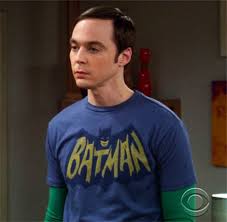
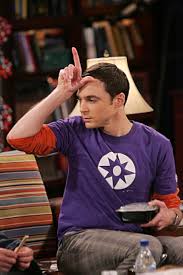
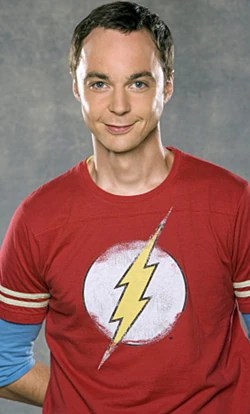
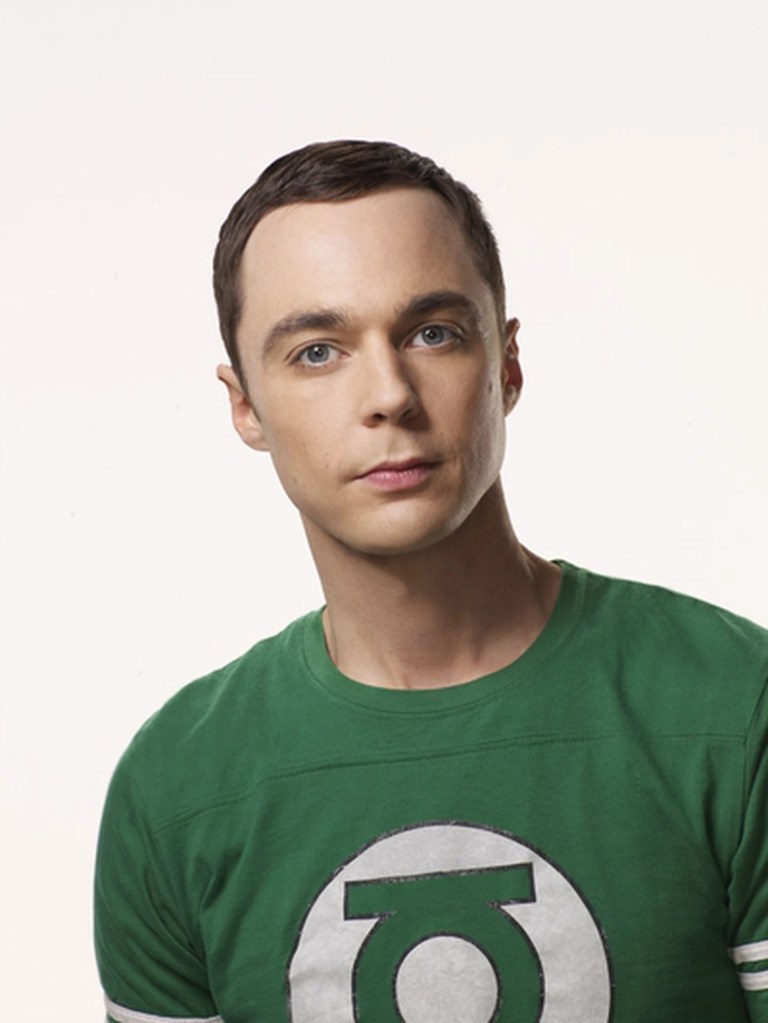
On another level, some autists choose clothing that has ties to their specialist interests to help boost their comfort and dopamine like a band or comic book t-shirt. I keep an array of whimsical socks in my drawer for example, many of which have animals printed on them like highland cows, dogs and alpacas as animals are very close to my heart (and feet!). When you think about it, Sheldon Cooper’s many superhero t-shirts were all indicators of dopamine dressing years before the concept was ever proposed.
This week I’d like to discuss an unusual phenomenon that is experienced by approximately 19% of autists (compared with 4-7% of neurotypicals)- Synesthesia.
So what exactly is it?
Synesthesia is a rare neurological phenomenon where triggering one sense involuntarily stimulates another sense e.g., tasting colours, hearing shapes, perceiving words and numbers as colours etc.
Aoife, why do I feel like you’re starting to make up autistic conditions?
I know, it sounds wild but it’s a real thing! Famous synesthetes include numerous musicians such as Billie Eilish, Stevie Wonder, Brendon Urie, Kanye West, Jimi Hendrix and Charli XCX, artist David Hockney and architect Frank Lloyd Wright.
There are two main types of Synesthesia-sensory and cognitive/conceptual
Sensory Synesthesia– when one sense triggers another. Examples:
Auditory-tactile synesthesia– when sounds trigger touch-like sensations such as pain, pressure or temperature changes
Sound-color synesthesia– where you hear sounds as colours
Mirror-touch synesthesia– where you physically feel something that you see happen to someone else e.g., you see someone stub their toe and feel pain in your own toe
Cognitive/Conceptual Synesthesia- when senses get combined with semantic triggers, like numbers, letters, or time units. Examples:
Day-color synesthesia– where you associate days of the week with a particular colour
Time-space/spatial sequence synesthesia– where you visualize things in a very specific way, like seeing units of time in 3D shapes or colours e.g., 5+6= yellow
Some synesthetes have one form of synesthesia, while others will experience multiple forms.
In my own experience, I have some tendencies towards synesthesia. I associate some things like bands and people with colours- I always saw Muse as blue, Paramore as fuchsia, one of my colleagues as purple etc. I’ve also been known to describe tastes how something smells and vice versa. As discussed previously, I have an excellent sporadic eidetic memory. During my research for this blog, I’ve discovered that synesthetes also have excellent, vivid memories as their enhanced recall is tied to their heightened sensory perceptions and associations. Perhaps this explains why my memory works the way it does as I’ve always been able to recall very detailed memories by thinking of colours, outfits, smells, tastes, specific dates etc.
But why are neurodivergents more likely to experience synesthesia than neurotypicals?
As with many other co-morbid conditions, it appears that there may be a genetic overlap between the genes that cause autism and the genes that cause synesthesia. Moreover, the hyperconnectivity between different regions of the autistic brain (caused by a lack of synaptic pruning), can cause the heightened sensory sensitivity that leads to this blending of sensory stimuli.
To kickstart 2026, this week I’m going to take a look at the issue of autism and intrusive sleep.
So what exactly is that when it’s at home?
As discussed in my previous post on sleep and autism, 40 to 80% of autists experience issues with sleep. Intrusive sleep (not to be confused with narcolepsy) occurs when you suddenly experience drowsiness or involuntarily lose consciousness, a phenomenon that is usually triggered by boredom/loss of interest in autists with co-morbid ADHD (aka AuDHD). Also known as theta wave intrusion, this phenomenon occurs when slow theta brain waves associated with relaxation, meditation and deep sleep are triggered by a boring task, causing the brain to abruptly disengage, and you to nod off. Essentially these theta waves act as bridges between consciousness and wakefulness.
So many college lectures drifting in and out of consciousness are starting to make sense!
For much of my adult life I’ve struggled with daytime sleepiness hitting me at the most unfortunate times- in the middle of lectures, in crowded theatres during a musical, and several times throughout the work day, especially when dealing with monotonous tasks. I always thought it was due to a lack of sleep the previous night (and as a night owl admittedly, it often is), but I’ve noticed it happening more and more despite having a decent nights sleep. One minute I’m working away, the next I get the sudden urge to take a nap. Conversely if I’m engaged and stimulated, I could be running on 3 hours of sleep and not feel in the least bit sleepy!
But is there any reason the neurodivergent brain is susceptible to intrusive sleep?
People with autism and ADHD tend to have excess theta waves compared with neurotypicals particularly in the frontal cortex of the brain. Higher levels of theta are associated with lower levels of fast beta brainwaves which are needed for focus and alertness, making neurodivergent brains more prone to intrusive sleep and other sleep disturbances.
So don’t judge me too harshly the next time you see me struggling to stay awake in the middle of the day 🫠
This week I’d like to talk about something that a lot of neurodivergents have observed in their social circle- that lot’s of our friends are also neurodivergent! Prior to my autism diagnosis, I did not have any friends on the spectrum, or so I thought… Over the past 11 years, many of my friends have sought or are currently seeking autism and ADHD assessments. In the last year alone I’ve had four friends seek my advice about getting diagnosed.
During my school years, I didn’t really have a core group of close friends; people just didn’t get me, nor I them. Going to university opened up an entirely new world, widening my social pool and enabling me to meet more likeminded people. I quickly found tribes of friends who were equally quirky with similar interests that I connected with on a level that I couldn’t explain. We would connect within minutes as if we had known each other our whole lives, feeling completely comfortable in each others presence, unknowingly unmasking.
After my diagnosis, I slowly started to notice common autistic traits among my friends. At first I thought it was funny when friends would say the more they listened to me talking about my traits, the more paranoid they became that they had autism, but now I see the grains of truth. I’ve spoken about this with my neurodivergent friends and they have also noticed similar patterns in their social circles.
There isn’t really any research on this topic, but it seems that there is a general pattern of neurospicy birds of a feather flocking together. Autists tend towards sameness and familiarity, so naturally our social preferences also mimic these patterns. Studies have shown that friends tend to have similar brain activity patterns called neural synchrony- so on a biological level, we are designed to seek out minds that are similar to our own. In addition, studies have shown that our noses play an important part in forming friendships as we tend to gravitate towards people with natural scent profiles similar to our own. Given how autists are sensitive to smell, it’s fair to say that perhaps our nose is handpicking neurodivergent friends for us!
This week I’d like to discuss the recent depiction of an autistic character in the medical drama Doctor Odyssey.
For those who haven’t seen the show yet (not that I’d recommend it, I mainly stuck with it for closure on how the series ended 🫠), Doctor Odyssey follows Max Bankman (played by Dawson’s Creek alum Joshua Jackson) who has just taken a job as the on-board doctor for the luxury cruise ship ‘The Odyssey’. This overhyped drama from producer Ryan Murphy (known for Glee, American Horror Story, Monsters and 9-11) was 90% unrealistic rubbish, BUT it did provide us with a somewhat true depiction of autism.
During episodes 9 and 10 of the first series (which by current reports seems likely to be it’s last 🫠), the ship receives a distress call from a group who’s charter ship sank after a shark attack. Among the rescued is first mate Ray (played by AuDHD actor Liam Johnson), a straight talking, literal thinking, awkward autist who is a little out of sorts on the ship as his routine has been disrupted following the shark attack. Following a rocky start after inadvertently annoying staff on the ship, Ray quickly becomes an asset using his mathematic and marine skills to chart the quickest course to port, in addition to advising the ships captain when The Odyssey is besieged by a pod of orcas (as if the sharks weren’t enough…).
Now while Ray’s onscreen traits and manner are relatively stereotypical (there’s a lot of scenes about sound sensitivity around using sound cannons and fireworks to get rid of the orcas), what was refreshing was how the show chose to depict him as a handsome, stoic, naval character. When men are depicted with autism, they are generally overtly nerdy, skinny, outcasts working in some form of STEM, but here we find a jock-esque first mate confidently navigating the seas, showing us all that with a little support and understanding, autists can do anything they set their mind to.
All in all, while the show is rather far fetched, it does sort of get autism right (though I still wouldn’t recommend watching it- stick with The Pitt and The Good Doctor 😉).
Leading on from my previous post about gender identity and autism, this week I’d like to discuss NHS proposed guidelines in the UK where children who are referred to gender clinics will also be assessed for neurodevelopmental conditions like autism and ADHD.
But is this a good thing?
While some people believe that this is part of the growing anti-trans agenda in the UK, the majority feel that this is a positive step for the autistic community as experts estimate that trans patients could be 3-6 times more likely to be diagnosed as autistic. As such, it’s important that gender dysphoric patients are properly assessed so that they can be fully supported. This is especially important given the long term ramifications if a patient transitions but their dysphoria was a temporary product of their autism.
I have read many stories over the years from families with undiagnosed autistic kids who identified with trans ideology as they did not feel like they fit in. These children then began the transitioning process, only to find that after an autism diagnosis, they no longer felt at odds with their birth gender. Statistics among de-transitioning patients are difficult to estimate, but studies have found that as many as 15-20% of these are autistic.
It’s actually quite common for neurodiverse children to temporarily disassociate from their bodies as they naturally approach puberty. In my own case, I often felt that life would be so much easier if I could just click a button around 9 years of age (after having the dress up experience of one’s first holy communion of course 😂🙈) to switch genders as being a man seemed so much better than the realities of womanhood. Other than these passing thoughts as an undiagnosed kid, I have never ever felt at odds with my gender. Despite being quite tomboyish in my younger days, my friends describe me as quite feminine in my 30s with a wardrobe that’s bursting with dresses. Were 9 year old Aoife to express such thoughts today, I would likely be landed in a gender clinic being assessed for gender dysphoria, when what I really needed was an autism assessment.
Whilst many autists may be genuinely transgender, we need to do due diligence in gender assessments to ensure that no decisions are rushed. In my opinion, this is an excellent plan from the NHS to ensure that autists and people with gender dysphoria are getting the best care possible.
On the other hand, this proposal begs the question as to why similar guidelines have not been recommended for other conditions that are often co-morbid with autism. Many people who are assessed for ADHD are receiving subsequent autism diagnoses. Overlap is estimated to be as high as 80%, yet an autism assessment is not always considered during ADHD assessment. Moreover, it’s thought that 23-32% of patients with eating disorders are also autistic, an issue that is quite common for undiagnosed women, yet autism assessments are not factored into treatment. These co-morbid issues impact an arguably higher number of autists than gender dysphoria, yet patients are generally not co-screened for autism.
A larger conversation is clearly needed around co-occurring mental health and neurodiversity if we want to properly support the autistic community.
Leading on my from my previous post about autism and ageing, this week I’d like to discuss whether or not people with autism look younger.
Yep, apparently there appears to be a link between autism and looking younger!
In my own experience, it has been mentioned that I look far younger than my age. I’ve always had a youthful complexion, but I’d just chalked it down to good skincare, genes and the lack of a man to turn my hair grey 😂 Never in my wildest dreams did I think that my autism might be linked to my appearance!
So let’s explore why autists look younger.
As I’ve discussed in my previous post about autism and joint hypermobility, some autists have co-morbid hypermobility conditions such as Ehlers-Danlos Syndrome (EDS). This causes structural tissues like collagen to be weaker and more elastic which causes stretchy joints. However, this increased elasticity can result in a more youthful appearance as the skin is more resistant to damage, which can delay or even prevent the appearance of wrinkles🫨
Facial expressions may also contribute to a youthful visage, as autists tend to produce facial expressions less frequently and for shorter durations than neurotypicals. A less expressive face = less wrinkles.
It’s also possible that our youthful appearance may be more behavioural than biological. A lot of autists tend to be introverted and prefer indoorsy activities away from the elements, especially those with light sensitivity. As a result, lower UV exposure may be preserving our skin from the ageing impact of the sun. My nickname was ‘Dracula’ as a teenager as I would spend summers indoors reading, often returning from sun holidays with little to no tan🙈. On another level, our tendency towards naivety, more childish interests and behaviours can make us seem younger by association rather than looks.
However, while the evidence does seem to suggest autists do look younger, there equally is evidence that some autists look a lot older. As much as EDS increases skin elasticity, it can also lead to thin, fragile skin that can be more prone to bruising, resulting in premature ageing. One study even suggests that autists experience a faster rate of ageing and that they have an older facial age. This may however be correlated to poor self care, lifestyle and the higher levels of biological stress experienced by autists, buuuttt the same can largely be said for neurotypical ageing🤷♀️.
As every year passes, I’m hearing about more and more celebrities that are on/suspected to be on the spectrum. So this week I’d like to continue on from my previous 3 posts on the subject and let you know about some more autistic celebs:
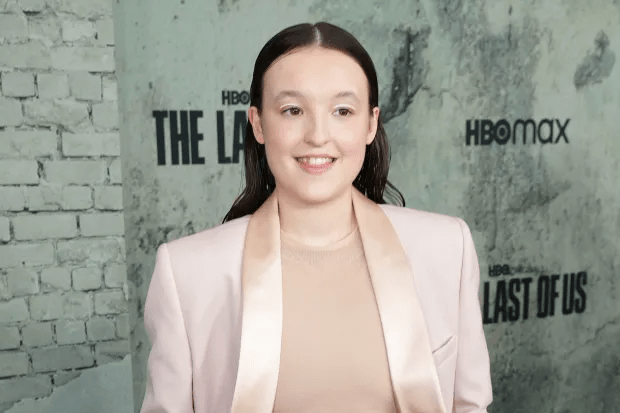
Bella Ramsey
The Last of Us non-binary actor Bella Ramsey has been in the news over the last few weeks disclosing their diagnosis after a crew member picked up on autistic traits. This person had a daughter with autism and assumed that Bella had also been diagnosed, sending them on their diagnosis journey, ultimately confirming what they had always wondered about.
Here’s a clip of Bella discussing how their diagnosis has made them a better actor:
Emma Langford
Irish singer-songwriter Emma Langford was diagnosed with autism at the age of 32. After getting involved in a fundraiser for autism charity As I Am during the pandemic, she started to do some research and noticed that she related to many of the experiences of autists. In retrospect after receiving her diagnosis, she noticed that all her songs were about the autistic experience as she used music to express the feelings that she couldn’t understand. The diagnosis has made her past clearer and the future brighter as she finally knows there is a place for her in the world, she just works a little differently.
Lee Ryan
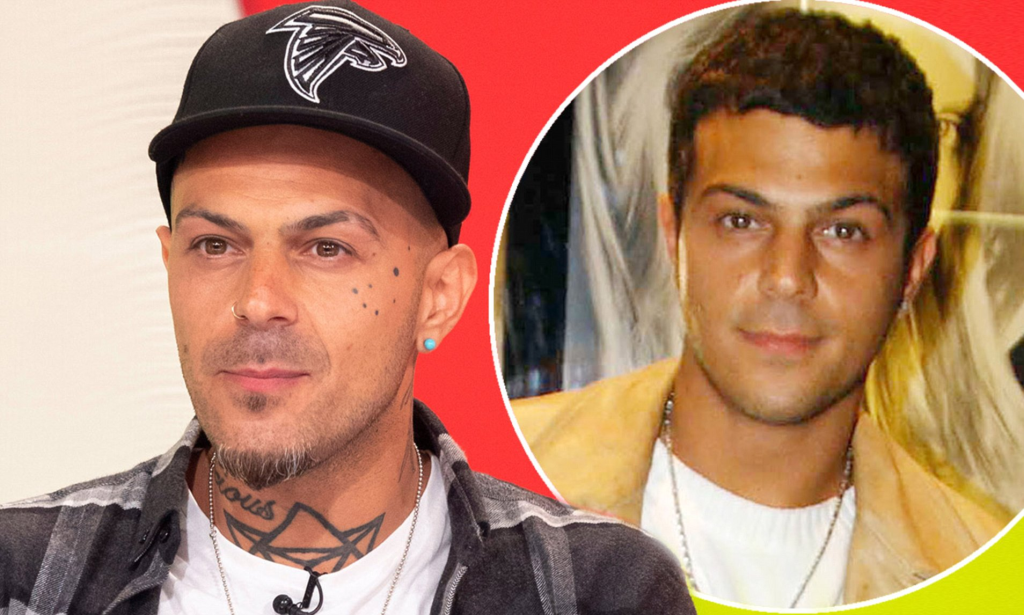
Having recently watched the BBC documentary Boybands Forever, I did some ‘where are they now’ searching and discovered that Lee Ryan of Blue fame has been diagnosed with autism (Asperger’s syndrome) and ADHD in his forties. Of his diagnosis Lee wrote on Instagram:
‘I’ve struggled with various things since I was a child, but these things weren’t really known about back then or spoken about. What it means for me is that I have a high IQ but my brain works in a different way to others. For all the kids and adults out there who are going through the same thing, there’s nothing wrong with you. You might be very clever, highly creative – have highs and lows, but you might deal with social situations differently from others. You might react differently, particularly to sounds, sights, smells and even touch. People might think you’re being rude, difficult or chaotic. This is going to sound a bit weird but I’ve always hated the wind, the way it feels on my skin when it hits you. I’m particularly sensitive to touch, so when someone does that and I’m in a stressful situation then I might react quickly. There is so much I’m learning about myself and a lot is starting to make sense.‘
You can see a brief clip of him discussing his diagnosis below:
Sticking with British boybands, I again discovered post watching Boybands Forever that Abz Lov (Richard Abidin Breen) from the band Five was diagnosed with Asperger’s syndrome as an adult. Abz disclosed his diagnosis in 2013 after a stint on Celebrity Big Brother following encouragement from his CBB housemate Sophie Anderton. Of the diagnosis, Abz has said “It’s a personal thing but it makes it difficult for me in certain scenarios when people want the sparkly bright Abz all the time.” Abz struggled with addiction after Five first broke up and even went through a period where he paid people to be his friends 😢
Tylan Grant
Trans actor Tylan Grant (child of vocal coach Carrie Grant who I discussed in my previous post) was diagnosed with autism at the age of 7 and at age 16 made history becoming the first black actor to portray an autistic character in the British soap opera Hollyoaks.
You can see Tylan discuss his experience with autism in this interview:
Jess Kidd
London-Irish author Jess Kidd was diagnosed with autism in her late forties after one day her daughter asked “Mum, do you think you might be autistic?” She told her that she would look into it, likening the diagnosis process to the X-Factor where you keep getting through to the next round. She has embraced the diagnosis as a positive and advocates for awareness around the female experience of autism.
Josh Thomas
Australian comedian Josh Thomas was diagnosed with autism at 33 (and ADHD at 28), ironically after he had created the TV show ‘Everything’s Gonna Be Okay‘- a show that was celebrated for having a realistic autistic lead character played by Kayla Cromer who is herself on the spectrum. The diagnosis confirmed a nagging suspicion he had always had and described it as a positive experience that has helped him to better understand himself and for the people around him to do the same.
You can see an interview with him discussing his diagnosis in the video here:
Jacksepticeye
Irish Youtuber Sean McLoughlin (better known by his handle Jackscepticeye) was diagnosed with autism in 2024 having been previously diagnosed with ADHD. In the midst of his ADHD journey after medication didn’t work, he started to read about the overlap with autism and the penny started to drop, so he sought a diagnosis to satisfy his curiosity.
You can see him chatting about his diagnosis in the video below on his channel:
Tom Stoltman
The world’s strongest man Tom Stoltman was diagnosed with autism at the age of 8. He often felt very isolated as a young man and struggled in school with bullies and teachers who told him he wouldn’t go anywhere in this life. For him, autism initially felt like a burden often wondering why him? His attitude has since drastically changed, now viewing it as a superpower. Going to the gym completely changed his perspective, allowing him to see how useful his autistic traits like hyperfocus can be in his training regimen.
You can see him discuss his experience of autism in the video below:
Neil Gaiman
Controversial English writer Neil Gaiman has lowkey discussed that he was diagnosed with autism in posts on Twitter and Tumblr describing his experience as “From my point of view, it’s both my super powers and it’s my kryptonite. Your mileage (as they say sensibly) may vary.” However, he is currently embroiled in legal proceedings regarding multiple sexual assaults, and some people are trying to use autism to excuse his behaviour…. Let’s move on!
Damien Haas
Actor and writer Damian Haas, best known for his work with Smosh Games on YouTube, has openly discussed being diagnosed with autism, ADHD and OCD. He has described his diagnosis as a characteristic part of who he is, emphasizing that it is not something to be fixed, it’s just the deck of card’s he’s dealing with.
You can see him discussing his AuDHD here:
Bobby Fischer
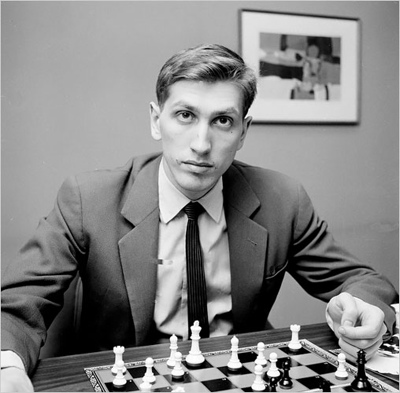
Chess prodigy and grandmaster Bobby Fischer has long been in the subject of debate as to whether or not he was on the spectrum. Psychologist Rueben Fine has said “Some of Bobby’s behavior is so strange, unpredictable, odd and bizarre that even his most ardent apologists have had a hard time explaining what makes him tick“. However, he could also have been schizophrenic or had paranoid personality disorder which can be co-morbidities with autism, so take from that what you will.
The Founding Fathers
While we cannot officially diagnose them, historical records about the Founding Fathers of America suggest that they may have all been neurodivergent in some way or another showing signs of ADHD and autism. Just have a quick look at this summary short and you’ll see what I mean:
Taylor Swift?
Okay, now this one maaaaay be a stretch, but some psychologists have speculated that based on her public demeanor, dating history, food habits, stimming behaviours and her music that Taylor Swift is likely autistic. A lot of fans have been debating whether or not this could be true, especially as her music resonates quite strongly with some autists. Then again most people resonate with her music so who knows 🤷♀️
This week I’d like to discuss a topic that many autists struggle with- boredom. We all know the feeling, that mental itch that makes you want to jump out of your skin, but for autists boredom can be so much worse.
Many autists, especially those with co-morbid ADHD, crave constant stimulation. As a result, boredom occurs more easily than neurotypicals. A simple lack of interest in a topic, if a task is too easy, or feeling overwhelmed can trigger boredom and autists will tune out fast. When this happens, it can lead to negative behaviours where an autist will act out and be destructive and disruptive, it might even trigger a meltdown in chronic scenarios (I have had this happen in work following months of tedious tasks🙈).
Boredom has always been a challenge for me. I constantly need to be working on something. In school I often got in trouble for reading/drawing/writing during class as I would get ahead of my work and need to keep my hands busy while waiting for the lesson to move forward. If anything they should have encouraged my habit for productivity in my downtime! 🤷♀️
But what does the science have to say?
As I’ve discussed previously, autists have higher levels of stimulating neurotransmitters and lower levels of calming neurotransmitters, so their neurons are firing excessively in the brain. When they aren’t able to channel this excess stimulation into something, boredom takes over which can lead to negative behaviours that cause problems. Autists also have dysregulated levels of the neurotransmitter dopamine- the chemical involved in motivation, pleasure and reward systems. When dopamine levels are low, motivation is low, so when an activity is not enjoyable, autists won’t have the brain power to engage and boredom will set in.
On another level, there have been reports from doctors claiming that FMRI scans of ADHD brains show that areas of the brain associated with pain light up when they experience boredom, suggesting that boredom might actually be a painful experience for neurodivergents. However, other neuroscientists have refuted this claim as the human pain response largely remains a mystery, so making this assumption from the data is a bit of a stretch.
This week I’d like to discuss autism in one of my favourite teenage book series ‘The Princess Diaries‘ (we won’t go into the films- they deviated too much from the books and Anne Hathaway comes across more adorably awkward than autistic).
So what are the books about?
The books focus on American teenager Mia Thermopolis and her discovery that she is secretly a princess to the small European principality of Genovia. Mia keeps a diary to help process her feelings in the wake of this massive revelation, whilst also navigating the ups and downs of school life, teenage crushes, bullies, self image and self-discovery. Two later books geared at the adults who grew up with Mia document her royal wedding and experiences of quarantine life during the Covid-19 pandemic.
But what about autism?
Now here’s where things get interesting. Reading these books was probably the first time that I had ever heard of Asperger’s syndrome (the original series was written pre-2013 when Asperger’s was still a separate diagnosis). Mia is assigned to do a report on the condition in psychology class in book 5 ‘Princess in Pink‘ (or ‘Give Me Five ‘ as I knew it), quickly identifying with many traits, and subsequently diagnosing herself and everyone in her social circle. However, her mother reminds her that she thought she had Tourette’s syndrome during her previous assignment, brushing away her fears and never mentioning autism again. Her mom does suggest that Mia’s best friend Lily might have Aspergers- which is likely, but in my opinion Lily tends to veer more towards narcissism than spectrum.
Princess Diaries author Meg Cabot
So is Mia really autistic?
Despite being brushed off by her family, I (and many other autistic readers) believe that ironically Mia is quite likely on the spectrum. I always identified with Mia and saw a lot of myself in her. Tomboyish and nerdy, she always marched to her own beat (in spite of her bullies), but struggled to fit in outside her close knit friend group. She’s a highly sensitive over-thinker with a tendency to catastrophize and create scenarios in her head out of nothing. She obsesses over the minutia of how the world perceives her and the social pressures and expectations of society (she spends several books overthinking about her readiness for physical intimacy and what is expected of her), often describing herself as a ‘freak’ who wants to be normal. An avid writer, Mia journals everything in detail, her thoughts often resonating with ADHD thinking. Moreover, she is quite drawn to smells like her brothers head and her boyfriend’s neck, feeling calmer after she has sniffed these- something that many autists can relate to. She also tends to look to romantic comedies and romance novels for how relationships should play out- something that many experts have noted autistic women do.
One moment in particular stands out to me with the hindsight of my diagnosis. In the 6th book Princess in Training (Sixsational in the UK/Ireland), Mia completely cracks under the pressure of her princess duties, running for student council, her first ever B in English, and her paranoia that her boyfriend will break up with her as she’s not ready for sex. After seeing her grandmother handing out pens in school for her presidential campaign, she freaks out, starts throwing the pens and completely breaks down crying and is hauled off to the nurses office, an incident the nurse described as “a crying jag”. This seems far more like a classic meltdown to me. Moreover, there are many more instances of things like this where when things go wrong, Mia goes into flight mode running off with her diary to her fire escape, the school roof, abandoned stairwells and spends an awful lot of time in bathroom stalls mirroring my own responses to upsetting situations as a teenager.
Some readers however were not happy about Mia’s assumption that everyone she knows has Asperger’s. Meg Cabot has apologised on her blog for any pain caused by this as she was trying to portray how Asperger’s can be so diverse in it’s symptoms and how we all have traits, but was mainly trying to show the phenomenon of thinking you have the disease you’re reading about. On another level, I think this is really interesting how Mia keeps seeing it in her friend group as quite often neurodivergents tend to gravitate towards each other (a number of my friends have sought autism/ADHD diagnoses as adults), so it’s fair to say her friends likely do have many autistic traits.
Not much was widely known about the female experience of autism back when these books were written, but it’s a pretty accurate depiction, however unintentional.
















 A Is For Aoife Not Autism