Autism Through The Ages

Greetings Earthlings! 🙂

In this week’s post I’m going to briefly explore the history of autism.

So gather round for storytime! 😀

fgghd

As autism rates increase, many people have come to believe that the condition is relatively new. Whilst the clinical term may be in it’s infancy, autism can in fact trace it’s genetic lineage back through millennia!

Genetic research has shown that some of the key genes involved in the development of autism came from our shared heritage with the apes, predating the evolution from monkey to man (somewhere in the region of 7 million years ago).

Image result for evolution

Other related autism genes are slightly more “recent” than this, having come into existence over 100,000-years ago.

Whilst a third of autistic genes may come about through spontaneous genetic mutation, from this evidence we can see that autistic genes were inserted into the genetic code of our ancestors for a reason.

Interestingly in ancient times, people that displayed autistic traits were in fact highly revered. Such autistic traits as exceptional memory skills, creative thinking, observational skills, heightened senses and extensive knowledge in important areas such as plants and animals (i.e specialist interests), would all have been greatly valued in an ancient community. The incorporation of these skills within the group would have been essential to their survival.

Experts also believe that autistic skills such as memory and attention to detail may have contributed to the creation of ancient cave paintings such as this one:

How often we focus on the negatives of autism that we fail to stop and consider the reasons these genes exist. If they were a hindrance to the human race, why have they not been eradicated through millennia of evolution?

I think Temple Grandin sums it up pretty well here:

Image result for autism genes memes

And she would be right! 😉 Experts believe that autistic genes have been conserved to advance our intelligence. Variants of autistic genes have been linked to improved cognitive performance and the formation of new brain cells.

Such talented historical figures as Michelangelo, Mozart, Beethoven and of course, Albert Einstein, are all believed to have shown signs of autism- but history remembers them for their esteemed achievements, not their genetic quirks.

Something that we would all do well to think of when we commit autistic people to the annals of history in future.

So there we have it Earthlings, I hope you find this information as interesting as I found it 🙂 I could go on further buuuuttt I think I’ll spare you the clinical history of autism for another day 😉

Have a good weekend everyone! 🙂

Aoife

Can animals have autism?

Greetings Earthlings! 🙂

Today I’d like to explore something I’ve been wondering about a lot recently: can animals be autistic?

We’ve often been told how closely related human and animal genomes are, but what about our brains?

I often look at my German Shepherd and see a lot of autistic traits in him- he has ADHD and anxiety, behaves inappropriately, thinks creatively (he once buried a bone in a mattress) and never really grew out of his puppy brain despite recently turning 6!

Image result for crazy dog gif

^^^Not my dog, but similarly bonkers! 😛 😉

Naturally, I could be imagining it (as a scientist it’s hard not to over analyse), but what does the evidence have to say?

In clinical research, there are a number of animal models which have been genetically bred to exhibit autistic traits including rats, fruit flys, monkeys and most commonly mice. These animals will have mutations in genes that have been linked to autism which causes them to exhibit some common autistic traits. In the mouse model for example, mice show signs of repetitive behaviours, deficits in social interaction and reciprocation, memory deficits and increased aggression.

But what about in nature?

There is very little evidence to suggest that animals can be autistic, however, a recent study by veterinary behaviorists in the USA has indicated that there is evidence of canine autism! 

 whoa shock waynes world waynes world 2 GIF

I know!

Maybe I should get my dog diagnosed… 😉

In fact, vets have considered the possibility of autism like symptoms in dogs since 1966!!

The 2015 study examined tail chasing behaviours in bull terriers in addition to running DNA analysis.  These researchers found that tail chasing was associated with trance-like behaviour and random outbursts of aggression in these dogs. In addition to this, tail chasing was more common in males than females- just like human ASD’s. This group also suggested that the physical features of these bull terriers (long face, high-arched palate, and large ears) could be indicative of Fragile X Syndrome-  a genetic condition where 15-60% of this population are additionally diagnosed with autism.

This study is not definitive, but it does open us up to the possibility that autism may naturally exist in the animal kingdom.

As autism can be difficult enough to diagnose in humans, you never know- other animals could quite possibly have autism, we’ve just never considered it! 🙂

bitmoji-1628445894.png

Aoife

Sleep and Autism

Greetings Earthlings! 🙂

Did you know that between 40% and 80% of autists reportedly have sleep problems?

bitmoji-1207141827.png

I have spent many a restless night tossing and turning whilst my mind races. Like a washing machine on the highest spin setting, my mind keeps going round and around when I turn out the lights.

This is a fairly accurate (and cute) representation of my efforts to sleep at night:

gif.gif^

I struggle to get comfy and start thinking and stressing about my day, about tomorrow, about that embarrassing time when I got an answer wrong in class and everyone laughed at me…and it keeps rolling on in a similar never-ending loop. The pillow starts heating up (did you know that thoughts produce heat? ), I start stressing about not sleeping and how soon the alarm will go off, get frustrated and inadvertently end up even more awake than before!

Eventually I pass out, and when the sun comes up the next morning…

ugh.png

….I wake up feeling like death in a tangle of bedclothes, wearing my sheet as a scarf! 😛

It doesn’t happen every night, but on occasion, especially if I have to be somewhere important or catch a bus early the next morning. I spend so much time thinking about needing sleep that I end up chasing away any tiredness! 😛

But why are we prone to disturbed sleeping patterns?

As with many aspects of autism, it’s unclear why exactly we struggle with sleep, but the experts have a few theories on the subject:

  • Melatonin, the hormone which controls sleep and wakefulness, is thought to contribute to sleep issues in autism. The amino acid tryptophan is needed for the body to produce melatonin, an amino acid which research has shown can be either higher or lower than normal in people with autism. Ordinarily melatonin is released in response to darkness (to induce sleep) with levels dropping during daylight hours (to keep us awake). However, studies have shown the opposite in some autists, where higher levels of melatonin are released during the daytime and lower levels at night. So that explains why I’m often inexplicably dying for a nap in the middle of the day!                                                   sleepy.png
  • Sensory issues are also thought to contribute to these sleep problems. Many autists have an increased sensitivity to such stimuli as touch, light, noises, etc. During my first year in college I became somewhat of an insomniac due to city noises, late night fire alarms and paper thin walls…
  • A number of autists, such as myself, are night owls. Recent brain imaging scans have shown that there are physical differences in the brains of night owls and morning larks. Night owls show signs of reduced integrity in the white matter of the brain (fatty tissue that enables brain cells to communicate with each). This compromises the speed of transmission between neurons which can cause insomnia, daytime sleepiness, antisocial personality disorder and interfere with cognitive functioning. Differences in the integrity of white matter have been linked to ASD’s, so this could explain why we struggle to sleep at night. But it’s not all bad- some studies have shown that night owls are more productive, have more stamina and can display greater analytical and reasoning abilities than morning larks! 🙂
  • Anxiety problems are also thought to contribute to troubled sleeping

So what can you do to improve your sleep?bitmoji-330321839.png

Weighted blankets are often recommended to help manage autism. As I’ve discussed previously, autists have higher levels of stimulatory neurotransmitters and lower levels of calming neurotransmitters. Weighted blankets contain metal or plastic beads in the quilted layers to apply deep, calming pressure to the user- like simulating a hug. This pressure is designed to stimulate the release of serotonin (which helps regulate the sleep cycle and temperature) and dopamine to relax and calm the mind and to better help us to sleep.

Some studies have shown that weighted blankets do not noticeably improve sleep for autists, however many people, neurotypical and neurodiverse alike, have found that they get a much better night’s sleep from using them- so it’s worth a try!

Personally, I’ve discovered that using screens too close to bed time can make it harder for me to nod off at night. Scientists have found that the blue light emitted by most screens can interfere with the production of melatonin, making it more difficult to fall asleep. If melatonin disturbances are indeed contributing to your sleep issues, it would be wise to decrease screen time in the night time.

Aoife’s Top Tip: Ditch the laptop before bed, read a book instead! 😉

Experts also recommend avoiding caffeine, getting more exercise, establishing a routine and taking measures to manage stress.

In my experience, stress management is key to getting a good nights sleep. My memories of being an angsty teenager are littered with sleepless nights spent fretting about everything! Once I got on top of my stress, peaceful sleep was quick to follow 🙂

Sleep will come, you just have to find what works for you.

Goodnight dear Earthlings, I’m feeling a nap coming on 😉

Enjoy the weekend!

bitmoji1631749140.png

Aoife

Autism and Phones

Greetings Earthlings! 🙂

So a little bit different today- I know the title is unusual! 😛

But the prospect of talking on the phone is something that fills many an autist with dread!

vibrate.png

But why does this seemingly innocuous device strike fear into our hearts?

My relationship with phones is complicated.

On the one hand, I enjoy chatting to my family and friends on the phone; on the other, talking on the phone feels soooo AWKWARD to me!

As if reading a person isn’t hard enough, but when you can’t see them? It really adds to your social anxiety. You can’t tell if they’re bored or if  you’re cutting across them, not to mention dealing with heavy accents, bad signal and awkward silences- the stress is a killer!

Worse still when someone asks you to answer their phone!

Image result for mrs puff gif

I don’t mind answering too much if it’s someone I already know, but when it’s a stranger….

What do I say?

What if the person on the other end thinks I’m them?

How long will I have to talk until they can take the phone away from me??

AAAAGGGHHHHH!!!!!

bitmoji-1238506530.png

It makes me feel beyond awkward answering someone elses phone!

Not to mention the awkwardness of dealing with telemarketers and scammers…I try to brush them off and don’t want to be rude… but then when they keep pushing their product on you, I feel too awkward not to listen! I just sit there burning up, waiting for an appropriate opportunity to tell them ‘no’ and run! 😛

Sometimes I just want nothing more than to throw my phone at the wall! 😛

Image result for phone ringing gif

I will do everything that I can to avoid calling someone, if at all possible. I will email, text, Whats App, Facebook etc. before I will ever go near my phone. If the phone rings in the house and I’m closest to it, I have been known to get up and leave the room for the bathroom to force someone else to pick up the receiver! 😛

This meme is a pretty accurate transcription of actual conversations I’ve had with my mother 😛

17523469_272317673214791_3405809311875448190_n.jpg

Over the years however, I have gotten more comfortable with the phone. When I was younger, I never really knew how to act appropriately on the phone. When someone asked to speak to another member of the house, I would freeze up and throw the phone at that person while the caller was still talking! 😛

Since then, I’ve gradually developed my phone etiquette and learned to relax a little more when answering the phone. Practice makes perfect I suppose 🙂

Making calls can still be a little tricky.

Image result for homer simpson phone

A lot of it is tied up in the anxiety of not being able to see the person on the other end. When you initiate a conversation in real life, you know if the person is amenable to talking. If I call them however, my brain starts worrying about disturbing them if they’re busy or whether they really want to talk to me or not.

And then there’s the added stress of “I’ll call you back,” and the panic that ensues when they don’t.

“Did they forget?

Did they not want to talk to me?

Oh God, do I need to call them back???!!”

But as you grow older, these worries begin to fade. You just have to take a deep breath, press call and go for it! 🙂

An email is not going to fix your internet (for obvious reasons 😛 ) or secure your hair cut! 😉

Top Tip: It helps to remind yourself when calling strangers that they can’t see you, they don’t know you so they can’t judge you if you say something stupid 😉

Have a good week everyone! 🙂

Aoife

Autism and Driving

Greetings Earthlings! 🙂

Soooo….driving…

uyghl.png

Wouldn’t be high on my list of favourite activities I’ll admit! 😛 Stressful roundabouts, merging onto busy roads, idiot drivers, getting lost, the noise of hitting a pothole- it can be a lot for an aspie to handle!

My coordination issues did not make it the easiest of tasks to get the hang of, that’s for sure!

Coordinating pedal movements and gear changes, difficulties with spatial awareness, not to mention the stress and anxiety of learning to drive on country roads (Irish country roads tend to be narrow, winding, and full of potholes! 😛 ) made this a highly frustrating experience!

driving-gif.gif

I never could understand why I found it so hard to get the hang of driving when my sisters took to it so easily, but after I got my diagnosis, my struggles began to make a world of sense!

Driving would not be the first thing to come to mind when someone pictures the struggles an autist faces. In fact it’s a requirement in some countries that your ASD diagnosis be listed on your drivers licence if it impacts your ability to drive safely– you can even be fined in the event of an accident if it’s not stated on your licence!

Studies among autists actually report more traffic violations than in neurotypical groups, however, this may relate to our tendency to be more honest than our neurotypical peers 😛 😉

This doesn’t mean that autists shouldn’t drive, but it’s something to be aware of.

So how exactly does autism impact our driving?

ClumsyScaryArgusfish-size_restricted.gif

  • Impulsivity Autist’s are naturally more impulsive than neurotypicals. This can impact our driving by causing us to make poor driving decisions on impulse. It has also been reported that this impulsivity may influence speeding behaviours
  • Sensory integration/processing issues– Driving involves a huge amount of sensory input. Listening to the engine, watching the road, spatial awareness, not to mention unexpected road noises and unpleasant smells from the outside- it can be a lot for the autistic brain to process when moving a vehicle
  • ADD & ADHD- Autists can get distracted quite easily…on busy roads where lot’s of things are happening, your focus can sometimes waver. If there’s a cute dog nearby, I have been known to take my eyes off the road…raw (2)
  • Spatial Awareness & Coordination Autists often have issues with these which can make it difficult in positioning the car on the road, parking and navigating gear changes. Spatial awareness was one of my greatest obstacles when first learning to drive. I always seemed to be veering towards the nearest hedge…When I first got my car, I was practicing driving around the house with no problems, aaannd then I decided to change direction- BIG mistake! My poor spatial judgement caused me to nicely scratch the car on the edge of the dog house…before getting it stuck on some cement blocks at the oil tank! Caused a mini shutdown which made my sister think I had run the dog over I was so incoherent!! 😛                                                                           fghd.png

Top tip for parents and instructors: PATIENCE!!!! Learning to drive is much more difficult for autists so don’t be too hard on us for when we don’t get it straight away. We’re already beating ourselves up for our slow progression; getting frustrated or annoyed with us will only make it worse.

Here are some useful links with driving tips for autists:

Click to access Driving1.pdf

https://sellmax.com/driving-with-autism/

Aoife’s Top Tip- Get a Sat Nav. They really help to take the edge off when stressed about driving to new and unfamiliar locations. If you mess up, it will recalculate and send you right in the end 🙂

Having autism may initially make learning to drive difficult, however, you will get there in the end 🙂 After two years of stressful practice, I passed my test first time and drive everywhere now.

The freedom you gain from this skill is worth the fight 🙂

bitmoji1810728188.png

Aoife

Autism “Cures”?

Greetings Earthlings! 🙂

Many of you may have come across articles or ads online claiming to have “cured” or found a “cure” for autism.

bitmoji-329668744

Notice my use of air quotes? 😏

According to both the medical and scientific community- there is no cure for autism; fact!

Autism can be managed; but it cannot be cured.

In truth, these purported “cures” are unproven, and in some cases, quite dangerous. Here are the facts about some of these products/techniques:

  • Raw Camel Milk (whhhhyyyy!!!) & Essential Oils are just some of the many products retailed as a “cure” for autism. Neither have been proven safe or effective by the FDA
  • Hyperbaric oxygen therapy: Remember those stories about Michael Jackson sleeping in an oxygen tent? Some have claimed that breathing oxygen in a hyperbaric chamber can “cure” autism, but this is completely unproven
  • Detoxifying clay baths: These are mixed in with bathwater to supposedly draw out toxins, pollutants and heavy metals in order to “dramatically” improve autism; but again, these are entirely false claims
  • Diet Change: Some articles report that following a specific diet can “cure” autism. As I’ve previously discussed, many people report improvements in autistic symptoms following gluten (a protein found in grains like wheat), casein (a protein found in dairy) and sugar free diets, but there is insufficient scientific evidence to support this. Many doctors have recently spoken out against these fad diets as they can be very bad for your health if you unnecessarily remove these foodstuffs. Gluten free diets for example can increase your risk of cardiac problems through decreased intake of essential wholegrains
  • Chelation therapies: This is a medical procedure where chelating agents are administered to bind and remove heavy metals and toxins from the body, such as in the case of mercury and lead poisoning. These are often marketed as “cures” for autism, coming in the form of suppositories, sprays, drops, capsules, and clay baths. These are NOT approved for the treatment of autism, and should only be used under medical supervision, as they can remove important minerals from the body which can cause serious life-threatening issues such as deadly kidney damage!
  • Miracle Mineral Solution (MMS): This is perhaps one of the most dangerous “cures” for autism. A solution that claims to cure HIV, cancer and malaria in addition to autism, MMS contains 28% sodium chlorite solution- equivalent to industrial strength bleach! People have reported vomiting, diarrhea and symptoms of severe dehydration after taking this, but the labels claim that this means that the product is working!! This can also cause life threatening low blood pressure and death in severe cases. Naturally, this has not been proven to cure autism.

The bottom line, these so called “cures” are nothing but

bitmoji362079316.png

For those struggling parents out there, I know it’s difficult. I wreaked havoc as a child and did not make life easy for my family; but seeking a cure is not the answer. Love and acceptance are the best way forward 🙂

This stuff is dangerous and can make your child very sick indeed.

Always be wary of what you read/buy on the internet dear Earthlings!

Aoife

Does Autism Make Me A Bad Person?

Greetings Earthlings! 🙂

So today I’m going to share with you something that I’ve been musing on a lot lately:

Does autism make me a bad person?

bitmoji-1085719112.png

When it comes to autism, there is a very fine line between bad behaviour and autistic behaviour.

To an outsider, meltdowns appear like temper tantrums. Inappropriate statements and behaviours seem to hint at a naughty child.

It can be very hard to discern the difference.

As a child, I spent much of my time being branded as naughty. Growing up in an Irish household, I was no stranger to the dreaded wooden spoon…

Image result for wooden spoon meme

I was notorious for my “temper tantrums”, I always seemed to say and do the wrong things, and I consistently found myself fighting with those around me. In short, I was a nightmare!

Worse still was the nightmare I lived on the inside.

I never could understand why I said or did bad things back then. My sisters never seemed to find themselves in the trouble that I always did. Something simple would just set me off like a rocket and there would be no turning back. After the smoke had cleared, sitting in a pool of tears surrounded by the wreckage of a meltdown, I felt like the worst person in the world.

“Why did I say that?”

“Why did I throw lego at my parents?”

“Why was I so violent?”

I was always left shocked and appalled my behaviour, crying for hours afterwards at the consequences I faced.

Oftentimes I felt as though I were little more than a criminal. My parents even threatened my bad behaviour with the police on a number of occasions- once going so far as to put my PJs in a plastic bag after telling me that they were coming to take me away! 😛

I tried so hard to behave, but I never could seem to keep it up for more than a few weeks. As I’ve told you before, I even tried running away because I couldn’t be good and felt obliged to leave.

But none of this behaviour was ever intentional.

Autists have no control over meltdowns; the brain is completely overwhelmed. In this state, literally anything can happen. Like Elvis, any trace of rationality has left the building. I’ll explore meltdowns next week in greater detail.

My tendency towards mimicry and my twisted sense of logic also impacted my bad behaviour.

I graffiti-ed a desk in school after perceiving previous samples around me to be the norm, I practiced swearing like a sailor and flipping the bird (I struggled with the dexterity of it) before secondary school to blend in – I even forced the habit of chewing pens as I thought that I needed a “bad” or “cool” habit when I went there!!!! Don’t ask me how I rationalized that one! 😛

Chewing On Pen GIFs - Get the best GIF on GIPHY

Not good for your teeth kids!

Over the years I’ve better learned to control and prevent public meltdowns and restrict my social faux pas’, but on occasion I will wind up in a spot of bother just like everybody else.

Autism has huge influence over my behaviour, but do my actions make me a bad person?

This is a tricky one.

I’m not perfect. I often say or do things that can rub people up the wrong way, but for the most part, I don’t intend to do people wrong. Having been wronged many times in my own life, the thought of hurting another person greatly upsets me. When I unintentionally put my foot in it, I’ll torture myself for hours, weeks, even years afterwards for my missteps.

But I’ll always try my hardest to make amends and be better.

bitmoji2049295878.png

Even before I received my diagnosis I made serious efforts to try to modify my negative social behaviours. I oftentimes find that I overcompensate with my friends for fear of being perceived as bad like my childhood all over again. I’ll proofread your project at 2 in the morning, I’m always baking and making gifts, I even overcompensate with emojis for fear of the wrong sentiments coming across. I forever spend my days worrying how others may take me up wrong.

I’m constantly in a state of high alert that I’ll do something bad. In many ways I’ve spent much of my adult life trying to be the sort of person that I couldn’t seem to be as a child, as if by being good now somehow undoes the wrongs, or acts as a safety net in case I meltdown or lodge my foot in my mouth.

Yes, there are times in my life when I can be bad, say or do the wrong things or lose control; but that doesn’t make me bad. Autism can make me act badly sometimes, but it doesn’t mean that the person is bad.

I’m by no means Mother Teresa, but I’d like to think that I’m a good person 🙂

That being said, just because a person is autistic, does not mean that they are entirely blameless if they act badly. Indeed, much of my poor behaviour as a child can be attributed to autism, but there were also times where I knowingly chose to be bad, just like any other child.

Autism can’t always be used as an excuse for my actions.

Some psychologists for example, have theorized that Hitler likely had Asperger’s syndrome, but we couldn’t give him a free pass now could we?

Autism is a spectrum– there are both good and bad among us. We are human, we make mistakes- we just tend to make a few more of them than others 😉

Having autism doesn’t make a person bad, it merely makes us human 🙂
dfgsfh.png

Aoife

Vaccines and Autism

Greeting’s Earthlings! 🙂

Yep…I’m going there today- the autism vaccine controversy.

Image result for exchange shocked looks gif

This issue has been thoroughly debated by scientists in recent years, so I’m going to discuss this once, and once alone.

In 1998, the now completely discredited scientist Andrew Wakefield published this paper in The Lancet:

Image result for wakefield paper

Notice the word ‘RETRACTED’ in bold red letters.

In this paper, Wakefield suggested that the MMR (measles, mumps and rubella) vaccine is linked to inflammatory bowel disease and autism.

This is what I like to call:

bitmoji-546088588.png

Subsequent to the publication of this paper, serious conflicts of interest and falsified data were discovered. This led to the paper’s ultimate retraction and Wakefield was struck off the medical register in the UK. Countless studies have endeavored to replicate the results of Wakefield’s work, but none have succeeded, proving that there is no medical link between the MMR vaccine and autism.

bitmoji1545013222.png

Here are the real facts about the case:

Wakefield’s work had multiple conflicts of interest:

  • When the paper was first submitted for publishing, he failed to disclose that he was in receipt of funds (~£435,000 or $674,000) from lawyers acting on the behalf of parents that believed the MMR vaccine was harmful!
  • During the course of his investigation, Wakefield filed a patent for a new measles vaccine, standing to gain financially from the downfall of the currently available vaccine
  • Patients were recruited to the study through anti-MMR campaigners

Several ethical codes were broken by Wakefield when conducting his research:

  • Wakefield unethically collected blood samples from children at his son’s birthday party (reportedly for £5 a pop)
  • Patients were subjected to unnecessary invasive procedures such as lumbar punctures and colonoscopies without prior ethical approval
  • The company that Wakefield sought to establish following the paper’s publication was to be headed by the father of one of the patients included in his study
  • Wakefield further tested out his new measles vaccine on a child without recording it in his medical notes or discussing it with the child’s GP
  • Most serious of all- Wakefield falsified and manipulated his findings!! It was discovered that Wakefield had either misrepresented or altered medical histories in ALL cases described in the study!

Aside from evidence tampering, the design of the study was quite poor. Wakefield’s research examined a very small patient cohort (only 12 children) using case reports- one of the weakest forms of medical research. Large scale studies examining hundreds of thousands of cases have not established a link between the vaccine and autism.

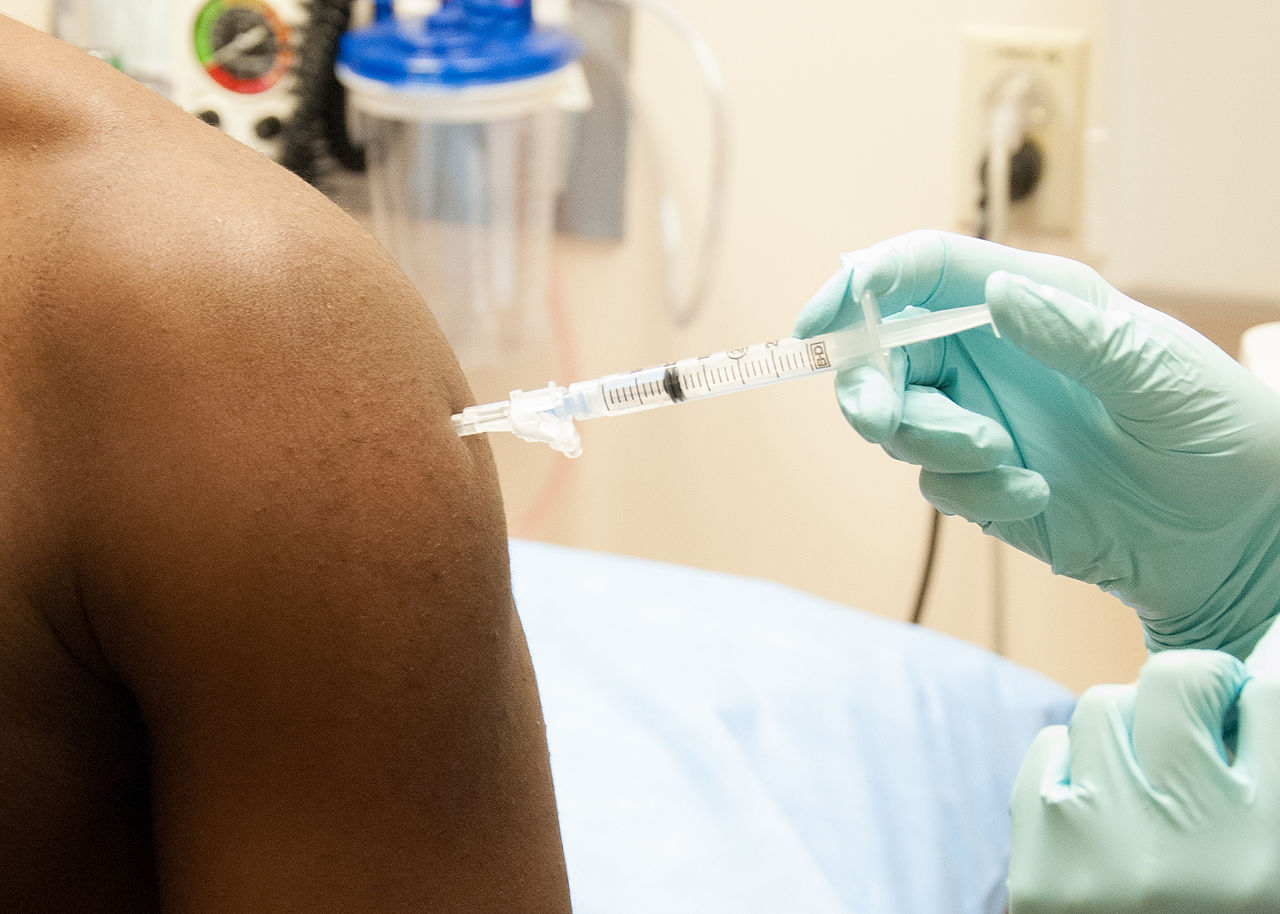
Image result for vaccine

Of the 12 children examined in the study, 5 showed signs of developmental delay prior to receiving the MMR vaccine, and a further 3 patients did not in fact have autism.

But what of other research in this area?

Studies which are often cited in the MMR controversy suggest a link between thimerosal, (a mercury containing compound), in vaccines and autism- a link which has been largely refuted. Additionally, thimerosal has been removed from or reduced to trace amounts in currently available vaccines- but autism rates still continue to rise.

Studies have also been conducted to explore the impact of the anti-vax movement on autism rates. These studies compare autism rates in those who did and those who did not receive the MMR vaccine. The result- no difference in autism rates between both groups!! 

Furthermore, following the publication of his paper, Wakefield proposed that 3 separate vaccines for measles, mumps and rubella was a safer alternative to the combined vaccine.

But did he have a point?

bitmoji2072993471.png

Nope- in countries where the practice of giving 3 separate vaccines at 3 separate stages was adopted, autism rates continued to rise regardless.

So there we have the facts about the MMR vaccine controversy. If you’re still a little bit skeptical, I’ll leave you with one final thought:

Wakefield has repeatedly refused to deny or replicate the findings of his study. If there was nothing to hide, then why not prove his claims?

bitmoji42958429.png

Aoife

Impulsivity and Autism

Greetings Earthlings! 🙂

In continuation from the previous post exploring curiosity and autism, today we’re going to take a look at impulse control in autists.

Many people with autism report issues with impulsivity.

All my life I’ve struggled with this issue. Too often I’ve felt like Didi in ‘Dexter’s Laboratory’, dying to know what the button will do and being unable to keep myself from pushing it! 😛

tumblr_lnvvttAUbb1qzc8l4o1_250.gif

As a child I was highly impulsive. I never knew when to stop eating, would impulsively give up on a book halfway through in favour of another (at one point I had 9 books on the go!)  and when overwhelmed I would often try to run away.

During one particularly interesting meltdown I began to impulsively throw all items that my mother had given me out of my bedroom window (which is a storey high I might add), whilst my sisters in the room below gleefully retrieved them, each determined to claim ownership…Clear example of black logic at work! 😛

So why do we struggle with impulsiveness?

Impulsivity in autism can be explained by deficits in what is known as executive functioning.

Image result for huh gif

Don’t worry- it’s not as complicated as it sounds! 😛

Executive functioning is simply a broad umbrella term referring to the mental processes involved in cognitive, physical and emotional self control. Examples of executive functions include planning, memory, cognitive flexibility (the ability to adapt thinking to new and unexpected situations) and most importantly response inhibition– aka the ability to suppress unnecessary or inappropriate actions.

But what causes these deficits in executive functioning?

Many autists also suffer from attention deficit disorder (ADD) or attention deficit hyperactivity disorder (ADHD), both of which have an effect on executive functioning and impulsivity. I’ll explore these disorders at a later stage 🙂

Experts believe that ASD’s share a common genetic basis with ADD and ADHD, indicating that genetic mutation may be at the heart of these deficits in executive functioning.

Impulse control can be quite challenging at times (it’s a real struggle not to run squealing to every single puppy I encounter for a cuddle! 😛 😉 ) but as I always say, it is by no means a cause for despair. You will eventually learn control with time 🙂

Granted I can still be quite impulsive at times- feeling the urge to curl up asleep on the floor like a dog in company (an urge I feel quite a lot! 😛 ), wondering what it would feel like to step on hot ash/coals or wanting to draw designs all over my face with makeup; the difference being that now I am able to choose whether to ignore or act upon an impulse 🙂

Well…for the most part! Still haven’t fully cracked compulsive eating…or maybe I just don’t want to! 😛 😉

bitmoji1655674740.png

Enjoy the weekend everyone! 🙂

Aoife

Curiosity & Autism

Greetings Earthlings! 🙂

Today I’m going to explore an aspect of autism that’s not widely discussed- curiosity 🙂

Many people find that curiosity is in fact diminished among members of the autistic community because of our preference for routine. In my experience, the opposite is true.

To quote Albert Einstein, who is widely believed to have been on the autistic spectrum:

I have no special talent. I am only passionately curious.

Passionately curious.

That’s how I would describe my insatiable sense of curiosity about the world.

Image result for magnifying glass gif


Throughout my entire life I have been driven by my desire to acquire knowledge. The words who, what, when, where, why and how are rarely ever far from my lips. For me, it’s more than just a desire, it’s a need.

I need to know how the world works, I need an encyclopedic knowledge of those I care about, I need to know why did the chicken really cross the road??!!

If I had had Google as a child I would have been a nightmare! 😛

If I don’t get the answers I crave, it drives me insane, getting under my skin like an itch I can’t scratch. A friend recently told me she had news for me right at the exact moment I lost my WiFi signal! I nearly screamed with frustration over the next two hours trying to reconnect long enough to find out what her news was!!

Curiosity does have its uses though when it comes to the likes of science, motivating you to stick with the building blocks that will one day lead you to understand entire systems.

Buuuuuttt…as we all learned from ‘Alice in Wonderland’, curiosity can sometimes get us into a spot of bother…

Image result for curiosity gif

Many autists have issues with impulse control (which I will explore in detail on Friday 🙂 )  and as such, in my experience, curiosity can be impulsive.

For instance, I scorched the kitchen door as a child when I set fire to a drawing with a candle out of curiosity…

Another such incident (which I have no memory of but have been assured happened 😛 ), saw my younger cousin and I trap my kitten between two buckets until my horrified mother caught us in the act!

The only explanation that I can offer for my behaviour based on similar experiences is that I was interested to know what would happen! 😛

Thankfully in this instance, curiosity did not kill the cat! 😉

bitmoji343820677.png

Curiosity can also be an issue in social situations. Countless times I’ve landed myself in hot water for asking inappropriate questions, often unintentionally coming across as nosy. As with all things autism however, with time, you learn to reign in your curiosity and channel it towards something more positive, like keeping up with the latest research 🙂 (even if the unasked questions do irritatingly press on the brain 😛 )

But why am I so curious?

Unfortunately, I don’t have much to offer in the line of concrete scientific explanation I’m afraid. There doesn’t appear to be much research in this aspect of the autistic experience.

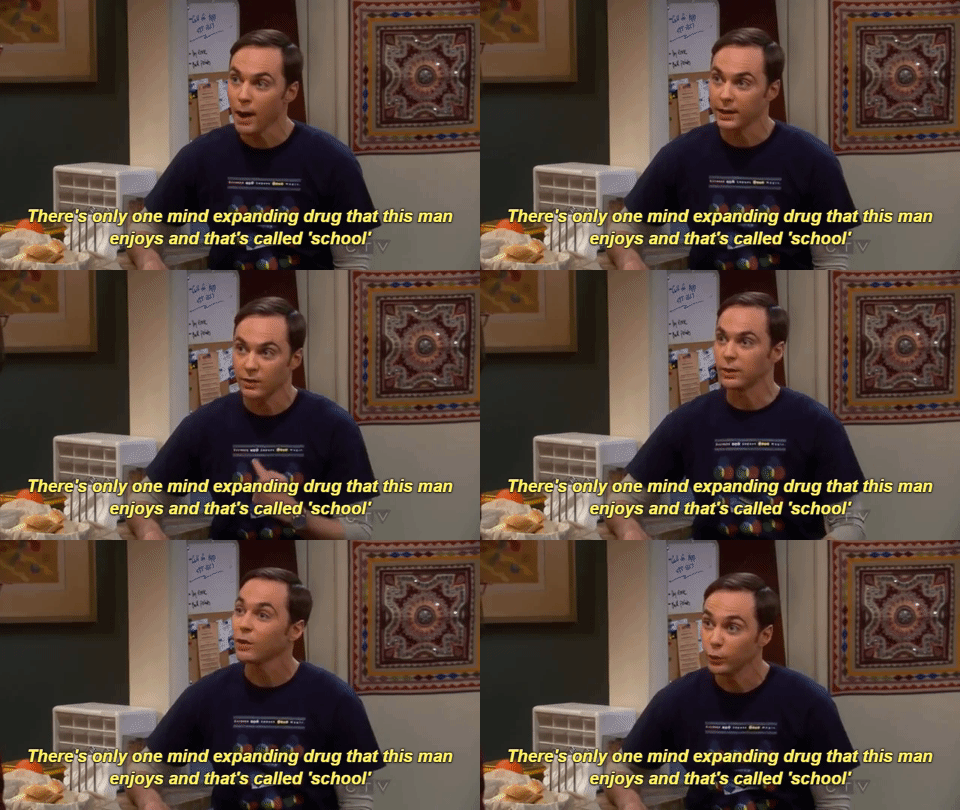
However, in terms of the general science of curiosity, the neurotransmitter dopamine plays an important role. Curiosity activates brain regions associated with pleasure and reward through the activity of dopamine, giving us that pleasurable feeling of satisfaction when our curiosity is quenched. Many addictive drugs operate through this pathway, so you could say that I’m addicted to learning! 😉

 school big bang theory sheldon cooper mind expanding drug GIF


In autism, dopamine levels are dysregulated, which may influence curiosity as a result. Moreover, increased activity in the midbrain is associated with curiosity. Brain analyses of autistic individuals reveal structural changes in this region, suggesting that perhaps these changes contribute to and account for differences in curiosity levels among autists.

Stay tuned for Friday’s post where we’ll be putting impulsivity under the microscope! 🙂

Aoife
Blog at WordPress.com.

Up ↑