Autism- Breaking the Mould

Greetings Earthlings! 🙂

In the last couple of days an audition video from America’s Got Talent has gone viral featuring Kodi Lee- a blind, 22 year old autist with an amazing gift for music. If you haven’t seen the clip yet, check it out below (such an amazing voice!):

After watching this video, it’s got me thinking about our tendency to put people on the spectrum into boxes. We’re constantly talking about tolerance, acceptance and equality in the world today, but still we can be quite quick to write people off.

“You’re autistic”- this is you label, this your box, this is what we expect of you.
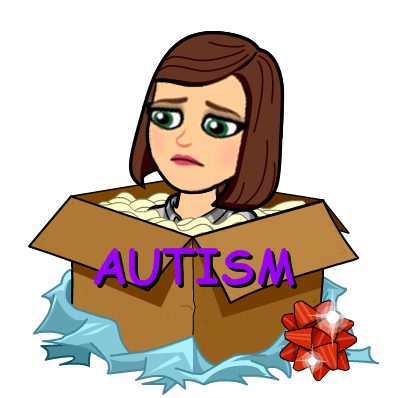
box

Having Asperger’s is just one aspect of me. It influences quite a lot of my quirks, but it is still only one piece of my jigsaw. This one word will not tell you about my talents, my interests, my active social life. It reveals a part of me, but not the whole.

My entire life I’ve never been one to conform, and autism is no exception. I refuse to fit into any particular mould- I’d much rather be an abstract painting, entirely unique.

Moulds are for bread and fondant 😛
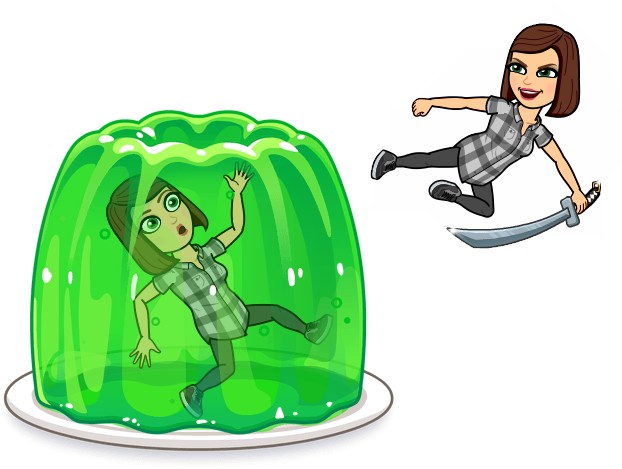
mould.jpg

Something that really saddens me is that when a parent hear’s the word autism, there is a tendency to let go of the mental picture that they have for their child’s life. They mourn the loss of a “normal” life (whatever that is!). They worry that their child won’t make friends, will struggle in school, that they won’t achieve their dreams.

Life does not always run smoothly, and rarely fits the picture we first imagine. I never thought I would still be single in my late twenties, but that’s life. Some might think that I would scrap that picture of finding love from my mind after I got my diagnosis (as so often autists struggle romantically), but why would I? Sure it can make it difficult to read romantic situations, but it doesn’t mean I won’t find love one day. There’s no real reason that I can’t break the mould.

And sometimes in life, the picture has to completely change to give birth to something greater. For example, there is some evidence that there may be a hidden portrait underneath the Mona Lisa. Leonardo da Vinci had to let go of this original picture in order to create a masterpiece (one which he spent years editing I might add).

Our lives are like the creation of the Mona Lisa- the picture is always changing. An autism diagnosis may alter the projected picture, but it doesn’t mean that one day it won’t become a masterpiece.

The pictures we have in our heads for our lives/our children’s lives are not finite. We don’t have to let go of our dreams for the sake of one word. Look at how Kodi is breaking the mould- with one look you might think you know his story, but when he opens his mouth he paints you a brand new portrait. And let’s not forget Susan Boyle (a fellow aspie), one audition changed her life forever. Everyone laughed when she came on stage, but now she’s living her dream! (Side note- can’t believe this was 10 years ago…feeling old!👴).

And let’s not forget how non-verbal Carly Fleischmann has become a talk show host!

The world is full of stories of incredible autists breaking the mould, challenging our preconceptions of what we think autism is. As I am repeatedly saying, no two are the same, so why do we insist on these moulds?

Give us the freedom to be who we are, lend us a blank canvas and we’ll paint you a picture you could never have imagined 🙂

Hope you enjoyed this post dear Earthlings! 😀

Have a wonderful weekend! 🙂

bitmoji-20190529114602.png

Aoife


Autism and Gait

Greetings Earthlings! 😀

This week I’d like to discuss another lesser known aspect of the spectrum- autism and gait.

As I’ve discussed previously, coordination issues are part and parcel with autism, however, what you may not know is that these coordination issues tie in with an autists gait- particularly for those with Asperger’s syndrome. In fact one of the lesser known diagnostic criteria in the DSM-V is that of an odd or unusual gait.

New technologies are even using gait analysis as an early means of detecting autism:

I know it seems an unusual trait, (let’s face it, we rarely notice a person’s walk) but researchers have observed that autists can have greater or even reduced step and stride length, increased step width, have unusual posturing, tend to walk on their toes, and are lacking in “motor smoothness” when compared with their neurotypical peers.

So why is an autists gait so unusual? What does the science have to say?

Thus far only a few studies have investigated the underpinnings of gait and autism (although the association has been known for decades), but as usual, the evidence points back to the brain. There has been a lot of debate as to which region is responsible for gait differences, however there is evidence to suggest that neurological alterations in the cerebellum (regulates motor movement) and the basal ganglia (a group of nerves involved in voluntary control of motor movements) in autists are the likely culprits.

Furthermore, those autists who tend to toe walk can develop a leg length discrepancy which can also contribute to their odd gait. Gait issues such as this can have a negative impact on the body as this can shorten your Achilles tendon. Research shows that children with ASD’s tend to have a reduced range of motion in the knee and ankle when walking which may imply weakness around these joints.

It’s not all bad news however, as special orthotics can be used to help improve some of these issues.

bitmoji-20190521095540.png

Hope you enjoyed this post dear Earthlings! 🙂

Have a lovely weekend!

Aoife

Pica and Autism

Greetings Earthlings! 🙂

This week I’d like to briefly talk about an aspect of the autistic spectrum which you may not be familiar with- pica.

So what exactly is pica?

Image result for pika pika gif

No not that guy! 😛

Pica is a type of eating disorder where a person has an appetite for things that are not considered to be food such as dirt, dust, chalk, hair etc.

It’s often seen in pregnancy however, almost 25% of autists display signs of this behaviour.

Thankfully I’ve never really had any weird cravings like that, however as I child I did like to eat toothpaste on occasion…what can I say Aquafresh just looked too much like sweets!! 😛

Those red, white and blue stripes were just too tempting! I even think I used to recreate this Werther’s Original ad in the mirror pretending the toothpaste was the sweet! 😂

Anyway less of my weirdness, back to pica!

Joking aside, pica can be very serious if the substance that is ingested is toxic such as lead or if the item can cause an intestinal obstruction like hair ingestion.

So what does the science have to say? Why is this behaviour found in autism?

There does not seem to be one uniform cause of pica, however, pica has been associated with nutrient deficiencies (such as iron) and is thought to be the body’s subconscious way of replenishing the missing nutrients, which would be consistent with the often restrictive nature of an autists’ diet.

It’s also thought that pica may be a sensory response to stimuli in autists to relieve stress, anxiety, pain and discomfort or the item simply has a pleasurable texture. Pica may equally be interpreted psychologically as a means of seeking attention.

Science aside, experts say that the cause of pica may simply be that the autist is unaware that they are eating an item that is unconventional/unsafe.

dirt.png

That’s all for this week Earthlings, hope you enjoyed this post! 😀

Have a great weekend! 🙂

Aoife

Autism on Screen- Pablo

Greetings Earthlings! 🙂

Today I’m going to take a look at the latest live-action/animation sensation, the acclaimed children’s TV show ‘Pablo‘.

Pablo is a five-year-old boy on the autistic spectrum in a new TV show (BBC/PA)

So what’s so special about it?

Co-produced by RTÉjr and CBeebies in Ireland and the UK, ‘Pablo‘ is a unique kids TV show about a 5 and a 1/2 year old boy with autism who with the help of some magic crayons, creates an elaborate world of animals to help him to cope with and make sense of the world around him.

Here’s a quick video about the show:

The really cool thing about ‘Pablo‘ is that the stories are based on the real life experiences of several people on the spectrum, and not only that, but all of the characters in the show themselves have autism! 😀

52 10-minute episodes have been created thus far, and several countries have expressed interest in broadcasting the show. Even Netflix wants to broadcast it!

So what’s the show like?

Granted I’ve only caught a few episodes of the show, but I found it to be an excellent and lighthearted show that both educates and entertains.

One of the things I really liked is that the show highlights the diverse nature of spectrum traits by personifying them as animal characters in Pablo’s imagination. Each character possesses different autistic traits as narrated in the catchy theme tune:

I really liked how in one particular episode the writer took literal thinking and turned it into something fun. Pablo spilled a bag of crisps which his mother said “went everywhere.” Following this, Pablo embarks on an adventure to locate the crisps in such far reaching places as the moon and at the bottom of the ocean! A new and inventive way to spin autism! 🙂

All in all this is an excellent show for the youth of today which should help to educate the next generation and make them more accepting of autism 🙂

Hope you enjoyed this post dear Earthlings!

Have a great weekend!

Aoife

Happy Easter! :)

Greetings Earthlings! 🙂

Just taking this opportunity to wish you all a very happy Easter! 🙂

bitmoji-20190415073640

Hope you all have a great weekend!

Try not to eat too much chocolate now! 😉

Aoife

Autism and Clothing

Greetings Earthlings! 🙂

This week I’d like to briefly expand on something that I touched on in my previous post about skin sensitivity, -the importance of clothing and autism.

bitmoji-20190401080206

No, I’m not going to talk about fashion, but function!

For many autists, it can be quite difficult to pick out clothes. A stray fiber, an itchy label or a prickly seam can unleash a storm of sensory discomfort. Gene mutations cause the nerves in our skin to be extra sensitive to certain stimuli. This coupled with hyperactivity in the cortex and the amygdala (both regions involved in sensory processing) don’t make for the happiest of bedfellows.

But what if the clothes that irritate us could in fact be used to manage autistic symptoms?

bitmoji431833082

Clothes are now being designed and adapted to cater for the different needs of autists. Companies are now producing  seamless socks and underwear, looser fitting clothes made from softer materials, and most interestingly, weighted and compression clothing.

Based on the research of the great Temple Grandin and her hugging machine, both weighted and compression clothing provide calming, deep pressure stimulation much like a soothing hug. The pressure switches off the sympathetic nervous system (fight or flight) to the parasympathetic nervous system (rest and digest), promoting the release of “feel good” neurotransmitters. Based on this, it’s thought that autists are better able to cope with sensory issues, hyperactivity, motor skills and sleeplessness when wearing sensory clothing.

It’s a really interesting premise- there’s even been an inflatable sensory scarf produced that’s designed to provide soothing pressure in addition to emitting calming aromas! Check it out:

https://www.wired.com/2015/08/odd-looking-clothing-designed-help-autistic-kids/

In reality however, the results are mixed. Scientific studies indicate that weighted and inflatable vests do not appear to be effective and are not clinically recommended, yet the personal testimonials of families across the globe beg to differ. One testimonial claimed that a child’s meltdowns went from 12 a day to having none in 3 years!

Either way, nothing ventured nothing gained, so if you think that sensory wear may be of benefit to you or a loved one with autism, why not give it a shot? 🙂

With the variety of sensory wear available, you’ll at the very least look fabulous! 😉

bitmoji216715141


Enjoy the weekend everyone! 😀

Aoife

Autism and Alexithymia

Greetings Earthlings! 🙂

Today I’d like to briefly elaborate on something that I’ve touched on in previous posts– autism and alexithymia.

So what exactly is alexithymia?

alexithymia

Alexithymia is a personality trait wherein an autist may struggle to identify and describe emotions in themselves and in others. We feel emotions just like everyone else, we just aren’t always aware of what it is we are feeling. It can be incredibly frustrating (ironically I’ve often struggled to identify this emotion in the past 😛 ) knowing that you feel something but not having a clue how to verbalize it or process it properly. I’ve honestly spent days going “The thing is…it’s just…um..I dunno!” round and round my mind until I can figure out what it is I’m feeling!

heartclutch

Thankfully as I’ve gotten older this happens less and less frequently.

Aoife’s Top Tip: as I’ve discussed previously, music can be quite beneficial when dealing with alexithymia. If I can’t identify an emotion, I tend to gravitate towards songs that sound like what I’m feeling or a particular lyric that resonates with my experience which can help get you past a rough patch 🙂

As many as 85% of autists may have varying degrees of alexithymia, but is there a scientific explanation for it?

bitmoji-20190319080914

The science remains unclear, however some neurological studies may provide us with some clues.

Early studies proposed that there is a breakdown in communication along the corpus callosum between the emotional right and the logical left hemispheres of the brain when emotional information is transferred to the language regions of the brain. In one third of autists, the corpus callosum (a thick bundle of nerves which connect the hemispheres) is either partially or completely missing which could explain the struggles to identify emotions. Another study suggests that dysfunction in the anterior cingulate cortex of the brain may contribute to alexithymia, an area of the brain associated with empathy that appears to be weakly activated in social situations in autists.

So try not to judge us too harshly when we struggle to show empathy 🙂

Hope you enjoyed this post dear Earthlings!

Enjoy the weekend! 🙂

Aoife

Making Assumptions about Autism

Greetings Earthlings! 🙂

I had intended to write a different post this week, however, after watching the most recent episode of ABC’s acclaimed ‘The Good Doctor‘ (a TV show that follows a surgical resident with autism), I’d like to talk a little bit about making assumptions about an autist and their abilities.

Just in case any of you are fans and are not up to date look away now *spoiler alert.*

sdygtr

*Spoiler* In recent episodes, the new chief of surgery has made the decision to remove Shaun (aka the ‘Good Doctor’) from the surgical program following a minor social miscommunication with a patient, and place him in pathology, refusing point blank to get to know him or give him his job back. Naturally, this did not help Shaun’s mental state and need for routine, which ultimately led to the mother of all meltdowns and his subsequent firing from the hospital.

It was a nice bit of acting by Freddie Highmore if you’d like to see a clip following his firing:

Spoiler over!

Now it’s not often that I really feel a connection with Shaun (as we are very different in a lot of ways- no two autists are the same after all!), but this episode got me right in the feels.

Shaun’s predicament was one that I knew all too well. Shortly after my diagnosis I encountered a similar scenario in my career where assumptions were made about my abilities. Once the ‘A’ word was on the table, my employers opinion of me changed overnight, but alas, not to my benefit. Suddenly I found myself adrift in career limbo because someone jumped straight to the conclusion without stopping to discuss.

This is something that we’re all guilty of, not just employers. We hear the word ‘autism’ and suddenly our brain paints a picture. We see traits that may not be there, we imagine difficulties that may not even exist, we make assumptions on a persons character, interests, idiosyncrasies etc. based on what we know of autism without first taking time to see the person in front of us.

box.png

I’m worn out trying to tell people that no two autists are the same! Yes, there are similarities and common traits, but just because John hates to be touched, doesn’t mean that Mary automatically hates hugs. She may love them- but if the assumption is made you’ll never get to find out.

We cannot make assumptions on an autists ability. We need to educate ourselves, get to know a person, take time to see the person beyond the diagnosis. What I need is different to what Shaun the ‘Good Doctor’ needs; who I am and what I can do are worlds apart from him. Shaun is a skilled surgeon that sometimes struggles with communication, I’m an outgoing sciencey-artsy type who never shuts up, yet most people on hearing the word ‘autism’ would tar us with the same brush.

When it comes to autism, you can never judge a book by it’s cover-but especially don’t make an assumption as stupid as this one 😛 :

https://www.betootaadvocate.com/uncategorized/i-took-my-autistic-mate-to-the-casino-and-lost-17000-in-ten-minutes/

bitmoji-20180825124938.png

Hope you enjoyed this post dear Earthlings! 😀

Until next time!

Aoife

Autism and Mental Health

Greetings Earthlings! 🙂

Did you know– autistic children have higher levels of depressive symptoms and are 28 times more likely to have thoughts of suicide than their neurotypical counterparts? 😲

bitmoji1256098968In recent years our awareness of and willingness to tackle mental health issues has increased significantly, however, the autistic community is often forgotten in our discussions.


Mental health issues such as OCD, anxiety, depression, eating disorders, ADD, psychosis, personality disorders and bipolar disorder are frequently co-morbid with ASD diagnoses, but aside from OCD and anxiety, you will rarely hear about these other issues in relation to autism. In fact, such mental health issues can even obscure ASD diagnoses in higher functioning autists as clinicians often diagnose the co-morbid condition without seeing the underlying ASD.

This is a particularly big issue for women on the spectrum as experts have found that we tend to exhibit greater depressive symptoms and higher anxiety levels than our male counterparts as we tend to internalize and ‘mask‘ our struggles. Moreover due to differences between male and female presentation of ASD’s and male bias in the development of the diagnostic criteria, women with autism are often misdiagnosed as having mental health issues, but the root ASD continues to evade.

bitmoji-20190226102522

But are there any scientific reasons why mental health issues are so prevalent among autists?

A recently published study has suggested that perhaps the gut may influence an autists mental health. As gastrointestinal issues are often co-morbid with an ASD diagnosis, and as the microbes that live in the gut can have an influence on the brain and behaviours, it has been proposed that perhaps a “dysbiosis” or imbalance in gut microbes may have an influence on an autists mental health 😲

Interestingly studies have also identified an overlap between the genes that cause schizophrenia, bipolar disorder and autism wherein certain points on these genes encode proteins that are involved in the formation and strength of synapses (which act as chemical bridges between neurons) suggesting that these disorders may act through a similar neurological pathway. Moreover, dysregulation of neurotransmitters (biochemical messengers in the brain) has also been implicated in depression, anxiety, bipolar disorder, ADHD and autism (as we have discussed in multiple previous posts) indicating further neurological overlaps.

In short, it seems that the biological basis of both autism and mental health issues are intertwined, which could explain why so often the two walk hand in hand.

bitmoji-20190226101111

Hope you enjoyed this post dear Earthlings! 🙂

Until next time!

Aoife


Autism- Atypical Language Use

Greetings Earthlings! 🙂

This week I’d just like to briefly talk about the use of atypical or unusual language in autism.

bitmoji-20190214094617

Now you may have noticed in previous blogs that I don’t always use the most simplistic of language to express myself- I have always been fond of big words, and have a tendency to regurgitate these randomly in casual conversation.

One infamous incident was the time that I told my Maths teacher that I intended to drop to ordinary level Maths after I had been “ruminating” on it for the previous few days- my family have never let that one go! 😛 😂 Similarly, my supervisor nearly shot me for including the word “multitudinous” in my first publication! Needless to say it was pulled during edits 😛

ruminate

I was most interested to learn after my diagnosis that my verbosity (couldn’t help myself choosing this word! 😂)  is not uncommon among autists, particularly among those with Asperger’s syndrome. In fact the tendency to use more formalized language was first observed during Kanner’s original observations of autism back in the 1940’s and is included on the common list of diagnostic criteria.

So is there a scientific explanation as to why many autists tend towards atypical language?

Studies of individuals with damage to the right hemisphere of the brain have been known to have a proclivity for verbose language. Moreover, brain imaging studies of autists have shown that there is a tendency towards “rightward asymmetry” (a tendency for certain brain functions to be more specialized in the right side of the brain) in language areas versus their neurotypical peers. Taken together, alterations to the right hemisphere of the brain may explain why some autists prefer a more formalized use of language when communicating.

Alternatively you could just enjoy using big words as I do- like I always say, why use a smaller word when there are so many glorious synonyms floating around in the back of my brain!  😛 😉

bitmoji-20190214094545

Hope you enjoyed this post dear Earthlings! 🙂

Until next time!

Aoife

Blog at WordPress.com.

Up ↑