Autism and Overthinking

Greetings Earthlings! 🙂

You can imagine my surprise this week to discover that I have never written a post about overthinking and autism!

Before I was diagnosed, overthinking was probably one of my strongest autistic traits. My brain was often compared to a washing machine set on high spin going round and round and out of control. I analyzed every single detail of my life, rehearsed potential conversations and social scenarios (usually catastrophizing them), and mentally abused myself daily with self critique. I would spend hours on the pillow staring into space unable to sleep as my mind raced out of control. My brain would be going so fast my head would be on fire on the pillow with all the heat generated from my neural activity!

Granted, I still have a tendency to rehearse and think through scenarios from multiple angles, but I find it much easier to rein in the horses before they start to race. Knowing why my mind works the way it does was a huge help, enabling me to be much kinder to myself, but also firmly stop the thoughts when needed.

But are there any scientific explanations for why we overthink?

There are a number of potential reasons why autists overthink. Sensory sensitivities and social anxiety may trigger overactive thoughts as an autist tries to process overwhelming stimuli and social interactions. As autists can be quite detail oriented and rigid in their thinking, it can also be hard to pivot from certain thoughts leading to overthinking. On another level, overthinking could have a physical cause in the way our brains are wired. As I’ve discussed previously, autists have too many synapses (connections between neurons where information is exchanged) so the brain is over-connected. With so many extra connections and ways information can travel, perhaps over-connectivity could be contributing to the issue of over-thinking.

So is there anything that can be done to manage it?

Here are some of my top tips for reining in your racing thoughts:

  • Weighted blanket or a weighted plushie– weighted blankets have been a game changer in helping me to sleep at night. They are scientifically designed to dampen the chemicals that stimulate your brain so less stimulation means less racing thoughts
  • Keep your hands busy– diverting all your nervous energy from your brain to your hands is great to slow your thoughts. I took knitting back up in college to try to slow my mind and found it immensely therapeutic. I was so busy concentrating on what my hands were doing that my brain didn’t have any capacity to think about anything else. Similarly, I’ve found sculpture and cake decorating have the same effect, so get your hands stuck into a project!
  • Exercise– is there anything a good walk can’t cure? Exercise can be great to help manage overthinking. I find that spin classes are great to switch off as you have to concentrate so completely on the task you don’t have any space in your head for anything else
  • Talk it out– discuss some of your thoughts with a friend or family member. A problem shared is a problem halved. I buried so many negative thoughts for so long my mental health suffered greatly, but things got so much easier once I started to talk through my problems. You don’t need to shoulder your struggles alone
  • Write it out– similarly, writing out your thoughts can be very therapeutic. I’ve often found that the simple act of getting my thoughts on paper was enough to get them to leave my head

Hope you enjoyed this post dear Earthlings!

Have a lovely weekend! 🙂

Aoife

Autism and Pensivity

Greetings Earthlings! 🙂

This week I’m going to talk a little bit about pensivity and autism, or as my sister describes it in my interview with her, “staring into the abyss.” 😛

We all have those moments where we retreat into ourselves. Our eyes glaze over, we tune out from our surroundings and make weird, subconscious facial expressions as we dreamily ride the thought train round and round.

why am i the way i am.png

For an autist, these spells of introspection tend to happen a little more frequently. Our minds move so fast that we often find it hard to concentrate, and somehow we slip into this abyss of swirling thoughts:

‘What do I want for dinner tomorrow?’

‘Is evolution real?’

‘What would I look like as a blonde?’

‘What would it be like to have an Alpaca farm!?’ (genuinely spent a weekend considering the practicalities once!)

These are just a few of the millions of questions that I spend my time pondering in the abyss, proceeding to explore these thoughts in minute detail! 😛

I’ve been known to spend almost an hour lying on my bed, staring into space without saying a single word to anyone!

bed

Once I’ve fallen in, my mind could literally go anywhere-I’ve even conjured up a musical based on the music of My Chemical Romance during one of these particular spells!

It’s not a bad thing in my experience, I get some of best ideas wandering the abyss, but people just don’t know what to make of me in this state in social situations. As my sister says, it really creeps her out watching me! 😛

I suppose I can’t blame her when I often sit around staring like this for 40 minutes:


bitmoji1032267440.png

Half the time, I’m not even aware that I’m doing it, which can be awkward on a night out.  If it get’s very loud or the conversation goes stale, I just slip down into the depths, awoken from my reverie several minutes later by bemused friends and colleagues! 😬

What people fail to understand however, is that I am perfectly content in my little bubble. Yes I look strange, and my face may not show it, but I’m perfectly fine 🙂 In fact I sort of enjoy thinking, just floating around exploring the darkness of the abyss. It’s actually a little bit soothing in an odd way.

Autists are not good with the unknown. We like structure, things we can predict and prepare for. By questioning, or pondering the unknown in our minds, this can help to make the world seem a little less scary. Knowledge is power after all!

So don’t panic if you see me stumbling into the abyss- I’m probably just wondering where I can buy an alpaca! 😛 😉

Enjoy the weekend everyone! 🙂

Aoife

Autism 101- ADHD

Greetings Earthlings! 🙂

So today I’m going to be talking a little bit about-

squirrel-up-dog-gif.gif

Haha! Sorry about that! 😛 Although fun story- genuinely stopped mid conversation to cry “SQUIRREL” when out with a friend recently! 😉

Yes that’s right, today we’ll be talking about ADHD in autism- also known as attention deficit hyperactivity disorder.

ADHD is commonly diagnosed in autists (in the region of 29-83%), causing such difficulties as impulsiveness, over-activity and poor attention.

There are 3 main types of ADHD:

  • Inattentive ADHD (formerly known as ADD (attention deficit disorder))- This can manifest in a number of ways such as a lack of attention to detail, losing things, organizational problems, making careless mistakes, having trouble completing tasks and struggling to sustain attention.
  • Hyperactive-Impulsive ADHD- Signs of hyperactivity and impulsivity include restlessness, excessive talking (Guilty!) fidgeting, interupting others, impulsive descisions and activities etc.
  • Combined Inattentive and Hyperactive-Impulsive ADHD

Personally, I would have really mild combined ADHD tendencies. In addition to my sometimes impulsive nature, I have a habit of zoning out of lessons and conversations, sometimes even films, books and TV shows for brief moments, completely lost in my own thoughts.

I can be pretty easily bored and distracted!

Half the time I’m not even aware of it happening. I could be reading a page in a book one minute, and suddenly find myself halfway down the next page, without any idea of what I was supposed to have taken in! Other times I find myself in a room in the house unsure as to why I came in as I hopped onto another train of thought mid action! I often have to repeat tasks over and over in my mind to ensure I don’t forget them.

My mind just completely wanders off…

Image result for homer brain gif

But somehow I’ve always managed to hide my inattention. It never really posed a problem at school. Teachers knew I was away with the fairies, but could never seem to catch me out when pressed! 😛 I suppose my deductive skills must have learned to compensate for my temporary lapses in concentration! 😉

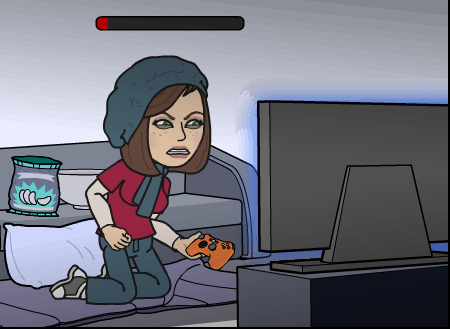
Top Tip: Studies have suggested that playing video games may be beneficial to improving concentration in ADHD.

sdgsd.PNG

Just because concentration can be a struggle however, does not mean that you can’t concentrate.

Interestingly, there occurs a concentration paradox in ADHD and autism known as hyperfocus- an intense form of concentration where you are completely absorbed by a task, something that I like to call “The Zone”. I’ll write a separate post on hyperfocus at a later stage 🙂

Aoife’s Top Tip: Applying specialist interests to tasks can encourage concentration. Last year I was struggling to write an essay for college, I found an angle that allowed me to write about Eurovision and suddenly I couldn’t stop writing! 🙂

In addition to my lapses in focus, I can also be a little bit hyperactive. Now, hyperactive doesn’t necessarily mean bouncing off the walls like a child high on sweets, it can also mean abnormally active.

I am quite a restless individual. On the outside, I may look like I’m staring at a wall, in my mind I could be designing a cake, a knitting project, writing a story or drafting a hypothesis. I once spent a train ride visualizing, staging and arranging a musical based on the music of My Chemical Romance!😂

I always have this need to be productive, even if it’s as simple as building my trophy collection on the Playstation or binge watching a TV series.

My brain never turns off!

If I’m excited enough, I do bounce around the place on occasion too 😉

Image result for wild child bouncing gif

But what’s going on in the brain that interrupts our concentration?

It is not clear what exactly causes ADHD in the brain, but remember neurotransmitters? (Inside the Autistic Brain, Autism 101-Sensory Processing, Autism 101- Digestive Problems)

Most current models point to low levels of the neurotransmitters Dopamine and Noradrenaline. Pathways involving these chemical messengers project to the striatum and prefontal cortex of the brain- areas which are responsible for executive function (i.e. memory, planning, organization, behaviour control etc.). If these neurotransmitters are out of sync, this will have an effect on these functions. As neurotransmitters are also dysregulated in the autistic brain, this would explain why ADHD so commonly occurs in autism.

ADHD, like autism, can’t be cured, but it can be treated with cognitive behavioural therapy (CBT) and medication in severe cases, however, the side effects of medical treatment for ADHD have been controversial, and long term usage studies have yet to be completed.

However, like autism, ADHD need not hold you back in life. Some of the most successful people in the world have ADHD, such as Sir Richard Branson, Justin Timberlake, Simone Biles, will.i.am, Russell Brand, Ryan Higa, Jamie Oliver, Jim Carrey and Solange Knowles 🙂

So to conclude Earthlings-

Wait! What was I saying again?! 😉

adhd no transparency.png

Have a good weekend guys!! 😀

Aoife

Blog at WordPress.com.

Up ↑