Autism in your social circle

Greetings Earthlings!

This week I’d like to talk about something that a lot of neurodivergents have observed in their social circle- that lot’s of our friends are also neurodivergent! Prior to my autism diagnosis, I did not have any friends on the spectrum, or so I thought… Over the past 11 years, many of my friends have sought or are currently seeking autism and ADHD assessments. In the last year alone I’ve had four friends seek my advice about getting diagnosed.

During my school years, I didn’t really have a core group of close friends; people just didn’t get me, nor I them. Going to university opened up an entirely new world, widening my social pool and enabling me to meet more likeminded people. I quickly found tribes of friends who were equally quirky with similar interests that I connected with on a level that I couldn’t explain. We would connect within minutes as if we had known each other our whole lives, feeling completely comfortable in each others presence, unknowingly unmasking.
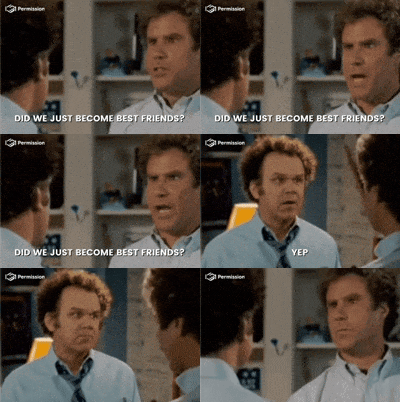
After my diagnosis, I slowly started to notice common autistic traits among my friends. At first I thought it was funny when friends would say the more they listened to me talking about my traits, the more paranoid they became that they had autism, but now I see the grains of truth. I’ve spoken about this with my neurodivergent friends and they have also noticed similar patterns in their social circles.

There isn’t really any research on this topic, but it seems that there is a general pattern of neurospicy birds of a feather flocking together. Autists tend towards sameness and familiarity, so naturally our social preferences also mimic these patterns. Studies have shown that friends tend to have similar brain activity patterns called neural synchrony- so on a biological level, we are designed to seek out minds that are similar to our own. In addition, studies have shown that our noses play an important part in forming friendships as we tend to gravitate towards people with natural scent profiles similar to our own. Given how autists are sensitive to smell, it’s fair to say that perhaps our nose is handpicking neurodivergent friends for us!

Hope you enjoyed this post dear Earthlings!

Have a lovely weekend! 🙂

Aoife

Autism in ‘Friends’?

Greetings Earthlings! 🙂

This week I’d like to take a quick look at some likely spectrum characters in the beloved TV sitcom Friends. Now I know what you’re thinking, autism was never mentioned during the 10 season run (likely due to a lack of general awareness of the condition during the 1990s), but many people have retrospectively noticed some autistic traits in the gang.

For those of you who have been living under a rock (or are so young you have yet to see the show), the TV series follows 6 friends in their 20’s/30’s living in New York, charting their friendship and the hilarious antics they get up to. Here’s a compilation video of the iconic intro across the seasons to give you a flavour of the show:

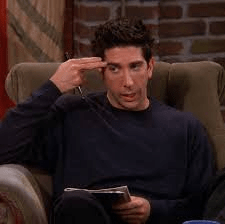
So let’s get to autism. First up- let’s take a look at Ross Geller (David Schwimmer).

Ross displays many traits of a high functioning autist. He’s a quirky, highly strung palaeontologist (do I smell a stereotype?) who is intensely passionate about science.

He is often socially awkward, misses out on social cues and sarcasm, moves with an unusual gait, and shows signs of sensory issues (he thinks that ice-cream is too cold). Ross is also prone to impulsive decisions, obsessive tendencies, and outbursts of rage that border on meltdown-like behaviour as you can see in the clip below.

Ross’s sister Monica (played by Courtney Cox) on the other hand, while not as overtly quirky as Ross, also displays some traits. Her OCD and control issues are often centre stage in the show with many comedic moments drawing from this. She can be an obsessive overthinker and fiercely competitive, often fixating on certain topics in her pursuit of perfectionism.

Her compulsive overeating in her teen years could also be considered an autistic trait. She may not be quite as neurodivergent as her brother, but she could fall under broader autism phenotype as do many siblings of autists. The iconic dance scene between the brother-sister duo really highlights their quirkiness and possible neurodiversity in their complete blindness at how ridiculous they look.

Finally, let’s take a look at the iconic Phoebe Buffay. Portrayed by Lisa Kudrow, Phoebe is the quintessential outsider displaying many autistic and ADHD traits. Brutally honest and hyperactive, she unashamedly marches to her own beat, completely oblivious to how others perceive her (or her terrible singing). She also flaps her hands an awful lot in the show and has been known to chew her hair in earlier seasons which are signs of stimming behaviour.

Interestingly, neurodivergent individuals tend to stick together in real life (I’ve spoken to many spectrum friends and you tend to subconsciously attract each other 🤣), which could explain why 3 out of the group of 6 display autistic traits. This is perhaps the most realistic aspect of autism that the show unconsciously portrays.

Now obviously we will never know if these characters are on the spectrum, but it’s still nice to see clearly neurodivergent characters marching to the beat of their own drum for us to identify with 🙂

Hope you enjoyed this post dear Earthlings! 🙂

Have a lovely weekend!

Aoife

Autism and Making Friends

Greetings Earthlings! 🙂

Today we’re going to talk about something that many autists find difficult-making friends.

When it comes to making friends there is no exact science, something which can trip up many a logically thinking autist.

It’s not that we don’t want to make friends, but we often struggle to navigate the social playing field, sometimes choosing our own company to avoid the various trials and tribulations of social interaction.

There are no set rules when it comes to friendship, and we just can’t seem to wrap our brains around it.

Image result for how not to make friends

In my own experience, I found that connecting with my peers was a real barrier to formulating friendships in school. We had different tastes in music and film, were interested in different hobbies, wanted different things, held opposing beliefs etc. I found it really challenging to find common ground to converse on.

Making friends isn’t the easiest of tasks, but there are some things that I’ve learned over the years to make the process a little less challenging :

  • Take classes- I found that dance classes were a great social outlet as a child. I partnered up with different children, got invited to a lot of birthday parties (although I have many memories of wandering off to be by myself! 😛 ) and it helped with my coordination. Speech and drama classes can also be very useful in helping to build your confidence and social skills.
  • Try to find common ground with your peers. When in conversation, ask the other person about TV shows, bands, films, sports etc. you may be surprised at what you have in common.
  • Don’t be discouraged if you’re struggling to connect with your peers- I was 11 before I truly made a lasting friendship, and it wasn’t until college that I finally felt that I belonged socially. The average school-goer can often be small minded when it comes to befriending people who dare to be different. While some amazing efforts are being made to de-stigmatize and embrace autism in the younger generation, there will always be some who rebel against difference. Forget the haters- there are so much better people out there who are worthy of your friendship 🙂

5284_583670671643597_310296445_n.jpg

  • Try not to compare yourself to your neurotypical peers- We all make friends in different ways, prefer different types and sizes of social groups. What seems to work for others may not work for you. Social mimicry may seem logical, buuuutt, it doesn’t always work.
  • Be yourself- As cheesy as it sounds, it’s true! 😛 I have spent many a year feigning interest in matters that I thought my peers would respond to, but when I stayed true to myself, that’s when I discovered true friendship. True friends love you for you 🙂

Image result for best friends know how weird you are

  • And if that all fails, you can always do what I do- bake to make friends! Nothing like a plate of home made sugary goodness to create a lasting impression 😉 Even if you burn it, you’ll still get a funny story out of it! As I’ve grown into adulthood, the stories of my many mishaps have become quite the conversation starter 😛 😉

If things don’t work out, don’t be so hard on yourself about it. Not all friendships are built to last. One of the biggest mistakes that I make is to hyper-analyse why a friendship breaks down in my efforts to understand where I went wrong to avoid future problems. Whilst yes, social lessons can be taken from past experiences, there’s no use in torturing yourself about it- you may not even have made a misstep.

Sometimes, these things just happen.

But that does not mean that you should not try again. The social complexities of formulating friendship can be overwhelming, but the reward is great 🙂

I have been so blessed in the friends that I have made in my lifetime, people who love and accept me as I am- even embracing my quirks.

Sometimes people are not always the most accepting of those who dare to be themselves, but that doesn’t mean that you do not belong socially. It took me years to find my pack, but in the end, I found my place 🙂

Image result for friendship memes

Have a great week everyone! 😀

Aoife

Blog at WordPress.com.

Up ↑