Autism and Snow

Greetings Earthlings! 🙂

Happy new year! 😀 As I am snowed in this week, I thought I would take some time to discuss this weather phenomenon and how it can have a ‘polarizing’ impact on autists❄️.

As I’ve discussed in previous posts, autists can be sensitive to temperature and changes in weather, so snowy conditions can be particularly triggering. Extreme cold temperatures and the added glare and brightness from our snow covered environment can be a real sensory challenge. Textural changes in our surroundings can also bring added challenges with new crunching sounds and the feeling of snow against the skin, not to mention the sensory impact of wearing many constrictive layers to combat the cold. There are also additional challenges for those of us who have coordination issues on slippery surfaces (I may have taken a tumble on walk with my dog the other day as a car was coming up the road straight at us🙈) as well as stressful routine disruption due to snow related travel restrictions.

On the other hand, many autists find snowy conditions to be a rather positive experience. They relish the peaceful silence that accompanies snowfall, muffling the often overwhelming noises of the world. Moreover, they view the time out from the hustle and bustle of every day life to be soothing. With dangerous impassable roads (especially in rural Ireland where we are not prepared for heavy snowfall), school, work and social plans are often cancelled, allowing autists to take some socially acceptable time out to retreat from the world. Having had an especially busy and socially heavy Christmas period, I have been particularly grateful for the weather this week as it has allowed me much needed time to recharge my batteries 🙃

Snow can also be a rich source of sensory stimulation for some autists. The simple tactile sensations of running in the snow, making snow angels, rolling snowballs and building snowmen can be soothing, with the added benefit of building your coordination, and spatial awareness skills.

Hope you enjoyed this post dear Earthlings!

Have a lovely weekend! 🙂

Aoife
Autism 101- Dyspraxia

Greetings Earthlings! 🙂

In continuation from a previous post exploring coordination issues and autism, I’d like to dedicate a specific post to the often co-morbid issue of dyspraxia.

So what exactly is dyspraxia?

Dyspraxia, like autism, is a neurodevelopmental disorder that impacts a person’s ability to plan and process motor movements. It may also be known as motor learning difficulties, perceptuo-motor dysfunction, developmental coordination disorder (DCD).

Some of the general symptoms of dyspraxia include issues with balance and hand-eye coordination, poor posture, problems with fine motor skills (like picking up and holding items like a pencil or tying shoelaces), clumsiness and issues with spatial awareness and perception. It can also cause learning difficulties, but it generally does not impact intelligence.

So how are autism and dyspraxia linked?

Dyspraxia is caused by errors in the transmission of motor messages from the brain to the body. The neurological basis for the coordination issues associated with autism is poorly understood, however, it’s believed that they occur through a similar pathway to dyspraxia. The synapse (or connecting junction point between two neurons) is thought to play a major role in motor coordination. Autist’s have an overabundance of synapses compared to their normally developing peers, so with a greater number of brain connections comes the greater potential for signals to get lost en route to their destination.

Motor learning and control is influenced by a specific group of neurons known as purkinje cells. Purkinje cells, (located in the cerebellum- an area heavily involved in motor control), receive signals from climbing fibers- a type of neuron which carries information from the body to the brain. These climbing fibers detect changes or disturbances in our environment, such as changes in space or the position of nearby objects, and relay this information to the purkinje cells. Purkinje cells then emit inhibitory signals at synapses so to modify motor movements accordingly. In autism however, the efficacy of purkinje cells to influence motor change is greatly reduced.

Normally, each purkinje cell receives input from a single climbing fiber. As autists have too many synapses connecting the brain, the purkinje cell receives signals from multiple climbing fibers. This confuses the purkinje cell, which in turn alters the efficacy of corrective signals and motor movements veer off course.

In addition to this, dopamine deficiency is thought to disrupt motor learning at the synapses, which as I’ve discussed in many previous posts, is dysregulated in the autistic brain.

Roughly 80% of autists have issues with motor coordination, but not all will also have dyspraxia. It can be difficult to differentiate between the two conditions due to the high level of overlap in symptoms.

Hope you enjoyed this post dear Earthlings! 🙂

Have a lovely weekend!

Aoife

Autism and Gait

Greetings Earthlings! 😀

This week I’d like to discuss another lesser known aspect of the spectrum- autism and gait.

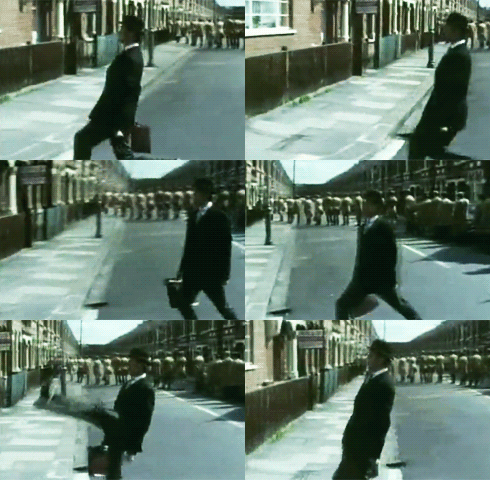
As I’ve discussed previously, coordination issues are part and parcel with autism, however, what you may not know is that these coordination issues tie in with an autists gait- particularly for those with Asperger’s syndrome. In fact one of the lesser known diagnostic criteria in the DSM-V is that of an odd or unusual gait.

New technologies are even using gait analysis as an early means of detecting autism:

I know it seems an unusual trait, (let’s face it, we rarely notice a person’s walk) but researchers have observed that autists can have greater or even reduced step and stride length, increased step width, have unusual posturing, tend to walk on their toes, and are lacking in “motor smoothness” when compared with their neurotypical peers.

So why is an autists gait so unusual? What does the science have to say?

Thus far only a few studies have investigated the underpinnings of gait and autism (although the association has been known for decades), but as usual, the evidence points back to the brain. There has been a lot of debate as to which region is responsible for gait differences, however there is evidence to suggest that neurological alterations in the cerebellum (regulates motor movement) and the basal ganglia (a group of nerves involved in voluntary control of motor movements) in autists are the likely culprits.

Furthermore, those autists who tend to toe walk can develop a leg length discrepancy which can also contribute to their odd gait. Gait issues such as this can have a negative impact on the body as this can shorten your Achilles tendon. Research shows that children with ASD’s tend to have a reduced range of motion in the knee and ankle when walking which may imply weakness around these joints.

It’s not all bad news however, as special orthotics can be used to help improve some of these issues.

bitmoji-20190521095540.png

Hope you enjoyed this post dear Earthlings! 🙂

Have a lovely weekend!

Aoife

Autism and Music

Greetings Earthlings! 🙂

Today I’m going to be exploring the benefits of music for people with autism.

We all know that feeling we get when we listen to our favourite songs- the rush, the rippling chills, the feeling that the music is physically running up and down your spine.

Image result for music gif

But what if I told you that music can do so much more than just entertain us?

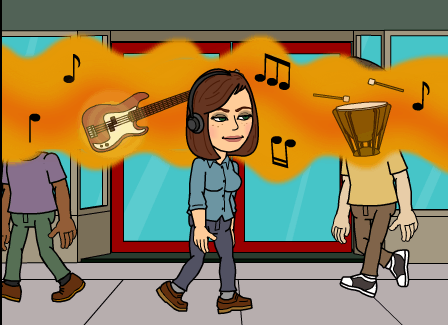
Research has shown that music therapy can greatly benefit people with autism by helping to improve social behaviours and interactions, focus and attention, coordination and spatial awareness in addition to reducing stress and anxiety. Music therapists aim to improve the wellbeing of their patients through music by encouraging singing, listening to, moving to and discussing music among other actions.

So how does music benefit the brain in this way?

The simple act of learning to play an instrument can greatly improve brain processing, fine motor skills and non-verbal reasoning skills. Interestingly, physical changes are taking place in your brain when you learn to play an instrument. As children grow up, the outer layer of the brain (the cortex) can grow thinner in certain regions which can lead to such issues as anxiety, depression and attention difficulties. Evidence suggests that learning to play an instrument however thickens the cortex in areas associated with emotional processing, executive functioning, and impulse control– functions that are affected in many people on the spectrum.

bitmoji1128635568

Studies have also shown that the vibration of music can help to stimulate and improve brain and muscle function in patients with Alzheimer’s and Parkinson’s!

Recent evidence suggests that dopamine plays a role in the brains response to music. As I’ve discussed in previous posts, dopamine regulates emotions and mood. Researchers have found that music encourages dopamine release and positive mood changes, whereas noise exposure negatively impacts mood. As dopamine levels are out of sync in people with autism, music could really help our brains to better control mood swings and improve emotional processing.

In my own life, music has been highly beneficial to help process my emotions.

I have had a lifelong passion for music. The riffs, the vocals, the lyrics- there’s nothing quite like it! Music has always held a special place in my heart, but especially the lyrics from my favourite songs.

As I’ve discussed previously, many autists struggle to identify and/or describe what they are feeling, a condition known as alexithymia (from the Greek meaning “no words for mood“). Many years ago, long before my diagnosis, in times of strife I found myself intensely drawn to music. The lyrics soothed my soul and calmed my mind allowing me to process the storm of emotion passing through. Whenever I could not make sense of my emotions, I could always find a song that would verbalize my struggles, and after a time, everything became a little clearer 🙂

eryhres

There we have it Earthlings! We’ve all felt the power of music, and the science shows it’s potential.

So grab your ipod and dust off your guitar this bank holiday weekend- your brain will thank you! 😉

Aoife

Autism and Driving

Greetings Earthlings! 🙂

Soooo….driving…

uyghl.png

Wouldn’t be high on my list of favourite activities I’ll admit! 😛 Stressful roundabouts, merging onto busy roads, idiot drivers, getting lost, the noise of hitting a pothole- it can be a lot for an aspie to handle!

My coordination issues did not make it the easiest of tasks to get the hang of, that’s for sure!

Coordinating pedal movements and gear changes, difficulties with spatial awareness, not to mention the stress and anxiety of learning to drive on country roads (Irish country roads tend to be narrow, winding, and full of potholes! 😛 ) made this a highly frustrating experience!

driving-gif.gif

I never could understand why I found it so hard to get the hang of driving when my sisters took to it so easily, but after I got my diagnosis, my struggles began to make a world of sense!

Driving would not be the first thing to come to mind when someone pictures the struggles an autist faces. In fact it’s a requirement in some countries that your ASD diagnosis be listed on your drivers licence if it impacts your ability to drive safely– you can even be fined in the event of an accident if it’s not stated on your licence!

Studies among autists actually report more traffic violations than in neurotypical groups, however, this may relate to our tendency to be more honest than our neurotypical peers 😛 😉

This doesn’t mean that autists shouldn’t drive, but it’s something to be aware of.

So how exactly does autism impact our driving?

ClumsyScaryArgusfish-size_restricted.gif

  • Impulsivity Autist’s are naturally more impulsive than neurotypicals. This can impact our driving by causing us to make poor driving decisions on impulse. It has also been reported that this impulsivity may influence speeding behaviours
  • Sensory integration/processing issues– Driving involves a huge amount of sensory input. Listening to the engine, watching the road, spatial awareness, not to mention unexpected road noises and unpleasant smells from the outside- it can be a lot for the autistic brain to process when moving a vehicle
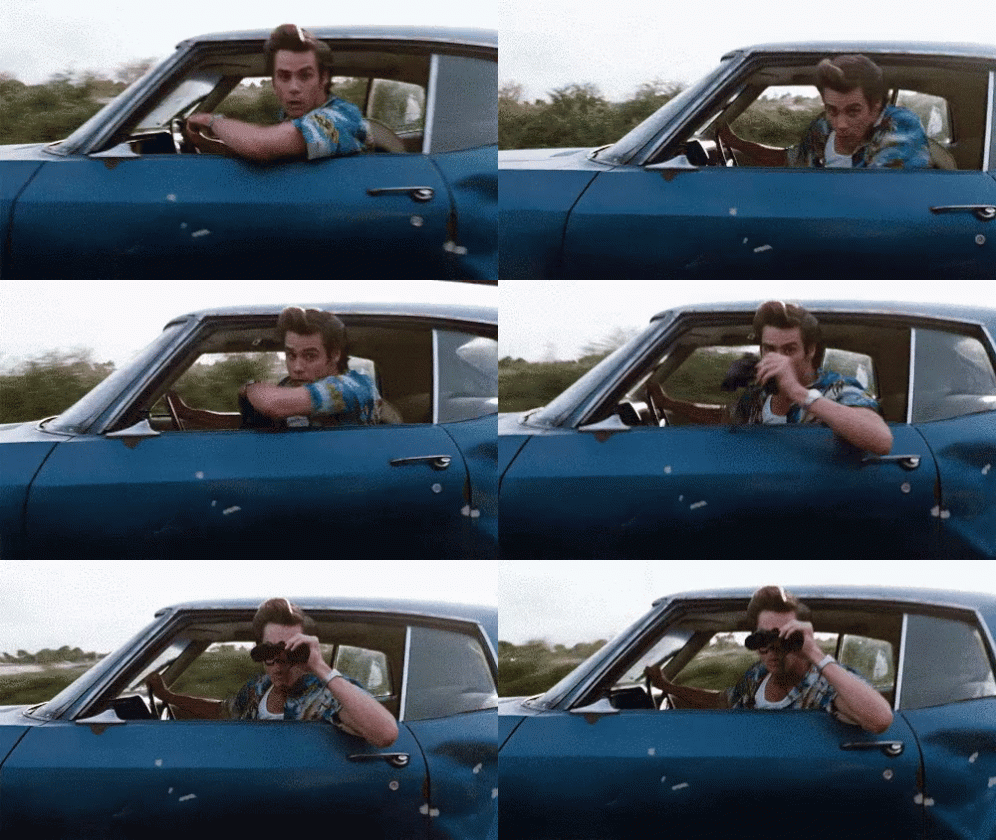
  • ADD & ADHD- Autists can get distracted quite easily…on busy roads where lot’s of things are happening, your focus can sometimes waver. If there’s a cute dog nearby, I have been known to take my eyes off the road…raw (2)
  • Spatial Awareness & Coordination Autists often have issues with these which can make it difficult in positioning the car on the road, parking and navigating gear changes. Spatial awareness was one of my greatest obstacles when first learning to drive. I always seemed to be veering towards the nearest hedge…When I first got my car, I was practicing driving around the house with no problems, aaannd then I decided to change direction- BIG mistake! My poor spatial judgement caused me to nicely scratch the car on the edge of the dog house…before getting it stuck on some cement blocks at the oil tank! Caused a mini shutdown which made my sister think I had run the dog over I was so incoherent!! 😛                                                                           fghd.png

Top tip for parents and instructors: PATIENCE!!!! Learning to drive is much more difficult for autists so don’t be too hard on us for when we don’t get it straight away. We’re already beating ourselves up for our slow progression; getting frustrated or annoyed with us will only make it worse.

Here are some useful links with driving tips for autists:

Click to access Driving1.pdf

https://sellmax.com/driving-with-autism/

Aoife’s Top Tip- Get a Sat Nav. They really help to take the edge off when stressed about driving to new and unfamiliar locations. If you mess up, it will recalculate and send you right in the end 🙂

Having autism may initially make learning to drive difficult, however, you will get there in the end 🙂 After two years of stressful practice, I passed my test first time and drive everywhere now.

The freedom you gain from this skill is worth the fight 🙂

bitmoji1810728188.png

Aoife

Blog at WordPress.com.

Up ↑