This week I’d like to discuss a topic that many autists struggle with- boredom. We all know the feeling, that mental itch that makes you want to jump out of your skin, but for autists boredom can be so much worse.
Many autists, especially those with co-morbid ADHD, crave constant stimulation. As a result, boredom occurs more easily than neurotypicals. A simple lack of interest in a topic, if a task is too easy, or feeling overwhelmed can trigger boredom and autists will tune out fast. When this happens, it can lead to negative behaviours where an autist will act out and be destructive and disruptive, it might even trigger a meltdown in chronic scenarios (I have had this happen in work following months of tedious tasks🙈).
Boredom has always been a challenge for me. I constantly need to be working on something. In school I often got in trouble for reading/drawing/writing during class as I would get ahead of my work and need to keep my hands busy while waiting for the lesson to move forward. If anything they should have encouraged my habit for productivity in my downtime! 🤷♀️
But what does the science have to say?
As I’ve discussed previously, autists have higher levels of stimulating neurotransmitters and lower levels of calming neurotransmitters, so their neurons are firing excessively in the brain. When they aren’t able to channel this excess stimulation into something, boredom takes over which can lead to negative behaviours that cause problems. Autists also have dysregulated levels of the neurotransmitter dopamine- the chemical involved in motivation, pleasure and reward systems. When dopamine levels are low, motivation is low, so when an activity is not enjoyable, autists won’t have the brain power to engage and boredom will set in.
On another level, there have been reports from doctors claiming that FMRI scans of ADHD brains show that areas of the brain associated with pain light up when they experience boredom, suggesting that boredom might actually be a painful experience for neurodivergents. However, other neuroscientists have refuted this claim as the human pain response largely remains a mystery, so making this assumption from the data is a bit of a stretch.
You can imagine my surprise this week to discover that I have never written a post about overthinking and autism!
Before I was diagnosed, overthinking was probably one of my strongest autistic traits. My brain was often compared to a washing machine set on high spin going round and round and out of control. I analyzed every single detail of my life, rehearsed potential conversations and social scenarios (usually catastrophizing them), and mentally abused myself daily with self critique. I would spend hours on the pillow staring into space unable to sleep as my mind raced out of control. My brain would be going so fast my head would be on fire on the pillow with all the heat generated from my neural activity!
Granted, I still have a tendency to rehearse and think through scenarios from multiple angles, but I find it much easier to rein in the horses before they start to race. Knowing why my mind works the way it does was a huge help, enabling me to be much kinder to myself, but also firmly stop the thoughts when needed.
But are there any scientific explanations for why we overthink?
There are a number of potential reasons why autists overthink. Sensory sensitivities and social anxiety may trigger overactive thoughts as an autist tries to process overwhelming stimuli and social interactions. As autists can be quite detail oriented and rigid in their thinking, it can also be hard to pivot from certain thoughts leading to overthinking. On another level, overthinking could have a physical cause in the way our brains are wired. As I’ve discussed previously, autists have too many synapses (connections between neurons where information is exchanged) so the brain is over-connected. With so many extra connections and ways information can travel, perhaps over-connectivity could be contributing to the issue of over-thinking.
So is there anything that can be done to manage it?
Here are some of my top tips for reining in your racing thoughts:
Weighted blanket or a weighted plushie– weighted blankets have been a game changer in helping me to sleep at night. They are scientifically designed to dampen the chemicals that stimulate your brain so less stimulation means less racing thoughts
Keep your hands busy– diverting all your nervous energy from your brain to your hands is great to slow your thoughts. I took knitting back up in college to try to slow my mind and found it immensely therapeutic. I was so busy concentrating on what my hands were doing that my brain didn’t have any capacity to think about anything else. Similarly, I’ve found sculpture and cake decorating have the same effect, so get your hands stuck into a project!
Exercise– is there anything a good walk can’t cure? Exercise can be great to help manage overthinking. I find that spin classes are great to switch off as you have to concentrate so completely on the task you don’t have any space in your head for anything else
Talk it out– discuss some of your thoughts with a friend or family member. A problem shared is a problem halved. I buried so many negative thoughts for so long my mental health suffered greatly, but things got so much easier once I started to talk through my problems. You don’t need to shoulder your struggles alone
Write it out– similarly, writing out your thoughts can be very therapeutic. I’ve often found that the simple act of getting my thoughts on paper was enough to get them to leave my head
This week I’d like to discuss autism in one of my favourite teenage book series ‘The Princess Diaries‘ (we won’t go into the films- they deviated too much from the books and Anne Hathaway comes across more adorably awkward than autistic).
So what are the books about?
The books focus on American teenager Mia Thermopolis and her discovery that she is secretly a princess to the small European principality of Genovia. Mia keeps a diary to help process her feelings in the wake of this massive revelation, whilst also navigating the ups and downs of school life, teenage crushes, bullies, self image and self-discovery. Two later books geared at the adults who grew up with Mia document her royal wedding and experiences of quarantine life during the Covid-19 pandemic.
But what about autism?
Now here’s where things get interesting. Reading these books was probably the first time that I had ever heard of Asperger’s syndrome (the original series was written pre-2013 when Asperger’s was still a separate diagnosis). Mia is assigned to do a report on the condition in psychology class in book 5 ‘Princess in Pink‘ (or ‘Give Me Five ‘ as I knew it), quickly identifying with many traits, and subsequently diagnosing herself and everyone in her social circle. However, her mother reminds her that she thought she had Tourette’s syndrome during her previous assignment, brushing away her fears and never mentioning autism again. Her mom does suggest that Mia’s best friend Lily might have Aspergers- which is likely, but in my opinion Lily tends to veer more towards narcissism than spectrum.
Princess Diaries author Meg Cabot
So is Mia really autistic?
Despite being brushed off by her family, I (and many other autistic readers) believe that ironically Mia is quite likely on the spectrum. I always identified with Mia and saw a lot of myself in her. Tomboyish and nerdy, she always marched to her own beat (in spite of her bullies), but struggled to fit in outside her close knit friend group. She’s a highly sensitive over-thinker with a tendency to catastrophize and create scenarios in her head out of nothing. She obsesses over the minutia of how the world perceives her and the social pressures and expectations of society (she spends several books overthinking about her readiness for physical intimacy and what is expected of her), often describing herself as a ‘freak’ who wants to be normal. An avid writer, Mia journals everything in detail, her thoughts often resonating with ADHD thinking. Moreover, she is quite drawn to smells like her brothers head and her boyfriend’s neck, feeling calmer after she has sniffed these- something that many autists can relate to. She also tends to look to romantic comedies and romance novels for how relationships should play out- something that many experts have noted autistic women do.
One moment in particular stands out to me with the hindsight of my diagnosis. In the 6th book Princess in Training (Sixsational in the UK/Ireland), Mia completely cracks under the pressure of her princess duties, running for student council, her first ever B in English, and her paranoia that her boyfriend will break up with her as she’s not ready for sex. After seeing her grandmother handing out pens in school for her presidential campaign, she freaks out, starts throwing the pens and completely breaks down crying and is hauled off to the nurses office, an incident the nurse described as “a crying jag”. This seems far more like a classic meltdown to me. Moreover, there are many more instances of things like this where when things go wrong, Mia goes into flight mode running off with her diary to her fire escape, the school roof, abandoned stairwells and spends an awful lot of time in bathroom stalls mirroring my own responses to upsetting situations as a teenager.
Some readers however were not happy about Mia’s assumption that everyone she knows has Asperger’s. Meg Cabot has apologised on her blog for any pain caused by this as she was trying to portray how Asperger’s can be so diverse in it’s symptoms and how we all have traits, but was mainly trying to show the phenomenon of thinking you have the disease you’re reading about. On another level, I think this is really interesting how Mia keeps seeing it in her friend group as quite often neurodivergents tend to gravitate towards each other (a number of my friends have sought autism/ADHD diagnoses as adults), so it’s fair to say her friends likely do have many autistic traits.
Not much was widely known about the female experience of autism back when these books were written, but it’s a pretty accurate depiction, however unintentional.
This week we’re really going through the looking glass to discuss the notion that nonverbal autistic people have telepathic abilities- a supernatural superpower.
Give me strength!
So where has this notion come from Aoife?
Over the last few months, a podcast called ‘The Telepathy Tapes‘ has been getting a lot of online attention claiming to showcase scientific evidence that nonverbal autists are telepathic. Experiments based on the theories of former psychiatrist Diane Hennacy Powell were conducted where parents and children were separated and shown images, numbers, words etc. and the child used tools to communicate what was shown to their parent, supposedly with 95% accuracy. The podcast also claims that autists can predict the future, see dead people, heal people and meet others in some sort of subconscious plane called ‘The Hill’ (buuutt I’d be here all night if I was to delve into those claims🙈).
But are autists really telepathic?
Whilst I haven’t personally listened to the podcast (as one does not have 10 spare hours to indulge this notion 😛), the feedback from the scientific community has condemned the experiments as pseudoscience. Experts have looked at the videos shown in the podcast (which are conventiently hidden behind a paywall) and it seems that the pseudoscientific rapid prompting method (which I have discussed previously) was used to help the children communicate. This method requires the facilitator to hold a letter board and ask the subject to spell out the answer to a question, but the results can be easily manipulated (either consciously or unconsciously) by directing the board in a certain way or prompting the child to give the answer in other ways.
In the video clips some researchers noticed the parents visibly prompting their children to give the right answers. In one case a child gave the right answer when tested with her mother (who showed signs of prompting behaviours) but they could not replicate this result when tested with her father. This is really reminiscent of an episode of the Simpson’s where they thought Maggie was a genius, but Lisa was subconsciously giving her answers.
From another perspective, these results could also be explained by some autists excellent pattern recognition skills, observational skills and neurodivergent ways of thinking that allow them to make conclusions that may appear like extrasensory perception (ESP). Many of us autists may appear to have somewhat of a sixth sense for predicting the outcome of a TV show, finishing sentences or guessing quiz answers- but it’s all educated guesswork. Even premonitions can be explained by our tendency towards overthinking and imagining all possible scenarios in a situation. I once had a premonition that I might sit on a pile of caramel squares that were setting on a chair in my kitchen while I cleaned. It seemed like a mad notion when I thought it, but of course I did end up sitting on them in the end while distracted 🙈. No superpower about it, I’m just really good at predicting potential pandemonium from years of analyzing my mistakes 😜
The credentials of anti-vaxxer Diane Hennacy Powell are also a little bit sketchy. She claims her medical license was suspended in response to her research and reinstated based on the results, buuuttt the truth was actually related to her medical practices including poor paperwork, boundaries, medication management and response to serious patient symptoms. In light of this, one would seriously question how reliable her research practices are. The field of parapsychology research (i.e., the study of psychic and paranormal phenomena) is a very dubious discipline with results that are difficult to replicate. Flaws and weaknesses have been found in every single study that has every been conducted in this field over the last 200 years. You can read more about the telepathy tapes and how unreliable parapsychology experiments are here https://www.mcgill.ca/oss/article/critical-thinking-pseudoscience/telepathy-tapes-prove-we-all-want-believe.
While there are many things we cannot explain in this life, it seems fairly clear that autists are not telepathic.
Happy new year! 😀 As I am snowed in this week, I thought I would take some time to discuss this weather phenomenon and how it can have a ‘polarizing’ impact on autists❄️.
As I’ve discussed in previous posts, autists can be sensitive to temperature and changes in weather, so snowy conditions can be particularly triggering. Extreme cold temperatures and the added glare and brightness from our snow covered environment can be a real sensory challenge. Textural changes in our surroundings can also bring added challenges with new crunching sounds and the feeling of snow against the skin, not to mention the sensory impact of wearing many constrictive layers to combat the cold. There are also additional challenges for those of us who have coordination issues on slippery surfaces (I may have taken a tumble on walk with my dog the other day as a car was coming up the road straight at us🙈) as well as stressful routine disruption due to snow related travel restrictions.
On the other hand, many autists find snowy conditions to be a rather positive experience. They relish the peaceful silence that accompanies snowfall, muffling the often overwhelming noises of the world. Moreover, they view the time out from the hustle and bustle of every day life to be soothing. With dangerous impassable roads (especially in rural Ireland where we are not prepared for heavy snowfall), school, work and social plans are often cancelled, allowing autists to take some socially acceptable time out to retreat from the world. Having had an especially busy and socially heavy Christmas period, I have been particularly grateful for the weather this week as it has allowed me much needed time to recharge my batteries 🙃
Snow can also be a rich source of sensory stimulation for some autists. The simple tactile sensations of running in the snow, making snow angels, rolling snowballs and building snowmen can be soothing, with the added benefit of building your coordination, and spatial awareness skills.
This week I’d like to take a lighthearted look on whether or not our favourite bearded man may in fact by autistic- yep, I’m talking about Santa Claus!🎅
I know it seems crazy but hear me out, as many people have observed Santa’s autistic traits:
Restrictive diet– Santa’s diet is known for being very fatty and restrictive, mainly consisting of milk, cookies and other holiday treats like mince pies. Many autists can relate to this tendency towards beige foods
Christmas is his specialist interest– For us mere mortals Christmas comes but once a year. Santa’s entire life however, revolves around this single calendar day and his efforts to make it the best day possible for children all over the world
Tendency towards sameness and routine– Santa wears the same clothes day in day out which are loose fitting and comfy (which could be indicative of sensory issues). Moreover, his choice of red clothing is interesting as red is a colour often dismissed by autists, meaning he could have diminished sensitivity to the colour red making it an ideal colour choice for someone with colour sensitivity. Santa also works on the 25th of December every year without fail, completing the same working routine in children’s homes across the world
Black and white thinking/rule orientated– Naughty and nice list, need I say more?
Repetitive behaviours– Lining up and naming out his reindeer over and over, repeatedly saying Ho Ho Ho, and checking the list twice are all classic repetitive behaviours
Avoids social interactions/unaware of social rules– He slips into our homes in the dead of the night, but never engages with us, just get’s the job done and moves on to the next house. Similarly, he is completely oblivious to how casually breaking into someone’s home to deliver presents in the middle of the night isn’t exactly a socially acceptable behaviour 😂
Santa is an introvert– Santa prefers to live in his own space in the North Pole far away from the prying eyes of the world with only Mrs Claus and the elves for company
Creative thinker- When the whole world bullied Rudolph for his nose, Santa found a way for him to be useful, highlighting neurodivergent creative thinking at it’s finest
So there you have it Earthlings- do you agree that Santa might be one of the most famous autists in the world? 🤔
Wishing you and yours a very merry Christmas and every blessing for 2025!
Leading on from my previous posts about autism and animals, alpacas, and assistance dogs, this week I’d like to discuss a concept that has been floating around the neurodiversity reels on social media- “animal whisperer autism”.
There have been a number of reels floating around where autists claim to have “animal whisperer autism” and not “good at maths autism”, and I have to admit this sums me up in a nutshell 😂 I have always had a love and affinity with animals that has become increasingly apparent in recent years. It’s gotten to the stage lately where random dogs have pulled their owners towards me for snuggles walking down the street! 🙈
It’s not just dogs, all kinds of animals just tend to gravitate towards me- when I’m out walking my dog the local horses, cows and sheep all come up to the gate or follow along beside us in the field as we go. Once I was pulled out of bed to herd some cows that had escaped into our field (I’ve never herded cows in my life), I just walked up to them and they all randomly formed a line in front of me 😂🐄
But is there any explanation for our animal magnetism?
The evidence for this phenomenon is mainly anecdotal, so it’s not an easy one to explain. As I’ve discussed previously, animals have a calming influence on autists, so it’s possible that animals are responding to that calm- like a mutually shared vibe. In addition, studies have shown that some autists have an altered fear response wherein they show less fear than neurotypicals in a scary situation, so where many people might feel nervous around animals, an autist might not have that same fear.
Other explanations could be linked to our intuition and keen observational skills. Temple Grandin, one of the most famous autism advocates, is a leading livestock expert with particular expertise in the area of animal handling. Her observations on animal behaviour and their interactions with their environment have revolutionized humane animal treatment- the ultimate animal whisperer. With animals, there are no confusing social rules or games, so it’s easier for an autist to understand them.
Another wild explanation could be linked to body odour as different smells can control social behaviours. Studies have linked body odour to imitating behaviours in autists where an autist imitates the behaviour of their family in response to smell. If we were to apply this observation to animals, perhaps autists are becoming animal whisperer’s through imitation behaviours where we are subconsciously learning how to socially interact with animals through smell. In other words, the animals could be teaching us how to communicate with them!
However, some autists impaired perception of body odours causes them to misread social cues, so maybe this one is a long shot (or this group are not of the animal whisperer autism persuasion 🤷🏻♀️).
Maybe one day researchers will investigate this phenomenon properly. Who knows, maybe there’s a genetic mutation that makes us smell better to animals or some other random biological phenomenon that makes us irresistible to our feathered and furry friends? 🙃
This week I’d like to take a look at the neurodivergent character Elsbeth Tascioni, a character that I have been watching for years, first as a recurring guest on The Good Wife and it’s spin off The Good Fight, and now finally in her own show Elsbeth. Played by Carrie Preston, Elsbeth is a quirky, unconventional lawyer who has been assigned to oversee the NYPD as part of an anti-corruption decree, but quickly finds that she has a knack for solving murders! Unlike conventional crime solving dramas, we see the whodunnit portion at the start of each episode, refreshingly sitting back to watch how Elsbeth is going to catch her killer (spoiler alert- she always does🙃).
So to autism- how does this show fare?
Whilst this is another show that does not directly label their lead as autistic, Elsbeth certainly displays many traits of autism and ADHD, with many autistic fans praising the show for a positive female depiction of neurodivergence and executive dysfunction. She is an endearing, unique and highly eccentric character marching to her own beat at all times, never caring what anyone else thinks. Whilst Elsbeth doesn’t tend to display signs of sensory issues, she is often oblivious to social cues, overstepping boundaries, talking about unusual subjects and regularly making people uncomfortable (I mean she’s trying to catch killers- cages need to be rattled 🤣).
She get’s distracted very easily by shiny objects and other items of interest to her, going off on tangents mid conversation and explanations, floating around in her own little bubble without any notice of how the world perceives her. What I particularly like about Elsbeth is how she notices details that no one else does, a trait which makes her incredibly adept at crime solving. Too often we focus on disability, but this show really drives home the unique skills that neurodivergents can bring to the workplace. Elsbeth’s tendency to get distracted at first appears problematic, but it is this eye for detail that makes her an excellent detective. She’s constantly underestimated by her peers for her quirkiness, but always shows her worth by the end of each episode, proving there is method in her perceived “madness”.
Autistic or not, Elsbeth is a delightful and refreshing take on the crime solving drama genre, and I highly recommend it for anyone seeking a wholesome, easy watch- you will leave with a smile on your face for certain 😀
Following a recent messy meltdown whilst wearing a full face of makeup (a late night car clamping situation 🙈), this week I’d like to discuss some of my must have products if you want to meltdown proof your face 🙃
If you’re anything like me when a meltdown hits, your eyes unfortunately betray you, tears cascading down your face, often destroying the makeup you spent ages applying that day! On one particularly bad occasion, I had a minor meltdown from the frustration of my car failing it’s NCT, and within seconds my eyes formed pools of congealed black mascara…😂
As such, I now invest in higher quality makeup that can withstand a good cry! Here are some of my top products to meltdown-proof your makeup:
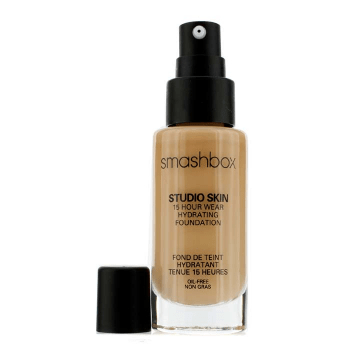
Smashbox Studio Skin- this is my go to foundation (on the few occasions I choose to wear it). It’s lightweight, but buildable and most importantly, durable. Once set, it will barely budge. You won’t find tear track marks down your cheeks from the slightest leak. I once wore this to a Green Day concert where it drizzled for the evening. While some did naturally come off in the rain, by 3am my makeup still looked intact 💪 If you want a day time foundation with SPF, I can also recommend Max Factor’s Facefinity (although I’m not the biggest fan of the smell)
Benefit’s Bo-oing concealer- this industrial strength concealer can hide a multitude of blemishes and truly lasts against the tide of tears. I also highly recommend YSL’s Touche Éclat concealer for touchups after a meltdown. I often carry this concealer pen in my handbag for nights out as its precision head is ideal to fix any dark smudges round your eyes if your makeup fails you
Urban Decay Naked Eyeshadow range– These eyeshadow palettes are a must have. They have great pigment and longevity when paired with a decent eye-primer, and won’t run off your face during a meltdown
Victoria Beckham Satin Kajal liner- this eyeliner pencil has been going viral the last couple of years and for a good reason! It’s creamy, waterproof, smudge free and the pigment will last all day, even against an unexpected flood of tears
Charlotte Tilbury Exagger-Eyes Mascara– and now to the heaviest hitter. The new Exagger-Eyes Mascara has been going viral in recent months and I am here to tell you to believe the hype! It’s smudge proof, humidity proof, flakeproof and clump proof, that can last through sweat, tears and meltdowns! I have even worn this during a spin workout and it did not budge one bit. Word of caution though, if you are spraying a setting spray after applying, make sure that the mascara has dried or else you will find yourself with black rings under your eyes🙈 I also highly rate Benefit mascaras. I started wearing these shortly after my diagnosis and they have survived many a meltdown- there’s a very good reason that Benefit’s mascara range is one of the top sellers in the world. For an everyday option, I recommend their waterproof Badgal Bang- great volume, great pigment and takes industrial strength remover to scrub off 😂
Pro-tip– Avoid NYX Worth the Hype mascara. Worth the hype it may be in terms of look… but that’s exactly the brand I was wearing in the meltdown I described at the beginning 🙈 They have since brought out a waterproof formula though, so if you must wear that brand, make sure to get the waterproof one 🙃
Hope you enjoyed this post dear Earthlings! Never let a meltdown get in the way of looking fabulous 😎
Naturally, no one likes to be criticized, but with autists criticism can be quite devastating. As I’ve discussed many times, autists are black and white thinkers so when criticized, even constructively, we don’t tend to see the positives. Things are wrong and right, so if a mistake is made or an error pointed out, then it’s not just this one tiny thing that’s wrong, we perceive everything about us to be wrong. This can be particularly problematic in an educational setting where constructive criticism is essential to the learning process.
I found criticism particularly difficult in school. As a high achiever, it was a very bitter pill to swallow when I made a mistake. To this day I still cringe about the time I confused Lee Harvey Oswald and Mark David Chapman (I mean they were both high profile assassinations after all, it’s an easy mistake!) and had to embarrassingly hang my head after eagerly waving my hand around like an eejit to answer 🙈😂
In particular I struggled with constructive criticism when it came to art. It was one of my favourite subjects at school, but I was always butting heads with the teacher every time she tried to provide me with constructive feedback to the point that she felt she couldn’t give me any feedback at all based on my reactions. My parents had words with me, but while I adjusted my attitude as best I could, my teacher and I were at odds right up ’til the end of school as neither of us could seem to see the other’s perspective.
When it comes to education, this sort of relationship doesn’t help anyone. The teacher was frustrated with me, I was upset and frustrated with her, and my creative education was suffering as a result. While it is difficult for an autist to deal with constructive criticism, there are some ways to manage the situation.
Time and place– Be conscious of the situation and environment. Autists are often hyperaware of their differences, so you don’t want to make a scene in front of their peers that will only add to their distress. Moreover, you need to consider the timing and state the student might be in to avoid conflict. In one particularly memorable moment during my leaving cert (Irish state exams to get into university), my teacher attempted to question my approach and design for my piece DURING MY FINAL EXAM. Naturally in my stressed state, I had a moment and quite loudly gave out to her for disturbing me during my exam! Pick your moments carefully- and try not give feedback in a test setting 😛
Be specific– Don’t give vague feedback on areas for improvement. We need specific, concrete advice, otherwise we will catastrophize and drive ourselves demented wondering ‘What did they mean by X?’, or we may invest time working on the completely wrong thing. Don’t say ‘Your essay needs improvement’. Tell them they need to make it longer, include quotes, better spelling and punctuation, make a plan etc. When I worked in a lab and my experiments kept failing, each day for several weeks I was told ‘Not good enough‘, but no one took the time to sit with me and find out that I was missing one step every time (a step that they had failed to include in my instructions). All I knew was that I had failed and had to try and blindly figure it out on my own, which didn’t help anyone. I kept failing, they kept getting angry and my education suffered. Like any construction project, constructive criticism requires clear instructions
Focus on solutions, not problems– Similar to the previous point, focus on problem solving when giving constructive criticism. If the focus of feedback is all negative, this will likely overwhelm the student and trigger a meltdown (especially if they suffer from RSD) and they will learn nothing
Compliment sandwich– Lead with praise, deliver negative feedback, and close with praise. This can help to soften the blow for an autist making it clear that they didn’t exactly go wrong, but improvements can be made. This piece of advice is not just for those teaching an autist, but can also be useful for an autist who has to deliver constructive criticism to avoid complete bluntness and seeming lack of empathy . The TV show The Good Doctor used this technique to help autistic doctor Shaun Murphy educate his new autistic intern





















 A Is For Aoife Not Autism