Autism in Doctor Odyssey

Greetings Earthlings! 🙂

This week I’d like to discuss the recent depiction of an autistic character in the medical drama Doctor Odyssey.

For those who haven’t seen the show yet (not that I’d recommend it, I mainly stuck with it for closure on how the series ended 🫠), Doctor Odyssey follows Max Bankman (played by Dawson’s Creek alum Joshua Jackson) who has just taken a job as the on-board doctor for the luxury cruise ship ‘The Odyssey’. This overhyped drama from producer Ryan Murphy (known for Glee, American Horror Story, Monsters and 9-11) was 90% unrealistic rubbish, BUT it did provide us with a somewhat true depiction of autism.

During episodes 9 and 10 of the first series (which by current reports seems likely to be it’s last 🫠), the ship receives a distress call from a group who’s charter ship sank after a shark attack. Among the rescued is first mate Ray (played by AuDHD actor Liam Johnson), a straight talking, literal thinking, awkward autist who is a little out of sorts on the ship as his routine has been disrupted following the shark attack. Following a rocky start after inadvertently annoying staff on the ship, Ray quickly becomes an asset using his mathematic and marine skills to chart the quickest course to port, in addition to advising the ships captain when The Odyssey is besieged by a pod of orcas (as if the sharks weren’t enough…).

Now while Ray’s onscreen traits and manner are relatively stereotypical (there’s a lot of scenes about sound sensitivity around using sound cannons and fireworks to get rid of the orcas), what was refreshing was how the show chose to depict him as a handsome, stoic, naval character. When men are depicted with autism, they are generally overtly nerdy, skinny, outcasts working in some form of STEM, but here we find a jock-esque first mate confidently navigating the seas, showing us all that with a little support and understanding, autists can do anything they set their mind to.

All in all, while the show is rather far fetched, it does sort of get autism right (though I still wouldn’t recommend watching it- stick with The Pitt and The Good Doctor 😉).

Hope you enjoyed this post dear Earthlings!

Have a lovely weekend!

Aoife

Autism in ‘Grey’s Anatomy’

Greetings Earthlings! 🙂

I’ve recently been re-watching clips from medical drama ‘Grey’s Anatomy’ on Facebook, and came across some old episodes featuring a doctor with Asperger’s syndrome. As I watched these episodes prior to my diagnosis (and never made any connection to my own experiences), this week I’d like to take a closer look at Dr. Dixon and the depiction of autism.

For those of you who are unfamiliar, Grey’s Anatomy is the longest running primetime medical drama of all time (entering into it’s 21st season in the coming weeks), following the personal and professional adventures of Dr. Meredith Grey through her surgical internship (and beyond).

In 2008 during it’s 5th season, the show introduced the character of Dr. Virginia Dixon for 3 episodes- a renowned heart surgeon with Asperger’s syndrome. This was perhaps the first on screen depiction of autism I had ever seen, and it’s easy to see why I didn’t connect with the character at the time.

Despite being a woman with autism (which given this was 2008 was quite progressive), Dr. Dixon’s character has been completely panned by the autistic community and branded as difficult to watch. She’s highly stereotyped with a high IQ, monotone voice, no social skills, rule oriented and completely emotionless– a particular pain point for misunderstood autists everywhere. In addition, the stereotyping isn’t even consistent with how most autistic women present as she doesn’t make any attempt to mask her differences whatsoever. A lot of autists were particularly irked by a scene where Dr. Dixon has a complete meltdown after a patient excitedly hugs her. Given that she is a high functioning adult with autism, her response to the incident has been seen as completely over the top given that most of us by this age have adapted coping mechanisms to deal with these sorts of situations.

Here’s a video with some clips of Dr. Dixon in action:

I personally didn’t find issue with the episodes when I initially watched the show, but given what I now know about autism, I would have to agree with the community. While I can appreciate the attempt to raise awareness about the condition, it really wasn’t handled the best. I found it particularly irksome during the meltdown scene, as when a fellow doctor was asked to hug Dr. Dixon to help calm her, she made a quip about giving a thorazine shot instead (a common anti-psychotic medication). Autists aren’t crazy, it’s just a different operating system 😒.

All in all, it will not be taking a spot on my recommendation list. Great show, bad autism.

Hope you enjoyed this post dear Earthlings!

Have a lovely weekend! 🙂

Aoife

Autism in ‘Geek Girl’

Greetings Earthling! 😀

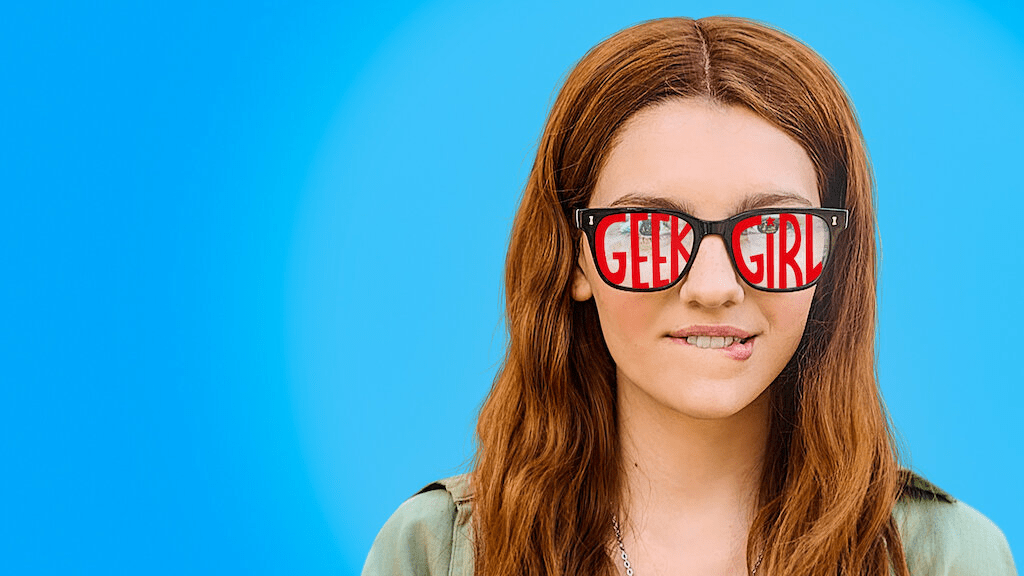
This week I’d like to talk about the new young adult series Geek Girl on Netflix (they’re really on the ball with neurodiversity the last few years!) and it’s accurate depiction of the struggles of an autistic teenage girl.

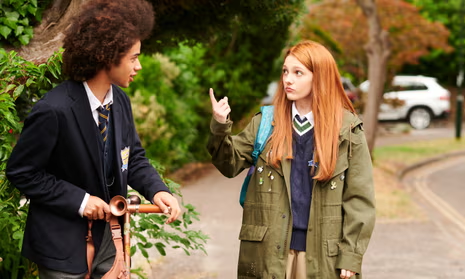
Based on the Geek Girl books by Holly Smale (which I have purchased and will write about eventually), the series follows awkward “geek” Harriet Manners who’s life completely changes after being scouted by a modelling agency. Mercilessly bullied at school, she sets out on her modelling journey to reinvent herself. You can check out a trailer for the series here:

But you haven’t mentioned anything about autism yet Aoife?

So- the author Holly Smale wrote these books based on her own experiences of being an awkward teen model, BUT Holly was diagnosed with autism at the age of 39 and has retrospectively described Harriet as autistic. As such, it seems that the TV series is planning to incorporate an autism diagnosis down the line, as lead actress Emily Carey is autistic, and there have been many hints to her neurodivergence including a conversation between her agent and her father about seeking a professional and not wanting to label her.

So what did I make of the show?

Well I absolutely loved it- a lovely wholesome show with an authentic portrayal of neurodivergence, I was hooked! Harriet’s autistic traits were subtle (as they are for most high functioning autists)- stimming, coordination issues, minor issues reading social cues etc. What really sets the series apart from others though is Harriet’s narration. We get to see her internal monologue, how she thinks and processes, which really helps to give an insight into what we autists go through on the inside (though I will say that my internal monologues speak waaaaaaay faster than Harriet’s 😂). Harriet’s friend Toby is also clearly on the spectrum, albeit he presents far more like the traditional autistic oddball that we often see in media depictions of autism- which while a little stereotypical, really helps to show how different male and female presentations of autism can differ.

One of the other things I found most interesting was how Harriet’s dad also appears to be neurodivergent. He seems to struggle with work, is quite nerdy and eccentric (he drives Harriet to school in his PJs one day) and is described by his wife as very childish. At one point during an online job interview his wife holds up flashcards for him coaching him on what to say, reminding me of how people have tried to guide me in certain social situations. Very often with on screen portrayals of autism we focus on the child or the oddball single adult, we don’t tend to see neurodivergence in the wider family like between parent and child 0r other spectrum siblings. Autism is highly genetic with many parents discovering their neurodivergence after their child is diagnosed, and there can often be multiple autistic children within a family (I once came across a family with 5 sons on the spectrum).

My one criticism, again like Dinosaur, was Harriet’s stereotypical love of dinosaurs and desire to be a paleontologist, buuutttt as a real autist wrote the show, I can’t really argue with lived experience 😜. I’m really starting to wonder- did I miss the autism memo that you need to be obsessed with dinosaurs cause I have never really seen the fascination 🤣🙈 Dogs are much more my vibe!

Interestingly, many critics have branded the show an “inauthentic” representation of autism… to which Holly Smale had the following to say:

“It’s based on books written by me (autistic), about me as a teen (autistic). I wrote all of Harriet for the show (still autistic) and the lead actor is autistic. It’s the DEFINITION of authentic. I think people are so used to seeing inauthentic representation they don’t recognise it when it’s in front of them.”

You can’t get more authentic than that folks! 🤣🙈

All in all I highly recommend this show and look forward to seeing Harriet’s journey in future seasons!

Hope you enjoyed this post dear Earthlings! 🙂

Have a lovely weekend!

Aoife

Autism in ‘Friends’?

Greetings Earthlings! 🙂

This week I’d like to take a quick look at some likely spectrum characters in the beloved TV sitcom Friends. Now I know what you’re thinking, autism was never mentioned during the 10 season run (likely due to a lack of general awareness of the condition during the 1990s), but many people have retrospectively noticed some autistic traits in the gang.

For those of you who have been living under a rock (or are so young you have yet to see the show), the TV series follows 6 friends in their 20’s/30’s living in New York, charting their friendship and the hilarious antics they get up to. Here’s a compilation video of the iconic intro across the seasons to give you a flavour of the show:

So let’s get to autism. First up- let’s take a look at Ross Geller (David Schwimmer).

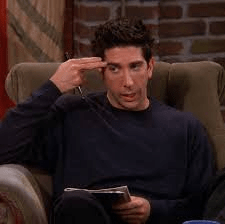
Ross displays many traits of a high functioning autist. He’s a quirky, highly strung palaeontologist (do I smell a stereotype?) who is intensely passionate about science.

He is often socially awkward, misses out on social cues and sarcasm, moves with an unusual gait, and shows signs of sensory issues (he thinks that ice-cream is too cold). Ross is also prone to impulsive decisions, obsessive tendencies, and outbursts of rage that border on meltdown-like behaviour as you can see in the clip below.

Ross’s sister Monica (played by Courtney Cox) on the other hand, while not as overtly quirky as Ross, also displays some traits. Her OCD and control issues are often centre stage in the show with many comedic moments drawing from this. She can be an obsessive overthinker and fiercely competitive, often fixating on certain topics in her pursuit of perfectionism.

Her compulsive overeating in her teen years could also be considered an autistic trait. She may not be quite as neurodivergent as her brother, but she could fall under broader autism phenotype as do many siblings of autists. The iconic dance scene between the brother-sister duo really highlights their quirkiness and possible neurodiversity in their complete blindness at how ridiculous they look.

Finally, let’s take a look at the iconic Phoebe Buffay. Portrayed by Lisa Kudrow, Phoebe is the quintessential outsider displaying many autistic and ADHD traits. Brutally honest and hyperactive, she unashamedly marches to her own beat, completely oblivious to how others perceive her (or her terrible singing). She also flaps her hands an awful lot in the show and has been known to chew her hair in earlier seasons which are signs of stimming behaviour.

Interestingly, neurodivergent individuals tend to stick together in real life (I’ve spoken to many spectrum friends and you tend to subconsciously attract each other 🤣), which could explain why 3 out of the group of 6 display autistic traits. This is perhaps the most realistic aspect of autism that the show unconsciously portrays.

Now obviously we will never know if these characters are on the spectrum, but it’s still nice to see clearly neurodivergent characters marching to the beat of their own drum for us to identify with 🙂

Hope you enjoyed this post dear Earthlings! 🙂

Have a lovely weekend!

Aoife

Blog at WordPress.com.

Up ↑