This week I’d like to take a lighthearted look on whether or not our favourite bearded man may in fact by autistic- yep, I’m talking about Santa Claus!🎅
I know it seems crazy but hear me out, as many people have observed Santa’s autistic traits:
Restrictive diet– Santa’s diet is known for being very fatty and restrictive, mainly consisting of milk, cookies and other holiday treats like mince pies. Many autists can relate to this tendency towards beige foods
Christmas is his specialist interest– For us mere mortals Christmas comes but once a year. Santa’s entire life however, revolves around this single calendar day and his efforts to make it the best day possible for children all over the world
Tendency towards sameness and routine– Santa wears the same clothes day in day out which are loose fitting and comfy (which could be indicative of sensory issues). Moreover, his choice of red clothing is interesting as red is a colour often dismissed by autists, meaning he could have diminished sensitivity to the colour red making it an ideal colour choice for someone with colour sensitivity. Santa also works on the 25th of December every year without fail, completing the same working routine in children’s homes across the world
Black and white thinking/rule orientated– Naughty and nice list, need I say more?
Repetitive behaviours– Lining up and naming out his reindeer over and over, repeatedly saying Ho Ho Ho, and checking the list twice are all classic repetitive behaviours
Avoids social interactions/unaware of social rules– He slips into our homes in the dead of the night, but never engages with us, just get’s the job done and moves on to the next house. Similarly, he is completely oblivious to how casually breaking into someone’s home to deliver presents in the middle of the night isn’t exactly a socially acceptable behaviour 😂
Santa is an introvert– Santa prefers to live in his own space in the North Pole far away from the prying eyes of the world with only Mrs Claus and the elves for company
Creative thinker- When the whole world bullied Rudolph for his nose, Santa found a way for him to be useful, highlighting neurodivergent creative thinking at it’s finest
So there you have it Earthlings- do you agree that Santa might be one of the most famous autists in the world? 🤔
Wishing you and yours a very merry Christmas and every blessing for 2025!
Leading on from my previous posts about autism and animals, alpacas, and assistance dogs, this week I’d like to discuss a concept that has been floating around the neurodiversity reels on social media- “animal whisperer autism”.
There have been a number of reels floating around where autists claim to have “animal whisperer autism” and not “good at maths autism”, and I have to admit this sums me up in a nutshell 😂 I have always had a love and affinity with animals that has become increasingly apparent in recent years. It’s gotten to the stage lately where random dogs have pulled their owners towards me for snuggles walking down the street! 🙈
It’s not just dogs, all kinds of animals just tend to gravitate towards me- when I’m out walking my dog the local horses, cows and sheep all come up to the gate or follow along beside us in the field as we go. Once I was pulled out of bed to herd some cows that had escaped into our field (I’ve never herded cows in my life), I just walked up to them and they all randomly formed a line in front of me 😂🐄
But is there any explanation for our animal magnetism?
The evidence for this phenomenon is mainly anecdotal, so it’s not an easy one to explain. As I’ve discussed previously, animals have a calming influence on autists, so it’s possible that animals are responding to that calm- like a mutually shared vibe. In addition, studies have shown that some autists have an altered fear response wherein they show less fear than neurotypicals in a scary situation, so where many people might feel nervous around animals, an autist might not have that same fear.
Other explanations could be linked to our intuition and keen observational skills. Temple Grandin, one of the most famous autism advocates, is a leading livestock expert with particular expertise in the area of animal handling. Her observations on animal behaviour and their interactions with their environment have revolutionized humane animal treatment- the ultimate animal whisperer. With animals, there are no confusing social rules or games, so it’s easier for an autist to understand them.
Another wild explanation could be linked to body odour as different smells can control social behaviours. Studies have linked body odour to imitating behaviours in autists where an autist imitates the behaviour of their family in response to smell. If we were to apply this observation to animals, perhaps autists are becoming animal whisperer’s through imitation behaviours where we are subconsciously learning how to socially interact with animals through smell. In other words, the animals could be teaching us how to communicate with them!
However, some autists impaired perception of body odours causes them to misread social cues, so maybe this one is a long shot (or this group are not of the animal whisperer autism persuasion 🤷🏻♀️).
Maybe one day researchers will investigate this phenomenon properly. Who knows, maybe there’s a genetic mutation that makes us smell better to animals or some other random biological phenomenon that makes us irresistible to our feathered and furry friends? 🙃
Following a recent messy meltdown whilst wearing a full face of makeup (a late night car clamping situation 🙈), this week I’d like to discuss some of my must have products if you want to meltdown proof your face 🙃
If you’re anything like me when a meltdown hits, your eyes unfortunately betray you, tears cascading down your face, often destroying the makeup you spent ages applying that day! On one particularly bad occasion, I had a minor meltdown from the frustration of my car failing it’s NCT, and within seconds my eyes formed pools of congealed black mascara…😂
As such, I now invest in higher quality makeup that can withstand a good cry! Here are some of my top products to meltdown-proof your makeup:
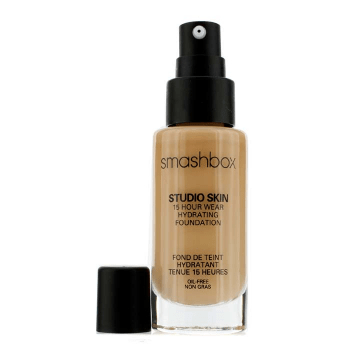
Smashbox Studio Skin- this is my go to foundation (on the few occasions I choose to wear it). It’s lightweight, but buildable and most importantly, durable. Once set, it will barely budge. You won’t find tear track marks down your cheeks from the slightest leak. I once wore this to a Green Day concert where it drizzled for the evening. While some did naturally come off in the rain, by 3am my makeup still looked intact 💪 If you want a day time foundation with SPF, I can also recommend Max Factor’s Facefinity (although I’m not the biggest fan of the smell)
Benefit’s Bo-oing concealer- this industrial strength concealer can hide a multitude of blemishes and truly lasts against the tide of tears. I also highly recommend YSL’s Touche Éclat concealer for touchups after a meltdown. I often carry this concealer pen in my handbag for nights out as its precision head is ideal to fix any dark smudges round your eyes if your makeup fails you
Urban Decay Naked Eyeshadow range– These eyeshadow palettes are a must have. They have great pigment and longevity when paired with a decent eye-primer, and won’t run off your face during a meltdown
Victoria Beckham Satin Kajal liner- this eyeliner pencil has been going viral the last couple of years and for a good reason! It’s creamy, waterproof, smudge free and the pigment will last all day, even against an unexpected flood of tears
Charlotte Tilbury Exagger-Eyes Mascara– and now to the heaviest hitter. The new Exagger-Eyes Mascara has been going viral in recent months and I am here to tell you to believe the hype! It’s smudge proof, humidity proof, flakeproof and clump proof, that can last through sweat, tears and meltdowns! I have even worn this during a spin workout and it did not budge one bit. Word of caution though, if you are spraying a setting spray after applying, make sure that the mascara has dried or else you will find yourself with black rings under your eyes🙈 I also highly rate Benefit mascaras. I started wearing these shortly after my diagnosis and they have survived many a meltdown- there’s a very good reason that Benefit’s mascara range is one of the top sellers in the world. For an everyday option, I recommend their waterproof Badgal Bang- great volume, great pigment and takes industrial strength remover to scrub off 😂
Pro-tip– Avoid NYX Worth the Hype mascara. Worth the hype it may be in terms of look… but that’s exactly the brand I was wearing in the meltdown I described at the beginning 🙈 They have since brought out a waterproof formula though, so if you must wear that brand, make sure to get the waterproof one 🙃
Hope you enjoyed this post dear Earthlings! Never let a meltdown get in the way of looking fabulous 😎
This week marks a bit of a milestone in my autism journey- the 10 year anniversary of my diagnosis. It’s mind boggling how fast these years have flown by, not to mention how much my life has changed in that time.
In September 2014, I was a complete wreck. I was suffering with social anxiety, my mental health was a mess, and I was struggling with work and the social dynamics of my workplace. I had never been so stressed in my entire life (which is saying something given that I was bullied in school) and was at breaking point. Out of nowhere, I found myself tricked into an autism assessment (kudos to my parents for that 😛 ) and my entire world flipped- but in the best possible way.
Admittedly, things were rough for the first year as I learned to adjust to this newfound knowledge, and it took an additional year to relax enough to not mention the diagnosis every 5 minutes, but my life has ultimately changed for the better. I spent my first 24 years on this earth feeling like I didn’t belong, like a wonky puzzle piece that couldn’t slot into society. Everyone misunderstood me, but I guess when I didn’t even understand myself, how could the rest of the world? Most twenty somethings will have a quarter life crisis on their journey of self discovery, but I had the ultimate one. One little word held the key that allowed me to fully embrace the person I was always meant to be.
10 years later, I barely recognize myself. I’m in a job that I enjoy, I have amazing, supportive friends, and a (very) busy social life. Looking back on my past through the lens of autism, I have become a lot kinder to my younger self, learning to laugh and channel my experiences to help others like me. I feel less self conscious of my differences, know my triggers and how to sidestep them. This has enabled me to grow in confidence to a point where I have never felt more comfortable in my own skin.
Before my diagnosis, I was always shy and introverted, but by fully understanding myself, I’ve been able to unleash my inner extrovert, comfortably smiling and chatting with strangers wherever I go. Having a name for my differences normalized my feelings and gave me ownership, allowing me to overcome my anxieties and manage my sensory issues. I have autism, but autism does not have me.
If you had told me ten years ago what this one little word would do to my life, I don’t think I would have believed you.
I find it quite hard to imagine what my life would look like now had I not received my diagnosis. I have previously discussed if parents should tell their child about their diagnosis, and while the decision depends on the individual, based on my experience I would highly recommend divulging. It was initially a tough pill to swallow, but my life is better for it.
There’s so many things I wished I knew about autism before I was diagnosed, even now I’m still learning every day, but I suppose the biggest thing was to know that I would still be me at the end of it all- just a shiny, happier model. As I’ve discussed on many occasions, while an autism diagnosis shouldn’t change anything in theory, knowledge changes everything for the autist. It’s a lot to process, and it can be hard to see beyond the label, but you will emerge from the chrysalis a fully fledged butterfly. Initially it seemed like autism weighed me down, but that was just my wings poking through ready for flight 🦋
So for those of you working through your diagnosis right now, cringey cliché that it is to say, it does get better. To quote ‘The Middle‘ by Jimmy Eat World:
“It just takes some time Little girl, you’re in the middle of the ride Everything, everything’ll be just fine Everything, everything’ll be alright, alright.” ❤️
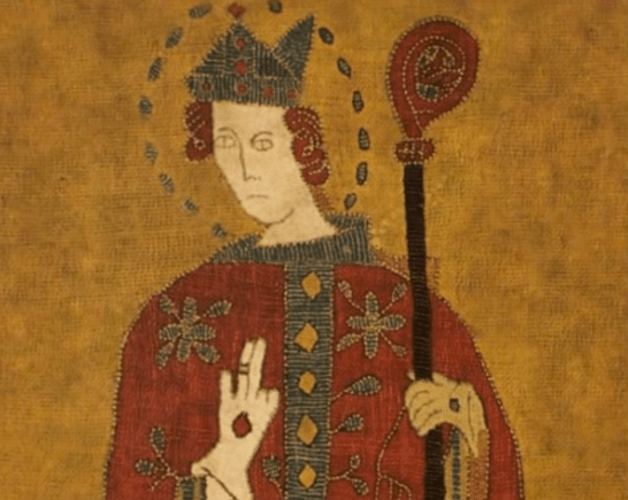
In the midst of some recent Googling, I accidentally came upon a suggested search for the patron saint of autism and was surprised to learn that there is such a saint- Thorlak Thorhallsson (Icelandic: Þorlákur Þórhallsson)! Naturally as a practicing catholic, I had to investigate.
So who was Thorlak Thorhallsson and how has he come to be associated with autism?
Relatively little is known about this saint compared with many others of the time, but here’s a snippet of what researchers have found:
Born in Iceland in 1133 (he’s also the Icelandic patron saint), Thorlak grew up on a farm in Hlíðarendi. A child prodigy, Thorlak taught himself to read at a very young age, and impressed the locals round the farmstead with his kindness, curiosity and knowledge of the world around him. At age 7 due to a bad fishing season, his mother moved with Thorlak and his sisters to a different farm where influential locals educated him, leading to his ordination as deacon at age 15 and a priest by 18. He later went abroad to study theology in England and France, returning to Iceland in 1168 where he set up an Augustinian monastery. 10 years later he was ordained bishop of the diocese of Skalholt.
Thorlak was often rigid with a fondness for rules, as evidenced by his decision to reject marriage and remain celibate in line with church laws- a rule (one of many) which the Icelandic clergy generally did not observe. After studying the strict monastic rules of St. Augustine abroad, Thorlak dedicated himself to church reform after he became bishop, implementing many reforms of the Western Church from Pope Gregory VII. He enforced stricter religious observance to improve public morality, his efforts resulting in the expansion of the church in wealth, power and influence, often going head to head with powerful chieftains who almost killed him on several occasions. He died on the 23rd of December 1193 at the age of 60 and was officially cannonized in 1984 by St. Pope John Paul II.
Thorlak is believed to have had many autistic traits which is why autists have adopted him as their patron saint. His intelligence, determination, love for the rules (and rigidity in enforcing them) and fondness for strict routine moulded by his monastic life all indicate that he was quite likely autistic.
So for any autists of faith out there, be sure to spare a moment to pray to St. Thorlak Thorhallsson for your intentions 🙏🏻
Bonus fun fact– for those of you who also have co-morbid ADHD or other mental health issues, Irish St. Dymphna is your patroness.
This week I’d like to talk about the subject of autism friendly festivals.
Yes- you heard me correctly! 😀
Festivals and autism are not really two words that tend to go together, what with the crowds, noises, smells and flashing lights, but recent years have seen large music festivals such as Electric Picnic and Glastonbury set up specific sensory friendly tents for neurodivergent attendees. In addition to this, there are now a number of specific autism friendly festivals.
Autism charity ASIAM recently launched the Sensoria festival in Dublin as part of a 3 year plan to make Dublin the world’s first autism friendly city. A free ticketed event, the festival took place at two different times in the day to keep crowds to a minimum, offering sensory domes, pods and gardens, a messy play tactile zone, neurodiversity information tents and therapy dogs. In addition to these sensory friendly modifications, a number of sensory activities and performances were arranged including non verbal street theatre, sensory movement workshops, sensory silent films, and a unique show titled ‘Squish, Stomp, Spin – The Magic of Stim’ by ADHD artist Moss Russell.
Similarly in the UK, the Spectrum Autism Friendly Festival has been running since 2017. The festival is run by staff that are fully trained about autism, and offers attendees an enriching experience with sensory areas and quiet spaces in addition to fun activities such as cooking classes, arts and crafts, bouncy castles, treasure hunts, pedal carts, and even light saber training!
Whilst these autism friendly festivals are a great incentive, they are largely geared at children, which is a little disheartening for autistic adults with sensory issues. In Reading in the UK however, the A Different WorldFestival has been established to cater to older autists. Inspired by their teenage son who could not access the Reading Festival as an autist, the organizers set up A Different World to allow young people and adults with additional needs to experience a real rock festival. This festival follows normal festival formats, but limits numbers to reduce crowding and ensure space, allows no strobe lighting or pyrotechnics, has a sensory village, a service dog tent, and a wellness tent to cater for everyone’s needs.
We’ve come to the end of yet another year on this blog, how the time has flown!
I’ve had a busy few weeks so I have been a little quieter than normal lately, but I will be back to my usual schedule in the new year 🙂
As always, I just wanted to take this opportunity to thank all of my readers for their continued support this year. I appreciate each and every one of you that takes the time to stop by to read or leave comments, I see them all.
Hope you and yours have a very merry Christmas, and every blessing for 2024 (that’s scary saying that- next year marks 10 years since my diagnosis! :O
Soo this week’s topic is a little bit unusual, but no, I assure you I haven’t lost my marbles (this time). In this post, I’m going to be looking at a weird link between autism and plastic!
A recent study has reported that autists eliminate chemical additives found in plastics from the body less efficiently than their neurotypical peers.
So what exactly are these chemical additives?
Bisphenol A (BPA) is a chemical additive used to make rigid plastics and protective coatings so it is often used in drinking containers. As a result, the chemical can leech into our drinks, which may be cause for concern as the health implications are still unclear.
BPA can mimic the effects of the hormone oestrogen which may disrupt the normal activity of the hormone, potentially contributing to cancers. The interactions are however very weak, so it is unlikely to have any lasting effects, especially as researchers have estimated that our current exposure levels to BPA are below the level associated with risk. Regardless, many remain concerned and efforts are being made to reduce our use of BPA in plastics. You may have seen many plastics for infants are marked as BPA-free as some countries have banned the use of BPA in this population as an extra precaution.
Similarly, other additives known as ‘plasticizers’ are added to plastics to make them more flexible. The additive Diethylhexyl Phthalate (DEHP) is the most commonly used plasticizer, widely used in the production of PVC. It can leach into food and drink like BPA which is concerning as it is a known carcinogen (cancer causing chemical) and can have a negative impact on male reproductive health. However, the doses consumed by humans are again not thought to be high enough to pose a risk, but the EU has banned their use in children’s toys, products and cosmetics as a precaution.
So now that we know what they are, back to autism.
As I mentioned at the start, children with autism and ADHD are not able to clear BPA and DEHP as efficiently as their neurotypical peers. Our bodies eliminate toxic substances via a process known as glucurondation, where complex compounds are broken down into smaller water soluble molecules using glucuronic acid so they can easily by eliminated from the body in urine. A recent study found that with BPA in particular, an autists efficiency to remove this chemical is 11% less than neurotypicals, and 17% less in individuals with ADHD. Researchers believe that some autists have genetic mutations that are slowing down the clearance rate making it harder to eliminate BPA from the system.
So what does this really mean?
Decreased efficiency in clearing BPA from the body means that this chemical hangs around longer, increasing exposure rates and the risk of negative health effects. As previous studies have linked BPA exposure to behavioral issues (e.g. hyperactivity, anxiety) and neurological conditions (e.g. Alzheimer’s, MS, Parkinson’s), it’s possible that BPA exposure could contribute to the development of autism.
As always while there is evidence of a link, this is just one study so it’s not worth worrying about just yet. Nevertheless, we should all be conscious of our plastic use and more careful with our disposal processes to preserve both our health and our planet.
In continuation of my previous post about weighted blankets for autists, this week I’d like to discuss another weighted item- weighted plushies!
I’ve always had a fondness for soft and cuddly bears (gotta love that texture 😉 ) so when I found out that they made weighted plushies I just had to give it a whirl! I bought Sleepy the Sloth (or as he’s been renamed in our house Séamus the Sloth, which we thought suited him better) on Amazon a couple of weeks ago to see how I fared.
My sister had some fun staging him one night while I was out at a concert 😂
But first things first, what exactly is a weighted plushie?
A similar product to weighted blankets, weighted plushies are filled with beads or pellets instead of conventional stuffing to exert calming deep pressure to the skin to mimic the effect of a hug. Weighted plushies are usually much lighter than weighted blankets (Séamus is 1.5kg and my current blanket is 7kg) so they are a much more portable option when on the go with a child with autism. There are also heatable versions that you can put in the microwave so you have the double whammy of soothing weight and heat. Disney have even launched a line of weighted plushies so your favourite characters can be used for sensory relief! 😀
So how does it work?
Like weighted blankets, research is limited but they seem to work through the same mechanism. As I’ve discussed previously, autists have higher levels of stimulatory neurotransmitters and lower levels of calming neurotransmitters, meaning that our brains are more “switched on” and harder to turn off than most. The deep pressure exerted by the plushie is designed to stimulate the release of the calming neurotransmitters serotonin (which helps regulate the sleep cycle and temperature) and dopamine to relax and soothe the racing mind. It’s also thought that deep pressure can stimulate the limbic system, the emotional centre of the brain, which could potentially help calm you down during a meltdown.
So how did I get on?
Aside from all the fun we’ve had playing with Séamus, he really provides a lovely sensory experience. It’s reminiscent of having a sleeping puppy on your chest when you drape him round your neck, (minus the warmth, wriggling and gentle snuffling sounds). You get that same sense of calm wash over you like with the weighted blanket, so it’s great for when you’re sitting watching TV or travelling and need something less cumbersome. However, a plushie does not cover the entire body, so it doesn’t quite have that same fully enveloping sense of relaxation that comes from being completely covered by a weighted blanket.
All in all I would highly recommend giving a weighted plushie a try, but they can be a little pricey, so if you’re buying it for a child be sure to involve them in the decision in case they don’t like the animal/character you intend buying.
As it’s been a few years since my first post about celebrities with autism, I’ve decided to write a follow up post to discuss some other celebrities who have since discussed their experiences of autism.
Sia
Australian pop star Sia recently divulged that she was on the spectrum, 2 years after her film ‘Music‘ received backlash for it’s depiction of autism and casting of neurotypical Maddie Ziegler as a nonverbal autist. She did not admit to being on the spectrum at the time, but said that the film was based on the experiences of a neurodivergent friend (I must check out this film for a future post).
Sia has said of her diagnosis:
“For 45 years, I was like, ‘I’ve got to go put my human suit on’, and only in the last two years have I become fully, fully myself.”
SirAnthony Hopkins
Two-time Oscar winning Welsh actor Sir Anthony Hopkins was diagnosed with Asperger’s syndrome in 2014 when he was in his late 70s! The actor is quite dismissive of his autism status, calling neurodiversity a “fancy label” and says that he doesn’t feel very different after the diagnosis. He has said that autism impacts his ability to socially interact, but it also makes him quite focused which helps him in his acting career:
“I definitely look at people differently. I like to deconstruct, to pull a character apart, to work out what makes them tick and my view will not be the same as everyone else. I get offered a lot of controlling parts, maybe because that’s how people see me. And maybe I am very controlled because I’ve had to be. I don’t question it, I just take the parts because I’m an actor and that’s what I do.”
Elon Musk
Eccentric billionaire businessman Elon Musk has openly talked about his Aspergers diagnosis and how he was bullied as a child for being different, often struggling with social cues and literal thinking. His diagnosis has never held him back however, as he is now one of the wealthiest men in the world, and even became the first autistic host of Saturday Night Live (or at least the first person to admit it!). He often credits his brain as the driving force behind his success as his intense focus fuelled his specialist interest in science and technology, often spending entire nights happily programming on his computer.
Here’s a video of him talking about his experiences of autism:
Hannah Gadsby
Australian comedian Hannah Gadsby was diagnosed with autism in her late 20’s after a lifetime of struggling to fit in. She openly talks about her diagnosis in her comedy- a great way to both educate and help people see the lighter side of the spectrum. Here’s a clip from one of her Netflix specials:
Prison Break (remember that show? There’s a throwback!) and Legends of Tomorrow actor Wentworth Miller was diagnosed with autism during the pandemic in 2020 in his late 40s. He announced his diagnosis in 2021 on Instagram, telling the world of his struggles to get a formal diagnosis and how he is slowly educating himself on the world of autism.
Of his diagnosis Miller said:
“This isn’t something I’d change … immediately being autistic is central to who I am. To everything I’ve achieved/articulated.”
Dan Harmon
Writer and creator of shows like Community and Rick and Morty, Dan Harmon has self-diagnosed himself with Aspergers syndrome. When creating the character of Abed in Community and researching his character traits, Dan began to realise that he may be on the spectrum himself.
You can hear him discuss his experiences in an interview here:
Melanie Sykes
UK TV presenter and former model Melanie Sykes was diagnosed with autism in 2021 in her early 50s.
“I cannot begin to tell you the sense of relief this is for me and how much I celebrate this diagnosis.I now have a deeper understanding of myself, my life and the things I have endured.”
“I am wired a completely different way and I’m only just understanding it. Where I used to think ‘what’s wrong with me?’ now I know it’s everything that’s right with me.”
You can read more about her experiences in her book Illuminated: Autism & All The Things I’ve Left Unsaid and in the interview below:
Stephanie Preissner
Irish author and screenwriter Stephanie Preissner was diagnosed with autism in 2021 at the age of 34. She had always suspected that something was wrong, but never thought she might be autistic as the male experience fed to us in the media did not match her experiences (been there!). She had always done well in school with it’s structures and routines, but her mental health started to suffer in college as expectations were less clear. You can listen to a short interview with Stephanie about her experiences here:
BlindboyBoatclub
Now most of my international readers will not have heard of Blindboy Boatclub (one half of the Irish comedy hip hop duo The Rubberbandits) but his autism story is an interesting one. But before I get into it, for those of you wondering about his bizarre appearance, the podcaster, author and TV presenter famously wears plastic shopping bags on his face to conceal his identity 🤣. Blindboy was diagnosed with autism in his 30s following comments on his podcast from his neurodivergent listeners who remarked on how many of his worldviews aligned with their experiences of autism. Without his podcast, who knows if he would ever have been diagnosed! You can listen to his podcast talking about his diagnosis here: https://podcasts.apple.com/ie/podcast/intrapersonally-speaking/id1300577518?i=1000557413083
Just so my international readers can get an understanding of The Rubberbandits, here’s a video of their most popular parody from the peak of their fame:
Christine McGuinness
British model and TV personality Christine McGuinness was diagnosed with autism at the age of 33 having struggled throughout her teenage years, allowing her to finally understand why she is the way she is. Her 3 children are also autistic. She now advocates for greater visibility for women on the spectrum which you can see. in the video below:
Eminem
Chart topping rapper Eminem may also be on the spectrum. He has not openly discussed a formal diagnosis, but he has mentioned having Asperger’s syndrome in a couple of his songs which are famously influenced by his real life. He talks about Asperger’s in the opening lines of his 2013 song ‘Wicked Ways‘:
In interviews Eminem has talked about being very shy and awkward as a kid, often feigning illness to skip school so that he could stay home reading, writing poetry and drawing comic book characters.
It has also been suggested (but no confirmed diagnosis) that Vladamir Putin, Donald Trump, Lionel Messi and Bob Dylan also seem to demonstrate a number of autistic traits. Following the release of Christopher Nolan’s gripping biopic Oppenheimer, there has also been a lot of renewed speculation that the renowned physicist Robert Oppenheimer may also have been on the spectrum.