Autism in ‘Elsbeth’

Greetings Earthlings! 🙂

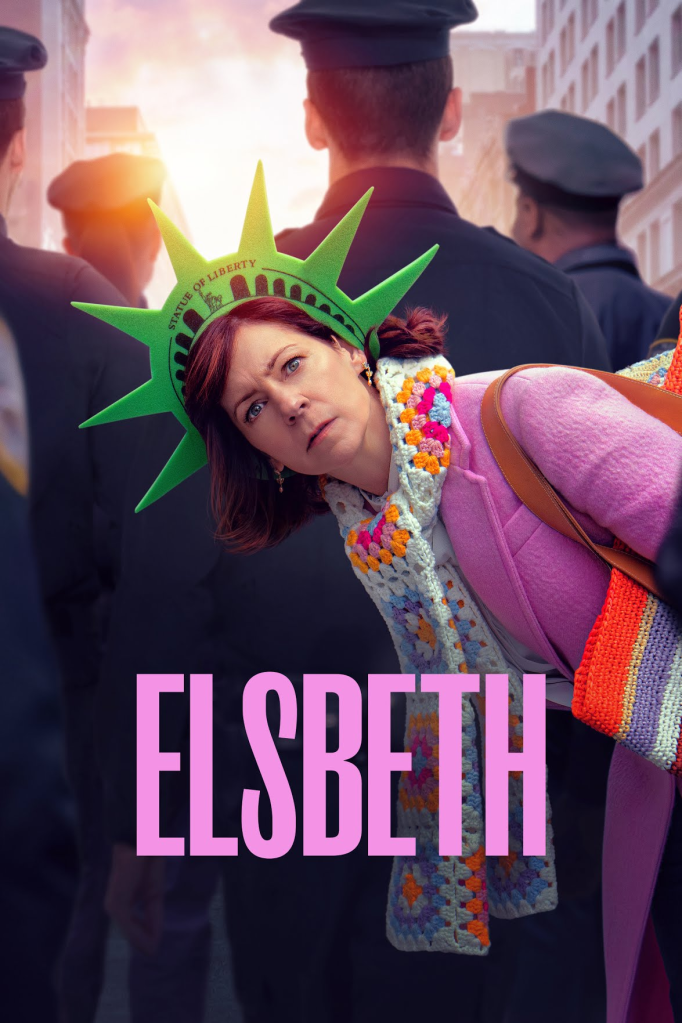
This week I’d like to take a look at the neurodivergent character Elsbeth Tascioni, a character that I have been watching for years, first as a recurring guest on The Good Wife and it’s spin off The Good Fight, and now finally in her own show Elsbeth. Played by Carrie Preston, Elsbeth is a quirky, unconventional lawyer who has been assigned to oversee the NYPD as part of an anti-corruption decree, but quickly finds that she has a knack for solving murders! Unlike conventional crime solving dramas, we see the whodunnit portion at the start of each episode, refreshingly sitting back to watch how Elsbeth is going to catch her killer (spoiler alert- she always does🙃).
So to autism- how does this show fare?

Whilst this is another show that does not directly label their lead as autistic, Elsbeth certainly displays many traits of autism and ADHD, with many autistic fans praising the show for a positive female depiction of neurodivergence and executive dysfunction. She is an endearing, unique and highly eccentric character marching to her own beat at all times, never caring what anyone else thinks. Whilst Elsbeth doesn’t tend to display signs of sensory issues, she is often oblivious to social cues, overstepping boundaries, talking about unusual subjects and regularly making people uncomfortable (I mean she’s trying to catch killers- cages need to be rattled 🤣).

She get’s distracted very easily by shiny objects and other items of interest to her, going off on tangents mid conversation and explanations, floating around in her own little bubble without any notice of how the world perceives her. What I particularly like about Elsbeth is how she notices details that no one else does, a trait which makes her incredibly adept at crime solving. Too often we focus on disability, but this show really drives home the unique skills that neurodivergents can bring to the workplace. Elsbeth’s tendency to get distracted at first appears problematic, but it is this eye for detail that makes her an excellent detective. She’s constantly underestimated by her peers for her quirkiness, but always shows her worth by the end of each episode, proving there is method in her perceived “madness”.

Autistic or not, Elsbeth is a delightful and refreshing take on the crime solving drama genre, and I highly recommend it for anyone seeking a wholesome, easy watch- you will leave with a smile on your face for certain 😀

Hope you enjoyed this post dear Earthlings!

Have a lovely weekend! 🙂

Aoife

Autism in ‘Not Dead Yet’

Greetings Earthlings! 🙂

This week I’d like to talk about an autistic character in the ABC sitcom ‘Not Dead Yet‘ starring Gina Rodriguez of ‘Jane the Virgin‘ fame.

So what’s the series about?

In a nutshell, Nell is an out of work journalist trying to get back in the game after leaving her job 5 years ago to move to London with her then boyfriend. She returns to the States with her tail between her legs, taking a job writing obituaries for her former employers. Things start to get interesting however, when Nell starts to see the ghosts of her subjects!

You can check out a trailer for the series here:

So back to autism.

Nell’s room mate Edward is on the autistic spectrum, played by autistic actor Rick Glassman. A nerdy, brutally honest, passionate environmental lawyer, Edward needs strict routines like the majority of autists, but for the most part he is a “normal” functioning member of society.

You can see a clip here where he opens up to Nell about his diagnosis here:

One of the interesting things about the character of Edward is that the casting director sent out a casting call for neurodivergent or autistic actors. The character wasn’t necessarily written as autistic, but they were open to making Edward autistic as they wanted to get extra ideas of people who aren’t normally represented- a very positive move for the entertainment industry. The writers also hired autism consultant David Finch to ensure that they were accurately depicting the day to day nuances of living as an autistic adult, something that really comes across in the series.

The show is quite refreshing as Edward is used as comic relief but not in the way you would expect. So often the autist is the butt of the joke in comedic TV shows, but in ‘Not Dead Yet‘, Edward flips the script and makes fun of everyone else with his neurodivergent asides and unfiltered comments. One of the things that I really connected with however was how the writers handled masking. When Edward’s girlfriend is in town, he takes on a completely different persona. He hides his nerdy toys, pretends to be spontaneous and nonchalant- the complete antithesis of the Edward we had seen thus far. Thankfully, Nell, despite preferring many of his false traits, encourages him to drop his mask and be himself which you can see in the clip below:

It’s really heartening to see this scene as so often autists are encouraged to mask to fit in, often at the loss of self. I spent much of my teenage years masking, often suppressing my true interests and quirks to fit in with my peer group. I feigned interest in girly things like pop bands and trashy TV shows just to have things to talk about, when what I really wanted was to talk gaming and rock n’ roll! It was only after I went to college and began to embrace my quirks and just be me that I made true friends like Edward has in Nell.

I highly recommend watching this series (it’s currently available on Disney +) as it’s a quirky easy watch with a lot of heart.

Hope you enjoyed this post dear Earthlings! 🙂

Have a lovely weekend!

Aoife

Autism in Girl Meets World

Greetings Earthlings! 🙂

This week I’d like to discuss the depiction of autism in the Disney + coming of age comedy series ‘Girl Meets World‘ (the spin-off/sequel to the 90’s classic ‘Boy Meets World‘) in an episode from 2015 that has been doing the rounds on Tik Tok in recent months.

The clip from the series depicts the shows protagonist Riley and her group of friends finding out that their best friend Farkle may be on the autistic spectrum, specifically he may have Asperger’s syndrome. Farkle was recently given an aptitude test that affirmed, what he always knew, that he is a genius. Following additional tests to confirm his IQ, it was decided that he should also be tested for autism as he presents with many traits such as touch aversion, social awkwardness, specialist interests etc. (we won’t get into how they automatically jumped to spectrum from a genius test 🙄).

Now while it’s great that such an important topic is getting airtime on a channel as big as Disney, the clip has been viewed quite negatively by the autistic community. After telling his friends that he may have autism, their reactions are somewhat overdramatic. Riley’s friend Maya automatically jumps off the couch and vehemently proclaims “You don’t!”, while Riley similarly jumps up saying “Let’s go tell them you don’t!” Moreover, Riley and Farkle’s parent’s set quite a serious and sombre tone in the room about his potential diagnosis which doesn’t help the vibe. Although not included in the original viral clip, the gang later study up on Asperger’s and every time that Farkle agrees with a trait and gives an example, Maya grabs him and tells him to “Stop doing that! He’s going to stop doing that!” Needless to say, autists everywhere have been highly offended by the reactions as they are treating autism like a terminal disease! This has even made many afraid to disclose their diagnosis to their friends based on this reaction (although I would argue that this is an overreaction as my friends have been nothing but accepting and supportive when I have disclosed my diagnosis).

The clip has since been edited/removed, but you can watch the episode in full on Disney + (Season 2 Episode 15). Here’s a clip instead introducing us to Farkle:

Ultimately, it turns out that Farkle isn’t on the spectrum, so there was a whole lot of hullabaloo about nothing, BUT it is revealed later on in the episode that Farkle’s female nemesis (and later girlfriend) Smackle was diagnosed with Asperger’s at 5 years old. She like Farkle is also a genius (whhhhyyy must we perpetuate these stereotypes!!!), with an aversion to hugs, difficulty reading social cues and struggles to make friends. Her depiction is very stereotypical Aspergers male and doesn’t tie in with how most women with autism actually present- although it is nice to see another woman on screen where autistic men are the media majority.

The episode ends with everyone accepting Smackle and showing her that none of them in the group identify as “normal” nor aspire to be “normal”, ending everything on a slightly better note of acceptance- something that most of the online chatter didn’t delve into following the disastrous reaction to Farkle’s potential diagnosis.

All in all, this type of representation is not great, but at least the tone does even out by the end of the episode. It’s a very stereotyped depiction and the initial reaction of the gang can be quite triggering for some autists, but I’ve definitely seen way worse handling of this issue. That being said, this episode does come from 2015 and media depictions have come a long way since then, with many shifting to cast autistic actors for accurate on screen portrayals- like the character of Quinni in Heartbreak High. As with history, we should learn from the past and look to examples like this as ‘what not to do’ so that media portrayals going forward will be far more reflective of the real autistic experience.

Hope you enjoyed this post dear Earthlings! 🙂

Have a lovely weekend!

Aoife

Autism in Stranger Things?

Greetings Earthlings! 🙂

Following the recent release of Netflix sensation ‘Stranger Things‘ Season 4 Vol., this week I’d like to discuss a possible autistic character that many fans have been discussing online since the season dropped (don’t worry- I’ll keep this spoiler free!).

So before I get into discussing this character, what’s Stranger Things about?

For those of you who may not have heard of Netflix’s all time most streamed TV show, Stranger Things is an 80’s nostalgia sci-fi/horror/drama series set in the fictional town of Hawkins Indiana. Secret government cold war experiments exploring psychokinesis have ripped a portal to an alternate dimension filled with monsters called the ‘Upside Down’, leading to a series of mysterious events in Hawkins which a young group of pre-teens set out to investigate after their friend Will disappears.

Now back to autism.

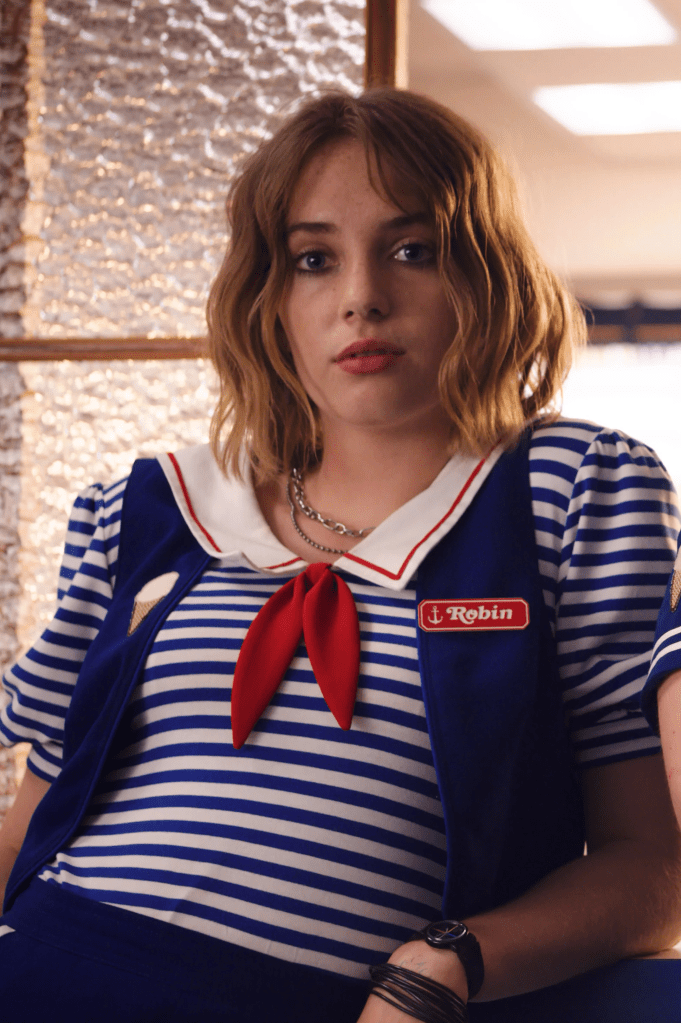
In the most recent series, one of the new characters introduced in the last season, now appears to be showing a lot of neurodivergent traits- Robin Buckley, played by Maya Hawke (daughter of Hollywood legends Uma Thurman and Ethan Hawke).

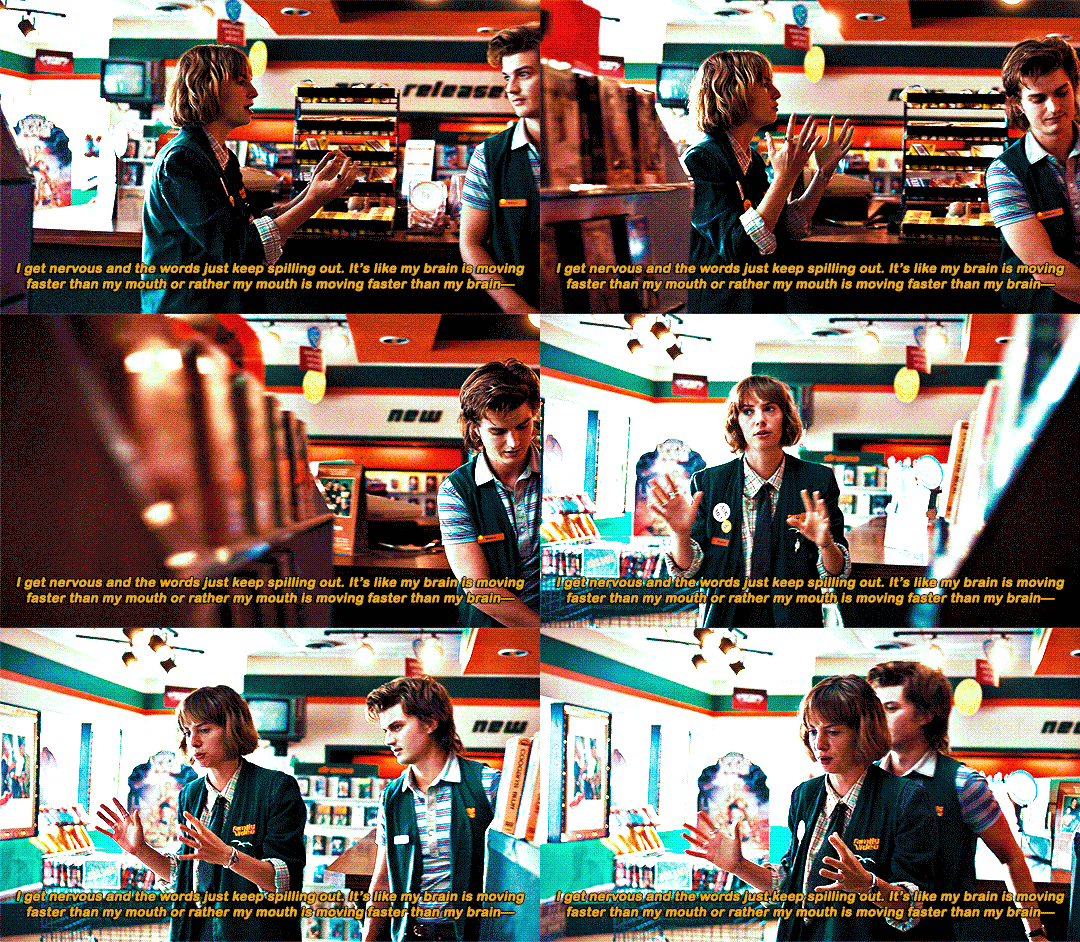
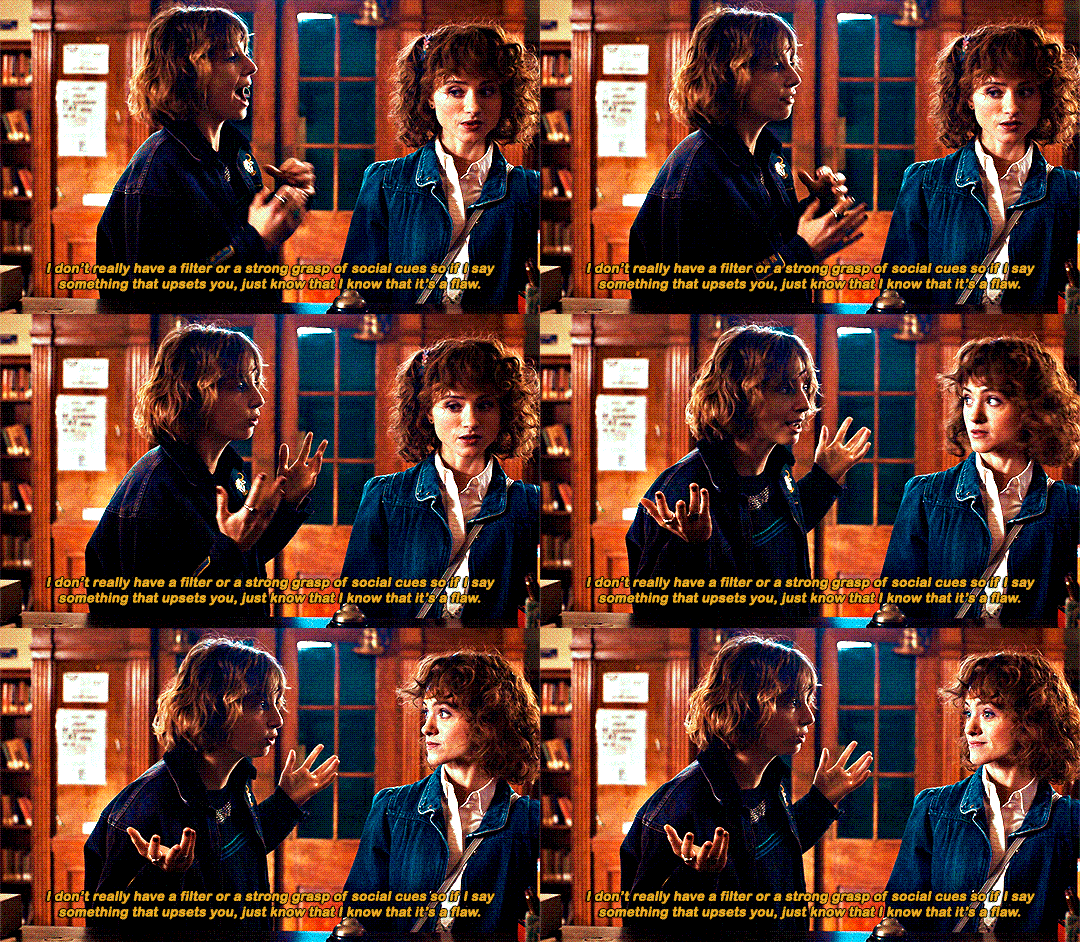
Robin is a highly intelligent high school student that befriends the main Stranger Things gang in season 3 when Russian scientists build a portal to the Upside Down in a secret lab beneath the mall that she works at. Described as “an alternative girl” when her casting was first announced, Robin has certainly captured the attention of autistic viewers as her character has developed in season 4. Throughout the season, Robin has been very quirky, exhibiting no filter and rambling constantly about random topics, but can also be quite easily distracted, suggesting that like many autists she has ADHD.

She mentions that she has no grasp of social cues and has awful coordination, claiming that she took 6 months longer to walk than the other babies which she says was not normal. Robin also claims to be a terrible liar and regularly addresses her weirdness and tendency to inadvertently come across as mean or condescending, constantly asking her friends if she is being annoying.

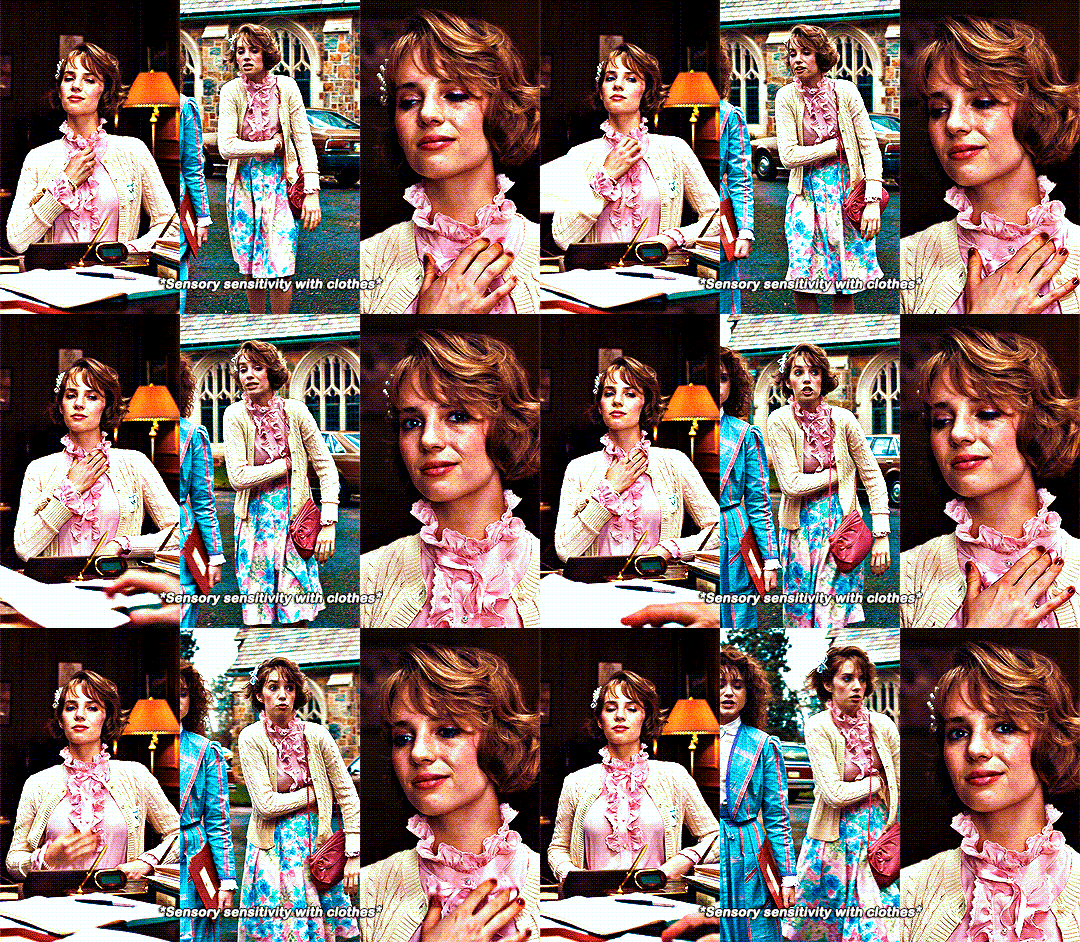
During one particularly memorable scene, Robin, a notorious tomboy, is dressed up in tight frilly clothing which she constantly complains about, arguing that the borrowed outfit is itchy, the bra is pinching her, and the blouse is strangling her, which could suggest that sensory sensitivities could be driving her penchant for baggy clothing.

Most autistic fans did not notice much in the line of neurodiversity in season 3, but other keen eyed viewers have noted traits prior to season 4 citing her ability to hyperfocus, her memory, her ability to connect dots the others can’t, her blunt truth bombs and that she is a member of the LGBTQ+ community (which a large proportion of autists are). Robin also remarked in season 3 “I feel like my whole life has been one big error“, a sentiment that many an autist can relate to. It could be argued that perhaps now that Robin is part of the gang, she is far more relaxed and doesn’t feel the need to mask as much as she did in season 3.

Whilst it is highly unlikely that Robin will have an autism story-line given how poorly understood autism was in women during the 1980’s, nevertheless it’s always nice for autistic fans to feel seen when watching our favourite shows. It will be interesting to see how her character develops in season 4 vol 2 and beyond!

Hope you enjoyed this post dear Earthlings!

Have a lovely weekend! 🙂

Aoife

Autism in the Eurovision Song Contest

Greetings Earthlings! 🙂

This week I’d like to talk to you about one of my specialist interests- the Eurovision Song Contest, as this year one of the entrants is on the autistic spectrum! 😀

So, first things first, what exactly is the Eurovision Song Contest?

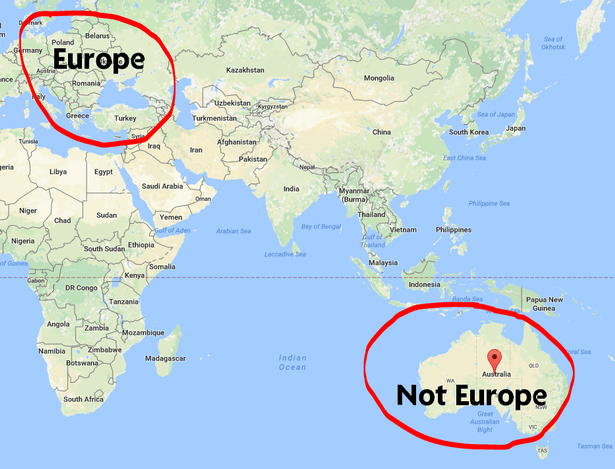
The Eurovision Song Contest (ESC) is an annual international songwriting contest organized by the European Broadcasting Union (EBU) that was first established in 1956 as a means of bringing divided European nations together through music in the wake of World War II. Originally, only 7 countries participated, but over the years musicians representing 52 countries have competed across Europe, Israel and Australia (don’t get me started on the logic for that one…)

Each participating country submits one original song under 3 minutes in length, and performs the song live on stage to the world, competing to win a trophy and the chance for their nation to host the contest the following year. There are two semi finals and one grand final, all held over one week, usually in May. The voting is a 50/50 split from audience televotes and panels of industry experts from each participating country.

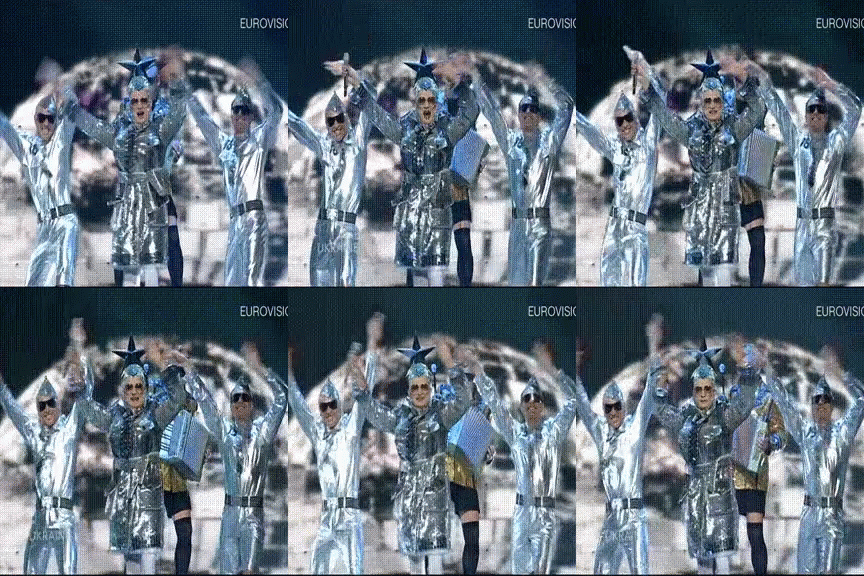
For those of you who are unfamiliar, Eurovision is very popular in Europe with an average annual audience of just under 200 million viewers. Over the years it has grown from a simple song contest to a huge spectacle with elaborate staging and often crazy performances from bread baking Russian grannies, to metal monsters, dancing drag queens, to flapping puppets (sorry again for that one Europe!), to powerful songs that unite us and capture the hearts of an entire continent.

Eurovision has also brought many acts to worldwide fame such as ABBA (Sweden 1974), Daði Freyr (Iceland 2020/2021), Riverdance (Eurovision 1994’s interval act), Céline Dion (Switzerland 1988) and most recently MÃ¥neskin representing Italy in 2021. A host of other established acts have represented their countries (or failed to do so) over the years, including Cliff Richard (UK 1968/1973), Julio Iglesias (Spain 1970), Enya (Irish song selection 1973), Olivia Newton John (UK 1974), Katrina & the Waves (UK 1997), Bonnie Tyler (UK 2013), Cascada (Germany 2013), Darude (Finland 2019), The Rasmus (Finland 2022) and even Elton John and Bernie Taupin wrote a failed song for Lulu in 1969 (who won with a different song that year) for the UK national selection! My native Ireland retains the title of most all time Eurovision wins (7 in total, including 3 years undefeated between 1991-1994), so naturally Eurovision was a big deal when I was growing up 🙂

We get it, you love Eurovision Aoife, so where’s the autism link?

This year, the Australian delegation (we’ll let the geographical issues slide for a few paragraphs) are sending autistic singer Sheldon Riley to the contest in Turin, Italy with his song ‘Not The Same‘ where he talks about his struggles in life, and particularly his struggles growing up with Asperger’s Syndrome. You can check out the song here:

Diagnosed at 6 years old, Sheldon was told that he would never be “normal”, that he would never achieve his dreams, never have a job, friends or a romantic partner. Instead, he has defied the odds and went on to compete in several song competitions in Australia in addition to America’s Got Talent. As part of his stage persona, Sheldon incorporates elaborate crystal masks into his performances to hide his face to allow him to focus on his singing as he often feels judged for his appearance, a shield to allow him to perform, taking autistic masking to a new level. With his participation in Eurovision however, Sheldon finally feels confident to start ditching his mask to embrace who he really is. You can also hear Sheldon talking about his experiences of autism to BBC in the video below:

Sheldon isn’t however the first autist to take to the Eurovision stage. In 2015, Finland sent the rock band Pertti Kurikan Nimipäivät comprised of disabled musicians with Down Syndrome and Autism. To this day it holds the record for the shortest ever song performed at Eurovision:

On another level, Greta Thunberg’s mother, Malena Ernman, who is an outspoken advocate for autism awareness, represented her native Sweden in the Eurovision in 2009!

Whilst these are the only confirmed examples of autists competing in the Eurovision, it’s quite possible that other past artists may also have been on the spectrum (knowingly or otherwise) but they have not revealed their diagnosis.

Fun Fact– yours truly contributed to last years 4th place Icelandic entry as part of an online virtual choir of 1000 fans, so you could say that one other autist has appeared on the Eurovision stage (in a roundabout way 😛 )

Hope you enjoyed this post dear Earthlings! 🙂

Have a lovely weekend and enjoy the competition tomorrow night if you’re watching!

Aoife

Autism in Holby City

Greetings Earthlings! 🙂

This week I’d like to talk about an autistic character in the British medical TV drama ‘Holby City‘ that I have been following for a few years now- Jason Haynes.

Jules Robertson - IMDb

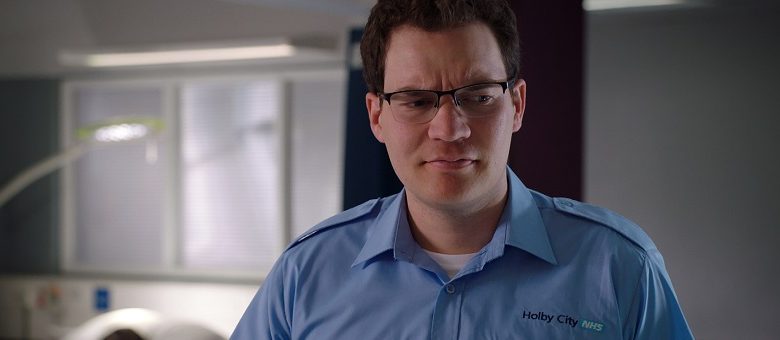
One of the really special things about this character is that Jason is portrayed by actor Jules Robertson who has Asperger’s syndrome – the first autistic actor to have a recurring acting role in a BBC TV show! Jules has been playing Jason on and off again since 2015 and has proven very popular with both his co-stars and the audience. His portrayal has been praised by several autism charities in the UK and Jules has even been nominated for a BAFTA for his acting work.

You can see Jules in action as Jason in this behind the scenes video:

Over the years the writers have really developed Jason’s character to highlight how much can be achieved when autists are properly supported. When he first appeared in the show, Jason was very literal, and needed full time care. Over time, he get’s a job as a hospital porter, get’s a girlfriend (who also has Asperger’s) and they have a baby and get married living completely independent lives, really challenging the stigma surrounding what autists can and can’t do.

I always get great enjoyment out of any episode that Jason appears in (he get’s some great one liners!). It’s a pleasure to see such a truthful portrayal of autism. Whilst Jules may not have some of the same issues in real life as Jason does, nevertheless he lights up the screen, fully able to be his true autistic self.

Jules Robertson in Holby City

None of this would have happened were it not for producer Simon Harper who fought hard to have an autistic actor play Jason to avoid another cliched Rainman-esque portrayal of an autist. Minor accommodations are made when Jules is filming such as encouraging a calm set and preparing the scripts further in advance than would be the norm for him, enabling Jules to work and inspire the next generation of autists to realize their dreams.

You can read an interview where Jules talks about life with autism here:

https://disabilityhorizons.com/2019/05/actor-jules-robertson-on-living-with-aspergers-and-rising-to-fame-in-holby-city/

Hope you enjoyed this post dear Earthlings! 🙂

Have a lovely weekend!

Aoife

Autism on Screen- Pablo

Greetings Earthlings! 🙂

Today I’m going to take a look at the latest live-action/animation sensation, the acclaimed children’s TV show ‘Pablo‘.

Pablo is a five-year-old boy on the autistic spectrum in a new TV show (BBC/PA)

So what’s so special about it?

Co-produced by RTÉjr and CBeebies in Ireland and the UK, ‘Pablo‘ is a unique kids TV show about a 5 and a 1/2 year old boy with autism who with the help of some magic crayons, creates an elaborate world of animals to help him to cope with and make sense of the world around him.

Here’s a quick video about the show:

The really cool thing about ‘Pablo‘ is that the stories are based on the real life experiences of several people on the spectrum, and not only that, but all of the characters in the show themselves have autism! 😀

52 10-minute episodes have been created thus far, and several countries have expressed interest in broadcasting the show. Even Netflix wants to broadcast it!

So what’s the show like?

Granted I’ve only caught a few episodes of the show, but I found it to be an excellent and lighthearted show that both educates and entertains.

One of the things I really liked is that the show highlights the diverse nature of spectrum traits by personifying them as animal characters in Pablo’s imagination. Each character possesses different autistic traits as narrated in the catchy theme tune:

I really liked how in one particular episode the writer took literal thinking and turned it into something fun. Pablo spilled a bag of crisps which his mother said “went everywhere.” Following this, Pablo embarks on an adventure to locate the crisps in such far reaching places as the moon and at the bottom of the ocean! A new and inventive way to spin autism! 🙂

All in all this is an excellent show for the youth of today which should help to educate the next generation and make them more accepting of autism 🙂

Hope you enjoyed this post dear Earthlings!

Have a great weekend!

Aoife

Blog at WordPress.com.

Up ↑