Autism and Textures

Greetings Earthlings! 🙂

Today I’m going to talk about something that you may not be aware of in relation to autism- the issue of texture sensitivity.

During my assessment, I was asked by the psychologist if I had any issues with textures. Caught off guard (as I was unwittingly hoodwinked into attending the assessment 😛 ), I quickly answered no, only to realize hours later that in actual fact, textures influence my life hugely!

In all previous conversations about autism, I had never heard anything about textures, but these are in actual fact a common source of sensitivity for autists.

Rough seat belts, itchy labels and materials, even bras can be extremely irritating to the hypersensitive autist.

There was absolute war between my mother and I when I would refuse to wear a bra as a child! The sensation of the garment against my skin weirded me out and I found it extremely uncomfortable. I would even try wearing it over my thermal vest to place a barrier between me and it, buuuut it didn’t very work well…I was constantly fidgeting! 😛

Weird textures completely freak me out- cornflour (a particular pet peeve), some fruits and veg, yogurts (or most foods) with lumps in them and nail files to name but a few.

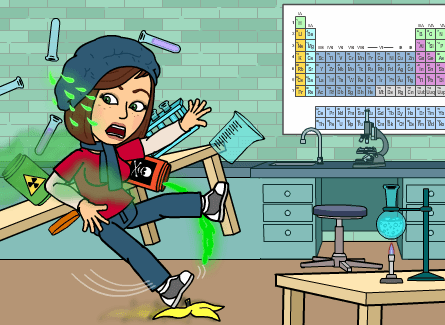
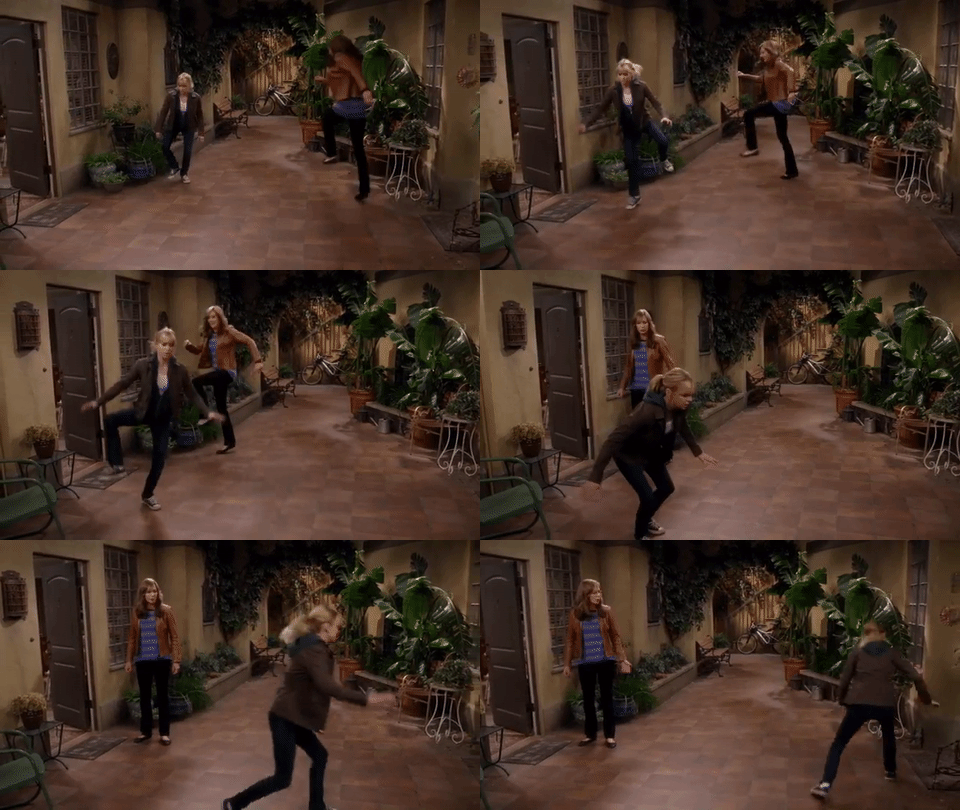
Encounters with such textures can lead to reactions like these…:

(Fun fact about me- I genuinely shake my head like a dog when I shudder! 😛 )

It’s not all negative though- you can learn to adapt and condition yourself to stimuli 🙂 I never drank a glass of water until I was 11 years old as it felt really weird to me compared with other more flavorful drinks. I gradually conditioned myself to it by taking one gulp water followed by one gulp juice (my family found this hilarious 😛 ) until the glass was empty- I now drink pints of water daily without issue! 🙂

Pleasant textures on the other hand pose an entirely different sensory experience, lighting up my brain like a Christmas tree! 🙂

The creamy texture of ice cream or chocolate melting in my mouth, the strangely irresistible and soothing feel of metal against my skin or the drug-like euphoria that comes from stroking a fluffy puppy-sheer bliss! 🙂

dfdsfhsae.PNG

As my sister remarked as I was writing this piece, it’s easier to list the textures that I do like than those I don’t! 🙂 😉

So what’s the scientific reason for this sensitivity?

As we have discussed in previous posts (Autism 101-Sensory Processing;Discussion-Trust, Intimacy and Sexuality), people with autism are hypersensitive to the sensation of touch. Dysfunctions in brain areas involved in sensory integration, in addition to hyper-connected and hyper-excitable neurons within the autistic brain, can greatly influence our responses to texture.

MRI studies of autistic brains also suggest that there is an exaggerated response to unpleasant stimuli in particular within the limbic system- a set of structures involved in such processes as emotions, behaviours and motivation.

It may seem like we’re consciously overreacting to certain textures, but our response is entirely neurological- so try to keep that in mind next time you see us pull a weird face after encountering an unpleasant texture! 😛 😉

Image result for nasty taste gif

Have a good week everyone! 🙂

Aoife

Autism on Screen- Snow Cake

Greetings Earthlings! 🙂

In continuation from the previous post, today I’m going to have a look at a female character with autism in the 2006 indie romantic-comedy drama (that’s a LOT of genres! 😛 )  ‘Snow Cake‘.

Snowcake.jpg

As discussed in my last post, gender bias is often an issue when it comes to women on the spectrum. Autism is viewed as a predominantly male condition, and as such this is reflected in Hollywood portrayals of autism.

We’ve all heard of ‘Rain Man’, but “Rain Woman” is rarely seen.

Snow Cake‘ is a really interesting example of this seemingly rare portrayal of autistic women on screen.

Starring Sigourney Weaver and the late Alan Rickman, ‘Snow Cake‘ explores the unusual relationship between Linda (a woman with high functioning autism) and Alex- a man who comes to visit Linda after her daughter Vivienne is killed in a car accident in which he was involved. Feeling guilty that he survived the accident, Alex set’s out to meet Linda and bring her some gifts that Vivienne had bought prior to her death, finding himself reluctantly drawn into her world.

You can view a trailer for this film below:

Before I get into the discussion of this, there is one line in the film (that can be seen in this trailer) that stands out for me:

I know all about autism- I’ve seen that film!”

bitmoji891163261.png

Granted, this line was likely included as a slight from the screenwriter, (a parent to an autistic child), towards public perceptions of autism, buuuutttt it does reinforce the importance of not believing everything Hollywood tells you of autism- something that one need bear in mind as to the portrayal of autistic women in this film in particular.

In terms of scientific portrayal of autism, the film gives a fairly accurate depiction of the symptoms.

BUT!

There is one major flaw…

Linda displays mostly male characteristics of autism!!

This is a common problem in on screen portrayals of autistic women as much of the information available to actors refers to male experiences of autism. For example, Diane Kruger was advised by a man with autism for her portrayal of Asperger’s syndrome in the series ‘The Bridge‘. When AS was featured in an episode of ‘Grey’s Anatomy‘ many years ago, a behind the scenes featurette revealed that the actress based her performance on a boy she knew with autism!

For her role in ‘Snow Cake‘, Sigourney Weaver conducted a lot of research into the role and was actually coached by a woman with autism- Ros Blackburn. Aside from her endearing eccentricities however, the character of Linda does not differ greatly from other films featuring male characters.

The problem here may lie in the script for the film, as screenwriter Angela Pell is mother to a boy with autism, and her writing would have been heavily influenced by her experiences.

However, the film does provide a good reflection of the reality of autism in that Linda is not a savant or overtly intelligent as is often over-represented.

In addition to this, Alan Rickman interestingly chose not to research autism ahead of filming in order to accurately reflect the reactions and frustrations that an outsider would experience in an encounter with an autistic individual, adding a further dimension of realism to the film.

Image result for snow cake

All in all, gender issues aside, ‘Snow Cake‘, while not the most riveting of films (wasn’t my cup of tea) does paint quite a realistic picture of life with autism.

Happy Friday everyone! 🙂

Aoife

Discussion:Women & Autism

Greetings Earthlings! 🙂

Today, I’m going to discuss a very important issue within the autistic community- gender bias and the misdiagnosis of women with autism.

If I asked you to close your eyes and picture a person with autism, the majority of you will have pictured a man (most likely Dustin Hoffman! 😛 ).

Image result for rain man gif

The current ratio for male to female diagnosis of autism is estimated at 4:1 as the condition is thought to be rarer in women; however, many experts now believe that this figure may be as low as 2:1.

So why the discrepancy?

Did you know: Women with autism present differently to males on the spectrum?!

bitmoji169946342.png

Yep- as neurotypical men are from Mars and women from Venus, so too are autistic men and women from entirely different planets (maybe Krypton and Daxam for the DC nerds out there 😉 )!

So how do women with autism differ from men?

For starters, several neurobiological studies have shown distinct anatomical differences between the male and female autistic brain (which I will explore in a separate post at a later stage 🙂 ). Girls with autism are thought to have more active imaginations than boys and participate more in pretend play, often creating elaborate fantasy worlds (I had a particular penchant for this. My sister and I created an elaborate world for our teddies each night, so elaborate that our star couple had their own imaginary portable mansion when we went on holidays!! 😀 ). Reports also indicate that women have lower levels of restrictive and repetitive behaviours than men.

Evidence has also shown that women are better at recognizing emotions than males, almost as well as their neurotypical peers in fact, and demonstrate signs of better attentiveness in social situations.

As a gender, women are more socially inclined than men, and so female autists feel a greater need to make an effort socially. It is expected that women should be more social than men when it comes to communication, and as a result, we are often held to greater social standards. I can’t count how many times a teacher/my mother pulled me aside to advise or chastise me for my social ineptitude! 😛 It was thought that I struggled, not because something was wrong, but that I simply didn’t try hard enough socially. Had I been a boy this would not have been the case.

One of the biggest differences between men and women with autism is the tendency among women towards social mimicry. Girls are particularly adept in masking their symptoms through observation of their peers, obscuring them from the view of parents, teachers and medical professionals.

I’m particularly guilty of doing this. For example, when someone asks ‘How are you?’, I honestly don’t know how to respond! Should I just say fine? Should I reciprocate the sentiment? Should I detail the many ways my life sucks at present?! Three of the simplest words in the English language and I struggle to respond! I eventually developed a mental phrase card in my head for common questions like these so that I would have a standard answer when called for, and 90% of the time you pass for a functioning human being! Other times you get caught off guard and situations like this happen 😛 :

15978097_10209539652072238_4508618477815437814_n.jpg

My life is full of these little social coping mechanisms, which I’ll expand on separately at a later stage 🙂

Finally, as previously discussed, when it comes to specialist interests, female autists tend to have interests resembling those of their neurotypical peers (horses, books, soap operas, boybands etc.), which can additionally hide them from view. Psychologists have also noted a ‘mothering’ tendency among peers of autistic girls, taking autists under their wing and adopting them into a social group. This further creates an illusion of social functioning for teachers, allowing these women to further slip beneath the radar.

As a result of all these differences, women are diagnosed much later than men, (men on average are diagnosed in childhood (~7 years); women as teenagers or adults)  if at all.

But why it it only now that these gender differences are emerging?

Gender bias in autism can trace it’s lineage to the original observations of both Leo Kanner (described autism) and Hans Asperger (described Asperger’s syndrome) in the 1940’s. In Kanner’s work, ‘Autistic Disturbance of Affective Contact’ (1943), Kanner observed a group of 8 boys, but only 3 girls with autism. Hans Asperger on the other hand, exclusively observed groups of boys, believing that AS was uniquely male! As a result, AS was not described in women until the 1990’s!!

whatgif_zps8269bc70.gif

I know!

Consequently, the diagnostic criteria for autism has been largely based on the male model of the condition, and as such, many women like me have slipped under the diagnostic radar.

Due to our inherent talent for social mimicry, women with autism unknowingly find themselves hidden from view. The warning signs that are obvious in males are not always visible, and as a result thousands of women go un-diagnosed, or worse still are misdiagnosed.

Mental health issues such as OCD, eating disorders, ADD, bipolar disorder, anxiety and depression are frequently linked with ASD’s and are particularly prevalent among women.
Experts believe that women with autism tend to internalize their autistic symptoms, leading them to exhibit greater depressive symptoms and experience higher levels of anxiety than male autists.

Women are frequently mis-diagnosed with mental health issues, whilst the underlying root ASD goes unnoticed.

The internet is filled with stories of these women who spent years in mental anguish without receiving the one diagnosis they needed. I recently came across an article where it took “10 years, 14 psychiatrists, 17 medications and 9 diagnoses” before a 21 year old girl got her autism diagnosis! You can read the article here: (https://spectrumnews.org/features/deep-dive/the-lost-girls/).

Researchers and clinicians have in recent years begun to adapt the diagnostic criteria to better serve autistic women, but there is much work still that needs to be done.

Rain Man‘ has dominated for too long- we need now to focus on “Rain Woman”.

bitmoji-1475045929.png

Aoife

Autism on Screen- My Name Is Khan

Greetings Earthlings! 🙂

In the next part of my autism on screen series, I’m going to explore the portrayal of autism in the Indian drama film ‘My Name Is Khan‘ (2010).

My Name Is Khan film poster.jpg

A dual Hindi and English language film, ‘My Name Is Khan‘ follows Rizwan Khan, a Muslim man with Asperger’s syndrome, who set’s out on a journey across America to tell the president that he is not a terrorist following a sectarian attack on his family in the wake of the events of 9/11.

Check out the trailer below! 🙂

So how does this film measure up in it’s portrayal of the realities of AS?

The film opens with a disclaimer stating that the film makers have endeavored to depict AS as authentically and sensitively as possible, however, as this is a work of fiction, they acknowledge that certain creative liberties were taken in the portrayal of autism- so as with ‘Rain Man‘, take the film with a grain of salt!

That being said, I found this film to be generally quite accurate from a symptomatic perspective. Granted, Khan appears slightly weirder than the average person with AS and many of his symptoms are exaggerated, but overall I felt that this was a solid onscreen portrayal of autism.

In particular I felt that this film gave a good representation of repetitive behaviors and sensory sensitivity.

Throughout the film, Khan can be seen fiddling with some stones in a repetitive manner.

autism stones my name is khan aspergers syndrome repetitive behvaiour

I may not carry stones around with me, but I am constantly fiddling with my jewelry in a similar manner. It’s a compulsive action- I have this constant need to reach out and feel my chain between my fingers. There’s something incredibly soothing about the motion, especially when you’re particularly stressed. Actions such as these are referred to as stimming or self stimulation. I’ll dedicate a post to stimming at another stage 🙂

As regards sensory sensitivity, I thought that the film presented more of a normalized and subtle reaction to sensory stimuli than most films featuring autism, particularly in relation to Khan’s sensitivity to the colour yellow (there’s a particularly funny moment where he changes direction on the street to avoid looking at someone wearing a yellow top!).

yellow my name is khan

When I first watched this film, I thought that this had to be an exaggeration, but in actual fact, as I mentioned in the last post, boys with autism really struggle to process the colour yellow! Scientists think that this may result from a sensitivity to luminance in autists. Alternatively this may occur as yellow is one of the most heavily sensory loaded colours, as it engages multiple colour detection cells (called cones) in the eye.

Comparing this film to ‘Rain Man‘, there is quite a difference in how autism is portrayed. There was a far greater focus on everything that is good about Khan rather than areas of disability in his life, which can often be exploited in film for dramatic effect. Unlike ‘Rain Man‘, modern films about autism, such as this, have the added benefit of over twenty years of research and observation of the autistic condition, leading to more accurate depictions/attitudes to difference on screen.

Unfortunately however, Khan is depicted as quite intelligent (even called a genius), with superb memory and a savant-like ability to fix any mechanical item known to man, further promoting the stereotype of the autistic savant. These traits however, are somewhat muted in comparison to ‘Rain Man‘, giving a slightly more realistic portrayal of autism.

So there we are- hope you all enjoyed this piece 🙂 I would highly encourage you all to watch this film at some stage. Autism aside, this is an amazing film- one of the best I’ve seen in a long time! In the latter half of the film, you start to forget that Khan is in any way different, finding yourself swept up in this powerful story of love, loss and acceptance. Having watched only the trailer to re-jog my memory, I really want to see this film again myself! 😀

Weekend plans sorted! 😉

bitmoji-1592672837.png

Aoife

Autism 101-Sensory Processing

Greetings Earthlings! 🙂

So today I’m going to briefly introduce you to the issue of sensory processing for people on the spectrum. This is a very broad topic, but I’ll expand on the issues in more detail at a later stage 🙂

Many individuals on the autistic spectrum struggle to process every day sensory information. Sounds, textures, smells, lights, even colours (boys in particular struggle to process the colour yellow) can overload the nervous system and greatly upset us, effect our behavior or even trigger a meltdown.

But why?

In autism, our senses can be either hyper or hypo sensitive (sometimes even both) to stimuli at different times. Our senses are heightened- smells are stronger, sounds are louder. As a result of this, stimuli reverberate all the more intensely in our brains.

Think of the brain as a computer server at exam time where everyone is logging in at once. Too much information has been entered into the system, but the server can only cope with so much. The entire system becomes overwhelmed and the server crashes.

giphy (24).gif

Here’s just a quick video simulation of sensory overload.

Warning for those on the spectrumthis video contains flashing lights, bright colours and loud, sudden noises

For me personally, I have many (mild) issues with sensory processing. Smells, tastes and textures are a daily struggle. For example, I don’t think I’ll ever be able to eat a salad as the smell alone makes me want to throw up- I’m dreading what pregnancy may one day bring! 😛 😉

Loud or irritating  noises, (especially repetitive ones), too can be a challenge. Don’t get me started on the shock I get when a passing bus makes that giant hiss/woosh sound or a car honks the horn unexpectedly!! 😛

schauble.gif

Most days, you’re lucky and the offending stimulus passes quickly, but other times it can get the better of you. I recently had a near meltdown on holiday from a cocktail of excessive heat, hunger, exhaustion and social frustration.

Top Tip– Keep on top of your hunger/thirst. I’ve discovered this past year that an excess of either will make me act really loopy! 😛

When you’re hit by sensory overload, it feels as though your head is caught in a vice grip. Your mind is screaming, unable to focus on anything else but the source of discomfort.

bitmoji-943797920.png

The worst part of it I find is coming across as a complete basket case when overloaded. You don’t get the most sympathetic of looks when you complain about a persistent noise- few can understand how it’s making your brain hurt.

giphy (23).gif

So what does science have to say about sensory processing?

Sensory integration involves three basic sensory systems:

  • The tactile system (touch)- comprises a series of nerves passing information from the skin to the brain
  • The vestibular system (sound)- comprises a series of structures in the inner ear involved in movement detection
  • The proprioceptive system-a series of receptors in the muscle (proprioreceptors) which feed information to the brain about the body’s position

These three systems share a close but complicated relationship which allow us to experience, process and respond to different stimuli. Dysfunction in this network can cause hyper/hypo sensitivity, in addition to problems with coordination, behavior and academic issues.

Evidence from brain imaging studies has also shown that autists experience stronger responses in the brain to sensory stimuli in areas that process sensory information and the amygdala- an area that is involved in attention, emotional reactions and threat response.

But why is this?

Several studies have found evidence of hyper-excitability and hyper-connectivity in the autistic brain.

Evidence shows that in many cases of autism, the neurons located in the sensory cortex of the brain are more sensitive and excitable than others. This is kind of like how a person can be more ticklish in some parts of the body than another- the nerves in the underarm are more excitable than those of the arm.

The autistic brain has also shown signs of hyper-connectivity, where regions of the brain are excessively connected- like an overloaded plug!

giphy (22).gif

This amplifies memory formation, sensory processing and causes an autist to be hyper-emotional, which can make the world painfully intense. Scientists have theorized that autists prefer safe, controlled and predictable environments as a coping mechanism to actively avoid this pain.

Finally, studies have indicated that sensory issues, in addition to a number of other autistic behaviors, may be linked to neurotransmitter (chemical messengers between body and brain) levels in the body. As previously discussed, some neurotransmitters are dysregulated in autism. Evidence suggests that in cases of autism, there are higher levels of excitatory neurotransmitters, and lower levels of inhibitory (i.e. calming) neurotransmitters. These high levels of excitatory neurotransmitters cause neurons to fire excessively, which can influence sensory perception and processing.

I’ll expand a little bit more on the individual sensory issues at a later stage 🙂

Enjoy your week everyone 🙂

Aoife

Autism 101- Savantism & High IQ’s

Greetings Earthlings! 🙂

Following on from the previous post examining ‘Rain Man‘, today I’m going to dive into the area of high IQ’s and savantism relating to autism.
Now before we start, remember- in spite of what Hollywood has led us to believe, savantism is a RARE condition affecting between 0.5 and 10% of autists. This means that over 90% of the autistic community do not possess these skills.

So be sure to take ‘Rain Man‘ with a grain of salt.

bitmoji1869188725.png

Now that we’ve got that out of the way, let’s explore this fascinating condition properly 🙂

So first off- what exactly is savantism?

Savant syndrome is an extraordinary phenomenon wherein a person with serious mental disabilities (such as autism) shows unusual or exceptional aptitude for a particular area, task or activity in spite of their mental challenges. Historically, these individuals were also referred to as ‘idiot savants’, a term that is sometimes still used today.

66515750.jpg

While seemingly  insensitive, the phrase actually comes from the French term meaning unlearned (idiot) skill (savant).

Surprisingly, savant skills tend to exist within five different skill categories:

  • Music (perfect pitch, performance skills)
  • Art (drawing, painting etc.)
  • Mathematics (human calculator abilities)
  • Calendar calculating (i.e. can tell you the weekday a previous date fell on)
  • Mechanical/Spatial skills (model construction, mental measurement calculation)

Other skills have been recorded, but most generally fall within these categories.

Like autism, savant syndrome exists on a spectrum with varying degrees of savant ability. For example, there are:

  • Splinter skills- the most common form, involving memorization and obsession with facts, music, trivia, licence plate numbers etc.; kind of like specialist interests
  • Talented savants- who show highly honed talents and abilities predominantly in single areas of expertise 
  • Prodigious savants-those who possess extraordinary skills

Savant skills are additionally accompanied by exceptional memory. For example the ‘megasavant’ Kim Peek on whom ‘Rain Man‘ is based, memorized over 6000 books in his lifetime, all US area and Zip codes, several maps and possessed encyclopedic knowledge of music, geography, literature, history and sports to name but a few!!!

BB4qxnF.gif

Astonishing!!! 😀

So what’s going on in the brain to cause this?

Numerous theories have been proposed to explain this phenomenon, but as with autism, there is no one single theory to explain all cases. However, two theories in particular seem to dominate.

As savantism is found more often in cases of autism than in other mentally disabled groups, leading expert Simon Baron-Cohen proposed a theory concerning hyper-systemizing.

76bRe.gif

I know- it sounds complicated! 😛

But basically the theory suggests that savantism results from an autists ability to recognize repeating patterns (systemizing) and excellent attention to detail. People with autism have a different style of thinking and memory filing and this predisposes them to savant skills 🙂

Further to this another theory, supported by several neurological studies of savants, indicates that dysfunction in the analytical left hemisphere of the brain (responsible for logic, language, reasoning, maths etc) causes the right hemisphere (creativity, imagination, art, music) to compensate, which can cause savant skills to emerge. It’s kind of like the right hemisphere is giving the left a piggyback.

b0lko_s-200x150.gif

In addition to savantism, higher IQ’s are sometimes linked to autism and Asperger’s syndrome.

A number of studies have found that some of the genes linked to autism development are also associated with high intelligence. The link between autism and intelligence is not yet clear, however, people who carry these genes scored better than those without on intelligence tests.

These findings create an interesting paradox given that autism is generally characterized by lower IQ’s. Researchers have proposed the hypothesis that autism involves augmented, but imbalanced elements of intelligence to counter this paradox. This basically means that autists have higher levels of intelligence in some areas (e.g. academia, mathematics, art etc.) but not in others (e.g. social intelligence).

So there we have it, just a quick over view of savantism and IQ in autism! 🙂

Enjoy the weekend everyone! 🙂

Aoife

Blog at WordPress.com.

Up ↑