Autism on Screen- Sesame Street: Meet Julia

Greetings Earthlings! 🙂

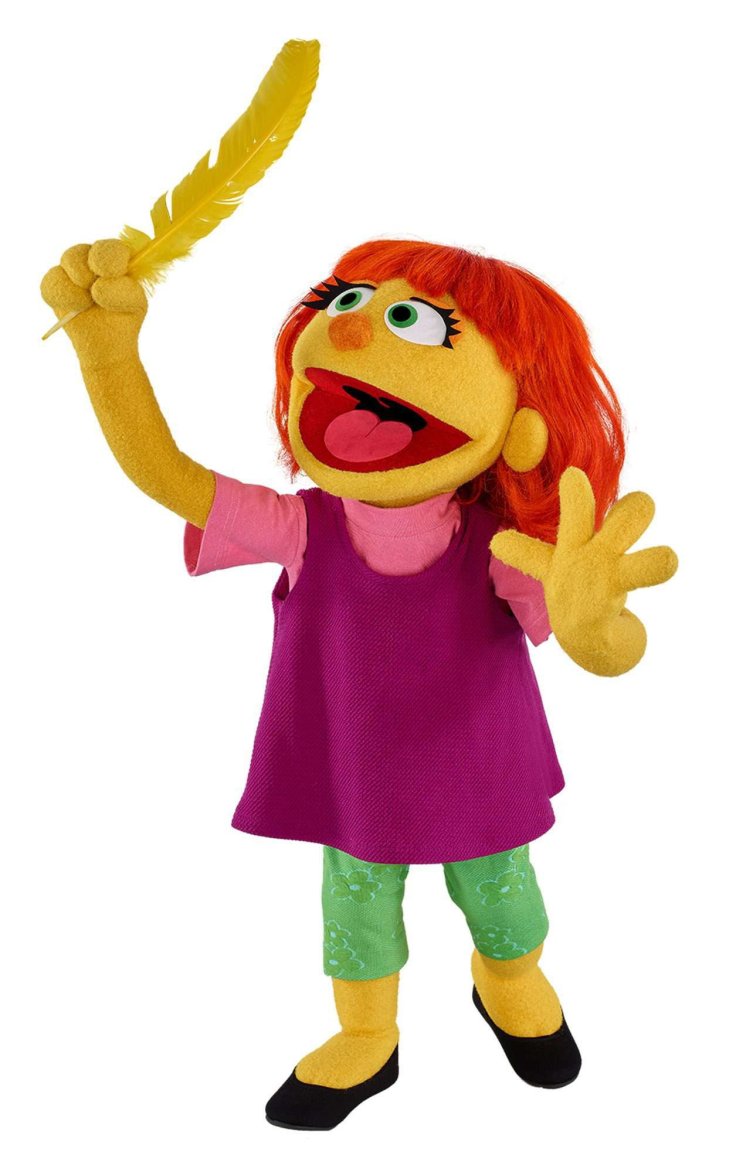
Earlier this week, popular children’s TV show Sesame Street officially debuted a new puppet with a twist- a puppet with autism! 😀 The character of Julia was introduced as part of Sesame Street’s autism initiative, first appearing on Monday to rave reviews from fans, experts and parents everywhere.
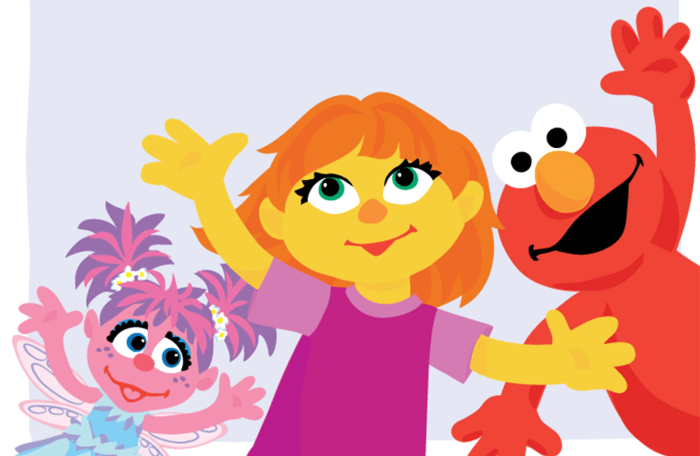
Image result for julia sesame street

Whilst only making the news in recent months, Julia has in actual fact been around since 2015, having first appeared in an online storybook about autism as part of ‘Sesame Street’s’ autism initiative- ‘Sesame Street and Autism: See Amazing in All Children’.

The creators of Sesame Street established this initiative in 2015 in order to promote better understanding of the condition after a study revealed that children with autism are more than five times more likely to be bullied than their peers!! This initiative was developed in partnership with autism workers, advocates, parents and autists themselves in order to ensure that the topic is handled in the best possible way.

You can find out more about the initiative here:

http://autism.sesamestreet.org/

It’s a nifty little website providing videos for kids, videos for parents, daily routine cards and loads of other useful materials for children and adults alike 🙂

So what is Julia actually like?

Image result for julia sesame street

Julia first appears onscreen quietly painting with her friends Elmo, the fairy Abby Cadabby and Alan. When Big Bird comes on the scene, Julia largely ignores him, completely engrossed in her painting. The other puppets are engaging in finger painting, but Julia makes noises of disgust and uses a paintbrush instead, with Abby remarking that Julia hates the feeling of paint on her fingers.

With their paintings finished, Abby gives Julia’s painting huge praise (it was easily better than Abby and Elmo’s efforts), remarking that she is very creative- casually demonstrating the talents that autists possess without veering into savant stereotypes. Big Bird tries to hive five Julia for her efforts, but still she ignores him, making no eye contact. When Julia hops off to play tag with the other puppets, Big Bird questions whether Julia likes him or not. This leads Alan to explain autism to Big Bird so that he understands that Julia does things a little differently, “in a Julia sort of way“- but she’s also lots of fun! 🙂

Later in the episode, Julia hears nearby sirens and covers her ears in response to the noise, needing to go somewhere quiet for a bit, subtly demonstrating how an autist can struggle with sensory sensitivity. Julia also carries around Fluster, a rabbit toy which she strokes to help her calm down, showing the audience ‘stimming’ in action.

The primary focus of this segment is to demonstrate that although Julia has autism, she can play and be your friend just like everyone else. After Big Bird remarks that Julia is not like any friend he’s ever had before, Elmo and Abby point out that none of them are exactly the same, bird, monster, fairy- they are all different, but are friends regardless. Julia talks a little differently, repeats sentences, flaps her arms when she gets excited- but she’s just another playmate, however different, at the end of the day 🙂

You can watch Julia’s debut in full in the video below 🙂 :

My school life would have been so much easier had other children been better able to understand and accept me as the other puppets accept Julia, but with initiatives like this at work I have great hope for the next generation 🙂

This episode was handled both sensitively and intelligently to provide children everywhere with an insight into autism. All behaviours are explained, little is left for the audience to guess at. Julia is different to the other puppets yes, but the episode normalizes her differences so that when children encounter real people like Julia, they will be treated with acceptance and understanding 🙂

Here’s a behind the scenes look at how the character was brought to life:

Fun Fact: Julia’s puppeteer (who can be seen in this video thumbnail) is a mother to an autistic son in reality!

This was a pleasure to watch and I look forward to seeing all of Julia’s future adventures in the show! 🙂
Aoife

Inside the Autistic Brain

Greetings Earthlings! 🙂

Today I’m going to dive into the physiology of the autistic brain to explain what’s actually going on at the neurological level. I’ve touched on aspects of the science in previous posts, but I wanted to give you a quick overview post where the main points in the one place 🙂

So let’s get down to some science! 🙂

247171_588045804539417_1828609848_ndg.jpg

Hyper-connected Neurons:

Scientific evidence suggests that neurons in the autistic brain are hyper-connected. Specifically, studies indicate that autists have too many synapses in the brain. The synapse is basically a gap or a junction between two neurons where chemical messengers (neurotransmitters) carry information like a ferry from one neuron to the next. It looks a little bit like this:

Image result for synapse

During normal brain development, about half of the synapses we are born with are “pruned” off. In autism, this process is slowed down, and so autistic children have an excessive amount of synapses compared with their neurotypical peers. As these connections are essential to communication between neurons, this can greatly effect how the brain works and processes information.

Dysfunction at the Junction:

In addition to possessing an excessive number of synapses, communication at these neuronal junctions is also impaired in the autistic brain.

Animal studies have indicated that synapses function differently in the autistic brain as a result of genetic mutation. Mutations cause certain proteins to be absent in autism- proteins that are essential to the normal functioning of the synapse. As a consequence of this, the transmission of information between neurons is affected, resulting in a number of social and behavioral issues.

Think of physical junctions on a busy road- if something goes wrong at the junction, a chain of chaos will ensue!

Image result for junction crash gif

Hyper-excitable Neurons:

Research shows that in many cases of autism, neurons in certain regions of the brain are more excitable than others. This means that these neurons are more sensitive to stimulation. For example, the neurons located in the sensory cortex of the brain (which processes sensory information such as smell), are more sensitive and excitable than other neurons. This is kind of like how a person can be more ticklish in some parts of the body than another- the nerves in the underarm are more excitable than those of the arm.

This sensitizes the autistic brain to all kinds of stimuli as discussed here.

Dysregulated Neurotransmitter levels:

As previously mentioned, information travels across the synapses in the brain via chemical messengers known as neurotransmitters. In the autistic brain, the levels of these neurotransmitters are dysregulated- or out of sync. Research indicates that individuals with autism tend to have higher levels of excitatory neurotransmitters (e.g. glutamic acid) and lower levels of calming neurotransmitters (e.g. GABA, serotonin) causing neurons in the autistic brain to fire excessively. In addition to this, levels of the neurohormone (a chemical that acts as both a hormone and neurotransmitter) oxytocin, which plays an influential role in trust and social behaviours, are also out of balance. Moreover, dopamine (a neurotransmitter which can both calm and excite) is also dysregulated in autism. Together, the action of biochemicals like these influences a number of autistic behaviours and issues such as ADHD, mood, appetite, sleep, anxiety, sensory processing, social behaviours, learning, memory and emotional responses.

Male vs Female Brain

Perhaps one of the most fascinating  things that I have discovered about autism are the anatomical differences between the brains of the male and female autist. Brain imaging studies have revealed that autistic women have brains that are anatomically similar to neurotypical male brains, and the brains of male autists share anatomical similarities to those of neurotypical female brains.

In short- this indicates that men with autism have feminine brains, and women with autism have masculine brains!!!

bitmoji543288982.png

I know!!!!

It sounds weird, but it makes a world of sense. Oftentimes I’ve felt like I had a male brain growing up- my tomboyish interests, my fashion sense, my preference for male company, my inability to walk in heels; it all fits!

Strange but true! 🙂

There we have it Earthlings- hope you enjoyed this brief insight into the physiology of the autistic brain 🙂 There is no clear mechanism through which autism acts, these are just some of the likely pathways involved. I’ll explore other possible mechanisms in a later post.

Have a good week everyone! 🙂

Aoife


A Siblings Perspective of Autism

Greetings Earthlings! 🙂

Going to shake things up a little bit today with an interview!

bitmoji-649041113.png

When it comes to experiences of living with autism, we hear most frequently from parents and those with the condition themselves. Oftentimes we forget that siblings of children with autism are also living the experience. So today I’m going to interview my sister Órlaith about her experiences of growing up with a sibling on the spectrum 🙂

What am I getting myself into….

14937174_1331590530184937_1924163464812313724_n.jpg

Over to you then Órlaith! 🙂

orl.png

Hello everyone! I’m Órlaith, Aoife’s younger (but not youngest!) sister. She’s roped me in today to talk about how life was growing up oblivious to the fact that Aoife has autism… and to provide some lovely anecdotes about some of her finest moments… Muahaha… So let’s get started!

Aoife: Growing up oblivious to the fact that I was on the spectrum, did you ever feel that something was different about me? Did you ever think my behaviour odd?

Where do I start! We always knew that there was something different about you. If you ask mammy I’m sure she will tell you you were born different. I suppose the most stand out things though were your spectacular “temper tantrums”, fantastic lack of tact, and your…amm… preference for always telling the truth…

I never really understood why when you got mad things really escalated like they did, I always thought it was not usual. Aoibhlinn (our other sister) and I would have had our moments but they were nothing compared to yours! Of course now with hindsight it’s easy to see that they were actually meltdowns that you weren’t really in control of but at the time it seemed very odd.

The tact and the truth telling always went/go hand in hand, it definitely wasn’t the norm for someone (in Ireland anyway), to tell you exactly what they think, no sugar coatings. That always struck me as odd. I’ll always appreciate being told that I look terrible… 😛

Looking back on it now, even when we watch old videos of you when you were about 5, it’s so obvious you have autism!

orl 2.png
Aoife: Did friends or other children ever pass comment to you about my “uniqueness” (for want of a better term)?

They did from time to time, which was never easy to hear because it’s your sister that people are talking about.  

Aoife: Did you ever find it hard to relate to me versus Aoibhlinn or other children?

Nah brah, I got your back jack! 🙂 Like, you often took managing but I never had a problem connecting with you, probably because we always liked the same things. And I dunno, you seem to like me or something so I think that helps 😛

Aoife: How did you feel around me when I would have a meltdown? What did you make of my meltdowns?

In general, the initial reaction was “Oh lord she’s at it again”, I think we all just got used to you and thought you were just being dramatic (see that time you threw everything out the window 😛). I’m a pretty anti-confrontation person anyway so when your blow-ups really blew up I really hated it and wanted you to just calm down and see reason, but I now know that when you’re in the middle of a meltdown you can’t see reason! Just having a, what we call, “Aoife Moment™”.

Screenshot_20170405-190406.png

Aoife: Growing up, even though you’re younger than me, did you ever feel responsible for me, as if you were my big sister?

Now that you mention it, I guess I did. Without being aware that you had autism and that you had to basically be taught how to behave in social situations, I think that I always felt like I had to show you how things work in the world and make you more “streetwise” because those things didn’t come naturally to you. You often don’t see the danger in things so often I feel a bit “big sisterly” and want to try and guard you and take you out of “Aoifeland” (for those who don’t know, this is the magical place Aoife goes to in her head when she zones out and falls down the stairs, spends hours looking at the ceiling, etc.). I still feel like I’m teaching you things every day, so I guess that changes the dynamic, dammit Aoife you’re meant to be teaching me! 😛

orl 3.png

Aoife: What did you know/feel about autism before I was diagnosed?

A hell of a lot less than I know now! Not a whole lot to be honest, I think I thought it was something that’s a lot more of a big deal than it is. I didn’t know how prevalent it is in people, which was a huge eye opener!

Aoife: Did you ever resent me for being different/my behaviours/social faux pas etc.?

A bit because you could have an “Aoife moment” and say something embarrassing about me 😛 Often you could have an embarrassing moment and, sure, that’s annoying, but on the up side, your social faux pas have led to some entertaining moments (“Mammy why is that man so smelly?” (Aoife 1994) Oh and let’s not forget your amazing sense of tact, it would be nice to not be insulted all the time, not that you mean to be insulting (I think…… 😛 )

Aoife: How did you feel about/react to my diagnosis?

I wasn’t in any way surprised because as we already talked about, there was always something odd about you! I think it was a good thing for you because it gave you a huge awareness and understanding about yourself and who you are, and that you’re not JUST an oddball, you’re an oddball with Autism! 😉

Aoife: Thanks for that then Órlaith! I bid you adieu! 🙂

orl 4.png

So there we are now Earthlings, I hope you enjoyed this post!

Enjoy the weekend everyone! 🙂

Snapchat-1754307707.jpg

Aoife (and Órlaith 🙂 )

Vaccines and Autism

Greeting’s Earthlings! 🙂

Yep…I’m going there today- the autism vaccine controversy.

Image result for exchange shocked looks gif

This issue has been thoroughly debated by scientists in recent years, so I’m going to discuss this once, and once alone.

In 1998, the now completely discredited scientist Andrew Wakefield published this paper in The Lancet:

Image result for wakefield paper

Notice the word ‘RETRACTED’ in bold red letters.

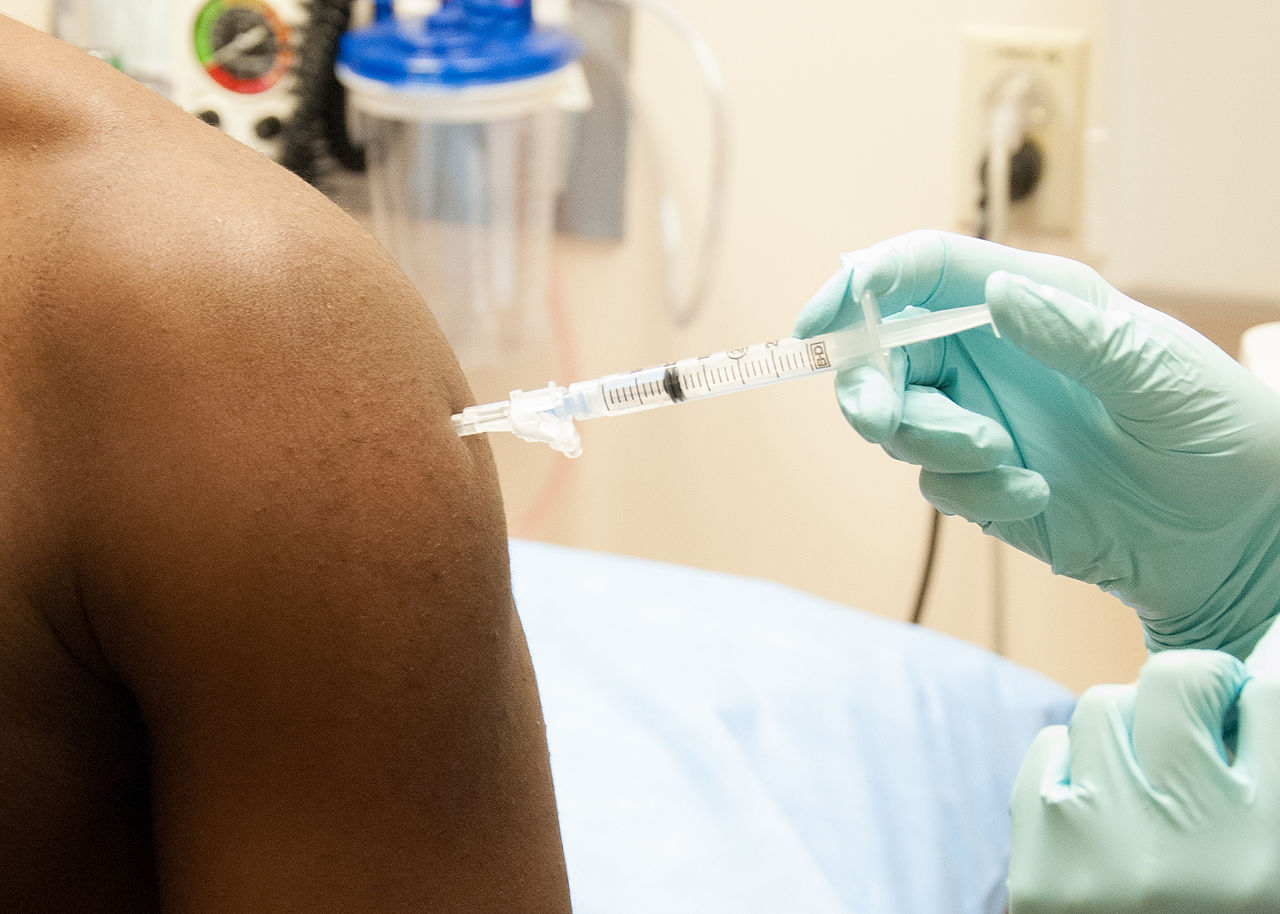
In this paper, Wakefield suggested that the MMR (measles, mumps and rubella) vaccine is linked to inflammatory bowel disease and autism.

This is what I like to call:

bitmoji-546088588.png

Subsequent to the publication of this paper, serious conflicts of interest and falsified data were discovered. This led to the paper’s ultimate retraction and Wakefield was struck off the medical register in the UK. Countless studies have endeavored to replicate the results of Wakefield’s work, but none have succeeded, proving that there is no medical link between the MMR vaccine and autism.

bitmoji1545013222.png

Here are the real facts about the case:

Wakefield’s work had multiple conflicts of interest:

  • When the paper was first submitted for publishing, he failed to disclose that he was in receipt of funds (~£435,000 or $674,000) from lawyers acting on the behalf of parents that believed the MMR vaccine was harmful!
  • During the course of his investigation, Wakefield filed a patent for a new measles vaccine, standing to gain financially from the downfall of the currently available vaccine
  • Patients were recruited to the study through anti-MMR campaigners

Several ethical codes were broken by Wakefield when conducting his research:

  • Wakefield unethically collected blood samples from children at his son’s birthday party (reportedly for £5 a pop)
  • Patients were subjected to unnecessary invasive procedures such as lumbar punctures and colonoscopies without prior ethical approval
  • The company that Wakefield sought to establish following the paper’s publication was to be headed by the father of one of the patients included in his study
  • Wakefield further tested out his new measles vaccine on a child without recording it in his medical notes or discussing it with the child’s GP
  • Most serious of all- Wakefield falsified and manipulated his findings!! It was discovered that Wakefield had either misrepresented or altered medical histories in ALL cases described in the study!

Aside from evidence tampering, the design of the study was quite poor. Wakefield’s research examined a very small patient cohort (only 12 children) using case reports- one of the weakest forms of medical research. Large scale studies examining hundreds of thousands of cases have not established a link between the vaccine and autism.

Image result for vaccine

Of the 12 children examined in the study, 5 showed signs of developmental delay prior to receiving the MMR vaccine, and a further 3 patients did not in fact have autism.

But what of other research in this area?

Studies which are often cited in the MMR controversy suggest a link between thimerosal, (a mercury containing compound), in vaccines and autism- a link which has been largely refuted. Additionally, thimerosal has been removed from or reduced to trace amounts in currently available vaccines- but autism rates still continue to rise.

Studies have also been conducted to explore the impact of the anti-vax movement on autism rates. These studies compare autism rates in those who did and those who did not receive the MMR vaccine. The result- no difference in autism rates between both groups!! 

Furthermore, following the publication of his paper, Wakefield proposed that 3 separate vaccines for measles, mumps and rubella was a safer alternative to the combined vaccine.

But did he have a point?

bitmoji2072993471.png

Nope- in countries where the practice of giving 3 separate vaccines at 3 separate stages was adopted, autism rates continued to rise regardless.

So there we have the facts about the MMR vaccine controversy. If you’re still a little bit skeptical, I’ll leave you with one final thought:

Wakefield has repeatedly refused to deny or replicate the findings of his study. If there was nothing to hide, then why not prove his claims?

bitmoji42958429.png

Aoife

Blog at WordPress.com.

Up ↑