Autism 101- Intro to the Spectrum

Greetings Earthlings! 🙂

Apologies to anyone who got an email yesterday- my computer had a moment and hit publish with only two lines written! 😛

Today I’m going to discuss some of the basics of autism to better acquaint you with the condition. As a scientist, I’ve read my fair share of research papers on the subject…

dafged (2).PNG

…so I’ll try my best to break it down! 🙂

Autism is defined as a pervasive neruodevelopmental disorder.

“What on earth is that?!” 

giphy-3

This simply means that autism is a disorder that impairs the normal growth and development of the brain resulting in a wide range of effects throughout the body.

Simple enough 🙂

Autism is thought to impair the development of the brain in areas associated with social interaction and communication, however, some studies suggest that the disorder may in fact affect the entire brain.

So how do these impairments manifest?

Typically, people with autism show deficits in three main areas:

  • Social communication
  • Social interaction
  • Social imagination  (this basically means that we struggle to predict the reactions of others, understand abstract ideas, imagine situations outside of daily routine etc).

These are known as the ‘triad of impairments’. There is also a fourth area of impairment describing struggles with sensory processing (touch, sound, light etc.), but ‘tetrad’ doesn’t quite have the same ring to it!

Each autistic person has their own unique blend of symptoms ranging from mild to severe (there’s FAR too many to detail in this post alone). No two individuals with autism are the same.

Forget about the stereotypes- if you’ve met one, you’ve met only one.

Here’s a little schematic I threw together showing how symptoms can vary using academic ability as an example:

spectrum.PNG

Such variations led to the catch-all concept of the autistic spectrum.

Everyone exhibits some autistic traits (my friends have remarked that the more traits I describe the more they think they have autism! 😛 ), but it is when you exhibit a high number of these traits that you are diagnosed with an autism spectrum disorder (ASD). For example, the average person scores ~15-17 out of 50 on the autism-spectrum quotient test, whereas the average autist scores 35 (I scored 38…!).

There are currently four separate ASD’s listed on the spectrum– Asperger’s syndrome (yours truly!), autistic disorder, childhood disintegrative disorder and pervasive developmental disorder not otherwise specified (PDD-NOS). I’ll write separate posts about these in due course 🙂

So what actually causes autism?

In truth- we don’t know for sure!

Most evidence points to a genetic cause as autism can be hereditary, but there has been no one autism gene isolated. As autism operates on a spectrum, it’s likely that there are numerous factors at play in each ASD. The current thinking is that lot’s of smaller gene mutations combine to cause autism. Like the X-men launching an attack! 😉

As interesting as the science of autism is however, it can’t really explain the experience.

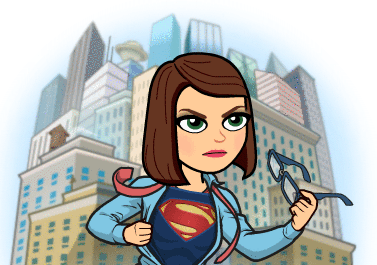
The easiest way to explain it I find, is to consider Supergirl.

Supergirl is an alien from the fictional planet Krypton. The elder cousin of Superman, she arrives on Earth as a teenager, a stranger in a strange land.  She looks like a human, talks like human and for the most part acts human, but Supergirl does not see the world as a human does; she perceives the world as a Kryptonian. When she first arrived on Earth, Supergirl had to learn to blend in. She would have struggled to learn our customs, sayings and social ways, all the while concealing her true alien self lest she be ostracized, just as I’ve had to do.

That’s what autism feels like- being an alien from another planet. What’s normal for you seems weird to the rest of the world. Social rules confuse you, you interpret things differently and find yourself spending much of your time hiding your quirks from sight.

As I’ve discussed in previous posts however, the autistic experience, while different, is not necessarily bad. With different perspectives and brain chemistry come different abilities. Like Supergirl, many of us have unique gifts and talents to share.

I can’t say that I have laser eyes or the ability to fly like her, but I am pretty handy with a set of knitting needles creating patterns off the top of my head! 🙂 Knitting was a struggle for me at first- I was the WORST in my class for years, but one day it just clicked! Something I was once terrible at could now be considered a superpower of sorts!
sgsd

This is one thing that I’d like to emphasize in these blogs- struggle. You’ll find that I will never use the word ‘can’t’ in relation to autism.

In these posts, I want to highlight that yes, autism is a struggle- life can be bloody hard at times; but just because we struggle, does not mean that we are not capable, or that we should be treated as such.

I have struggled with many things in life- learning to drive, knit, dance, tying my shoelaces etc.Yes, indeed I struggled, but that didn’t mean I wasn’t capable, it just took me a little bit longer. Like Supergirl, the struggle passes and you learn to adapt.

The hardware in our brains may be a little different, but with software updates, patches and a little patience, we can learn to function as well as any other computer 🙂

Aoife

PS- For the budding writers out there struggling with writers block as I did this week, shopping helps! 😉

Discussion-Black Logic

Greetings Earthlings! 🙂

It had been my intention to discuss another topic today, however, after reading this article in the Irish Independent yesterday, I felt the need to postpone:

http://www.independent.ie/world-news/europe/britain/why-didnt-you-just-kill-me-when-i-was-born-eu-legal-campaigner-reveals-request-from-daughter-with-autism-35369028.html

In the article, EU legal campaigner Gina Miller discusses a recent interaction with her autistic daughter-Lucy Ann. Having watched her siblings grow up differently to her, Lucy-Ann grew depressed, angry and frustrated.

One day, she asked her mother “Why didn’t you just kill me when I was born?”

raw-4

Whilst this broke my heart to read, this reaction is not entirely a surprising one. This reaction is one that I know well- a logical one.

The autistic mind is highly logical. Black and white thinkers, we struggle to understand the rainbow world surrounding us. It doesn’t necessarily mean that we will never understand it, but it can take time to upgrade to a technicolor lens.

In a confusing world of complex emotions and social contradictions, logic provides a safe haven. Logic is structured, formulaic and rational, guiding us through the unfathomable. When everything gets too much, it is our default setting.

Whilst it would be unusual for me to propose a viewpoint this extreme, I am no stranger to such statements.

Growing up un-diagnosed was a struggle for both me and my family. I would frequently meltdown, throw tantrums, lash out with my tongue…Without knowing the true cause for my behavior, I was regularly punished by my parents. One night when I was 6, I put on my shoes and coat and tried to run away! Luckily my mother was working in the office by the front door.

When asked why I was trying to leave, I told her that I had to go because I couldn’t be good!!

snigger.gif

Funny as this incident was, to me, my actions were the logical solution to my behavior!

When we find ourselves in the midst of a storm of emotion, it can be difficult to process what we are feeling. We can become so overwhelmed that the rational parts of our brain can biologically shut down.

From here,  what I like to call ‘black logic’ is born.

Overwrought and emotionally confused, we attempt to logically make sense of the situation. However, in my experience, the emotional storm clouds these attempts, tainting my logical conclusions and staining them black.

My response to the situation is logical, but a twisted logic.

Logical but equally illogical!

On another such occasion, this black logic led me to conclude that my mother did not love me as much as my younger sister as she used to tuck her in before me! I was so confused by my emotions that I failed to see the true logic in that my sisters bed was the closest to the door!

facepalm

Sometimes my emotional investment in love stories in television and film also twists my thinking, wherein I morbidly conclude that the death of a romantic rival may be the logical way to ensure the union of star crossed lovers! 😛

Black logic generally comes from a place of emotional turmoil- but there is ultimately method in the madness.

It is not my intention to be deliberately morbid, but sometimes my brain inadvertently leads me down some twisted paths! Over the years I’ve gradually learned to reign in these outbursts of black logic, but the odd one creeps through my filter. With so many thoughts travelling through my head at once, it’s bound to get clogged and let rubbish through occasionally 😉

After reading that article, I felt compelled to give you a little bit of context into how things can get processed in the autistic mind. Journalists oftentimes seek the sensational when reporting about autism, giving false impressions and promoting stereotypes.

When it comes to autism, what we really need is understanding- something which I hope that I can provide with this blog.

Growing up with autism is a challenge, yes, but it is by no means the end of the world.

To think that would be black logic indeed! 😉

Aoife

Getting Diagnosed

Greetings Earthlings! 🙂

In continuation from my previous post, you may ask how I came to be diagnosed. I survived in (relatively)blissful ignorance for 23 years, what changed?

The truth? I was tricked!

200.gif

By my own family no less!

I had been led to believe that I was attending a counselling session to work on my (mild) social anxiety issues. How very wrong I was…

I suppose I should have guessed that something was up when my mother joined the session (to provide a ‘developmental history’ or record of my behaviors growing up). There was no logical reason for her to be there, I was over 18 after all.

Eyebrows were raised and faces were pulled as I was confronted with what seemed like an unusual combination of questions, such as “do you have any issues with textures?”; but still my naivety persisted to the very end of the session. It wasn’t until the psychologist asked me if I would be surprised to learn that I scored highly on a test for Asperger’s syndrome that the penny finally dropped!

Needless to say I was not impressed when I found out that I had been hoodwinked…

sdga

….but ultimately it turned out to be a good thing! 😛 🙂

My mother had guessed a few years previously that I was on the spectrum, but as it wasn’t impacting my life hugely, she reckoned that ignorance was bliss. It wasn’t until my social anxiety became an issue during my life as a post-grad that my family felt it was finally time to tell me.

Throughout my life, I had always struggled socially. I would drift from group to group, friend to friend, frequently choosing my own company in the schoolyard. Oftentimes I spent my lunchtimes sitting in a bathroom stall waiting for the bell to ring so that people wouldn’t stare at the lone wolf walking around by herself. Knowing that wolves are pack animals I tried to find a group where I belonged, but I always felt like the odd one out, or ended up saying something that alienated myself.

In my head isolation often seemed easier.

During my undergrad in college however, I finally became a socially functional member of society. I had groups of friends, I was involved in art society, I went out several times a week. To an outsider I seemed normal, and for the first time in my life, I suppose I too began to feel like I fit in. Women on the spectrum are known for their ability to socially mimic their peers- the chameleons of the human race. I guess I finally learned how to make my skin change colour.

raw.gif

But as things must, change came knocking as graduation loomed, and I was thrown off course.

My post-grad plans fell through, I was cut off from my regular social life and I suppose I gradually began to regress. When I finally launched post-grad plan B, I naturally assumed that things would return to normal, but this proved quite difficult. I struggled to connect with my new peers and always seemed to rub them up the wrong way, no matter how hard I tried. It was like being back in school again. On nights out I reverted to being a quiet mouse in the corner, always feeling awkward and out of place.

I remember one night in particular where I almost had a panic attack in a bar. Everyone in the group was dancing and I wanted nothing more than to dance too, get back to my old self. I tried to move my body, but it refused to obey my brain. I managed a single jerk of my arm, nothing more, and it terrified me. Feeling everyone’s eyes on me I ran for the bathroom to try to catch my breath. My social attempts over the next few months produced similar results.

At the same time, the high pressure environment of the lab was taking it’s toll. Exhaustion, hunger, frustration of repeated failed experiments- I found myself frequently bursting into tears at the slightest provocation. A simple loud bang once sent me into meltdown! It was my dexterity however, which ultimately influenced my mother to seek a diagnosis. I was struggling greatly with some of the finer dissection work in my experiments and I was on thin ice.

Blissful ignorance aside- I needed to be diagnosed.

And so led to the grand deception that brought me to a psychologists office for diagnosis, and I’ve never really looked back! 🙂

Since the diagnosis, I’m the happiest I’ve ever been. Never before had I felt this comfortable in my own skin, this content to simply be me. No longer did I berate myself for my social shortcomings, but learned instead to understand and embrace my awkwardness.

As much of a shock as the diagnosis was at the time, it truly was one of the best things to ever happen to me. Cheesy as it is to say- it is always darkest before the dawn! 🙂


Aoife

Introductions

Greetings Earthlings! 🙂

Welcome to my new blog ‘A Is For Aoife Not Autism’- a blog charting my experiences of life on the autistic spectrum.

After much encouragement from my friends and family, I decided to set up this blog to give you an insight into my world- a world that’s not as different as you may think.

As you’ve already guessed, my name is Aoife, and I was diagnosed with Asperger’s syndrome (a form of high functioning autism) as an adult at the age of 23.

Yep- I was diagnosed that late.

I know it’s hard to believe as most people are diagnosed as children, but adult diagnosis is quite common, especially where women are concerned (I’ll write a post focusing on female diagnosis/presentation at a later stage).

I’m expecting my ‘Best Actress’ Oscar any day now for fooling the world that I was normal for so long! 😛

To say that a gust of wind could have knocked me over when I got the news would be accurate! I’m fairly sure my face looked something like this:

1hc54h

…with added red cheeks and streaming tears! 😛

Being told that you are on the autistic spectrum is mind blowing. It felt as though my entire identity had changed in an instant. Imagine you had spent your entire life thinking that you were a dog, only for someone to tell you actually no, you’re a cat! A similar, but entirely different species!

4926598654_981f0fea9e_b

The word ‘autism‘ itself was perhaps the hardest thing to process. Armed only with what I knew from films and books, I struggled to connect the diagnosis to my reality. And so I turned to Google to learn more about about this neuro-developmental disorder, devouring pages of information about abnormal brain pathways, genetic mutations and the plethora of symptoms that exist on the autistic spectrum. Slowly but surely, it all started to make sense, the jigsaw of my life falling into place piece by piece. Scholarly articles read like my own personal biography. They painted the portrait of a black and white thinker, uncoordinated and socially awkward. It depicted my struggles with change, my eating habits and my textural preferences (think Russell Brand and Jonah Hill in ‘Get him to the Greek’-stroke the furry wall!!).

stroke-the-furry-wall-o.gif

It clarified everything I had ever wondered about myself, all my little habits and idiosyncrasies explained by one condition. Who knew that my very neurons had been conspiring against me in social situations for decades?!

At the time, I felt like I was no longer Aoife, but the product of the symptoms I was expressing.

It took me an entire year to feel normal again (or at least what constitutes normal for me!), and a further year to stop analyzing everything/explaining every single quirk to those around me.

Autism does not define me- it may influence many areas of my life and personality, but it is not my identity. I am Aoife, a girl who just happens to be on the autistic spectrum!

And so I decided to set up this blog for all you other ‘Aoife’s’ out there- you’re not alone! But more importantly, I’ve set this up to shine a light on the reality of living with an ASD. Too often we are force fed the ‘Rain Man‘ stereotype- a great film, but one that differs hugely from the reality faced by most individuals on the spectrum.

In this blog, I hope to take you on a journey to see the real face of autism (which isn’t Dustin Hoffman’s). I will share with you my own personal experiences of life with Asperger’s syndrome, scientific explanations of the condition, and some of the challenges faced by the community. In this way, I hope that you will better understand my world- a world that, until recently, looked very similar to your own.

So pull up a pew and get comfy-this is going to be fun 🙂

Aoife


Blog at WordPress.com.

Up ↑