Blog

Seasons Greetings!

Greetings Earthlings! 🙂

bitmoji-793853795.png

Wow- I can’t believe Christmas is almost here! 😀

This time last year I was carefully designing this blog ahead of my January launch, and here we are now- over 70 blog posts later! 😲

How time flies! 🙂

This is just a quick post to take the time to wish you all a very Merry Christmas and to thank you all for reading in 2017 😀 It’s nice to know that someone out there is enjoying my ramblings 😛 😉

I’ll be taking a break from writing for a couple of weeks to enjoy the festive season, but rest assured I will return in January (you can’t get rid of me that easily 😉 )

Wishing you and yours all the best for the festive season :*

See you all in 2018! 😀

bitmoji912490377.png

Aoife

Should I tell my Employer I Have Autism?

Greetings Earthlings! 🙂

In continuation from my previous post, I’d like to discuss a very important question for autists in the workplace: should you tell your employer that you are on the spectrum?

bitmoji148542879.png

This is a tricky one to tackle.

On the one hand, your employer can better support you and help to adjust aspects of your role to suit your needs; on the other, many employers are poorly informed about autism. As a result of this, you may be misjudged and your true potential overshadowed by the big bad ‘A’ word.

In my career, I have had both positive and negative experiences when informing my employer. One employer was highly supportive- my diagnosis was openly discussed and viewed as an asset. In another position, my abilities were overshadowed by my diagnosis. Having Asperger’s was seen as a problem, and my career was reluctantly diverted down an entirely new road (which thankfully was fruitful). As a result of this, I chose not to reveal my diagnosis to my current employer in order to allow my work to speak for itself without an autism filter.

So what should you do?

Image result for hmm

There is no right or wrong answer to this question; the answer is entirely individual. In my case, thankfully my needs are minimal (a bottle of water and some snacks go a long way towards managing my more eccentric behaviours, and the occasional cake will help distract from foot-in-mouth tendencies 😛 😉 ). I am in the lucky position where I can pass for neurotypical, however, there are many autists out there that may struggle in the workplace if not adequately supported by their employer.

Ultimately the “right” answer is what is right for you.

Assess the situation- Do you need the extra support? Would you feel more comfortable/uncomfortable if your co-workers were aware? Is this the kind of company that will support you if you choose to tell them?

At the end of the day, it’s up to you.  You are under no obligation to reveal this information if you are no comfortable doing so.

And remember- whatever your decision, it will all come right in the end. If an employer doesn’t want you, then you don’t want them.

There are much better opportunities waiting out there for you 🙂

bitmoji1293571427.png

Aoife

Autism in the Workplace

Greetings Earthlings! 🙂

Did you know that between 75 and 85% of people with autism cannot find/maintain employment, despite many being highly educated?

Image result for shock gif

Shocking statistic isn’t it?

But why is it so?

Most of us have a strong desire to work and the qualifications to boot, but what we lack are the skills to navigate the workplace and or the interview process.

For many people with autism, the interview is perhaps the most difficult part of the employment process. Unexpected questions can throw us, social niceties can go over our heads, eye contact is a struggle and repetitive movements are often hard to control. We like structure and routine, things we can control and predict; interviews take us out of our structured comfort zones. All these difficulties coupled with the mere mention of the ‘a’ word sadly may see your CV dropped to the bottom of the pile.

Image result for paper in the bin gif

Of those lucky enough to get over the hurdle of the interview, further problems may lie in navigating the workplace itself.

The workplace can be overwhelming for the best of us, but for an autist, this can be even more so. Noise levels and repetitive sounds, the pressure to reach deadlines, the unappetizing smell of your co-workers lunches (whenever someone has fish at work it’s a real struggle for me to hold back my gag! 😛 )- it can be a sensory smorgasbord, not to mention the potential social issues! Some days it just takes all your strength to hold back a meltdown.

bitmoji1523297645.png

Most employers do not understand the needs of an autistic employee, and as such we may easily fall off the career ladder- and not just for reasons of poor coordination! 😛 😉

However, the tables are beginning to turn for the better in terms of making the workplace autism friendly- in fact many companies are now specifically seeking to employ autists to mine our oftentimes untapped skill sets.

But while we wait for the rest of the working world to catch up, here are a few things that you can do to better help you to thrive in the workplace:

work.png

  • Talk about your struggles– shoving it deep down isn’t going to do any good! Talk to someone when you’re feeling under pressure at work- trust me you’ll feel all the better for it
  • Know your limits– if you feel a task is getting on top of you, or you want to jump out of your seat with antsy frustration, take a break- have a snack, go to the bathroom, have an early lunch, or if the company allows it, a quick scroll on your phone. When you feel that overwhelming tidal wave approaching, get out of it’s way; don’t let it take you down
  • Take care of yourself– get enough sleep, stay fed and hydrated. In my experience the combination of exhaustion, hunger and or thirst with the added stress of a tough work task can run the risk of meltdown. Get to bed early, keep snacks and a drink nearby and work will be much easier to cope with
  • Get involved in the work social scene– now I know this one can be troublesome when social anxiety rears it’s ugly head, but making the effort to engage with your co-workers will really help. Many times I’ve forced myself to go to social work gatherings entirely out of my comfort zone and barely knowing the people that would be there, and you know what? It helped me make some brand new friends and put a fresh spring in my step 🙂

bitmoji1086201202.png

I’ll delve into more of my tips and tricks for finding and maintaining employment in a later post 🙂

Enjoy the weekend everyone, be sure to get that Christmas shopping done on time (I may or may not have finished mine a couple of weeks back…#organized! 😛 )

Aoife

Autism Management- Cognitive Behavioural Therapy (CBT)

Greetings Earthlings! 🙂

Today I’d like to briefly examine one of the most commonly recommended therapies for autism management- cognitive behavioural therapy or CBT.

So let’s all lean back in our chez long as we dive in! 🙂

dgdfd_Ink_LI.jpg

First off, what exactly is CBT?

Originally designed as a treatment for depression, CBT is a form of psycho-social intervention (i.e. counselling/psychotherapy) that is widely used to help improve mental health. Unlike other forms of therapy, CBT focuses on developing coping strategies to target our problems and to change unhelpful patterns in emotions, attitudes, negative behaviours,  and thought patterns.

In other words- CBT aims to change negative ways of thinking or cognitions in order to improve behaviour.

counselling

As a result, CBT is widely used to treat anxiety, depression, eating disorders, OCD and a range of other psychological issues- many of which are co-morbid with an ASD diagnosis. It’s thought that CBT can be a particularly useful tool to treat anxiety and to help develop emotional recognition in autists.

CBT was personally recommended to me following my initial diagnosis in order help me to better understand autism and to conquer my social anxiety.

So what did I make of it?

Well, being honest (as we aspies must be 😛 😉 ), my opinions are slightly mixed regarding CBT. Whilst initially I found it helpful as it taught me a lot about autism and the reasons behind my behaviours, after a time, I felt that I didn’t really need it- especially given that I was in my twenties and had already overcome many of the challenges associated with ASD’s. In many ways, simply knowing and understanding Asperger’s Syndrome was enough to assuage much of the mental anguish I had inflicted on myself for being different 🙂

Nevertheless, I did find it beneficial to have a neutral party to talk to in those first initial months post diagnosis. It’s quite a lot to take on board, so it was nice to have that outlet to help guide me through the fog.

All in all, I felt that perhaps CBT may be better suited for a younger person with autism in helping them to develop lifelong coping mechanisms that will enable them to thrive. Had I better understood myself earlier in life through CBT intervention, many things could have been so much simpler 🙂

So if you think CBT may help you or your child, why not give it a try- get out your phone, book an appointment and take a seat on that couch (it’s surprisingly comfy 😉 )

jgg.png

Enjoy the weekend everyone! 🙂

Aoife

Autism and Light Sensitivity

Greetings Earthlings! 🙂

As twinkling Christmas lights are rapidly being erected around me, I’ve been thinking a lot about autism and light sensitivity this week.

Light sensitivity, also known as photophobia (although the phobia part has never really made sense to me! 😛 ), is quite common for autists.

Image result for the light it burns gif

We are hypersensitive to other sensory stimuli such as sound, so naturally, light too can cause sensory issues for many autists. The wrong lighting environment can cause a whole host of problems that can exacerbate behavioural issues.

If lighting is too bright, this can distort vision, cause headaches and sleep disturbances, and of course, sensory overload and meltdowns. Equally, some autists can be hypo or under sensitive to light. This can cause issues with depth perception, coordination and clumsiness in addition to blurred vision.

In my experience, I have some minor sensitivities to light. Bright lights don’t bother me as such, but I find that I sometimes need to wear sunglasses to take the edge off of a sunny day- sometimes even on a grey one. There exists many photos of me climbing a mountain in the midst of a rain storm wearing my sunnies without a care in the world!😂

rain sun.png

Getting to sleep can also be a minor issue for me if the lighting is wrong- a past trip to Norway during 24 hours of light was an absolute nightmare! (it’s just not right!! 😛 )

So why are we more sensitive to light?

Well, as with many aspects of autism, there has been little research into this particular trait. One study has shown that the pupillary light reflex (the reflex that causes our pupils to either shrink or dilate in response to light) is noticeably different between autists and neurotypicals. Results from this study indicated that this reflex is delayed in autists, where the pupils constricted at a slower velocity and a smaller amplitude (i.e. the maximum size the pupil could constrict to) to neurotypicals. If our pupils are not regulating the entry of light into our eyes as efficiently as our neurotypical peers, this could explain why light can sometimes overwhelm us.

Optic nerve hypoplasia (a condition where the nerve connecting the eyes and the brain is underdeveloped) has also been indicated in a number of cases of autism, with photophobia being one of the main symptoms. So perhaps the development of the optic nerve may be impacted in the autistic brain.

So what can you do to help navigate this sensory issue?

  • Wear sunglasses– Ah, my best friends! I carry a pair in my handbag at all times as you never know when the sun might unexpectedly peep out- even in Ireland! 😛 For night time, why not try an eye mask (although if you’re as fidgety as I am at night, this could end up on the floor before dawn! 😂)!
  • Install a dimmer switch– A useful tool to help optimize light levels to suit the individual (and loads of fun to play with! 😉 )
  • Coloured Filters (overlays or lenses)– These are designed to block specific wavelengths of light which a person may be sensitive to in order to manage visual stress; however, there is no real research to support this claim. But as I always say- if it works for you, give it a try! 🙂

sun.png

Hope you enjoyed this post Earthlings! 🙂

Have a great weekend! 😀

Aoife


Autism and Pensivity

Greetings Earthlings! 🙂

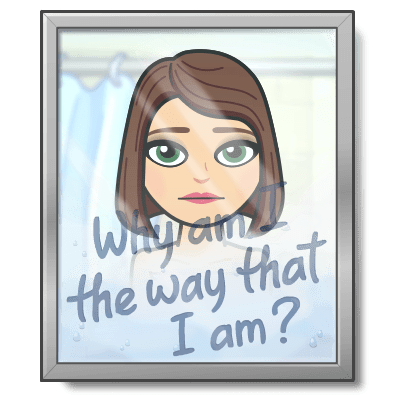
This week I’m going to talk a little bit about pensivity and autism, or as my sister describes it in my interview with her, “staring into the abyss.” 😛

We all have those moments where we retreat into ourselves. Our eyes glaze over, we tune out from our surroundings and make weird, subconscious facial expressions as we dreamily ride the thought train round and round.
why am i the way i am.png

For an autist, these spells of introspection tend to happen a little more frequently. Our minds move so fast that we often find it hard to concentrate, and somehow we slip into this abyss of swirling thoughts:

‘What do I want for dinner tomorrow?’

‘Is evolution real?’

‘What would I look like as a blonde?’

‘What would it be like to have an Alpaca farm!?’ (genuinely spent a weekend considering the practicalities once!)

These are just a few of the millions of questions that I spend my time pondering in the abyss, proceeding to explore these thoughts in minute detail! 😛

I’ve been known to spend almost an hour lying on my bed, staring into space without saying a single word to anyone!

bed

Once I’ve fallen in, my mind could literally go anywhere-I’ve even conjured up a musical based on the music of My Chemical Romance during one of these particular spells!

It’s not a bad thing in my experience, I get some of best ideas wandering the abyss, but people just don’t know what to make of me in this state in social situations. As my sister says, it really creeps her out watching me! 😛

I suppose I can’t blame her when I often sit around staring like this for 40 minutes:


bitmoji1032267440.png

Half the time, I’m not even aware that I’m doing it, which can be awkward on a night out.  If it get’s very loud or the conversation goes stale, I just slip down into the depths, awoken from my reverie several minutes later by bemused friends and colleagues! 😬

What people fail to understand however, is that I am perfectly content in my little bubble. Yes I look strange, and my face may not show it, but I’m perfectly fine 🙂 In fact I sort of enjoy thinking, just floating around exploring the darkness of the abyss. It’s actually a little bit soothing in an odd way.

Autists are not good with the unknown. We like structure, things we can predict and prepare for. By questioning, or pondering the unknown in our minds, this can help to make the world seem a little less scary. Knowledge is power after all!

So don’t panic if you see me stumbling into the abyss- I’m probably just wondering where I can buy an alpaca! 😛 😉

Enjoy the weekend everyone! 🙂

Aoife

Autism and Nail Trimming

Greetings Earthlings! 🙂

So this post might seem a little unusual, but as the difficulties faced by autists when it comes to haircuts has been doing the rounds on social media of late (for the record- I LOVE getting my hair cut! 😀 ), I thought I’d write a quick post about something small that I find a sensory challenge- trimming my nails.

My friends have been complimenting my nails a lot this week, which is a little odd seeing as I have not cut them since 2002! 😲

Yep- nail trimming freaks me out that much! 😂

Once my mother stopped trimming them for me, I have refused to put a nail scissors or file anywhere near them (save for a manicure in 2005- an experience I have not sought to repeat! 😛 )!

Don’t worry they aren’t freakishly long- I use my hands so much with my hobbies that they never seem to make it past a certain length!

Ow GIF

Trimming/filing my fingernails has always freaked me out. It’s really hard to describe, but for some reason it feels really wrong to me! There’s just something unnerving about nail scissiors cutting so close to the skin that it sends unsettling shivers up and down my spine. Nail filing in particular sends me into cringing convulsions-my hands are tensing up into balls just now at the thought of that abrasive piece of cardboard against my skin! 🤣

Image result for shudder gif

Oddly enough I’m fine with toenails, unless I cut too close to the skin 😛

I know I shouldn’t be unnerved by such an innocuous every day process, buuuuttt my brain just doesn’t seem to want to deal with this type of stimulus! 😛

Nail trimming issues are actually quite common among autists. This can be particularly troublesome if an autist is prone to skin picking or self injurious behaviours.

But there are some tricks that can help:

  • Trim your/your childs nails after a bath– this can soften the nail to make the task more comfortable
  • Pressing down on the nail before trimming– this application of deep pressure can temporarily reduce sensitivity
  • Distraction and Bribery– if you are cutting nails for an autistic person, try using bribes or distracting the person with something (particularly their specialist interest) to get the job done
  • Try not to keep the nail too short– aside from the weirdness of cutting my nails, if they were cut too short, or if I sustained a bad break, I found (and still sometimes find) this particular sensation quite unsettling (for want of a better term)

And if all that fails, you can always allow life to trim your nails for you like me (just maybe try to steer clear of your siblings if your nails are a little bit on the long side…😬)

finger

Enjoy the weekend everyone! 🙂

Aoife

Should I Tell My Child They Have Autism?

Greetings Earthlings! 🙂

So today we’re going to discuss a very important question when it comes to growing up with autism- should autists be made aware of their diagnosis?bitmoji185739333

Now this question is a little bit tricky.

On one hand, we have the parents who do not want their child to know at all; they want their child to grow up as “normally” as possible so that they may never be held back by the autistic label.

In a sense, part of me would agree with this approach. In a lot of ways, growing up undiagnosed was a blessing in disguise. I was never treated differently (well, by teachers at least- children are another kettle of fish!) and I grew up to be a “normally” functioning adult with a job and friends, never held back by the autistic label.

Buuuuuuutttttttt…

Whilst I can appreciate a parents desire for their child to thrive, the decision not to tell a child about their diagnosis ultimately amounts to sticking your head in the sand.

bitmoji1733715277

We cannot ignore autism and pretend that it’s not happening. There needs to be interventions, strategies and most importantly, understanding.

We don’t just grow out of autism, we need to cultivate an environment so that we can grow around autism. Without self awareness, this will ultimately make life difficult for your child.

What if they found out some other way that they were autistic? If they overheard a teacher, accidentally caught sight of their notes or were taunted by another child? How would you feel if your parents kept something like this from you?

At the end of the day, your child needs to know about their diagnosis; maybe not today or tomorrow, but when the time is right, they will need to know.

Yes, there were some advantages to getting a later diagnosis, but ultimately, life would have been so much simpler for both my parents and I had we known that I was on the spectrum. We would have known how to manage meltdowns, my peers would have understood me better, I wouldn’t have tortured myself for being different- I would have understood and learned to better accept and love me all the sooner.

hugs.png

So don’t worry about holding your child back, or upsetting them; take a deep breath and find a way to tell them- they will thank you for it in the end 🙂

Aoife

Autism and the Benefits of Animals

Greetings Earthlings! 🙂

We all love our furry and feathered friends dearly don’t we? Seems hard to imagine the internet without funny animal videos these days!

Image result for funny animal gifs

Animals are so important to us that they are not just friends, but an integral part of the family.

For autists, an animal in the home can be this and so much more (#specialistinterest 😉 )!

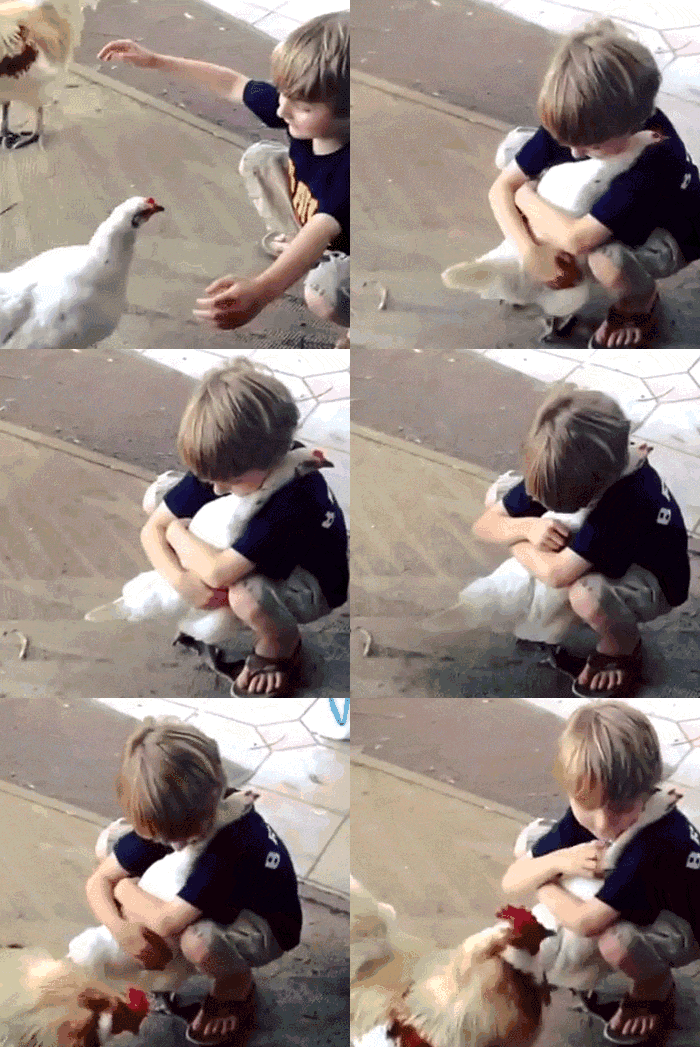
Research suggests that animals can play a very important role in the social, emotional and cognitive development of children and can also aid the development of empathy. Animals such as assistance dogs (which I hope to write a post on at a later stage), cats, horses, guinea pigs, and interestingly keeping chickens is the latest trend to help improve these skills in the autistic community!

Image result for hugging animal gif

Studies have shown that the social skills of autists who live with an animal are much greater than those who do not have a pet. Pets are often considered “social lubricants” wherein they provide autists with a source of conversation which can encourage better engagement.

Sometimes we find it a lot easier to relate to animals. I’ve often remarked growing up that life would be so much easier if we were all dogs for example. With a dog, life is black and white (fun fact– they aren’t colour blind!). You take care of them, they love you forever-simple. There are no games or tricks (well, unless like my dog yours spins round in circles when you try to brush him to make you dizzy in the hope that you will go away 😛 ), you never have to wonder where you stand with a dog, they’ll make it very clear if they love or hate you!

dfgerhrtsghs

Studies have also shown that animals in fact can have a measurable biological effect on people with autism! A recent study measured “excitement” levels in children with autism when performing such tasks as reading out loud and playing with a group. The results showed that in these situations, the excitement levels were higher in the brain indicating stress. However, when these levels were measured whilst playing with an animal they  plummeted as stroking the animal induced biological calm.

Finally!

Scientific proof that I should spend more time cuddling my dogs!!! 😉


However, as beneficial as animals can be, experts advise that the individual needs and sensitivities of the child are taken into consideration when choosing a pet. A dog might seem like a good idea, but whilst many autists may gravitate towards the soft and furry, others may be repulsed by the texture of their hair, the smell or may even be overwhelmed by their energetic nature.

Aoife’s Top Tip– Try to expose your child to different animals to gauge their reactions before making any firm decisions on a pet- they are a big commitment! The research shows that any pet, even a spider, can be beneficial 🙂

There we have it dear Earthlings- another, scientifically proven reason to love animals all the more! 😀

What better way is there to spend the bank holiday weekend than relaxing with your pet? 😉

bitmoji1415319073

Aoife

Autism and “Stimming”

Greetings Earthlings! 🙂

Today I’d like to touch on one of the most commonly observed autistic behaviours- “stimming”.

So what exactly is “stimming?”

Self-stimulatory behaviour, (also known as stereotypy or “stimming”), refers to many of the repetitive behaviours often exhibited by autists. Examples of these behaviours include scratching or rubbing the skin, noise making, smelling objects and the classic examples of rocking and  hand flapping, although in my experience it’s a lot more like ‘Jazz hands’ than flapping!

jazz hands.gif

There are two psychological theories as to why autists stim:

  • As a response to overwhelming sensory stimuli
  • As a means of relieving stress and anxiety

From a physiological perspective, there are a number of possible biological reasons.

Some researchers believe that stimming provides the autist with sensory stimulation. Contrary to common belief, many people with autism have a reduced sensitivity to certain sensory stimuli. Dysfunctions in the circuitry of the brain mean that the body craves sensory stimulation, and so we adapt repetitive behaviours in order to stimulate and excite our nervous system.

Deficits in dopamine levels in the brain can also interfere with our reward pathways, leading autists to engage in behaviours, such as stimming, which will provide the extra hit of dopamine that the brain needs.

So that’s why I’m drawn to fluffy things! 😉

Image result for stroking fluffy gif

Aside from being drawn to stimulatory texures, I have a particular tendency to fidget with the silver chain around my neck. I just find something oddly soothing about the rough sensation of the metal against my skin! 😛

In my experience, I also find that stimming isn’t always a response to stress, but born from a need to keep my hands busy.

As I’ve discussed previously, research shows that autists have higher levels of excitatory neurotransmitters such as glutamate, and lower levels of calming neurotransmitters in the brain. As a result, we are often hyper-stimulated. Stimulation of the brain’s reward system, i.e.  dopamine release through “stimming” behaviour, causes a decrease in glutamate levels, effectively calming the brain!

This would explain why I’ve often found that stimming sometimes helps me to concentrate and clear my mind by channeling any excess energy into a physical action. I find this particularly helpful when I’m studying, or writing, and for some strange reason while I’m waiting for the microwave to ping! 😛 #excitedforfood

Image result for fidgeting gif

Stimming can also be considered a form of self injurious behaviour, but I’ll write a separate post on this topic at a later stage 🙂

So is there anything that can be done to control this type of behaviour?

bitmoji339468972

  • Try replacement behaviours– if the stim is not socially acceptable or harmful, as in the case of biting behaviours, attempt to replace the stim with another one such as a fidget toy or chewing rubber
  • Exercise– there is evidence to suggest that exercising can decrease the frequency of stimming behaviours, although the research is unclear why
  • Cognitive behavioural therapy (CBT)– is thought to be useful as self stimulatory behaviour operates in a similar way to OCD tendencies which are often managed through CBT techniques
  • Medication– Seems there’s a pill for everything these days! Medications can be used to help modify compulsive behaviours such as stimming, but I personally would not advocate this route

So there we have it Earthlings, a brief insight into stimming behaviours in autism! 🙂

Enjoy the weekend everyone! 🙂

Aoife

Blog at WordPress.com.

Up ↑