The Wayfinding Centre Dublin

Greetings Earthlings! 🙂

Leading on from my previous post about Google’s ADC, this week I’d like to talk about a recent trip I took to the Wayfinding Centre in Dublin.
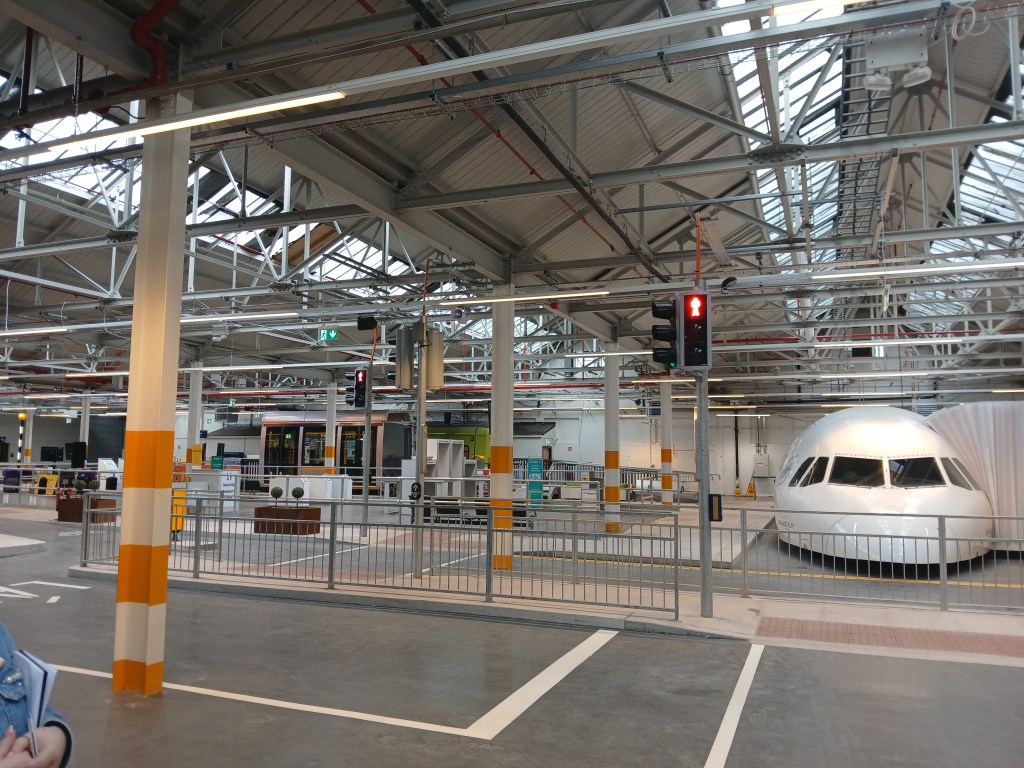
For those of you who are unfamiliar with the centre, it’s an innovative facility set up to make public transport more accessible for people with disabilities. The first of it’s kind, the centre empowers people with disabilities to navigate public transport by providing hands on training and experience in a safe indoor environment. Upon entering the centre, you walk into a real world replica of the Irish public transport experience including:

  • Street lighting, traffic lights, signage and timetable boards
  • Common transport noises such as pedestrian crossing sounds
  • Hazards including pavements (with accessible textured paving slabs), bollards, benches, fencing, fake roads, and train platforms
  • Replica cycle lanes, bus stops and pedestrian crossings
  • Sample train and Luas carriages
  • A double decker city bus and single level inter-city bus
  • An Accessible taxi
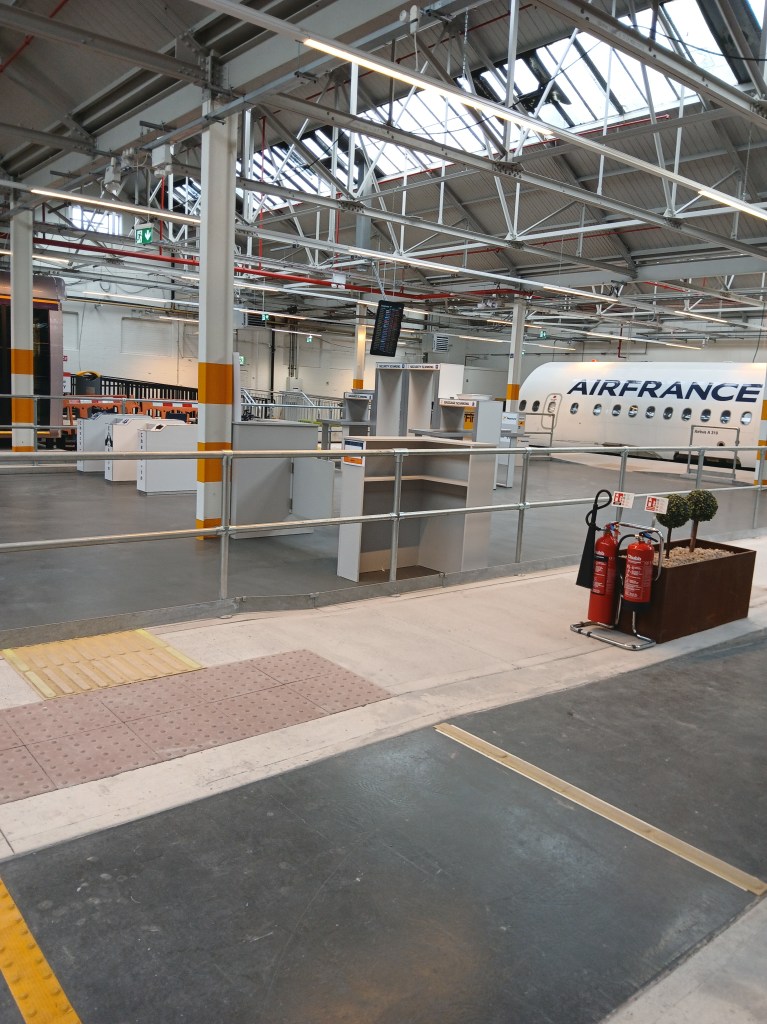
  • An Air France plane with replica airport security and boarding experience
In addition, the centre is also host to the living lab providing a high-tech innovation and research space where they perform user testing and conduct pilot projects, working closely with transport providers to make existing and future public transport more accessible for all users.

You can see a video from the launch of the centre in January 2024 below.

As previously discussed, navigating public transport can be quite an overwhelming experience for an autist. Everything is noisy and crowded and timetables can be confusing to decipher, especially when transport often does not stick to routine. The Wayfinding centre offers autists a unique opportunity to prepare themselves to access public transport to take some of the unknowns out of the equation. Autists can go to the centre and experience what it’s like to step onto public transport free from the sensory issues and pressure of the real world, allowing them to get used to the experience in a safe and supportive environment.
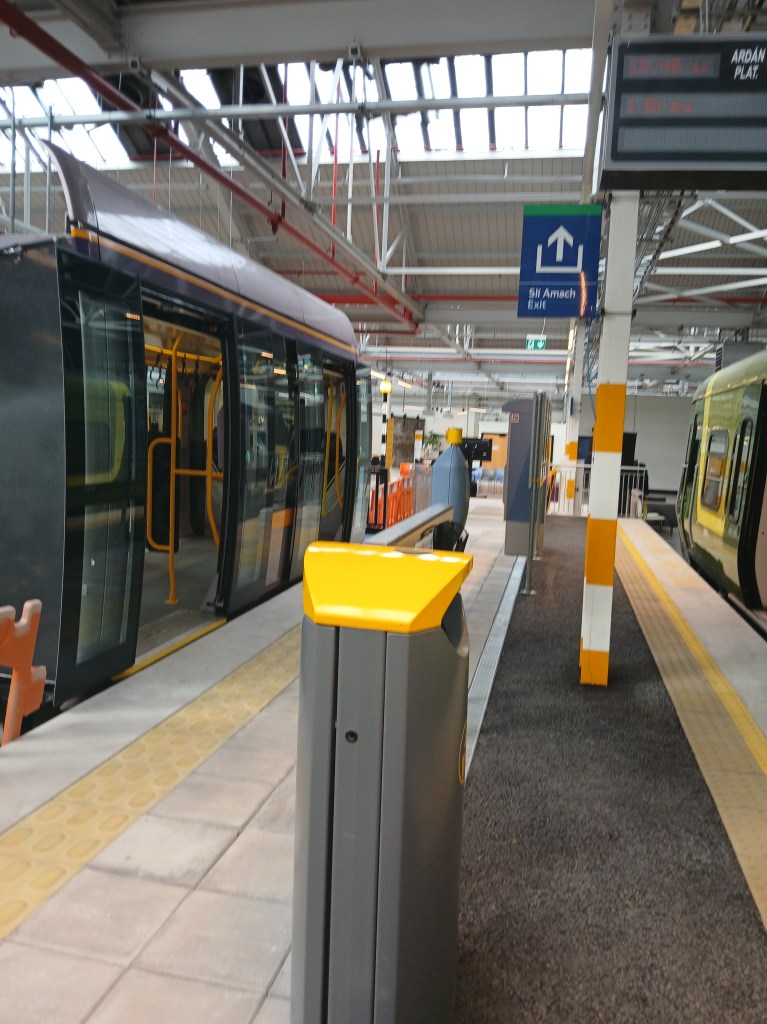
Perhaps the most impressive part of the centre is the experience of preparing for airport travel. Autists can visit the centre to get ready for their first trip to an airport and practice using scanners, putting luggage on carousels, and physically walking down the tunnel and on to a real plane where you can take your seat and comfortably adjust to the cabin experience.
I was really impressed by my visit and completely unaware such an innovative initiative was a mere few hours up the road. I would really recommend a visit if you’re around Dublin to experience the tour or access the facility in preparation for your public transport experience.

Hope you enjoyed this post dear Earthlings!

Have a lovely weekend!

Aoife

Autism in the Eurovision Song Contest

Greetings Earthlings! 🙂

This week I’d like to talk to you about one of my specialist interests- the Eurovision Song Contest, as this year one of the entrants is on the autistic spectrum! 😀

So, first things first, what exactly is the Eurovision Song Contest?

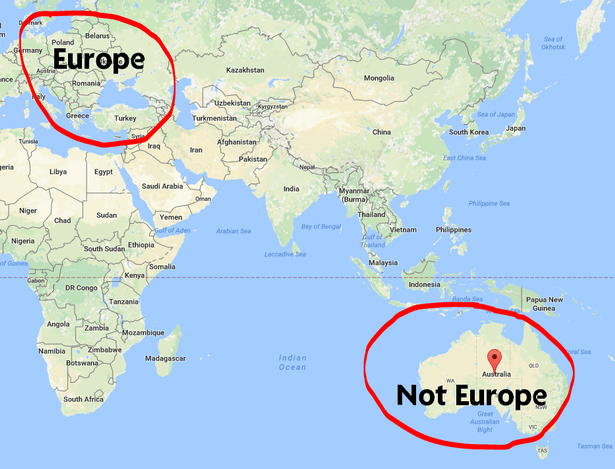
The Eurovision Song Contest (ESC) is an annual international songwriting contest organized by the European Broadcasting Union (EBU) that was first established in 1956 as a means of bringing divided European nations together through music in the wake of World War II. Originally, only 7 countries participated, but over the years musicians representing 52 countries have competed across Europe, Israel and Australia (don’t get me started on the logic for that one…)

Each participating country submits one original song under 3 minutes in length, and performs the song live on stage to the world, competing to win a trophy and the chance for their nation to host the contest the following year. There are two semi finals and one grand final, all held over one week, usually in May. The voting is a 50/50 split from audience televotes and panels of industry experts from each participating country.

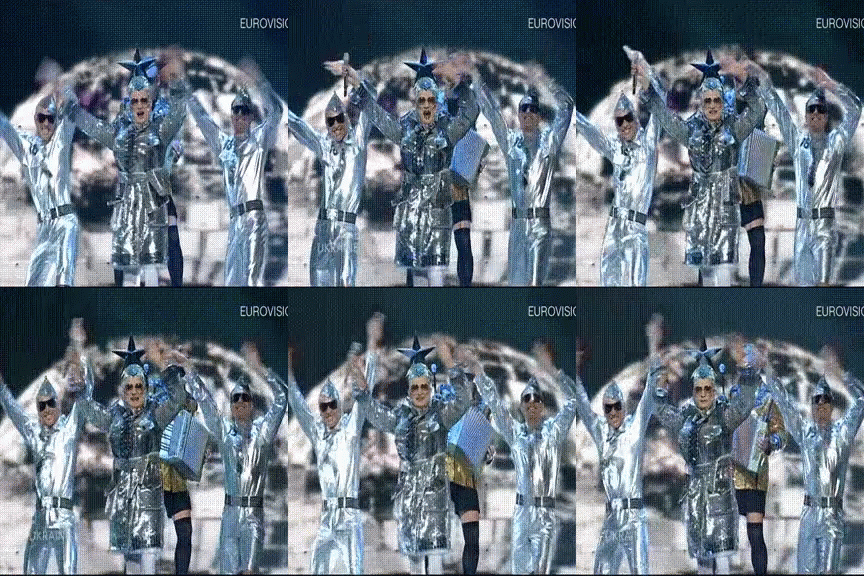
For those of you who are unfamiliar, Eurovision is very popular in Europe with an average annual audience of just under 200 million viewers. Over the years it has grown from a simple song contest to a huge spectacle with elaborate staging and often crazy performances from bread baking Russian grannies, to metal monsters, dancing drag queens, to flapping puppets (sorry again for that one Europe!), to powerful songs that unite us and capture the hearts of an entire continent.

Eurovision has also brought many acts to worldwide fame such as ABBA (Sweden 1974), Daði Freyr (Iceland 2020/2021), Riverdance (Eurovision 1994’s interval act), Céline Dion (Switzerland 1988) and most recently MÃ¥neskin representing Italy in 2021. A host of other established acts have represented their countries (or failed to do so) over the years, including Cliff Richard (UK 1968/1973), Julio Iglesias (Spain 1970), Enya (Irish song selection 1973), Olivia Newton John (UK 1974), Katrina & the Waves (UK 1997), Bonnie Tyler (UK 2013), Cascada (Germany 2013), Darude (Finland 2019), The Rasmus (Finland 2022) and even Elton John and Bernie Taupin wrote a failed song for Lulu in 1969 (who won with a different song that year) for the UK national selection! My native Ireland retains the title of most all time Eurovision wins (7 in total, including 3 years undefeated between 1991-1994), so naturally Eurovision was a big deal when I was growing up 🙂

We get it, you love Eurovision Aoife, so where’s the autism link?

This year, the Australian delegation (we’ll let the geographical issues slide for a few paragraphs) are sending autistic singer Sheldon Riley to the contest in Turin, Italy with his song ‘Not The Same‘ where he talks about his struggles in life, and particularly his struggles growing up with Asperger’s Syndrome. You can check out the song here:

Diagnosed at 6 years old, Sheldon was told that he would never be “normal”, that he would never achieve his dreams, never have a job, friends or a romantic partner. Instead, he has defied the odds and went on to compete in several song competitions in Australia in addition to America’s Got Talent. As part of his stage persona, Sheldon incorporates elaborate crystal masks into his performances to hide his face to allow him to focus on his singing as he often feels judged for his appearance, a shield to allow him to perform, taking autistic masking to a new level. With his participation in Eurovision however, Sheldon finally feels confident to start ditching his mask to embrace who he really is. You can also hear Sheldon talking about his experiences of autism to BBC in the video below:

Sheldon isn’t however the first autist to take to the Eurovision stage. In 2015, Finland sent the rock band Pertti Kurikan Nimipäivät comprised of disabled musicians with Down Syndrome and Autism. To this day it holds the record for the shortest ever song performed at Eurovision:

On another level, Greta Thunberg’s mother, Malena Ernman, who is an outspoken advocate for autism awareness, represented her native Sweden in the Eurovision in 2009!

Whilst these are the only confirmed examples of autists competing in the Eurovision, it’s quite possible that other past artists may also have been on the spectrum (knowingly or otherwise) but they have not revealed their diagnosis.

Fun Fact– yours truly contributed to last years 4th place Icelandic entry as part of an online virtual choir of 1000 fans, so you could say that one other autist has appeared on the Eurovision stage (in a roundabout way 😛 )

Hope you enjoyed this post dear Earthlings! 🙂

Have a lovely weekend and enjoy the competition tomorrow night if you’re watching!

Aoife

Blog at WordPress.com.

Up ↑