Autism in Heartbreak High

Greetings Earthlings! 🙂

Leading on from my previous post about Netflix’s film ‘I Used to be Famous‘, this week I’d like to talk about another new Netflix series that has an autistic character- the reboot of the Australian comedy-drama series ‘Heartbreak High’.

So what’s the show about?

The show centres on a group of teenagers in the fictional Hartley High School in Australia after a graffitied “sex map” has been discovered on a wall detailing all of the sordid details of the students sex-capades. Following its discovery, the principal puts the students in a mandatory sex education class called ‘Sexual Literacy Tutorials – or “SLTs” (which inadvertently sounds like ‘sluts’) in an attempt to guide the students and calm the PR storm brewing outside.

You can see a trailer for the show here:

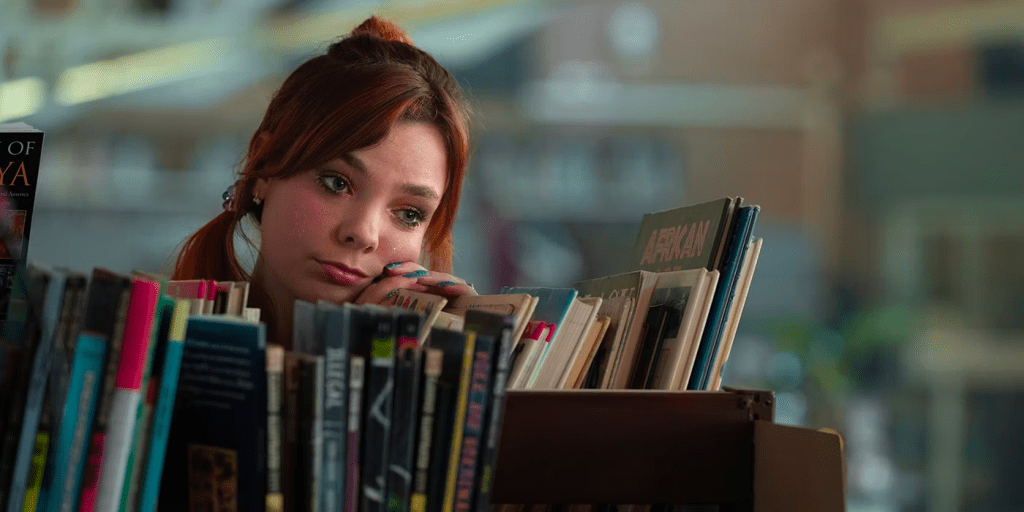
Now one of the great things about this show is that it prominently features an autistic character called Quinni, played by autistic actor and activist Chloe Hayden. Quinni is an emotionally intelligent, vivacious and bubbly teenager with ADHD, who loves bright colours, art, stickers, crocs and fantasy novels (one of her specialist interests). Quinni is also a lesbian, which marks one of the first times I’ve seen an LGBT autist in a fictional show, which is quite surprising given that many on the spectrum identify as LGBT+. It was refreshing to not have the classic asexual wallflower that is often depicted on screen. The real twist is that there is actually an asexual character in the show but he wasn’t autistic!

The writers worked very closely with Chloe to create a genuine picture of autism for the audience (she pretty much got to write all of her character). To the untrained eye it is not immediately obvious that Quinni is on the spectrum, she just seems like a chatty, quirky teenage girl. We don’t find out she is autistic until she blurts it out to her annoyed date after seemingly ignoring her attempts at conversation all evening as she was struggling to concentrate due to noise sensitivity in the crowded restaurant. The response she gets is one that all high functioning autists can relate to- questioning, doubtful, comparing us to stereotypes/media portrayals from neurotypical actors etc. This scene was added as the writer’s asked Chloe what happens when she tells people about her diagnosis which you can see below:

As the series progresses we get to see her navigate the rollercoaster of her first relationship. While it starts out sweet with Sasha being considerate of her needs, a typical selfish teenager, Sasha starts coddling her and feeling responsible for Quinni rather than understanding her needs:

The relationship ends in tears when Sasha becomes dismissive of her need for routine and ruins a much planned and anticipated meeting with Quinni’s favourite author for her, triggering a meltdown and shutdown, with Quinni retreating into herself, not speaking for days on end- a sad reality that autists may face.

Personally, I wasn’t the biggest fan of the show (in my opinion it was a little bit too “woke” and the broad diversity of the characters seemed a bit forced), but it is a genuine portrayal of the reality that teenage autistic women face every day and is one of the first times that I’ve seen something of myself in an autistic character on screen in a long time. We need to see more Quinni’s on our screen to properly educate people about the realities of living with autism, and to give the next generation of autists someone to relate to, something that so many of us were lacking in our developmental years.
Hope you enjoyed this post dear Earthlings!

Have a lovely weekend! 🙂

Aoife

Autism in the Eurovision Song Contest

Greetings Earthlings! 🙂

This week I’d like to talk to you about one of my specialist interests- the Eurovision Song Contest, as this year one of the entrants is on the autistic spectrum! 😀

So, first things first, what exactly is the Eurovision Song Contest?

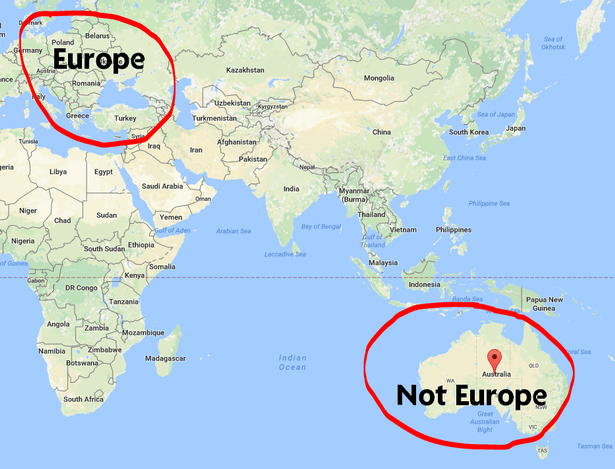
The Eurovision Song Contest (ESC) is an annual international songwriting contest organized by the European Broadcasting Union (EBU) that was first established in 1956 as a means of bringing divided European nations together through music in the wake of World War II. Originally, only 7 countries participated, but over the years musicians representing 52 countries have competed across Europe, Israel and Australia (don’t get me started on the logic for that one…)

Each participating country submits one original song under 3 minutes in length, and performs the song live on stage to the world, competing to win a trophy and the chance for their nation to host the contest the following year. There are two semi finals and one grand final, all held over one week, usually in May. The voting is a 50/50 split from audience televotes and panels of industry experts from each participating country.

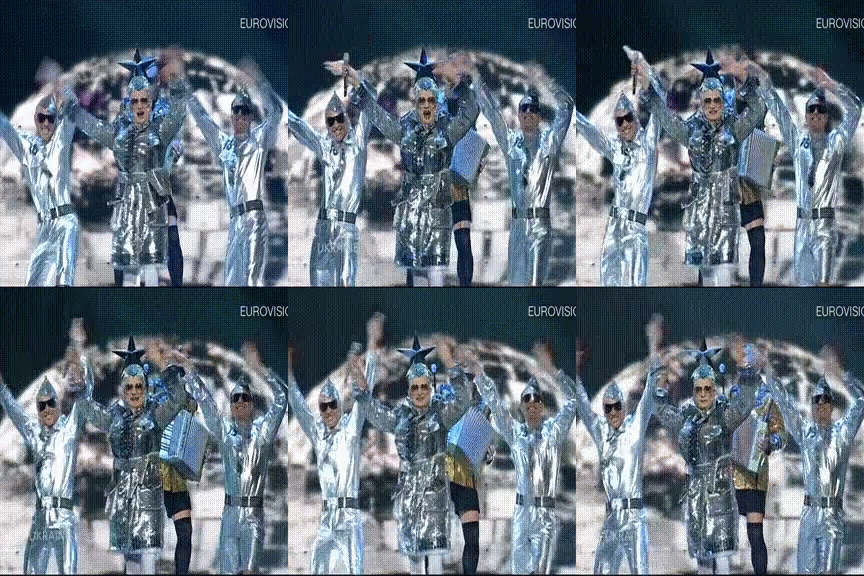
For those of you who are unfamiliar, Eurovision is very popular in Europe with an average annual audience of just under 200 million viewers. Over the years it has grown from a simple song contest to a huge spectacle with elaborate staging and often crazy performances from bread baking Russian grannies, to metal monsters, dancing drag queens, to flapping puppets (sorry again for that one Europe!), to powerful songs that unite us and capture the hearts of an entire continent.

Eurovision has also brought many acts to worldwide fame such as ABBA (Sweden 1974), Daði Freyr (Iceland 2020/2021), Riverdance (Eurovision 1994’s interval act), Céline Dion (Switzerland 1988) and most recently Måneskin representing Italy in 2021. A host of other established acts have represented their countries (or failed to do so) over the years, including Cliff Richard (UK 1968/1973), Julio Iglesias (Spain 1970), Enya (Irish song selection 1973), Olivia Newton John (UK 1974), Katrina & the Waves (UK 1997), Bonnie Tyler (UK 2013), Cascada (Germany 2013), Darude (Finland 2019), The Rasmus (Finland 2022) and even Elton John and Bernie Taupin wrote a failed song for Lulu in 1969 (who won with a different song that year) for the UK national selection! My native Ireland retains the title of most all time Eurovision wins (7 in total, including 3 years undefeated between 1991-1994), so naturally Eurovision was a big deal when I was growing up 🙂

We get it, you love Eurovision Aoife, so where’s the autism link?

This year, the Australian delegation (we’ll let the geographical issues slide for a few paragraphs) are sending autistic singer Sheldon Riley to the contest in Turin, Italy with his song ‘Not The Same‘ where he talks about his struggles in life, and particularly his struggles growing up with Asperger’s Syndrome. You can check out the song here:

Diagnosed at 6 years old, Sheldon was told that he would never be “normal”, that he would never achieve his dreams, never have a job, friends or a romantic partner. Instead, he has defied the odds and went on to compete in several song competitions in Australia in addition to America’s Got Talent. As part of his stage persona, Sheldon incorporates elaborate crystal masks into his performances to hide his face to allow him to focus on his singing as he often feels judged for his appearance, a shield to allow him to perform, taking autistic masking to a new level. With his participation in Eurovision however, Sheldon finally feels confident to start ditching his mask to embrace who he really is. You can also hear Sheldon talking about his experiences of autism to BBC in the video below:

Sheldon isn’t however the first autist to take to the Eurovision stage. In 2015, Finland sent the rock band Pertti Kurikan Nimipäivät comprised of disabled musicians with Down Syndrome and Autism. To this day it holds the record for the shortest ever song performed at Eurovision:

On another level, Greta Thunberg’s mother, Malena Ernman, who is an outspoken advocate for autism awareness, represented her native Sweden in the Eurovision in 2009!

Whilst these are the only confirmed examples of autists competing in the Eurovision, it’s quite possible that other past artists may also have been on the spectrum (knowingly or otherwise) but they have not revealed their diagnosis.

Fun Fact– yours truly contributed to last years 4th place Icelandic entry as part of an online virtual choir of 1000 fans, so you could say that one other autist has appeared on the Eurovision stage (in a roundabout way 😛 )

Hope you enjoyed this post dear Earthlings! 🙂

Have a lovely weekend and enjoy the competition tomorrow night if you’re watching!

Aoife

Blog at WordPress.com.

Up ↑