Greetings Earthlings! 🙂
Did you know that between 40% and 80% of autists reportedly have sleep problems?

I have spent many a restless night tossing and turning whilst my mind races. Like a washing machine on the highest spin setting, my mind keeps going round and around when I turn out the lights.
This is a fairly accurate (and cute) representation of my efforts to sleep at night:
 ^
^
I struggle to get comfy and start thinking and stressing about my day, about tomorrow, about that embarrassing time when I got an answer wrong in class and everyone laughed at me…and it keeps rolling on in a similar never-ending loop. The pillow starts heating up (did you know that thoughts produce heat? ), I start stressing about not sleeping and how soon the alarm will go off, get frustrated and inadvertently end up even more awake than before!
Eventually I pass out, and when the sun comes up the next morning…
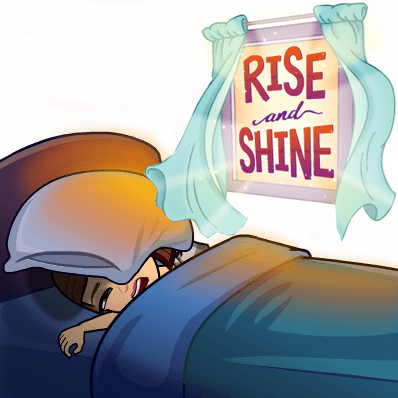
….I wake up feeling like death in a tangle of bedclothes, wearing my sheet as a scarf! 😛
It doesn’t happen every night, but on occasion, especially if I have to be somewhere important or catch a bus early the next morning. I spend so much time thinking about needing sleep that I end up chasing away any tiredness! 😛
But why are we prone to disturbed sleeping patterns?
As with many aspects of autism, it’s unclear why exactly we struggle with sleep, but the experts have a few theories on the subject:
- Melatonin, the hormone which controls sleep and wakefulness, is thought to contribute to sleep issues in autism. The amino acid tryptophan is needed for the body to produce melatonin, an amino acid which research has shown can be either higher or lower than normal in people with autism. Ordinarily melatonin is released in response to darkness (to induce sleep) with levels dropping during daylight hours (to keep us awake). However, studies have shown the opposite in some autists, where higher levels of melatonin are released during the daytime and lower levels at night. So that explains why I’m often inexplicably dying for a nap in the middle of the day!

- Sensory issues are also thought to contribute to these sleep problems. Many autists have an increased sensitivity to such stimuli as touch, light, noises, etc. During my first year in college I became somewhat of an insomniac due to city noises, late night fire alarms and paper thin walls…
- A number of autists, such as myself, are night owls. Recent brain imaging scans have shown that there are physical differences in the brains of night owls and morning larks. Night owls show signs of reduced integrity in the white matter of the brain (fatty tissue that enables brain cells to communicate with each). This compromises the speed of transmission between neurons which can cause insomnia, daytime sleepiness, antisocial personality disorder and interfere with cognitive functioning. Differences in the integrity of white matter have been linked to ASD’s, so this could explain why we struggle to sleep at night. But it’s not all bad- some studies have shown that night owls are more productive, have more stamina and can display greater analytical and reasoning abilities than morning larks! 🙂
- Anxiety problems are also thought to contribute to troubled sleeping
So what can you do to improve your sleep?
Weighted blankets are often recommended to help manage autism. As I’ve discussed previously, autists have higher levels of stimulatory neurotransmitters and lower levels of calming neurotransmitters. Weighted blankets contain metal or plastic beads in the quilted layers to apply deep, calming pressure to the user- like simulating a hug. This pressure is designed to stimulate the release of serotonin (which helps regulate the sleep cycle and temperature) and dopamine to relax and calm the mind and to better help us to sleep.
Some studies have shown that weighted blankets do not noticeably improve sleep for autists, however many people, neurotypical and neurodiverse alike, have found that they get a much better night’s sleep from using them- so it’s worth a try!
Personally, I’ve discovered that using screens too close to bed time can make it harder for me to nod off at night. Scientists have found that the blue light emitted by most screens can interfere with the production of melatonin, making it more difficult to fall asleep. If melatonin disturbances are indeed contributing to your sleep issues, it would be wise to decrease screen time in the night time.
Aoife’s Top Tip: Ditch the laptop before bed, read a book instead! 😉
Experts also recommend avoiding caffeine, getting more exercise, establishing a routine and taking measures to manage stress.
In my experience, stress management is key to getting a good nights sleep. My memories of being an angsty teenager are littered with sleepless nights spent fretting about everything! Once I got on top of my stress, peaceful sleep was quick to follow 🙂
Sleep will come, you just have to find what works for you.
Goodnight dear Earthlings, I’m feeling a nap coming on 😉
Enjoy the weekend!

Aoife



 A Is For Aoife Not Autism